Slotted track is a head-of-wall deflection track that allows vertical building movement while keeping interior or exterior metal stud walls intact. At our Vaughan facility at 370 New Enterprise Way, we engineer slotted deflection track to absorb live-load, wind, and seismic drift so your walls don’t crack, bind, or transfer unwanted forces.
By Navjot Dass • Dass Metal Products
Last updated: 2026-06-13
Above-the-Fold Overview
Use slotted track at head-of-wall conditions to let the structure move while the wall stays plumb. The elongated slots let fasteners glide as floors deflect under load, preventing drywall cracks and stud buckling. It’s a small detail that avoids big repair headaches during normal building movement.
This complete guide shows how slotted track works and where it saves projects. You’ll learn the science behind head-of-wall movement, typical movement ranges (often 1/2–1 1/2 inches), installation steps, inspection checks, and when to choose deep, standard, or curved options. We also provide field-tested tips from our engineers.
At a Glance
- What slotted deflection track is and when to specify it
- How slots protect finishes from live-load, wind, and thermal drift
- Installation steps, screw patterns, and common inspection checks
- When to choose deep leg, standard leg, or curved (U-Flex) track
- Acoustics, firestop coordination, and service penetrations
- Local logistics from our Vaughan hub to jobs across Canada and the U.S.
Quick Summary
- Head-of-wall movement is routine; walls must accommodate it without damage.
- Slots provide glide for fasteners—walls stay straight while floors move.
- Typical design movement is specified in inches; verify before ordering.
- Use deflection clips only where detailing demands; don’t over-constrain.
- Coordinate fire, sound, and seismic details early to avoid rework.
What Is Slotted Track?
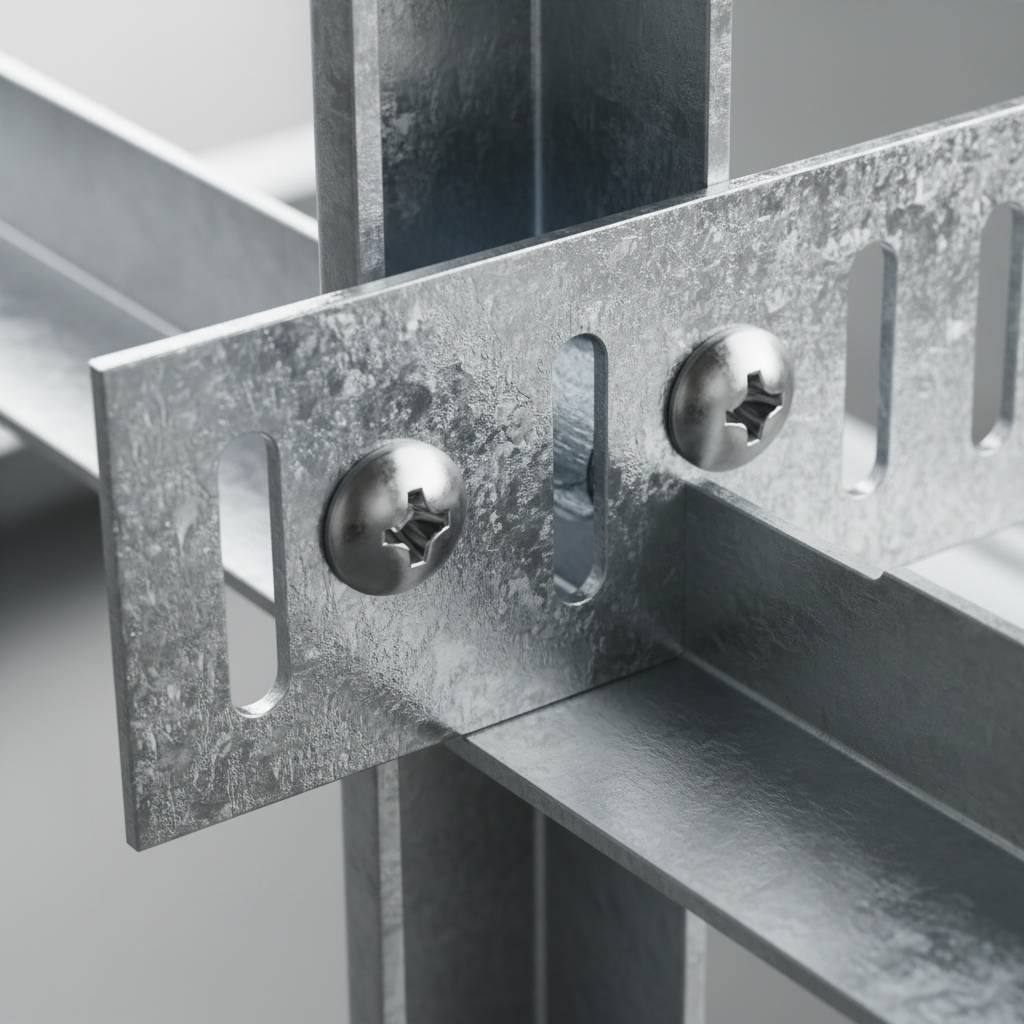
Slotted track is a metal framing track with elongated vertical slots used at the head-of-wall so studs can move with the structure without crushing finishes. Slots let fasteners slide as floors deflect from live loads, wind, or seismic drift, protecting drywall joints and preventing binding.
A standard head-of-wall detail has studs seated in a slotted track anchored to the slab or deck. As the structure moves, screws within the slots translate instead of pinning studs. Many specs call for 1/2–1 1/2 inches of vertical movement capacity at these joints. The key outcome: no cracked corners or nail pops when the building breathes.
Where it fits in the framing system
- Interior partitions below concrete slabs and steel decks
- Perimeter walls beneath curtain walls or spandrel glass
- Shaft wall returns and corridor heads (coordinate with rated systems)
- Areas with wind drift or long-span floors that deflect under load
For foundational framing context, see our deflection track guide and this slotted track metal framing guide for additional diagrams and field checks.
Why Slotted Track Matters
Buildings move. Slotted deflection track decouples that movement from your studs, which reduces drywall cracks, squeaks, and rework. It preserves alignment at the head-of-wall, so partitions remain plumb through seasonal temperature swings, occupancy loads, and wind-induced drift.
Even in quiet office buildings, floor deflection under live load can exceed 1/2 inch. Add daily thermal expansion, and joint stress grows. Without movement accommodation, damage often appears first at top corners: taped seams hairline, corner beads open, and door frames twist. Crews then chase cosmetic fixes that repeat as seasons change.
- Finish protection: Limiting stress at the head-of-wall prevents cracks that otherwise telegraph through paint within weeks.
- System longevity: Allowing 1 inch or more of movement can extend repaint cycles and reduce callbacks across hundreds of feet of corridor walls.
- Door hardware reliability: Keeping jambs square reduces service tickets on latches and closers after occupancy.
- Acoustic performance: Stable joints help maintain STC ratings by preventing unintended rigid connections that transmit sound.
We’ve seen tenant improvements skip deflection once—and spend days re-mudding joints after the first furniture move-in. The cure is specification discipline and a simple checklist during layout.
How Slotted Track Works
Slots in the track web permit fastener travel as the structure deflects, maintaining a free, vertical path for the stud. The stud top is not hard-fastened to the overhead structure, which eliminates crushing forces on gypsum and keeps corners tight.
Mechanically, the slot acts like a guideway. The screw shank sits in the slot, and as the deck moves down under load, the screw slides, allowing studs to remain plumb. Typical slot lengths support total movement on the order of 1 inch or more; always match slot length to the specified movement envelope.
Key components
- Slotted deflection track: Galvanized C-shaped track with elongated vertical slots sized for common framing screws.
- Studs: Light gauge (interior) or heavy gauge (load-bearing) as specified; cut to allow the designed gap at the head.
- Fasteners: Pan-head or wafer-head screws typically spaced 12–24 inches on center, depending on submittals.
- Sealants and firestop: Coordinate with acoustical caulk and rated joint systems so movement remains unrestrained.
To deepen the fundamentals, our metal stud track guide covers track geometry and leg height effects on stiffness and load transfer.
Types of Slotted Track and Related Approaches
Choose slotted deflection track for straight walls, deep leg track for larger movement envelopes, and curved U-Flex track for radiused layouts. Match leg height and slot length to the specified head-of-wall movement and coordination needs for fire, sound, and finishes.
There’s no single “right” track—selection depends on required movement, wall height, finish type, and ceiling interface. Below are the common options and when to use each.
1) Slotted deflection track (straight walls)
- Use when: You need vertical movement (often 1/2–1 1/2 inches) and a clean, straight corridor or office partition.
- Coordination: Works well with rated head-of-wall joint systems and standard acoustical sealants.
- Reference: See our product specification page for details on leg sizes and slot geometry on the slotted deflection track.
2) Deep track (larger envelopes)
- Use when: Movement demand is higher, or you want added tolerance during layout for taller walls.
- Benefit: Increased leg height boosts engagement length, which helps maintain alignment when studs are cut short by design.
- Reference: Typical dimensions and leg options are outlined on our standard track page with guidance on selecting deeper legs.
3) Curved layouts (U-Flex track)
- Use when: The plan includes radiused corridors or feature walls that still need head-of-wall movement.
- Benefit: Curved flexibility plus slots deliver architectural intent without sacrificing deflection performance.
- Reference: See curvature options on U-Flex track and coordinate movement envelopes with ceilings.
Comparison: slotted vs. standard vs. deep leg
| Track type | Best for | Movement capacity | Notes |
|---|---|---|---|
| Slotted deflection | Most head-of-wall joints | ≈ 1″ typical (verify) | Slots let screws translate; coordinate firestop |
| Standard (non-slotted) | Bottom track or fixed conditions | None | Do not use rigid head joints where movement is expected |
| Deep leg | Taller walls, larger envelopes | Often > 1″ (verify) | More tolerance; check ceiling clearances |
Installation Best Practices
Lay out the required movement first, then cut studs short, fasten through slots with the approved pattern, and keep sealants and firestopping flexible. Don’t hard-fastenen to the structure. Inspect the sliding action before boarding.
Field-proven steps
- Confirm movement: Review drawings and note required vertical movement (commonly 1/2–1 1/2 inches at head-of-wall).
- Snap lines and set track: Anchor the slotted track to slab/deck; verify slot orientation is vertical and unobstructed.
- Cut studs to length: Leave the designed head gap so screw travel remains free within the slot.
- Fasten through slots: Use specified screws at 12–24 inches o.c. Avoid overdriving; confirm glide by hand.
- Coordinate fire/acoustic sealants: Use flexible systems that allow full movement.
- Inspect before board: Pull-test a few studs to verify free travel through the full slot length.
Common pitfalls (and fixes)
- Blocked slot: Concrete splatter or tape blocks glide. Clean slots during layout; re-check before boarding.
- Over-tightened screws: Crushing the web kills movement. Use torque-limiting settings on drivers.
- Rigid caulk or framing header: Any rigid bridge defeats the system. Keep every component flexible at the joint.
- Wrong leg height: Too shallow a leg limits tolerance. For tall walls, consider deeper legs to protect alignment.
Our crews favor a short preboard checklist posted at the staging area. For a deeper dive, see the practical notes in our framing bottom plate basics and the slotted detail walk-through in our in-depth guide.
How to Specify and Submittal Checklist
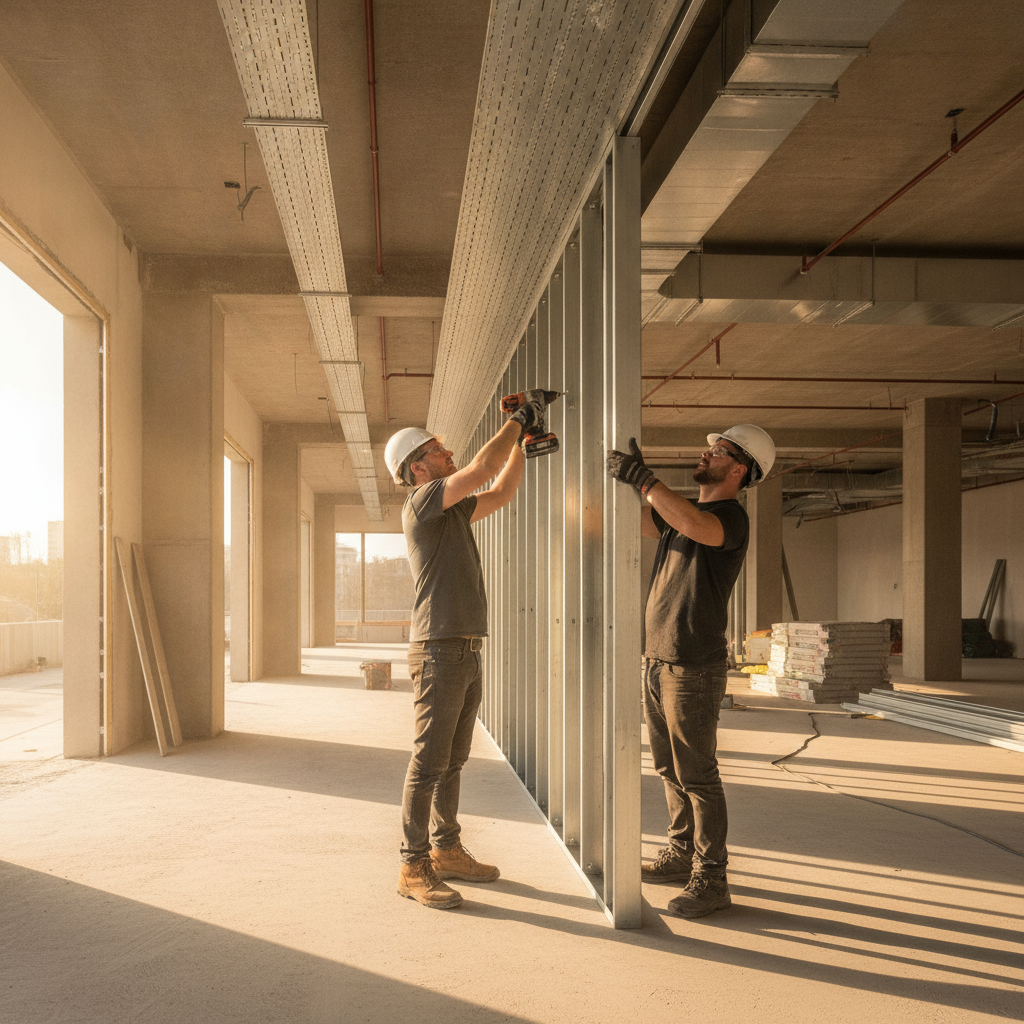
Write the head-of-wall movement, leg height, base metal thickness, corrosion class, and screw pattern into the spec. Then verify with submittals that slot length meets or exceeds the required movement and that fire/acoustic systems allow the same travel.
Specification essentials
- Movement: Required vertical travel in inches for head-of-wall.
- Leg height: Standard vs. deep leg based on wall height and finish tolerances.
- Gauge: Base metal thickness to match stud gauge and load conditions.
- Coating: Galvanized (G90 where exposure or corrosion risk warrants).
- Fasteners: Type and spacing in the slot; typically 12–24 inches o.c.
- Compatibility: Firestop and acoustical sealants rated for the movement envelope.
Submittal checklist
- Product data sheets indicating slot geometry and allowable movement
- Shop drawings marking head-of-wall detail references and movement notes
- Firestop system listings matching the joint and stated travel
- Acoustic details with STC goals and flexible sealant callouts
For component selection, reference our slotted deflection track data and complementary options like standard track or L track for adjacent interfaces.
Acoustics, Fire, and Coordination
Keep the head-of-wall joint flexible across all trades. Sound caulk, firestopping, ceilings, and MEP penetrations must permit the same movement as the slotted track or the wall will bind and telegraph cracks.
A well-detailed partition can maintain target STC ratings when all layers remain decoupled at the head-of-wall. In practice, the weakest link often appears where a rigid ceiling channel, duct support, or sprinkler armature short-circuits movement. One rigid element is enough to transfer forces into the drywall.
- Sound: Use resilient connections. Our slotted track guide covers pairing with resilient channel and furring strategies.
- Fire: Rated joint systems must match the stated movement; verify listing numbers and travel capacity on submittals.
- Ceilings: Floating or sliding interfaces ensure the entire assembly moves as designed.
- MEP: Provide slip joints or flexible couplings where penetrations occur near the head-of-wall.
Tools and Resources
Use product data sheets, movement calculators, and coordinated shop details to right-size slot length and leg height. Field teams benefit from a one-page checklist and preboard inspection to verify glide and sealant flexibility.
- Product data: Slot geometry, leg options, and gauges on our slotted deflection track page.
- Complementary tracks: Compare leg heights and interfaces on standard track and radiused U-Flex track.
- Practical guides: See our deflection overview and track geometry guide.
Need help sizing movement? Our engineers have 40+ years in steel framing. Share your wall height, finish plan, and required travel—we’ll recommend slot length and leg height, then align fire/sound details.
Case Studies and Field Examples
Real jobs show the value: when movement is accommodated, rework drops. In corridors exceeding 300 feet, slotted head joints kept corners tight after the first heavy move-in and winter temperature swings.
Ontario TI corridor: A long run of partitions below a post-tensioned slab saw live-load deflection near 3/4 inch at occupancy. With slotted track and flexible sealants, post-punch crack tickets were effectively zero at 90-day review.
Healthcare wing: Taller walls demanded deeper legs. Specifying a deeper profile with 1 inch of vertical travel maintained door frame alignment after heavy equipment roll-in.
U.S. distribution build-out: Radiused office pods used U-Flex for curved heads and maintained movement alongside floating ceilings. The combination preserved clean reveals despite seasonal drift across the large bay.
For shaft returns and head details adjacent to rated enclosures, coordinate with our shaft wall framing guide for typical intersections and clips.
Local Specs and Logistics in the Regional Municipality of York
From 370 New Enterprise Way in Vaughan, within the Regional Municipality of York, we stage slotted track for fast delivery across the GTA and cross-border. Local pickup reduces lead time, and engineers are available on-site for submittal reviews.
Local considerations for 370 New Enterprise Way
- Plan pickups around traffic near Queen St / Highway 50. Early morning windows help keep crews productive.
- Winter swings can increase floor movement; specify at least 1/2 inch of head travel for tall interior walls during cold snaps.
- Coordinate with ceiling trades early; floating interfaces are common in York Region office fit-outs and reduce callbacks.
Troubleshooting and Inspection
If a wall binds or cracks at the head, check slot obstructions, screw torque, and any rigid bridges from firestop, ceilings, or MEP. Verify that the designed gap and slot length match the required movement.
- Symptoms: Hairline cracks near ceiling, squeaks, or tight door hardware within weeks of occupancy.
- Quick checks: Confirm screw glide through the slot, look for rigid sealants, and measure the head gap against drawings.
- Remedies: Clear the slot, swap to flexible sealant systems, and adjust screw torque patterns to restore movement.
Document findings with photos and note slot length vs. measured deflection demands. In our experience, 80% of issues trace to a single rigid element added late in coordination.
Frequently Asked Questions
These quick answers cover the most common slotted track questions: movement capacity, screw patterns, where to use it, and how it interacts with ceilings, firestop, and sound control.
Where do I need slotted track?
Use it at head-of-wall conditions where vertical movement is expected—beneath slabs or decks, along perimeter walls under curtain wall, and in long corridors. Avoid rigidly fixing partitions to the structure where drawings call for movement.
How much movement should I design for?
Architectural and structural notes often call for 1/2 to 1 1/2 inches of vertical travel at head-of-wall joints. Match slot length to the specified movement and verify that firestop and ceiling interfaces allow the same travel.
Do I still need resilient channel with slotted track?
They solve different problems. Slotted track manages structural movement at the head-of-wall; resilient channel decouples gypsum from studs to improve sound ratings. Many partitions use both to control cracks and meet STC targets.
Can I use standard track at the head-of-wall?
Only if drawings indicate no movement. Standard track has no slots, so it rigidly connects studs to the structure. Where floors deflect or drift, use slotted deflection track to avoid binding and cracked finishes.
Related Reading and Next Steps
Build deeper knowledge with detailed guides and product pages. Then align movement, fire, and sound details in one coordinated submittal to prevent rework and callbacks.
Explore practical framing geometry in our metal stud track guide, and review corridor detailing in our deflection overview. For interfaces, our L track product page shows common transitions that appear at ceilings and built-ins.
Key Takeaways
Write the movement, choose the right leg height, keep every layer flexible, and verify glide before boarding. Those four habits eliminate most head-of-wall problems and reduce callbacks.
- Movement first: design and mark the required travel at layout.
- Right profile: match leg height and slot length to wall height and movement.
- All-flexible: fire, sound, ceilings, and MEP must not bridge the joint.
- Field check: tug-test glide before board to prevent hidden binds.
Ready to specify? Our team at 370 New Enterprise Way in Vaughan can review details, confirm slot lengths, and stage quick pickup for York Region and cross-border deliveries.