What corner bead selection means in practice
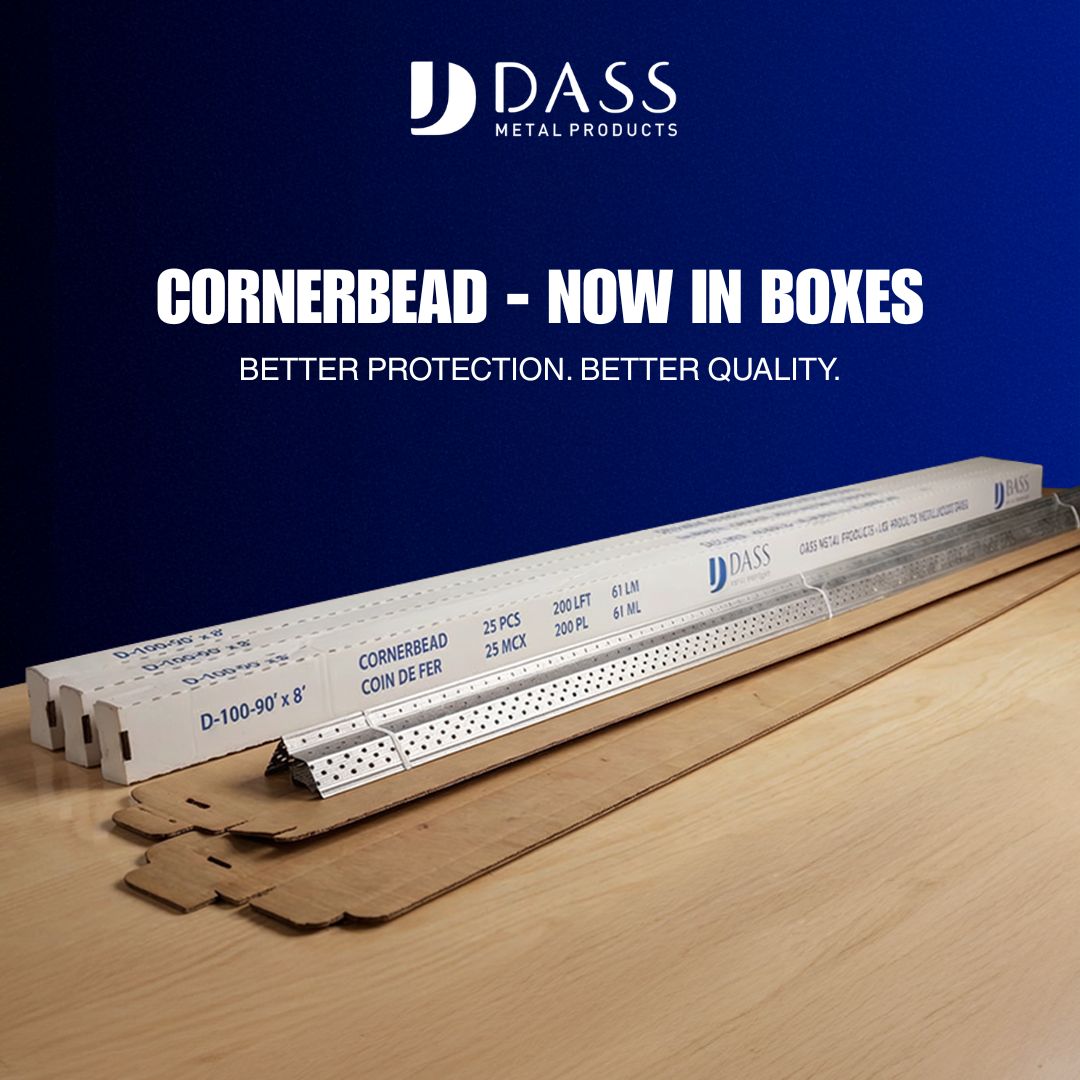
Corner bead selection is the decision process that defines the corner profile, material, and fastening and finishing method for drywall corners. That single choice balances several tradeoffs: how well the corner resists impact, how it behaves in moist or corrosive environments, how quickly a finisher can produce a smooth edge, and how the bead integrates with light gauge steel stud framing. Suppliers and manufacturers, including Dass Metal Products, catalogue 90° and 130° cornerbeads and provide technical documents and installation notes to help specifiers match bead type to project requirements.
Common corner bead types and when each is used
Contractors typically choose from a handful of material families. Each has predictable strengths and limits that determine on-site selection. Trade guidance and manufacturer notes show current preferences: paper-faced metal for faster finishing, galvanized steel for cost efficiency, aluminum when moisture resistance is important, and stainless steel for aggressive environments. For examples and industry perspective, see CornerBeadMFR for product trends and material notes.
Material-by-material quick notes
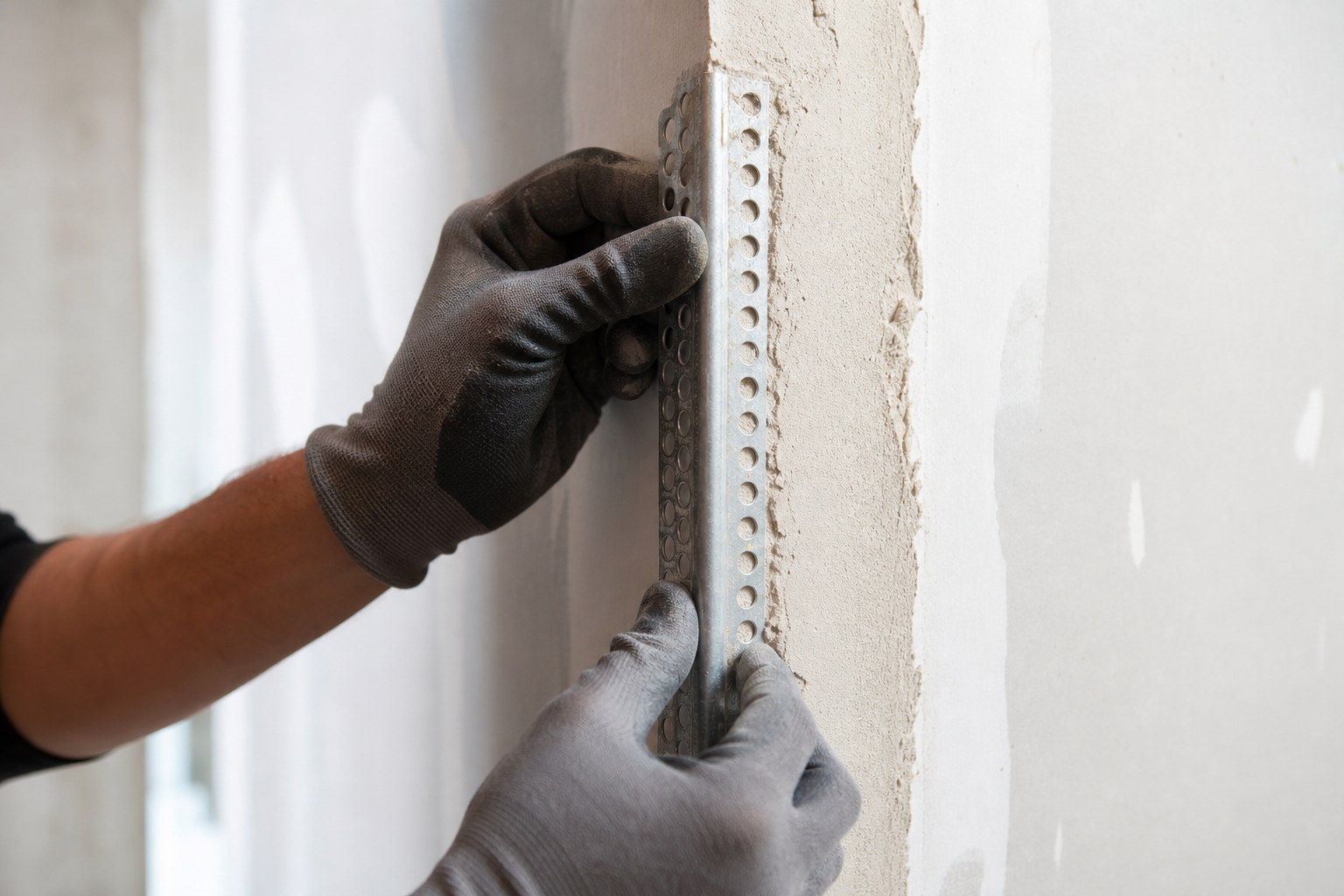
- Galvanized steel corner bead: Economical and rigid, suitable for standard interior walls where impacts are moderate. Choose this where corrosion is not a primary concern and budget matters. Perforated noses or serrated flanges help bond joint compound.
- Paper-faced metal corner bead: A paper flap bonded to a metal nose allows finishers to tape and finish corners in fewer coats, reduces cracking, and speeds finishing. Follow manufacturer bedding and taping guidance for best performance.
- Aluminum corner bead: Lighter and more corrosion resistant than galvanized steel, suited to bathrooms, exterior soffits, and other moisture-prone areas where a metal nose is required.
- Stainless steel corner bead: Selected for industrial interiors and locations where repeated cleaning or chemical exposure would damage other metals. Specify stainless where longevity offsets higher material cost.
- Vinyl corner bead: Plastic profiles resist dents and rust and are easy to cut and install. They may be harder to embed joint compound into and can lack the crisp look of metal noses. Vinyl is common for low-impact residential work.
- Bullnose and specialty profiles: Bullnose beads soften the corner to reduce visible damage, while 45° and other specialty profiles meet specific design or transition needs. These shapes affect how light and wear read a wall.
Decision criteria contractors use on site
Effective corner bead selection follows a short set of practical criteria. The most useful factors are:
- Impact resistance, which pushes choice toward rigid metal or bullnose edges in corridors and heavy use areas.
- Moisture exposure, which favours aluminum or stainless metal, or paper-faced systems approved for damp locations.
- Finishability and speed, where paper-faced beads often reduce coats and labour because the paper ties into the compound.
- Corner profile, whether a crisp 90° or a softer bullnose, determined by design and expected interaction with furniture and users.
- Compatibility with steel stud framing, including how the bead attaches to light gauge studs and how the nose aligns with the finished plane of gypsum.
- Attachment method, whether using screws, staples, adhesive, or clips, and whether the profile has pre-punched holes to facilitate the chosen method.
- Budget and availability, since local stock and lead times can make a lower-priced product impractical if it delays finishing.
- Repairability, because metal, paper-faced metal and vinyl each require different repair steps and materials.
Installation and finishing implications for steel-stud projects
The bead type changes how finishers fasten, tape, mud and sand corners on steel-stud walls. Paper-faced beads bond to compound and let finishers integrate tape more quickly, which can shorten schedules. Metal beads require mechanical fastening to the drywall or stud flange and a slightly different compounding sequence. For specification-level instructions, consult manufacturer installation guides and technical resources.
On steel studs, practical points to observe include:
- Locate the bead so the nose is centred on the finished drywall face to avoid uneven reveals.
- Use screws or clips that are compatible with light gauge framing; pre-punched flange holes speed fastening and improve consistency.
- Paper-faced beads reduce edge cracking where vibration or thermal movement is expected, but they must be installed with the manufacturer recommended bedding compound and technique to meet finish performance expectations.
- Vinyl beads can flex slightly; fasten at the recommended spacing to prevent gaps behind the nose that show through paint.
For practical repair and fastening how-to, Lowe’s provides a step-by-step look at fixing and fastening corner bead. For manufacturer installation standards on paper-faced beads, consult product-specific installation guidance from drywall system manufacturers. Dass Metal Products also offers an installation resource that addresses fastening and finishing tips for the trims they commonly supply, see the Drywall Bead: Learn the Fast Install Steps in 2026 resource on their site.
Common objections and practical trade-offs
Estimators and finish crews often debate bead types. Here are concise responses you can use when stakeholders question choices.
- “Metal dents easily.” Galvanized metal can dent, but it is cost effective for most interiors. Specify bullnose, vinyl, aluminum, or stainless where dents are a real concern.
- “Paper-faced beads cost more.” Product cost can be higher, but the faster finishing sequence may reduce labour and the total installed cost on many jobs. Use manufacturer installation notes to capture those savings consistently.
- “Vinyl looks cheap.” Vinyl resists corrosion and minor impacts, and it is appropriate where rust is a greater worry than a razor sharp corner detail.
- “Stainless is overkill.” For healthcare, washdown or harsh industrial environments the longevity of stainless often justifies the higher material price.
Specifying and procurement considerations in Canada

When writing specifications or ordering materials in Ontario and across Canada, local manufacturing and supplier support shorten lead times and simplify custom profile requests. Dass Metal Products is a Canadian manufacturer and supplier of steel studs and metal framing systems based in Vaughan, Ontario, and the company lists drywall finishing trims such as 90° and 130° cornerbeads among its product lineup. Supplier technical teams can review shop drawings and recommend compatible profiles, which is useful for projects that require CSSBI certified framing components or custom detailing.
Also confirm stock and cross-border logistics if you are working near the Canada US border, and include installation notes from the supplier in project documentation. For product families and specific install guidance, see Dass Metal Products’ drywall bead installation resource.
Quick on-site checklist for corner bead selection
Use this compact checklist for fast decisions on site.
- Define expected traffic and impact risk for the corner.
- Is the area exposed to moisture or cleaning chemicals? If yes, prefer aluminum or stainless.
- Do you need a crisp 90° or a bullnose profile for design or durability?
- Will paper-faced beads reduce finishing time on this job?
- Confirm fastening method and flange hole pattern match your steel stud system.
- Check local stock or lead time with your supplier before ordering.
- Plan repair materials and procedures for the chosen bead type.
- Include manufacturer installation notes or spec sheets in project documentation.
Frequently asked questions
Which corner bead is best for high-traffic or impact-prone areas?
Rigid metal beads or bullnose profiles are usually best in corridors and commercial spaces because they resist dents and keep corners intact under repeated contact. Stainless steel is preferred where corrosion and frequent cleaning are also concerns.
When should I specify paper-faced metal corner bead instead of standard metal?
Specify paper-faced metal when you need faster finishing and fewer coats, because the paper ties into the joint compound and reduces corner cracking. Use the manufacturer installation guide for recommended bedding and taping sequences to ensure consistent results.
Can I use vinyl corner bead on walls framed with steel studs?
Yes, vinyl can be used with steel studs if fastened correctly. Ensure fastening spacing and flange contact prevent gaps behind the nose, otherwise the nose may show through paint or crack under stress.
How does exposure to moisture or humidity change my corner bead selection?
Choose aluminum or stainless metal rather than galvanized steel when moisture, condensation or chemical cleaners are expected. Aluminum and stainless resist corrosion and extend service life in damp conditions.
Are Canadian-made corner beads available and can suppliers help with specifications or custom profiles?
Yes. Canadian manufacturers and suppliers, including Dass Metal Products, offer drywall finishing trims and can support specification and custom profile requests. Consult supplier technical resources and product brochures to confirm compatibility with your framing system.
If you need Canadian-made corner beads or custom profiles
For product details, specification sheets, or help matching corner bead to a steel stud system, contact Dass Metal Products or review their product and installation resources for drywall beads and trims. Dass Metal Products provides Canadian-made profiles, technical documents and engineering support to help you choose the right bead and finishing workflow for your project.
Further reading and installation references:
- Drywall Bead: Learn the Fast Install Steps in 2026 on the Dass Metal Products site
- How to fix metal corner bead on Lowe’s for practical repair steps
- Crisp Corners: Are metal drywall beads best? for material and tooling notes