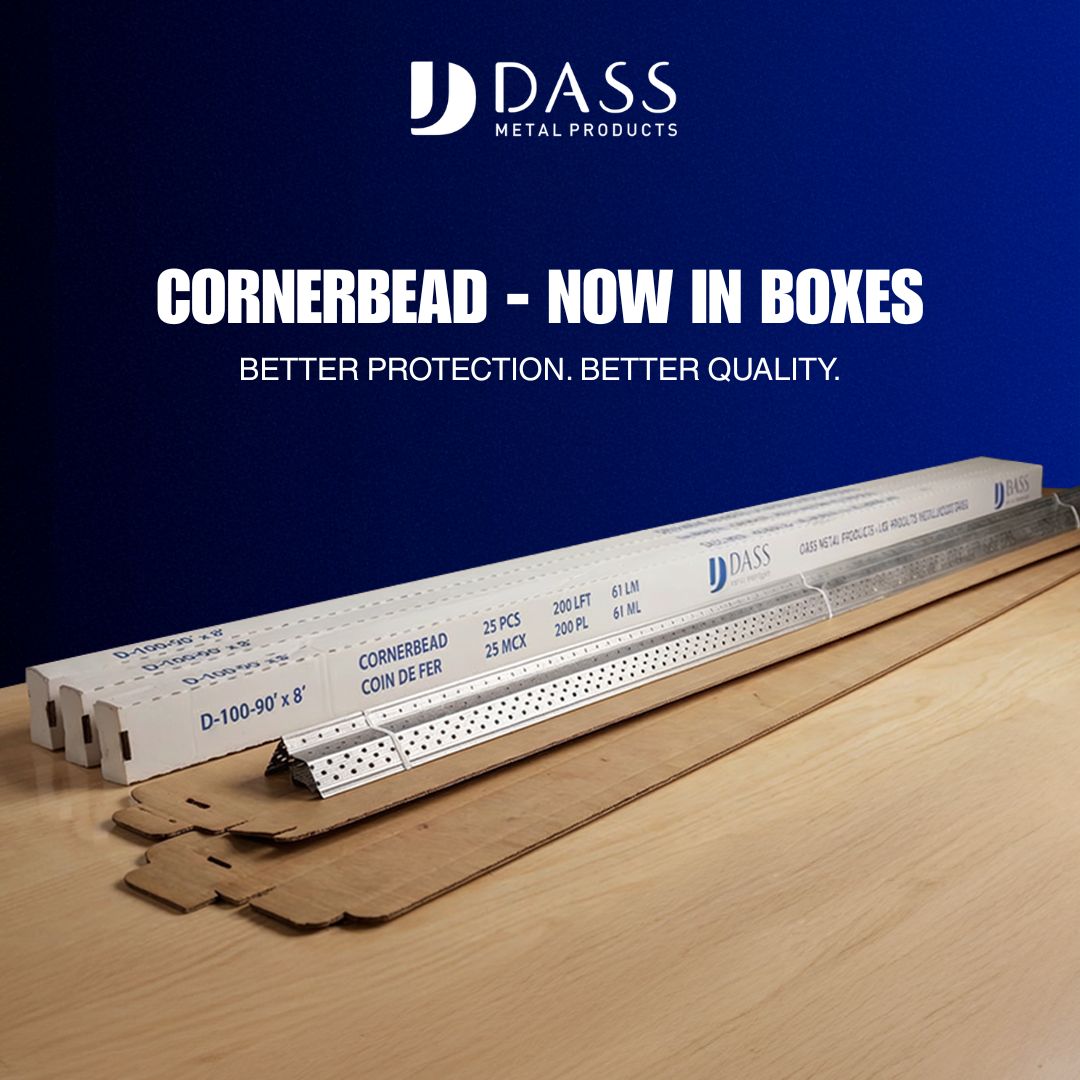
Light gauge steel framing is cold-formed, galvanized steel used to build non-load-bearing partitions and select structural assemblies. At Dass Metal Products in Vaughan, ON, at 370 New Enterprise Way, we engineer and supply code-aligned studs, tracks, channels, and trims—backed by CSSBI standards and load tables—to help contractors frame faster with reliable, consistent performance.
By Navjot Dass • Last updated: 2026-04-28
Start Here: Hook and Table of Contents
Light gauge steel framing accelerates fit-outs and improves consistency by using precision-rolled studs, tracks, and channels that arrive straight, true, and ready to install. Use this guide to understand components, best practices, tools, and real-world examples so your next project frames cleanly, passes inspection, and stays on schedule.
If you build interiors, curtain walls, or shaftwalls, this guide distills the essentials into practical steps. It’s written for builders, drywall and framing contractors, architects, and specifiers who want clarity without fluff.
- What is light gauge steel framing?
- Why light gauge framing matters
- How light gauge framing works
- Types, methods, and approaches
- Best practices that prevent rework
- Tools, submittals, and resources
- Case studies and field examples
- Frequently asked questions
- Conclusion and next steps
Overview
Light gauge steel framing uses cold-formed steel studs and tracks (typically 25–20 gauge for interiors) to create straight, stable walls and ceilings. It reduces shrinkage, resists warping, and installs quickly with screws and anchors. Designers can meet acoustic, fire, and deflection targets using tested assemblies and purpose-made accessories.
In our experience supporting contractors across Canada and the U.S., the quickest wins come from standardizing around proven assemblies and verified load tables. That keeps inspections smooth and change orders minimal.
Local considerations for 370 New Enterprise Way
- Plan deliveries to align with busy site windows around Vaughan projects, and stage studs and track near the hoist to shorten handling paths.
- Winter humidity swings can affect drywall; pair resilient channel and proper vapor control to protect acoustic and finish performance in colder months.
- For mixed-use shells common in the region, specify slotted deflection track to absorb floor movement and prevent drywall cracking at heads.
What Is Light Gauge Steel Framing?
Light gauge steel framing is a cold-formed steel system for interior partitions, soffits, ceilings, and select exterior framing. It relies on thin, high-strength, galvanized C-studs, paired with tracks and channels, to create straight, code-compliant assemblies that resist warping and install rapidly with screws.
At its core, light gauge framing replaces dimensional lumber with precision-rolled metal components. Common members include C-studs, standard track, deep track, slotted deflection track, resilient channel, bridging/carrying channel, furring channel, and accessory clips. Typical stud spacing is 16 inches on center for standard partitions and 24 inches for lighter-duty conditions—always verify against design and tested assemblies.
Differentiating interior non-load-bearing from load-bearing matters. Non-load-bearing walls typically use lighter gauges (e.g., 25–20 ga for studs) to carry drywall and lateral loads. For structural needs, see our load bearing stud framing system which employs heavier sections engineered to carry axial loads and wind or seismic forces.
For teams seeking a concise product view, our light gauge steel studs overview outlines profiles, gauges, and compatible trims that help you choose the right member quickly.
Core components and where they fit
- C-studs: Primary vertical members. Available in multiple gauges and flange widths for stiffness and service routing.
- Standard track: The U-shaped runner at floor and head where studs seat. Choose leg height to match deflection requirements.
- Slotted deflection track: Accommodates vertical building movement at the head to prevent cracking.
- Deep track: Adds bearing area or accommodates tolerances at slab edges and headers.
- Bridging/carrying channel: Controls stud twist and buckling; also used to suspend ceilings.
- Resilient channel: Decouples gypsum to improve STC ratings in acoustic partitions.
- Furring channel: Levels uneven substrates and supports cladding or ceiling finishes.
- Clips and accessories: Deflection side clip, webslide clip, bridging clip, and windbrace tailor performance.
Why Light Gauge Framing Matters
Light gauge framing matters because it speeds installation, improves dimensional stability, and supports predictable acoustic, fire, and deflection performance. It helps contractors hit schedules and pass inspections the first time by using straight, consistent components engineered to standards with documented load data.
Consistency is the quiet superpower here. Steel studs don’t warp, shrink, or split, so framing lines stay true and finishes stay flat. That reduces rework and finish waves. In multi-tenant buildings, resilient channel and proper insulation can help partitions reach STC 50+ when paired with tested drywall assemblies. Head-of-wall deflection details keep cracks at bay when floors move under load.
From a lifecycle view, cold-formed steel is highly recyclable, and its predictable dimensions simplify off-site prefabrication. Coordinating framing packages with complete metal framing systems allows crews to standardize fasteners, clips, and installation sequences—time you’ll feel immediately in production rates.
When to choose steel over wood
- High linear footage: On projects with long corridors and repetitive rooms, steel’s straightness accelerates layout and board install.
- Tight tolerances: Hospitals, labs, or millwork-heavy interiors benefit from dimensional stability and precise reveals.
- Acoustics and fire: Steel pairs cleanly with acoustic decoupling and fire-rated assemblies.
- Moisture exposure: In basements or humid zones, galvanized framing resists swelling and biological growth.
How Light Gauge Framing Works
Light gauge systems use cold-formed steel shapes seated in tracks, fastened with self-drilling screws, and braced with channels or clips. Designers set stud size, gauge, and spacing by span and loading; installers plumb studs, secure bridging, and complete gypsum layers per tested assemblies for fire and sound.
Design begins with spans, heights, and performance targets. Stud depth and gauge scale with wall height; increased flange width improves stiffness. For example, a 3-5/8 inch, 25-gauge stud suits many 8–10 foot partitions, while 20-gauge or deeper studs may be specified for higher walls or tile backing. Stud spacing (often 16 inches on center) interacts with gypsum thickness and layer count.
At the head, slotted deflection track lets floors move without transferring loads into the wall. For long corridors, periodic bridging channel (or flat straps) restrains studs from rotation and buckling. Acoustic walls use resilient channel or double-stud framing to break vibration paths. Always confirm published load tables and assembly listings before finalizing details.
Typical installation sequence
- Layout: Snap lines and locate openings; verify clearances and MEP coordination.
- Tracks: Anchor bottom track; install standard or slotted head track per deflection needs.
- Studs: Cut to height, rotate into tracks, plumb, and screw per spec (fastener pattern matters).
- Bridging: Install carrying/bridging channel or flat straps at prescribed intervals.
- Accessories: Add clips (deflection side clips, webslide clips), furring, and windbrace as designed.
- Boarding: Hang gypsum per tested assembly; stagger seams where required; add resilient channel if specified.

Design signals that influence selection
- Wall height and loads: Taller partitions and door jambs often move to heavier gauges or deeper studs.
- Acoustic target: STC 50+ suggests resilient channel, insulation, and potentially double layers of gypsum.
- Head movement: Use slotted deflection track and compatible clips to meet drift/deflection.
- Finish type: Heavy tile or stone calls for stiffer framing and fastener patterns.
Types, Methods, and Approaches
Light gauge systems include non-load-bearing interior studs, heavier load-bearing studs, and specialized accessories: standard track, slotted deflection track, deep track, bridging channel, resilient channel, furring channel, windbrace, and purpose-made clips. Each addresses stiffness, movement, or acoustics to create predictable results.
Dass Metal’s catalog covers interiors, exterior structural framing, and finishing trims so you can match parts to purpose. For non-structural partitions, see our non-load-bearing studs. For axial capacity, our load-bearing stud framing system scales profiles and section properties to structural demand.
Common components at a glance
| Component | Primary Role | When to Use |
|---|---|---|
| Standard track | Seat studs at floor/head | Typical partitions without movement requirements |
| Slotted deflection track | Allow vertical movement | Head-of-wall where floor deflection/drift is expected |
| Deep track | Extra bearing/tolerance | Irregular slabs or where added engagement is desired |
| Bridging channel | Lateral restraint | Long studs, tall walls, or corridor runs |
| Resilient channel | Acoustic decoupling | STC-driven partitions and ceilings |
| Furring channel | Leveling/support | Ceilings, cladding over uneven substrates |
| Deflection side clip | Slip connection | Where screws must not lock head to structure |
| Webslide clip | Adjustable connection | Fine-tuning alignment or movement |
| Windbrace | Diagonal bracing | Resist lateral loads in select assemblies |
Stud gauge and application guide
- 25 gauge: Utility partitions, soffits, short walls; verify board weight and service openings.
- 22–20 gauge: Standard commercial partitions, higher walls, tile backing zones.
- Structural profiles: Coordinate with engineering for axial/lateral design when loads govern.
Best Practices That Prevent Rework
Prevent rework by confirming assembly listings, using slotted tracks at heads, installing bridging on schedule, and sequencing MEP to avoid stud notching. Standardize fasteners and clips; document deflection requirements on shop drawings so field crews know where slip connections are mandatory.
We’ve found that clear, visual shop drawings plus labeled bundles reduce questions on site. Here are practices that consistently protect schedule and finishes:
Field-proven framing tips
- Label deflection conditions: Mark all head-of-wall slip locations; use compatible screws and slots.
- Stiffen openings early: Frame jambs/headers before long corridor runs to control alignment.
- Bridge before boarding: Install bridging or straps at the first prescribed interval—don’t push to the end.
- Acoustic discipline: Keep resilient channel screws out of studs; seal perimeters with acoustical sealant.
- Fastener consistency: Use specified self-drilling screws; verify length for multi-layer gypsum.
- Edge distances: Maintain minimum screw edge distances to preserve capacity.
For bracing strategies that hold up in the field, see our steel frame bracing guide. And to avoid punch-list spirals, review our notes in interior wall framing mistakes before mobilizing.
Tools, Submittals, and Resources
Use manufacturer load tables, product brochures, and standards to drive selection and submittals. Provide shop drawings that flag head-of-wall slip, bridging intervals, and acoustic details. Field teams need the right drivers, snips, levels, and anchors to keep production tight and inspections smooth.
Dass Metal supports teams with product brochures, standards, MSDS, and load tables in metric and imperial. These documents accelerate submittals and make inspector conversations factual. Many crews also benefit from a quick reference to metal framing systems—we maintain a concise systems guide that ties components to use cases.
Essential tools for installers
- Measuring/layout: Laser, tape, plumb bob, levels, and chalk lines.
- Cutting/forming: Aviation snips, chop saw with appropriate blade, hand seamer.
- Fastening: Screw guns with clutch, self-drilling screws, powder or gas anchors as specified.
- Safety: PPE appropriate to the site, hearing protection, gloves with good dexterity.
Coordinating with adjacent scopes matters too. For example, foundation and podium steel coordination is easier when your rebar partner speaks the same language. Explore practical background in this foundation rebar guide and this footing rebar overview if you’re bridging structural and interior scopes.
Soft CTA: Need submittal-ready specs or a quick takeoff on studs, tracks, and channels? Our engineering team can align profiles and gauges to your drawings—reach out for a consult via our website.
Case Studies and Field Examples
The best proof is what crews build. Here are condensed examples showing how slotted deflection track, resilient channel, and smart gauge selection prevented cracks, hit STC targets, and kept corridors laser straight—while meeting inspector expectations the first time.
Healthcare tenant improvement: A clinic retrofit demanded flat wall finishes for millwork and high-STC partitions near exam rooms. We standardized on 3-5/8 inch, 20-gauge studs at 16 inches on center, resilient channel on one side, and sealed perimeters. The GC reported consistent STC performance across rooms with reduced touch-ups.
Mixed-use corridor: Long corridor walls over a moving slab edge risked head-of-wall cracking. Slotted deflection track with deflection side clips created slip at the head, and bridging channel kept studs from twisting. The finish team noted clean reveals down a 120-foot line.
Shell-to-core coordination: On a mid-rise, exterior cold-formed framing had to align with interior shafts and services. Deep track at slab edges accommodated tolerances, while windbrace stiffened select bays. Coordination with a rebar partner simplified anchor locations and inspection dialogue; for background, see this practical note on 10M rebar uses.

Lessons learned you can reuse
- Confirm slip details on every movement joint—missing one head-of-wall slot invites cracking later.
- Bridge early on tall studs; it’s faster to install before services crowd the plenum.
- Protect acoustic intent during board install; the wrong screw in the wrong flange can drop STC several points.
Frequently Asked Questions
These short answers cover the questions we hear most about light gauge steel framing—from gauges and spacing to acoustic details and deflection. Use them to brief your team or as a quick reference during layout and inspection.
What gauges are typical for interior light gauge steel studs?
Most non-load-bearing interior partitions use 25 to 20 gauge studs, selected by wall height, finish weight, and spacing. Taller walls, tile, or high-traffic areas often move to 20 gauge. Always verify against published load tables and the tested assembly.
When should I use slotted deflection track?
Use slotted deflection track at the head of walls where vertical floor movement or drift is anticipated. The slot allows the structure to move without loading the partition, protecting gypsum finishes from cracking at the ceiling line.
How does resilient channel improve sound ratings?
Resilient channel decouples the drywall from the framing, interrupting vibration paths. When combined with insulation and the correct gypsum arrangement, it can help partitions achieve STC 50 or higher, depending on the tested assembly. Screw placement is critical to maintain decoupling.
What spacing should I use for studs?
Contract documents typically call for 16 inches on center for commercial partitions, though 24 inches is used in lighter-duty conditions. Spacing interacts with stud gauge, wall height, and gypsum layering, so confirm against manufacturer tables and the specific assembly.
Conclusion and Next Steps
Light gauge steel framing streamlines construction with straight, stable components and documented performance. Standardize around tested assemblies, confirm head-of-wall slip where needed, and use bridging and acoustic details correctly. The result is cleaner inspections, flatter finishes, and fewer callbacks.
Here’s how to move forward with confidence:
- Use our non-load-bearing studs for interiors and pair with the right channels and trims.
- For structural demands, coordinate early on our load-bearing system.
- Bookmark our light gauge framing tag for updates, guides, and field tips.
Key takeaways
- Choose gauge and spacing by height, finish weight, and assembly.
- Protect finishes with slotted deflection track at heads where movement is expected.
- Use resilient channel carefully to preserve acoustic performance.
- Bridge early and document details on shop drawings to prevent rework.
Ready to align specs with submittal-ready details? Our engineering team in Vaughan supports projects across Canada and the U.S. with CSSBI-aligned products, dependable delivery, and personalized guidance.