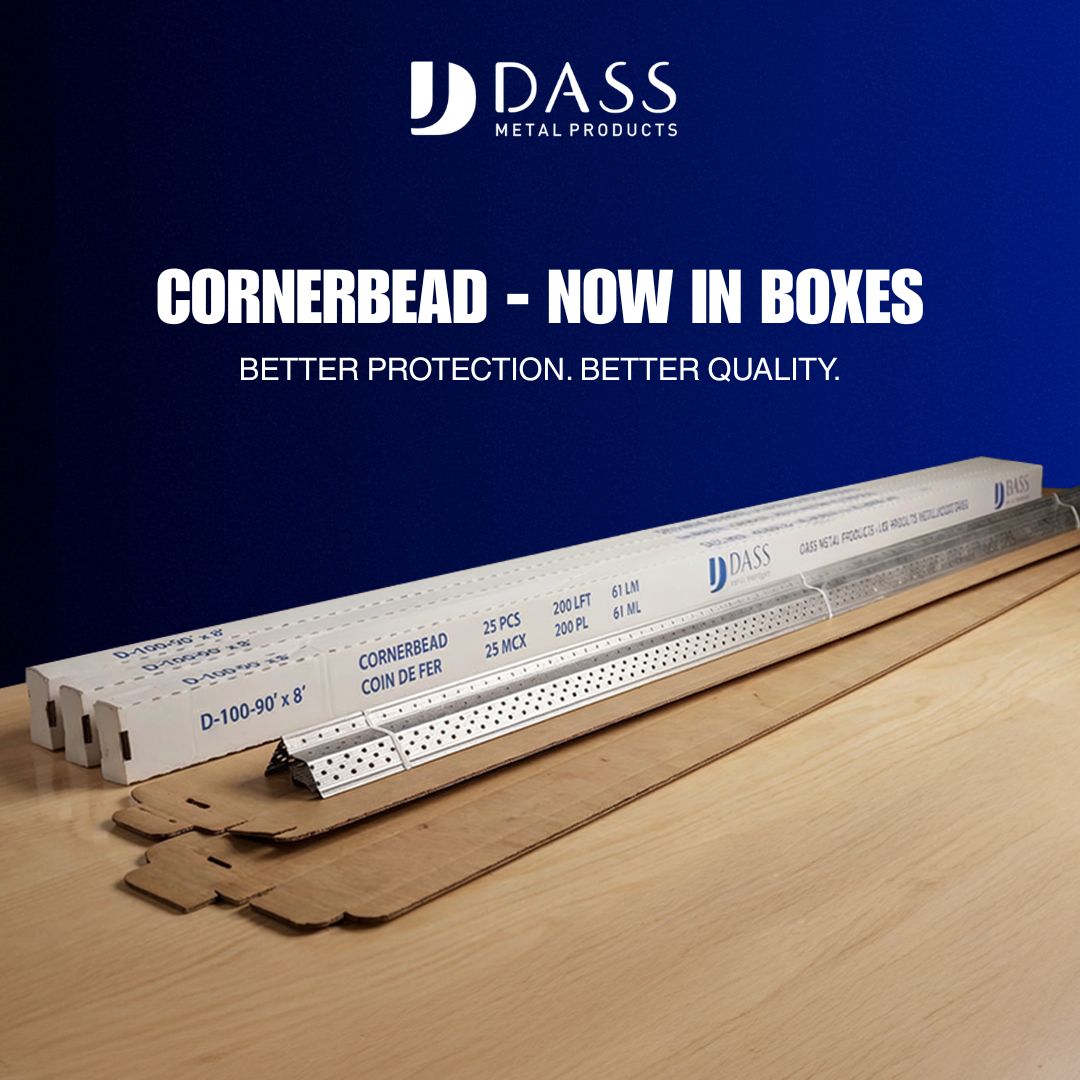
Metal lath is a sheet- or wire-based reinforcement and plaster base used in selected plaster, stucco, mortar, and finish assemblies. The right choice depends on the finish system, substrate, rigidity, exposure, attachment method, accessories, and project documents. “Metal lath” alone is not enough information for a reliable supply quote.
This guide explains the material, compares common configurations, and turns project information into a supplier-ready request. It also separates general selection guidance from Dass Metal Products’ verified public range, which focuses on steel studs, tracks, channels, drywall accessories, and related metal products.
What Metal Lath Is Used For
Metal lath gives plaster, stucco, mortar, or another finish a shaped base that attaches to a supporting assembly. Its openings and profile allow finish material to key around or against the lath, helping span and reinforce the surface between attachment points.
Metal lath is not interchangeable with every wire mesh or framing component:
- Metal lath: a plaster or finish base, commonly formed from expanded sheet metal or wire-based configurations.
- Welded wire mesh: a welded grid used for reinforcement or other specified applications. Wire diameter, opening pattern, format, and fabrication details determine suitability.
- Reinforcing mesh: a broad term that does not identify a particular lath configuration.
- Steel studs and tracks: framing components that create wall, ceiling, or partition geometry. They are not substitutes for a finish base unless the designed assembly says otherwise.
- Channels and drywall accessories: components for support, furring, acoustic separation, edges, transitions, or finishing. They solve different problems from metal lath.
For example, “supply metal lath for an interior wall” leaves too many decisions open. A clearer hypothetical request identifies the finish, substrate, lath configuration, material or coating, sheet format, quantity, attachment requirements, accessories, documentation, and delivery location.
If the intended product is welded wire mesh, describe its geometry and fabrication requirements instead of using lath as a general synonym. A welded wire mesh specification checklist can help separate mesh supply from fabricated mesh requirements.
Compare Metal Lath Types Before You Request a Quote

Choose the lath configuration from the finish and assembly first, then verify the exact dimensions, profile, material, and coating. Product names such as diamond mesh or rib lath are starting points, not substitutes for project documents or a tested assembly.
| Lath configuration | Where it may fit | What to evaluate |
|---|---|---|
| Expanded diamond mesh | Specified plaster, stucco, or mortar base applications | Sheet size, opening pattern, thickness or weight, coating, laps, attachment, and finish compatibility |
| Flat rib lath | Applications requiring a formed rib or stiffening feature | Rib geometry, dimensions, thickness or weight, orientation, support spacing, and finish system |
| Self-furring lath | Assemblies requiring stand-off from the substrate | Stand-off measurement, substrate, drainage or ventilation, fasteners, exposure, and accessories |
| Welded-wire lath | Specified assemblies calling for welded woven wire fabric | Wire size, opening pattern, sheet or roll format, support spacing, attachment, and documentation |
| Specialty stainless-steel lath | Locations where corrosion exposure or the specification justifies it | Alloy, exposure, adjacent materials, fastener compatibility, finish, cost, and documentation |
Match the profile to the assembly
Use expanded diamond mesh when the drawings or finish specification call for that plaster base. Consider flat rib or another stiffened profile only when its geometry, support conditions, and finish system are appropriate. A rib is not automatically a substitute for heavier gauge, closer support, or engineered backing.
Self-furring lath is selected for its stand-off, not simply because it is marketed as stronger. The space behind it can affect attachment, drainage, moisture management, finish thickness, and transitions around openings.
Verify these details before requesting a quote:
- Expanded, ribbed, self-furring, welded-wire, or specialty configuration
- Sheet, panel, or roll format
- Length and width
- Material thickness, gauge, or weight designation
- Stand-off measurement or rib profile, where applicable
- Galvanized, stainless, or another specified material or coating
- Required laps, edges, openings, bends, patches, or fabricated shapes
- Finish system, substrate, support spacing, and attachment requirements
Do not fill in missing dimensions from a familiar product name. Sheet size, profile, gauge, weight, and rib depth vary by product line and assembly, so use project documents and current supplier data.
Galvanized or Stainless Steel: Choose the Material for the Exposure
Galvanized metal lath is commonly considered for ordinary construction conditions because its coating provides corrosion protection suitable for many specified assemblies. Stainless steel becomes more relevant where moisture, salts, chemicals, persistent condensation, or the project specification creates a higher corrosion concern.
Review exposure, finish material, substrate, adjacent metals, fasteners, drainage, and service environment as one assembly. Stainless steel may suit wet rooms, coastal or salt-exposed environments, chemical-service areas, or projects that specifically require higher corrosion resistance. The alloy still needs to match the exposure, and “stainless” is not a complete specification.
Stainless steel usually costs more. Compare the exposure risk and project requirement against upgrading the lath, fasteners, accessories, and related components together.
Fasteners Depend on the Substrate and Assembly

There is no universal screw for metal lath. Attachment depends on the substrate, lath configuration, finish system, embedment, corrosion environment, support spacing, and approved project detail.
- Steel framing: verify framing thickness, screw type, edge distance, spacing, and whether the lath attaches directly or through another layer.
- Wood framing: confirm fastener length, penetration, corrosion resistance, washers, and specified spacing.
- Masonry or concrete: use an attachment method designed for that substrate, including anchor type, embedment, spacing, and installation limits.
- Existing or mixed substrates: identify each attachment zone separately. One fastener schedule may not work across steel, wood, masonry, insulation, and sheathing.
The project specification, tested assembly, designer, or lath manufacturer’s installation documentation controls the final selection. Confirm that the fastener head or washer does not damage the lath, the attachment provides required support, and fastener materials are compatible with the lath and exposure.
Follow the applicable product and site safety documentation for cutting and handling metal lath.
Coordinate Accessories With the Finish System

Accessories belong at transitions and movement points, not automatically in every lath order. Review drawings and finish details where lath must terminate, change direction, accommodate movement, or manage water.
- Patches: localized openings, damaged areas, or permitted repairs.
- Corner accessories: outside corners and formed edges requiring a defined finish line.
- Expansion or control joints: movement, long runs, substrate changes, or designed joints.
- Screeds and casings: finish terminations, thickness transitions, openings, or clean edges.
- Weeps and water-management components: drainage paths or controlled exterior terminations.
- Transition pieces: intersections with another finish, material, plane, opening, or movement zone.
An ordinary interior partition may need corner or termination accessories without exterior drainage components. An exterior or moisture-exposed wall may require water-management details that cannot be replaced by choosing corrosion-resistant lath.
Verify Documents, Standards, and Code Context
Request product data, installation instructions, material and coating information, submittals, applicable standards, and fire- or performance-related documentation as the project requires.
Ontario’s 2024 Building Code Compendium names expanded metal lath or welded woven wire fabric in a specific fire-performance context. The cited passage describes support on 19 mm vertical light steel studs spaced not more than 610 mm on centre, with plaster applied to both sides. It is not a universal specification for every lath application. Review the applicable Ontario fire-performance context against the complete tested or designed assembly before ordering.
Dass Metal’s standards documentation references structural performance, STC, ULc fire classifications, and ASTM standards for steel, coatings, installation, and trims. These references support review of its documented steel framing and related products, not confirmation that an unlisted metal lath meets a particular assembly.
Prepare a Complete Metal Lath Supply Request
A complete request lets a supplier price the intended material instead of guessing from “metal lath.” Include:
- Project and delivery: location, delivery window, site contact, receiving hours, unloading equipment, access restrictions, and phased-delivery needs.
- Application: plaster, stucco, mortar, repair, interior finish, exterior finish, fire-rated assembly, or another defined use.
- Substrate and support: steel, wood, masonry, concrete, sheathing, insulation, existing construction, support spacing, and backing.
- Lath configuration: expanded diamond mesh, flat rib, self-furring, welded-wire, or specified specialty type.
- Product details: format, dimensions, thickness, gauge or weight, profile stand-off, material, coating, edge condition, and laps.
- Quantity: net area, sheets or rolls, waste allowance, openings, patches, and separate wall or ceiling quantities.
- Accessories: corners, joints, screeds, casings, weeps, water-management components, patches, trims, and transitions.
- Attachment: specified fastener, spacing, substrate zones, and controlling assembly detail.
- Documentation: product data, installation instructions, coating information, submittals, standards, and fire-performance evidence.
- Alternates: whether substitutions are permitted and which characteristics must remain unchanged.
A hypothetical RFQ might begin: “Please quote expanded diamond metal lath for a plaster finish over steel framing at an interior commercial project. Provide available sheet format, material thickness or weight, coating, attachment guidance for the specified substrate, accessory options, product data, delivery availability, and acceptable alternates.” Drawings would supply the exact area, support spacing, finish, and assembly requirements.
From Product Selection to Availability and Delivery
Use this procurement sequence:
- Read the drawings, finish schedule, wall sections, and specification.
- Define the finish assembly, substrate, exposure, and movement conditions.
- Choose the lath category and identify dimensions and material details to verify.
- Coordinate attachment, corners, joints, terminations, drainage, and accessories.
- Request product data, submittals, standards information, and required fire or performance documentation.
- Confirm availability, packaging, quantity, delivery window, and receiving requirements.
- Review substitutions against the same finish, exposure, profile, attachment, and documentation requirements.
- Approve the final submittal before releasing the order and scheduling delivery.
Dass Metal’s verified public information covers light- and heavy-gauge steel framing, studs, tracks, channels, drywall accessories, and custom profiles. Its website states that it supports delivery across Canada and the United States, but the published product range does not confirm that Dass Metal currently manufactures or stocks metal lath. Verify metal lath availability, substitutions, documentation, and delivery directly.
For projects combining lath-related work with interior framing, review the broader metal framing system selection process so studs, tracks, channels, and movement details are coordinated.
Metal Lath Supply Questions Buyers Still Need to Resolve
Can metal lath be used instead of welded wire mesh?
Not automatically. They have different configurations and may serve different roles in a designed assembly. Use the product named in the drawings, specification, or tested assembly, and obtain approval before proposing a substitute.
What fasteners should be used for metal lath?
The correct fastener depends on substrate, lath type, finish system, corrosion exposure, embedment, spacing, and the approved attachment detail. Select it from project documents and installation instructions.
Do all metal lath projects need expansion joints, screeds, or weeps?
No. These accessories depend on finish, geometry, movement, terminations, openings, and moisture-management design. Interior work may need corners, joints, or clean terminations without exterior drainage components.
When is stainless steel lath worth specifying instead of galvanized lath?
Stainless steel deserves consideration where corrosion exposure is elevated or the project specification requires it. Compare exposure, adjacent materials, fasteners, finish, and documentation as a complete assembly.
What information should be included in a metal lath supply request?
State the application, finish, substrate, configuration, dimensions, thickness or weight, rib or stand-off depth, material or coating, quantity, accessories, attachment conditions, documents, substitutions, delivery window, and receiving limits.
Does Dass Metal Products supply metal lath?
The verified public information confirms Dass Metal Products’ steel studs, tracks, channels, drywall accessories, and custom-profile capabilities. It does not confirm current metal lath manufacture or stock, so ask Dass Metal to verify whether it can supply the specified lath or support a related framing requirement.
Once the finish assembly and quote details are defined, Dass Metal Products can be approached about related steel framing, drywall accessory, or custom-profile requirements. Its metal product range is the appropriate starting point for confirming documented capabilities and discussing project scope.