Steel framing accessories are the supporting components that connect, stabilize, accommodate movement in, finish, or acoustically improve a steel stud framing assembly. They include tracks, channels, clips, bracing, furring products, drywall finishing sections, and specialty profiles.
The right accessory depends on the framing system and project detail. Standard track is not interchangeable with slotted deflection track, and resilient channel serves a different purpose from bridging channel. Understanding these distinctions helps builders, contractors, and specifiers coordinate a complete metal framing assembly before ordering.
What Are Steel Framing Accessories?
Steel framing accessories are components used alongside steel studs to make a framing system work as designed. They help form connections, create perimeter conditions, accommodate building movement, maintain alignment, provide reinforcement or bracing, support acoustic detailing, and produce clean drywall or finish transitions.
The term covers several product families rather than one standardized item. A project may require standard track, slotted deflection track, bridging channel, clips, furring channel, finishing trim, and specialty profiles. Selection is governed by the drawings, specifications, framing design, and conditions at each interface.
Dass Metal Products supplies components for interior and exterior framing, including steel studs, tracks, channels, clips, and drywall finishing trims. Its range includes options for light gauge steel framing, load bearing stud framing, acoustic detailing, furring, and finishing.
Steel Framing Accessories by Function

Organizing accessories by function is more useful than treating them as an undifferentiated catalogue.
Connection and perimeter support
Track provides a receiving or perimeter component for steel studs and helps define the edges and interfaces of a framed assembly. Standard track products and related framing components may be relevant at floor, ceiling, wall, or other connection conditions, subject to the project design.
Other connection and edge-related products include clips, connectors, L track, J track, utility angles, and similar profiles. Their suitability depends on the detail being built, adjoining materials, and specified connection method. A product name alone does not establish how it should be installed.
Movement and deflection components
Some framed assemblies must accommodate movement at a floor, roof, ceiling, or other building interface. Slotted deflection track is a distinct track category for conditions where movement accommodation is part of the detail. It should not automatically be substituted for standard track.
Movement allowances, attachment locations, fasteners, and installation details must follow project drawings, specifications, and applicable product documentation. For a conceptual comparison, review how standard steel track and slotted deflection track differ.
Deep track for specific framing conditions
Deep track is another distinct track category. Its suitability depends on the stud arrangement, interface detail, and specification. It should be selected for a defined application rather than simply because it appears to provide more material.
Compare the track profile with the framing layout and confirm the intended use with the design team or supplier. Dass Metal’s resource on deep track applications provides additional context.
Alignment, bridging, and reinforcement
Bridging or carrying channel, windbrace, flat strips, bridging clips, and related components help coordinate and stabilize portions of a steel stud framing system. The appropriate product depends on the framing arrangement and the role identified in drawings or engineering information.
Do not assign these products a universal capacity or installation method. Verify the profile, gauge, connection detail, spacing, and quantity for the specific assembly. See bridging channel uses in steel framing for further context.
Acoustic-oriented accessories
Resilient channel is an acoustic-oriented accessory used as part of a specified wall or ceiling assembly. Its suitability depends on the complete assembly, including studs, boards, connections, cavities, and other materials.
It should be evaluated as one component of the intended construction, not as a standalone sound-performance guarantee. Review the product information for resilient channel and confirm the assembly requirements with the project team.
Furring, finishing, and edge details
Furring and finishing products address the transition from framing to the finished surface. Furring channel and Z-Bar may be used where the design calls for secondary support or furring. Selection depends on the substrate, layout, clearance, and finish detail.
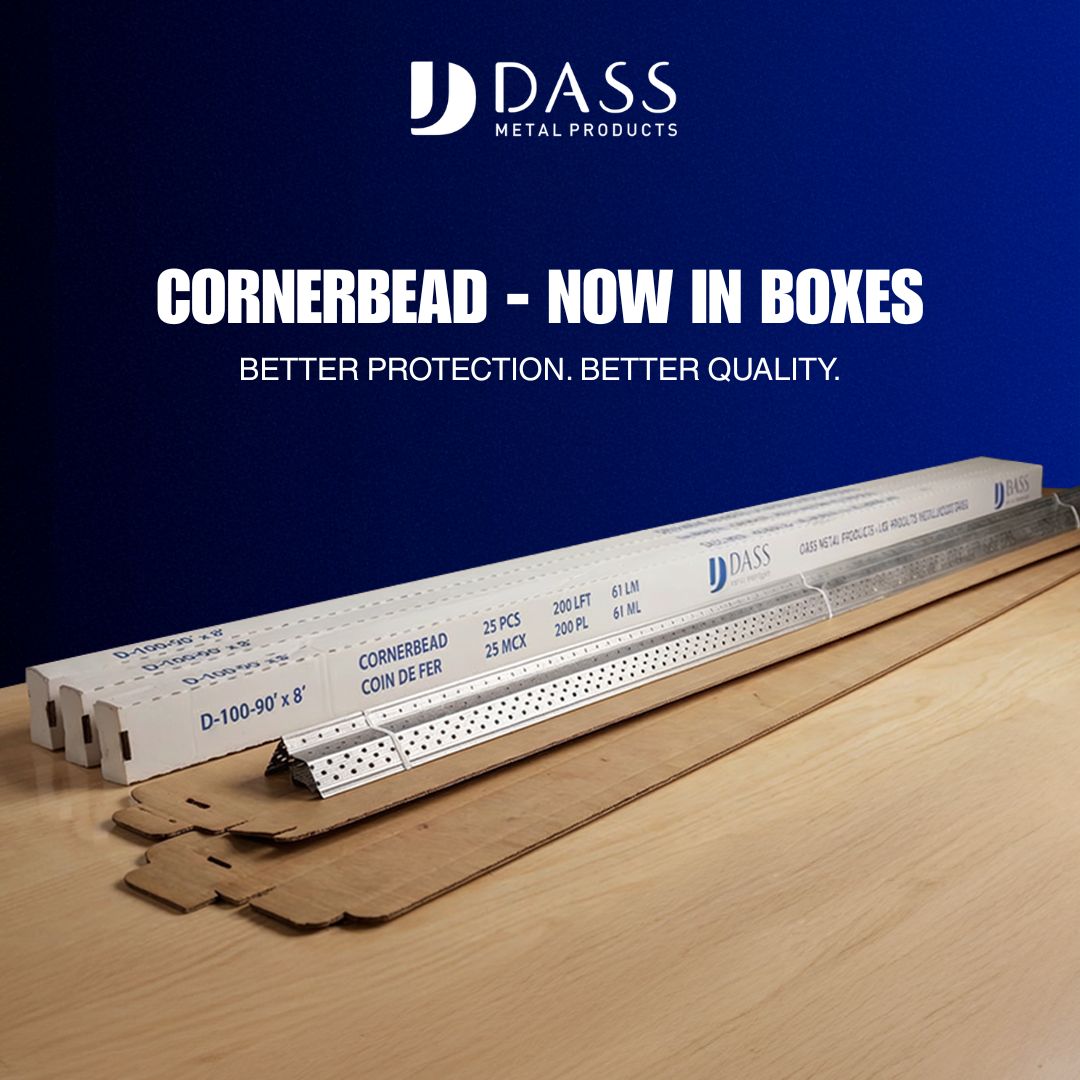
Drywall finishing sections include 90°/130° cornerbead, L trim, J trim, J track, and related edge profiles. These components help form, protect, or finish exposed edges and transitions. Flat strips and utility angles may also be specified for particular details.
Review Dass Metal’s information on furring channel and Z-Bar, then match the profile to the actual finish detail rather than selecting by name alone.
Clips, connectors, and specialty profiles
Clips and specialty profiles are selected for specific interfaces or construction conditions. The range may include deflection side clips, Webslide clips, bridging clips, U-Flex track, shaftwall or CH studs, hanger wire, tie wire, and special profiles.
Confirm the intended stud and track combination, connection detail, and required movement or alignment function before ordering. Product-specific information is available for U-Flex track and Webslide clips.
Which Accessory Category Fits the Project Requirement?
This table is a starting point for discussion with the design team and supplier. It does not replace drawings, specifications, engineering, or product documentation.
| Project requirement | Category to review | Confirm |
|---|---|---|
| Perimeter or basic framing connection | Standard track, clips, connectors, L track, or J track | Stud profile, interface, dimensions, and connection method |
| Movement or deflection | Slotted deflection track or related clips | Movement allowance, attachment detail, and specification |
| Deeper or specialized track condition | Deep track or specified track profile | Stud arrangement, profile dimensions, and application |
| Alignment, carrying, or stability | Bridging channel, windbrace, flat strips, or bridging clips | Design role, layout, connections, and quantities |
| Acoustic-oriented wall or ceiling detail | Resilient channel | Complete specified assembly and installation requirements |
| Secondary support or furring | Furring channel, Z-Bar, or related profiles | Substrate, clearance, layout, and finish interface |
| Surface edges and drywall transitions | Cornerbead, L trim, J trim, J track, or finishing sections | Edge geometry, finish material, and profile dimensions |
| Shaftwall or unusual geometry | CH studs, U-Flex track, or custom profiles | Drawings, clearances, compatibility, and fabrication feasibility |
Start With the Framing System, Not the Accessory
Accessory selection should follow the underlying steel stud framing system. A project using non-load-bearing light gauge steel studs has different design considerations from one using a heavy-gauge load-bearing stud framing system. Stud type, design loads, movement conditions, and assembly details influence the supporting products.
Dass Metal supplies both light-gauge non-load-bearing steel studs and a heavy-gauge load-bearing stud framing system. Establish which system the project requires before selecting track, channels, or clips. The resource on load-bearing and non-load-bearing light gauge steel framing systems can help clarify the distinction.
Pre-Order Checklist for Steel Framing Accessories
Prepare the following information before requesting a quote or placing an order:
- Project location: Identify whether delivery is required in Ontario, elsewhere in Canada, or the United States.
- Framing use: State whether the application is interior framing, exterior structural framing, shaftwall, furring, finishing, or another condition.
- Framing system: Confirm whether the assembly uses light-gauge non-load-bearing studs or heavy-gauge load-bearing framing.
- Profiles and dimensions: Provide specified stud, track, channel, clip, trim, or specialty profile dimensions and material requirements.
- Movement requirements: Identify deflection or other movement conditions and the specified allowance.
- Accessory function: Describe whether the component is for connection, alignment, reinforcement, acoustic detailing, furring, finishing, or a specialty interface.
- Compatibility: Confirm that it matches the specified studs, tracks, boards, substrate, and connection detail.
- Quantities: Provide takeoff quantities, lengths, and any project allowances.
- Documents: Share relevant drawings, specifications, schedules, load information, and details.
- Custom requirements: Identify unusual geometry, non-standard dimensions, or custom-profile needs early.
Documentation, Engineering, and Custom Profiles
Technical documentation supports accessory selection and coordination. Dass Metal provides product brochures, metric and imperial load tables, standards, and MSDS documentation. Match each document to the product and project rather than treating references as interchangeable.
Dass Metal also describes engineering support backed by more than 40 years of steel framing experience and the ability to produce custom profiles to project specifications. Custom fabrication still requires confirmation of the design, dimensions, quantities, material, and feasibility.
The company identifies its products as Canadian-made and highlights CSSBI certification as part of its quality approach. Certification and documentation support procurement review, while the design team remains responsible for confirming suitability for the particular assembly and jurisdiction. Learn more on the Dass Metal Products About Us page.
Frequently Asked Questions
Are steel framing accessories separate from steel studs and track?
They are generally described as supporting components used with studs and track. The term includes multiple product families, such as channels, clips, bracing, furring products, acoustic components, and finishing trims.
How do standard track, slotted deflection track, and deep track differ?
They are distinct track categories intended for different framing conditions. Standard track supports basic perimeter or connection conditions, slotted deflection track is associated with designed movement accommodation, and deep track is selected for particular profile or interface requirements. The project specification determines which is appropriate.
Which accessories support acoustic detailing?
Resilient channel is the accessory in Dass Metal’s range most directly associated with acoustic-oriented detailing. Its performance depends on the complete specified wall or ceiling assembly, not the channel alone.
What information should I provide when requesting a quote?
Provide the project location, application, framing system, exact profiles and dimensions, movement requirements, quantities, drawings or specifications, delivery needs, and any custom-profile requirements.
Can steel framing accessories be made to a custom profile?
Dass Metal describes the ability to produce custom profiles to specification. Confirm geometry, material, dimensions, quantities, documentation, and fabrication feasibility with the supplier before relying on a custom solution.
What to Confirm With a Supplier
- Is the exact profile, dimension, and material available for the specified framing system?
- Does it match the movement, connection, acoustic, furring, or finishing requirement?
- Which technical documents apply?
- Are quantities and lengths clear, including custom fabrication?
- Can delivery be coordinated to the project location in Ontario, Canada, or the United States?
- What drawings or information are needed to assess an unusual detail?
These questions separate product selection from assumptions about installation, performance, or compatibility. They also give the supplier enough context to discuss the right dimensions and quantities instead of quoting a superficially similar component.
Conclusion: Specify the Assembly Before Ordering Accessories
Steel framing accessories are the functional components that complete a steel stud or metal framing assembly. Tracks establish perimeter conditions, deflection products accommodate designed movement, channels and bracing support coordination, resilient channel addresses acoustic-oriented detailing, and furring and finishing profiles complete surfaces and edges.
Start with the framing system and project detail. Confirm the light gauge or load bearing stud system, movement, structural or coordination needs, acoustic intent, finishing requirements, dimensions, quantities, compatibility, and documentation. Raise custom-profile and engineering questions before ordering where standard products do not fit.
Builders, contractors, architects, engineers, and distributors can contact Dass Metal Products in Vaughan, Ontario, to discuss product selection, dimensions, quantities, technical resources, delivery coordination, or custom-profile requirements.