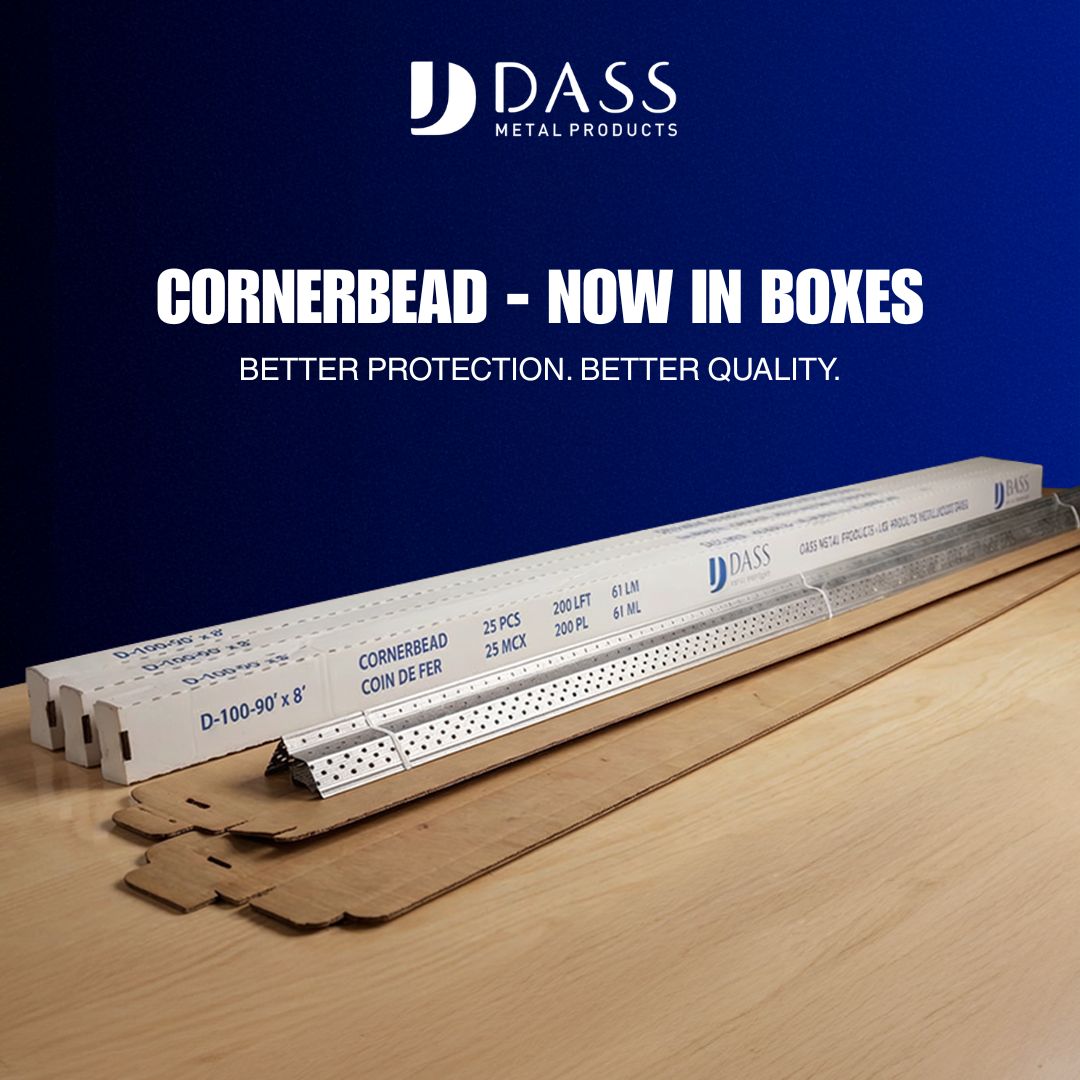
Choosing the correct corner bead prevents cracks, speeds finishing, and matches the finish system to site conditions. This contractor-focused corner bead selection guide lays out seven decision checks you can use on day one of specification or ordering. Each numbered section explains the rule, the typical bead families that fit, what to inspect on site, and short installation or repair notes that matter to framers and finishers.
1. Match bead to your finish system and substrate
Start by identifying the finish and the substrate. Is the job standard gypsum board with joint compound, a gypsum or lime-based plaster, a cement-lime render, or a rapid-set proprietary compound? Different finishes require different embedment depths and bead types. Manufacturers often state preferred bead families for best adhesion and crack control, so consult manufacturer guidance such as this overview on choosing corner bead for plastering when planning your specification.
Quick checklist
- Confirm finish type from the finish manufacturer’s data sheet.
- Note substrate rigidity: timber studs flex more than masonry.
- Record whether the corner will receive direct render coats or thin jointing only.
Attach the finish system note to the purchase order so the supplier and installer use the correct bead family. When plaster or cement render is specified, favour heavier metal or plaster-specific beads; for standard gypsum board systems, paper-faced or metal beads are commonly acceptable.
2. Choose material: metal, vinyl or paper-faced and why it matters
Material selection controls corrosion resistance, rigidity, and finish quality. Each family has trade-offs and typical uses.
Metal
Galvanized or galvannealed steel corner beads are rigid and abrasion resistant, preferred for straight commercial corners and high-abuse areas. Metal beads also suit assemblies where fire resistance or structural rigidity matters.
Vinyl
Vinyl corner beads are corrosion-proof and reasonably flexible for slightly imperfect corners or humid interiors, but they offer less impact resistance than heavy-gauge metal and can deform under hard impact.
Paper-faced
Paper-faced beads give the truest feathered finish with joint compound and reduce visible edges at sealed corners. They are less suitable for exterior exposures, very humid locations, or where carts and wheelchairs will strike corners frequently.
Decision criteria
- Corrosion risk: choose vinyl or coated metals in humid or corrosive interiors.
- Expected abuse: heavy-gauge metal for corridors and service areas.
- Finish technique: paper-faced for premium seamless joint finishing.
Refer to supplier product pages and technical data when choosing gauge and coating. Dass Metal Products lists drywall finishing trims including 90° and 130° cornerbeads to help match material families to project needs.
3. Pick the profile and radius: 90°, 130°, bullnose and specialty shapes

Profile selection balances aesthetics, safety, and finish tolerance. Common profiles and when to use them:
90° (standard)
Use 90° for most commercial and residential outside corners where walls meet close to square. It offers a crisp visual edge and strong protection for straight-lined architecture.
130° (eased)
130° beads create a slightly eased edge that hides minor squareness errors and reduces sharpness for safer corners in high-traffic zones. They can be faster to finish where walls are not perfectly aligned.
Bullnose and rounded profiles
Choose bullnose for high-end finishes, accessible spaces, or where eliminating a sharp corner is a design requirement. Vinyl or flexible paper-faced products often work best for forming radii on site.
When to choose which
- Aesthetics and tolerance: bullnose or 130° when the finish must mask irregularities.
- Safety and accessibility: eased or rounded profiles reduce risk of injury.
- Site curvature: flexible vinyl or paper-faced beads for field-formed radii.
Supplier literature on corner beads and finishing sections will list available profiles and radii and help match profile choice to project goals; consult those resources early in the specification process.
4. Fixing method and embedment: how attachment affects finish and durability
Attachment method and embedment depth directly influence crack resistance and the final flushness of the corner. Choose the right fixing method for the bead type and substrate and verify installation details with the finish manufacturer.
Common fixing rules
- Metal beads: typically fixed with nails, staples or adhesive and must be fully embedded under joint compound so the bead flange is bedded and covered.
- Paper-faced beads: taped and bedded into joint compound; proper bed depth and adhesion along the flange are essential for long-term crack resistance.
- Vinyl beads: can be adhered with compatible adhesives or mechanically fastened; check compatibility with the substrate and finishes.
What to check on site
- Substrate flatness and backing: back-block where studs are undersized or where substrate gaps exist.
- Fastener spacing and pattern: follow manufacturer recommendations to prevent movement.
- Embedment depth: confirm the bead flange is fully covered by the prescribed skim coat or joint compound.
When repairing a damaged corner bead, remove loose compound and the old bead, cut a replacement to fit with tin snips for metal, and fix it using nails, staples or adhesive according to the bead type before finishing. For step-by-step repair techniques see practical repair guides such as the one from Lowe’s.
5. Expect abuse and environment: pick for impact resistance and corrosion control

Assess the corner’s exposure to traffic, carts, cleaning equipment, and moisture. Use a simple low, medium or high risk ranking to match bead families to conditions and to specify protection accordingly.
Risk matches
- High abuse (corridors, loading bays, clinics): heavy-gauge galvanized or galvannealed metal, or reinforced bullnose profiles.
- Medium abuse (offices, retail): standard metal beads or durable vinyl where moisture is not a concern.
- Low abuse (residential, protected interiors): paper-faced beads for best finish appearance.
Corrosion control
For humid spaces or where chemical cleaners are used, prefer vinyl or corrosion-resistant coated metals. Confirm coating and substrate compatibility with the supplier; Dass Metal Products highlights Canadian-made manufacturing and material choices that help specifiers select appropriate corrosion treatments for Ontario conditions.
6. Acoustic, fire and code considerations for assemblies
Before finalising a bead choice, verify it will not compromise any tested assembly for fire resistance or acoustics. Some bead and fixing combinations can create rigid sound paths or alter the fire path in rated walls, so always check the tested assembly details.
Fire-rated assemblies
Non-combustible metal beads are usually acceptable in rated assemblies, but selection must align with the tested detail for the wall. Cross-check with the tested assembly and the project specifications rather than assuming universal acceptability.
Acoustic assemblies
When resilient channels, deflection tracks or decoupled layers are used to achieve a sound rating, ensure the bead and fasteners do not bridge the resilient layer. Document the bead and fixing method in the specification so installers avoid rigid connections that reduce acoustic performance.
Consult the project’s structural or acoustic engineer and the supplier’s technical resources when in doubt, and record the bead selection in the wall finish schedule.
7. Ordering, samples and custom profiles from a Canadian supplier
A clear RFQ shortens response time and reduces the chance of receiving the wrong product. Your RFQ should include the substrate, finish system, bead profile, material/coating, quantity, delivery address, and any certification needs such as CSSBI or material data.
How to prepare an efficient RFQ
- Item description: profile type and angle, for example 90° galvanized corner bead.
- Material grade or coating requirement and any certification reference.
- Finish system: drywall, gypsum plaster, cement render or proprietary compound.
- Quantities by profile and length, delivery address, and any handling constraints.
- Request for sample(s), specification sheets, MSDS, and a statement of lead time or availability.
Dass Metal Products is a Canadian manufacturer based in Vaughan, ON, offering drywall finishing trims including 90° and 130° cornerbead plus engineering support for custom profiles and cross-border delivery options. After you send an RFQ expect a specification sheet, product data or MSDS, and an option to receive samples before full-order approval. Include a small approval block on the purchase order that lists the bead profile, material, fixing method, and a sign-off space for sample approval to prevent surprises on site.
Frequently asked questions
Which corner bead is easiest to repair on-site after impact damage?
Repairability depends on the bead material. Metal beads are straightforward to replace but may need tin snips and mechanical fastening. Vinyl repairs can be quick with adhesive replacements. Paper-faced beads require careful cutting and taping to restore a seamless finish. Follow the standard repair workflow of removing loose compound and the old bead, fitting a replacement, securing it, and re-finishing.
Can I use paper-faced corner bead in bathrooms or humid areas?
Paper-faced beads are not ideal for constantly humid or wet locations unless the finish manufacturer explicitly permits them and an appropriate membrane or moisture control strategy is in place. For showers and high-humidity zones, choose corrosion-resistant metal or vinyl alternatives and verify compatibility with the finish system.
How do I specify a corner bead so it works with a fire-rated wall assembly?
Document the bead material and fixing method in the wall assembly specification and confirm that the bead does not alter the tested fire-resistance detail. Use non-combustible metal beads where the tested assembly requires them, and obtain written confirmation from the assembly provider or a fire engineer when necessary.
What information should I include in a quote request to get accurate samples and lead times?
Provide profile and angle, material and coating, finish type, quantities, delivery address, required certifications, and whether custom lengths or profiles are required. Ask explicitly for sample availability, MSDS, and the supplier’s standard lead time for the specified quantities.
Key takeaway: use this seven-point checklist when you specify or order corner bead. It prevents rework and aligns installers, specifiers and suppliers on the finish outcome.
Need a sample or custom corner bead from Dass Metal Products in Vaughan, ON?