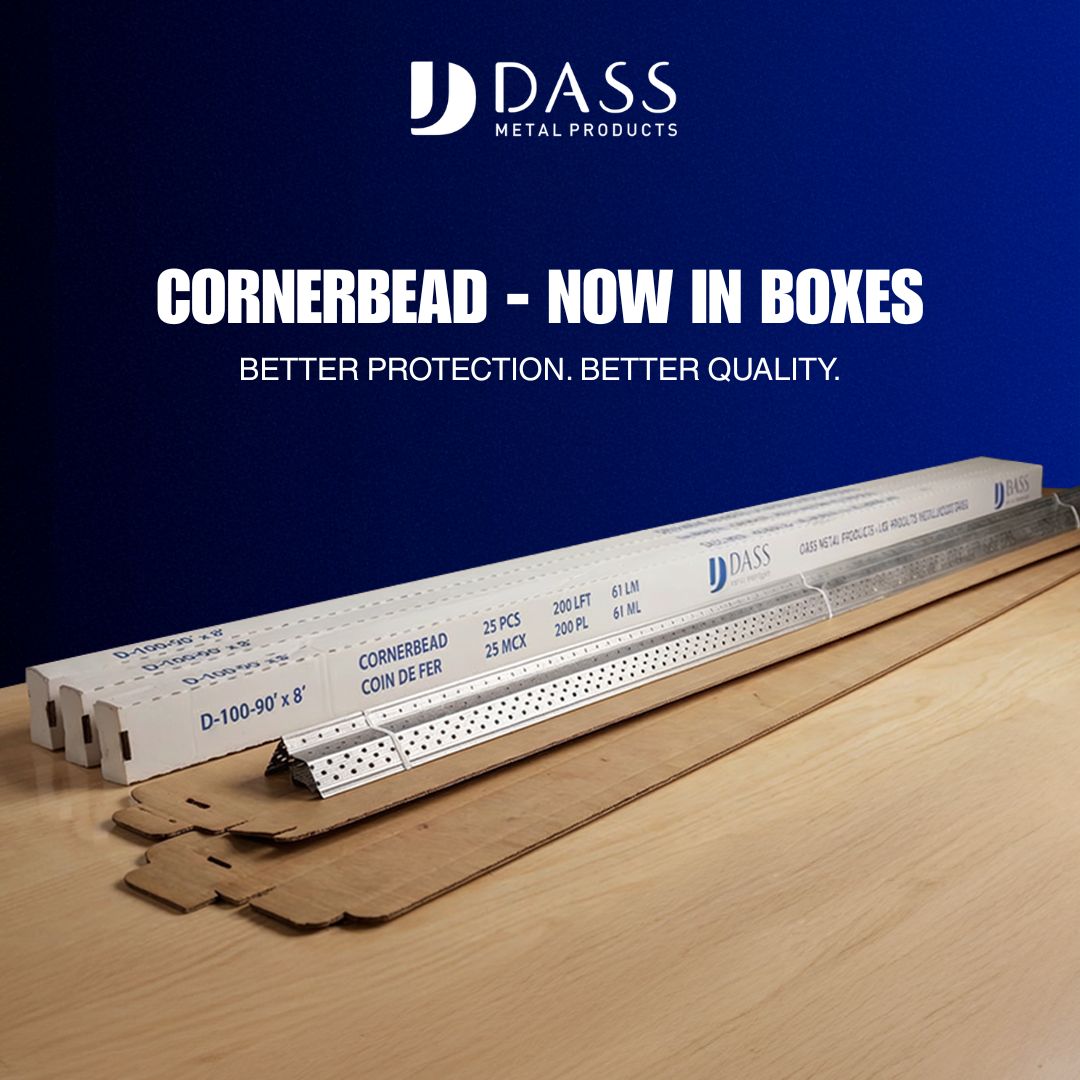
Drywall framing is the structural layout and installation of metal (or wood) members that support gypsum board. It sets wall and ceiling geometry, controls sound and fire performance, and carries doors, windows, and utilities. In 370 New Enterprise Way, our team at Dass Metal Products supports drywall framing with engineered steel studs, tracks, channels, and trims.
By Navjot Dass — Dass Metal Products
Last updated: 2026-05-03
Overview and Table of Contents
This guide shows you how to prevent the most common drywall framing errors, from layout and stud selection to deflection, acoustics, and fastening. Use it to standardize your crews, reduce rework, and pass inspections the first time—leveraging Canadian-made steel studs, tracks, and trims from Dass Metal Products.
Use this complete, practical reference to plan, build, and QA your next interior system. We include definitions, why it matters, step-by-step workflow, methods, tools, case briefs, and an actionable checklist.
- What is drywall framing?
- Why drywall framing matters
- How drywall framing works (step-by-step)
- Types and methods
- Best practices and mistakes to avoid
- Tools, materials, and resources
- Case studies and examples
- FAQ
- Key takeaways
- Conclusion
What Is Drywall Framing?
Drywall framing is the arrangement and installation of studs, tracks, and channels that create the substrate for gypsum board. It defines wall and ceiling lines, manages movement with deflection components, and integrates openings, services, and performance layers for fire and sound.
In practice, drywall framing uses cold-formed steel studs and tracks to create true, plumb, and code-aligned partitions and ceilings. Typical spacing is 16 or 24 inches on center, with gauges ranging from 25 to 16 for interior partitions. Slip tracks or slotted deflection track provide vertical movement where required.
- Core elements: non-load-bearing studs, tracks (standard or deep), slotted deflection track, bridging/carrying channel, resilient channel, and trims.
- Why metal? Steel studs are dimensionally stable, straight, and noncombustible. They resist warping and shrinkage, improving finish quality and schedule predictability.
- Where used: offices, schools, healthcare, retail, hospitality, and multifamily interiors—anywhere you need consistent walls and ceilings for drywall.
For foundational context on steel systems, see our light gauge guide and this metal framing systems overview to align on terminology and choices.
Why Drywall Framing Matters
High-quality drywall framing controls tolerance, speed, and performance. Correct member selection, spacing, and movement joints prevent cracks, callbacks, and sound leaks—protecting schedules and finishes. Good framing is the difference between fast tape-and-paint and weeks of patching.
Here’s the thing: framing is where you lock in straightness, backing, and clearances. A single missed header or misaligned stud can ripple into door binding, tile lippage, or failed acoustic targets. Consistent assemblies reduce rework—field teams often report fewer punch items when studs are blocked, bridged, and braced correctly.
- Tolerance: Flatness and plumbness within 1/8 inch over 10 feet minimizes joint telegraphing and corner bead waves.
- Acoustics: Resilient channel and decoupled framing can increase apparent STC ratings by double digits when installed to spec.
- Movement: Slip details (e.g., 1/2–3/4 inch vertical gap) accommodate floor deflection and thermal drift, preventing cracks at heads.
- Fire & safety: Noncombustible studs help assemblies meet rated design intent; proper screw patterns keep boards attached during heat exposure.
We help project teams in 370 New Enterprise Way translate drawings into buildable, consistent assemblies—matching stud gauge and depth to height, loading, and wall function, then supplying accurate quantities on time.
How Drywall Framing Works (Step-by-Step)
Drywall framing follows a repeatable workflow: verify conditions, lay out lines, install tracks, stand studs, brace and bridge, frame openings, add deflection and acoustics, then inspect. Lock these steps to reduce rework and pass inspections the first time.
- Precheck: Confirm slab level, structural deflection criteria, MEP layout, and fire/sound design. Document variances.
- Layout: Snap control lines. Mark 16 or 24 in. o.c. stud positions. Identify door/window locations and backing.
- Tracks: Install standard or deep track at floor and head. Use slotted deflection track where vertical movement is required; leave a 1/2–3/4 in. slip gap.
- Studs: Cut to length; seat in floor track and engage head track. Crown all studs the same way for flat faces. Check plumb as you go.
- Bridging: Install bridging/carrying channel and fastening clips to control twist and meet height limits.
- Openings: Frame jambs and headers; double studs at doors; add cripple and king studs per submittal.
- Acoustic layers: Add resilient channel on the appropriate side; maintain 1/4 in. perimeter gaps and avoid short-circuiting with screws into studs.
- Trims: Use J trim, L trim, and 90°/130° cornerbead to finish edges. Keep reveals clean and protected.
- Inspection: Verify screw patterns (e.g., 12 in. o.c. field/8 in. edges for common boards), backing locations, and deflection slips before board.
| Step | What to verify | Why it matters |
|---|---|---|
| Layout | Stud spacing, door widths, reveals | Prevents door rub and uneven reveals |
| Deflection | Slip gap at head, slotted track | Prevents cracking from movement |
| Acoustics | Resilient channel direction and spacing | Maintains STC; avoids bridges |
| Fasteners | Pattern and length match gauge | Retains board during loading |
For structural metal-stud concepts around load paths and deflection, our structural framing guide gives added context your team can skim in five minutes.
Types/Methods/Approaches
Most interiors use non-load-bearing steel studs with standard or deep track, plus add-ons like resilient channel, bridging channel, and trims. Special conditions call for slotted deflection track, U-Flex for curves, shaftwall CH studs, and windbrace or clips to meet height limits.
Core interior components
- Non-load-bearing studs (light gauge): 25–20 gauge for typical partitions up to common heights.
- Load-bearing stud framing: Heavy gauge members for shaft, stair, or exterior support; coordinate with structural.
- Standard/deep track: Deeper legs increase stud capture and stiffness; standard for most interiors.
- Slotted deflection track: Slots allow vertical slip (often 1/2–3/4 in.); required where floors move.
- Bridging/carrying channel: Controls stud rotation; increases allowable height.
- Resilient channel: Decouples gypsum from studs to raise STC; observe orientation and spacing (commonly 24 in. o.c.).
- U-Flex track: Pre-punched for curved walls; speeds layout on radiused features.
- Trims: J trim, L trim, Z-Bar, and 90°/130° cornerbead for clean edges and corner protection.
- Clips: Deflection side clips, webslide clips, and bridging clips for connections and movement.
Method choices that affect results
- Stud gauge vs height: Taller walls need heavier gauge or added bridging; check submittal limits.
- Spacing strategy: 16 in. o.c. improves stiffness; 24 in. o.c. cuts pieces but can affect finish flatness.
- Acoustic strategy: One-side resilient channel, staggered studs, or double walls—decide early with the designer.
- Deflection details: Use slotted track or head-of-wall clips wherever the structure moves independently.
- Openings package: Prefab jambs and headers reduce onsite cutting and maintain tolerances.
Need help matching parts to drawings? Our team can align specifications to real components—stud depths, gauges, track types, and trims—so your order quantities map exactly to takeoffs.
Best Practices and Mistakes to Avoid
Avoid cracks, waves, and sound leaks by controlling layout, movement, and fasteners. Use the right stud gauge for height, leave head-of-wall slip, install resilient channel correctly, and verify screw patterns. Small habits prevent costly punch lists.
Top 10 mistakes we see (and how to fix them)
- No deflection slip at head: Floors move. Use slotted deflection track and maintain a 1/2–3/4 in. gap.
- Wrong stud gauge for wall height: Tall walls with light gauge produce waves. Increase gauge or add bridging.
- Resilient channel short-circuited: Screws into studs kill isolation. Keep fasteners on channel only.
- Inconsistent stud spacing: 16 vs 24 in. o.c. mixed on same wall creates finish issues. Stick to plan.
- Missing backing: Accessories need solid support. Add flat straps or blocking where fixtures mount.
- Loose or twisted studs: Install bridging/carrying channel and clips to lock alignment.
- Improper door headers: Double studs at jambs; size headers to span—pre-engineer when in doubt.
- Skipped corrosion considerations: Moisture-prone areas demand coated members and proper separation from dissimilar metals.
- Fastener pattern errors: Verify edge vs field spacing; over-driving weakens board hold.
- Trims misapplied: J/L/Z trims and cornerbead must align with board thickness; protect reveals during trades.
Habits that raise quality
- Standardize checklists: Use a pre-board inspection sheet for spacing, deflection, backing, and openings.
- Prefabricate: Door bucks and curved U-Flex segments save hours onsite and lower tolerance risk.
- Label studs: Mark heights and cut lists to reduce errors, especially on high-volume floors.
- Protect corners: Use 90°/130° cornerbead and guard finished edges during MEP rough-in.
For a deeper dive into wall heights and member selection, our quick primer on steel stud size helps match gauge and depth to service conditions.
Tools, Materials, and Resources
A reliable kit includes studs and tracks, bridging and clips, resilient channel, trims, and the right fasteners—plus layout tools like lasers and rotary lasers. Pair these with clear submittals, shop drawings, and a pre-board QA checklist.
Field kit essentials
- Steel framing components: Non-load-bearing studs, standard/deep track, slotted deflection track, bridging channel, resilient channel, U-Flex, windbrace, and trims.
- Fasteners: Self-drilling screws sized to gauge; avoid blow-outs on thin stock.
- Layout: Laser level, chalk line, and story pole; measure twice where ceiling slopes or ramps transition.
- Cutting and safety: Snips, chop saw with appropriate blade, PPE.
Project documents to keep current
- Submittals and load tables: Confirm allowable heights vs. gauge and spacing before ordering.
- Shop drawings: Door schedules, backing plans, and control joint details avoid guesswork.
- Inspection checklist: Capture spacing, fastener patterns, deflection gaps, and RC installation before boarding.
For crews transitioning from wood to steel, this cold-formed framing guide shortens the learning curve with visuals and terminology.
Case Studies/Examples
See how standardized layouts, proper gauges, and deflection details reduce punch lists. Two brief examples show how our teams in 370 New Enterprise Way translated specs into clean, fast drywall-ready frames on tight schedules.
Tenant improvement floor — office corridors
- Challenge: Long corridor walls with glass sidelites showed waves after rough-in on a prior floor.
- Approach: Switched to heavier gauge studs at 16 in. o.c., added bridging channel every 4 feet, verified head-of-wall slip with slotted track.
- Outcome: Taping crew reported straighter joints and faster sanding. Door rub callbacks dropped to near zero on that floor.
Healthcare clinic — acoustic consulting rooms
- Challenge: Sound transfer through partitions with outlets back-to-back.
- Approach: One-side resilient channel, staggered outlets, sealed perimeters, and R/C spacing at 24 in. o.c.
- Outcome: More consistent acoustic performance; patients and staff noted quieter rooms after completion.
Local considerations for 370 New Enterprise Way
- Seasonal humidity swings can move structures; prioritize slotted deflection track and perimeter sealant checks, especially near building perimeters.
- Busy fit-out periods see trades overlap; protect cornerbead and reveals with temporary guards to prevent dents and rework.
- Coordinate deliveries to minimize material staging; our cross-border logistics support just-in-time drops to match your floor sequence.
Need a quick submittal review? Share your wall schedule and target heights. We’ll map studs, tracks, and channels to your details and return a clean, order-ready list.
Frequently Asked Questions
These quick answers clarify the most common drywall framing questions from builders and drywall contractors. Use them to set standards, train crews, and align inspections before board and mud.
What spacing should I use for interior steel studs?
Most interiors use 16 or 24 inches on center. Taller or high-impact walls often perform better at 16 inches with added bridging. Match spacing, gauge, and allowable heights from your submittal to avoid waves and callbacks.
When is slotted deflection track required?
Use slotted deflection track whenever the structure above is designed to move independently from the partition—common near perimeter beams, long spans, or roof decks. Maintain a visible slip gap (often 1/2 to 3/4 inch) and don’t hard-fasten through the slot.
Does resilient channel really improve sound control?
Yes—when installed correctly. Decoupling with resilient channel typically increases perceived sound isolation. Keep screws on the channel (not the studs), maintain 1/4 inch perimeter gaps, and seal edges to avoid acoustic short circuits.
How do I prevent door frame binding?
Double the jamb studs, size the header for span, and verify plumb. Use slotted head-of-wall details where floors can move. Confirm clearances and blocking before boarding; it’s faster to adjust bare studs than finished openings.
Key Takeaways
Standardize layout, match gauge to height, leave head-of-wall slip, and install resilient channel correctly. Inspect before board to eliminate most punch items. Partnering with a reliable steel stud supplier streamlines orders and delivery.
- Drywall framing locks in tolerance; small errors snowball into finish defects.
- Deflection and acoustics details prevent cracking and sound leaks.
- Bridge and brace to control stud twist; size headers and jambs properly.
- Use checklists and shop drawings to keep crews aligned and inspectors confident.
Conclusion
Treat drywall framing as a controlled process: plan, verify, install, and inspect. With the right gauges, movement details, and fasteners, your walls board faster and finish flatter—cutting rework and protecting schedules.
Dass Metal Products manufactures Canadian-made steel studs, tracks, channels, and trims to support consistent interior framing. Our engineering team in 370 New Enterprise Way helps match submittals to real parts—light gauge studs, standard and deep track, slotted deflection track, resilient and bridging channel, U-Flex for curves, and trims like J, L, Z-Bar, and 90°/130° cornerbead. Explore our metal framing systems guide and interior wall framing tips to standardize your next project.
Related Articles
For deeper context on member selection and workflows, read our concise explainers on steel stud sizes and the primer on framing a basement with steel studs. For structural coordination, skim this structural metal-stud guide before your next kickoff.
For teams coordinating interiors with concrete and reinforcement scopes, these primers from our sister site provide helpful context on interfaces and sequencing: read a quick rebar stirrups guide, an overview of foundation rebar details, and a reference on footing reinforcement.