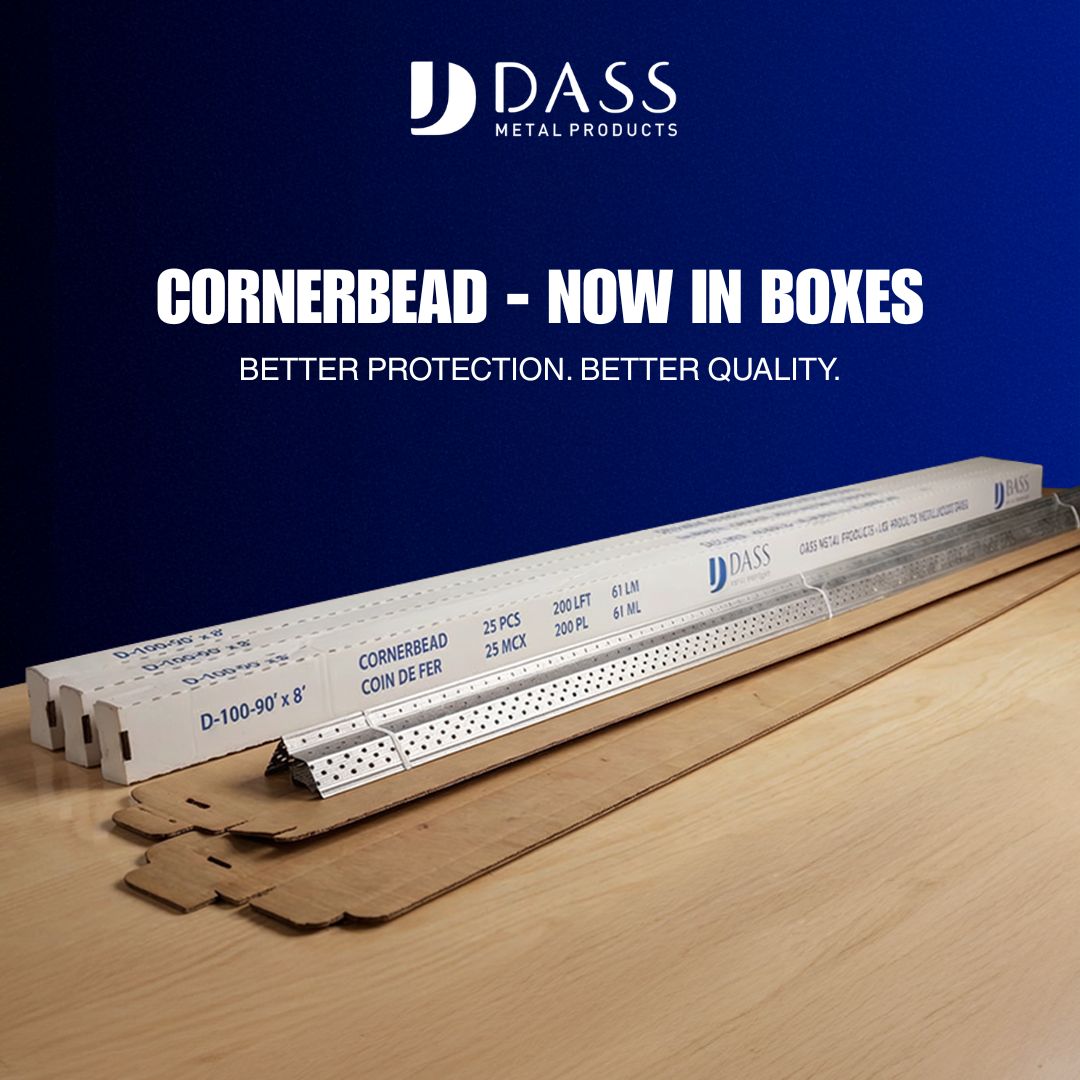
Steel studs are cold-formed, galvanized metal framing members used to build straight, code-compliant walls and ceilings for commercial and residential projects. They install quickly, don’t warp or rot, and support consistent finishes. Based in Vaughan, ON and serving 370 New Enterprise Way and beyond, Dass Metal Products manufactures precision-engineered steel studs and tracks for fast, reliable builds.
By Dass Metal Products Editorial Team · Last updated: May 18, 2026
Summary
Steel studs provide straight, stable framing that resists moisture, fire, and pests. This 2026 guide explains what steel studs are, why builders prefer them, how systems fit together, and which gauges, tracks, clips, and channels to use. You’ll see best practices, tools, real examples, and checklists to speed submittals and installation.
Use this complete guide as your fast reference for specification, procurement, and installation planning. It blends practical field tips with engineering context so your team can frame cleaner, faster, and with fewer punch-list callbacks.
- Clear definitions and dimensional conventions (mils, gauges, web/flange, leg)
- Selection rules for non-load-bearing and load-bearing framing
- Deflection detailing using slotted deflection track and clips
- Acoustic assemblies using resilient channel and furring channel
- Real-world examples from Dass Metal’s Canadian-made product line
Local considerations for 370 New Enterprise Way
- Plan deliveries to align with peak construction windows in the Vaughan area; staging steel framing early reduces winter weather impacts on schedules.
- Account for seasonal humidity swings; use deflection track and proper control joints to manage slab movement and thermal expansion.
- Coordinate material lifts and laydown areas with GC site logistics common to Greater Toronto projects; bundle studs and tracks by zone to cut handling time.
What are steel studs?
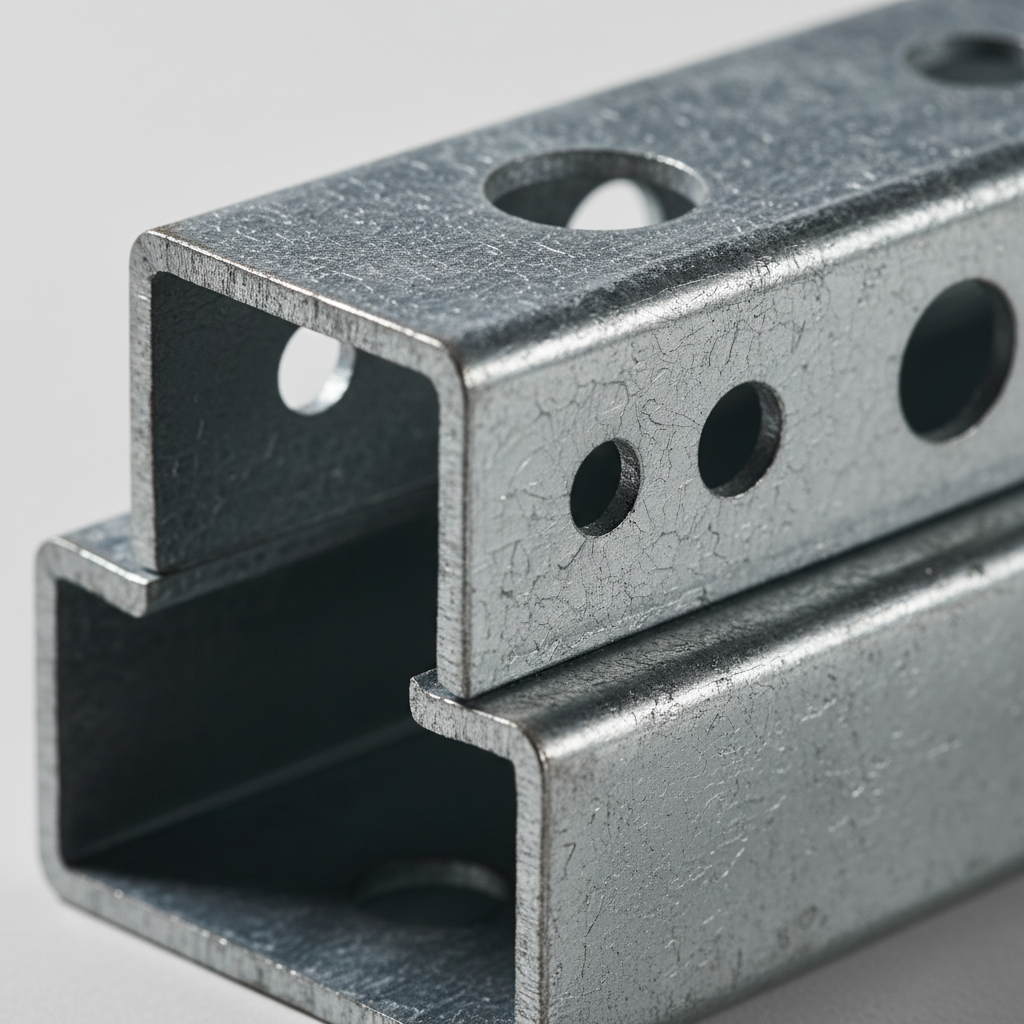
Steel studs are cold-formed C-shaped sections made from galvanized sheet steel, paired with U-shaped tracks to frame interior and exterior partitions. They deliver straight, stable walls, resist rot and pests, and support fire- and sound-rated assemblies. Common thicknesses range from 18–68 mil for light to heavy gauge applications.
At their core, steel studs and tracks create a repeatable, modular framing system. Web, flange, and return dimensions define capacity and fit with gypsum board, shaftliner, or sheathing. Light gauge members are typical for interior non-load-bearing walls; heavier gauges frame load-bearing walls, tall interior partitions, and exterior curtain walls.
- Member shapes: C-stud (S), U-track (T), channel, furring, Z-bar, angles, and specialized trims
- Thickness conventions: 25 ga ≈ 18 mil (0.018 in), 20 ga ≈ 33 mil (0.0346 in), 18 ga ≈ 43 mil (0.0428 in), 16 ga ≈ 54 mil (0.0538 in)
- Span and deflection: Designers target L/240 to L/480 limits for serviceability; heavier gauges or deeper studs control deflection
- Corrosion protection: G40/G60 zinc coatings are common for interiors; higher coatings or additional barriers are used where moisture is present
Because profiles are precision-rolled, steel studs remain dimensionally stable—no crowning or twisting. That stability shortens finish time and reduces touch-ups, which is why drywall contractors in the Vaughan market specify steel on schedule-driven jobs.
Why steel studs matter in modern construction
Steel studs matter because they install fast, stay straight, and deliver predictable fire and acoustic performance. They simplify inspections, reduce waste, and support tight schedules. For multi-family and commercial work, consistent dimensions, noncombustibility, and engineered load data translate to fewer delays and cleaner closeout.
On every project, framing drives downstream quality. Crooked walls telegraph into tile, casework, and storefronts. Steel’s stability preserves alignment across door frames and millwork reveals. Its noncombustible nature supports rated corridor and shaft assemblies, while resilient channel and furring channel enable high-STC partitions in apartments and hotels.
- Schedule reliability: Pre-bundled lengths and pre-punched holes speed layout and MEP coordination
- Code pathways: Published load tables and assembly details streamline approvals and RFIs
- Lifecycle durability: Steel won’t warp, swell, or host pests; coatings protect against corrosion
For owners, that consistency reduces maintenance. For GCs, predictable productivity reduces crew swings from 20%–30% across phases, stabilizing labor allocation as walls go up level and plumb the first time.
How steel stud framing works (system view)
Steel stud framing assembles studs into top and bottom tracks, secures them with screws, and integrates bridging, clips, and deflection components. Service holes route MEP. Gypsum board or sheathing attaches to flanges, completing rated or non-rated walls that meet structural and acoustic targets.
The system is deceptively simple: tracks establish layout; studs snap into place; screws and connectors lock geometry; and accessories handle movement, load transfer, or acoustics. With standardized parts, crews maintain rhythm—cut, place, fasten, repeat—yielding high linear-foot output per shift.
Core components
- Non load-bearing studs (light gauge): Typical for interior partitions; thicknesses from 18–33 mil; heights to ~15 ft depending on spacing and deflection target
- Load-bearing studs (heavy gauge): 43–118 mil for axial and lateral capacity in exterior or tall interior systems
- Tracks: Standard track for fixed connections; slotted deflection track at slabs to allow vertical movement
- Bracing/bridging: Bridging channel and clips control stud buckling in tall walls
- Acoustic members: Resilient channel, furring channel, and Z-bar decouple finishes to raise STC ratings
Assembly sequence (field-proven)
- Snap lines; anchor floor track at specified spacing and edge distances.
- Install head-of-wall track—use slotted deflection track where slab deflection is anticipated.
- Cut studs to height minus deflection gap; place 16 in. or 24 in. on center as specified.
- Add bridging channel at prescribed intervals; fasten with bridging clips.
- Install doors and rough openings with jamb studs and headers sized for load and deflection.
- Run MEP through pre-punched holes; protect edges with grommets where required.
- Sheathe and screw off per pattern; apply trims (J trim, L trim, cornerbead).
Crews following this sequence routinely hit consistent linear footage per day, especially when bundles are pre-cut by zone and tall partitions use mechanical lifts to minimize handling.
Types of steel studs, tracks, and components
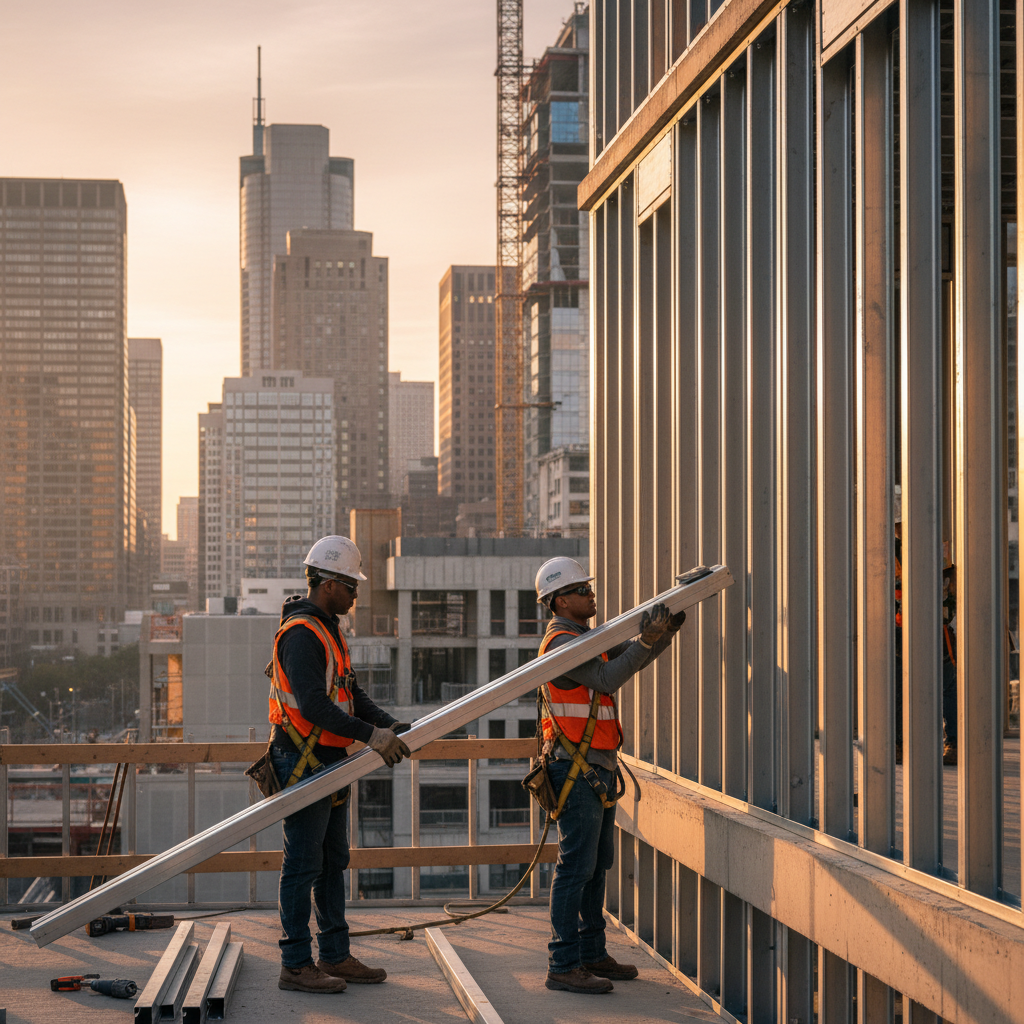
Steel framing systems include non-load-bearing studs, load-bearing studs, standard and deep tracks, slotted deflection track, bridging channel, resilient and furring channels, and trims like J, L, and cornerbead. Selecting gauge, depth, and accessories depends on wall height, spacing, deflection, and acoustic or structural needs.
Stud families
- Non load-bearing studs (light gauge): Interior partitions; 2-1/2 in., 3-5/8 in., 6 in. depths common
- Load bearing stud framing: Exterior or tall interior; 43–68 mil+ with engineered headers and jambs
- Shaftwall / CH stud: For elevator/stair shafts with liner panels; integrates with J track and shaftliner board
Tracks and movement
- Standard track: Fixed head/base conditions for most interior walls
- Deep track: Extra leg height to simplify connections or accommodate lateral bracing
- Slotted deflection track: Allows vertical slab movement at head-of-wall while maintaining lateral restraint
Bracing and acoustic control
- Bridging / carrying channel: Controls stud bowing and improves out-of-plane stiffness
- Resilient channel: Decouples gypsum to improve STC; often installed at 24 in. o.c.
- Furring channel and Z-Bar: Levels surfaces, supports cladding, and creates service cavities
Clips, trims, and miscellany
- Deflection side clip and webslide clip: Connect studs to structure while permitting movement
- J trim, L trim, J track, cornerbead (90°/130°): Finishing components for clean drywall edges
- Utility angles, flat strips, tie wire, hanger wire: Installation aids and hangers
Because Dass Metal manufactures Canadian steel studs with tight tolerances, components align consistently in the field. That precision reduces shim counts at doors and mullions and keeps reveals straight from floor to ceiling.
How to select gauges, depths, and spacing
Select steel studs by matching wall height and deflection targets with gauge and depth. Taller walls or stricter deflection (L/360 or L/480) need deeper or thicker studs. Use published load tables and span charts, and never exceed screw and clip capacities when you add loads or finishes.
Start with wall height and board layers. A 3-5/8 in., 25 ga stud may work for 10 ft, non-rated interiors at L/240, while 6 in., 20 ga often suits 12–14 ft at L/360 with proper bracing. Add bridging at intervals to control lateral-torsional buckling on taller runs.
| Typical Condition | Common Stud Choice | Notes |
|---|---|---|
| 8–10 ft interior, non-rated | 3-5/8 in., 25 ga (18 mil) | 24 in. o.c. with single-layer gypsum; verify deflection |
| 10–14 ft interior, improved stiffness | 6 in., 20 ga (33 mil) | 16–24 in. o.c.; add bridging channel as required |
| Exterior curtain, higher wind | 6–8 in., 16–18 ga (54–43 mil) | Engineer for wind and cladding loads; use deep/deflection track |
| Rated shaftwall assembly | CH stud with liner panels | Use matching J track and manufacturer’s details |
For load-bearing stud framing, check axial and bending interactions and specify headers/jambs that respect combined loading. Where head-of-wall movement is required, switch to slotted deflection track and compatible deflection clips so the wall can ride the slab without crushing finishes.
Installation best practices that speed inspections
Lay out accurately, fasten per pattern, brace tall walls, and detail head-of-wall movement. Use resilient channel for acoustics, protect MEP penetrations, and sequence trims to reduce rework. Document assemblies with manufacturer submittals and load tables to streamline approvals and inspections.
Layout and fastening
- Snap chalk lines and verify door swings before anchoring tracks.
- Use the specified screw pattern; don’t overdrive—maintain thread engagement.
- Stagger butt joints and keep cut ends factory-square to reduce shim work.
Movement and bracing
- Use slotted deflection track at concrete slabs; maintain the design gap at head-of-wall.
- Install bridging channel at listed intervals; secure with bridging clips to prevent roll.
- Isolate dissimilar metals and seal where moisture is present to protect coatings.
Acoustics and finishes
- Use resilient channel on the room side of high-STC walls; follow orientation and spacing rules.
- Apply J trim, L trim, and cornerbead after board fit-up; don’t bury trims under compound mounds.
- Coordinate backer locations for casework, handrails, and accessories before board goes up.
Crews that follow these practices reduce punch-list items by double digits, particularly around door hardware alignment and partition head cracks at movement joints.
Tools, resources, and submittal essentials
Prepare submittals with product data, load tables, and assembly details. In the field, use aviation snips, track cutters, screw guns with depth control, laser levels, and lifts for tall walls. Organized documentation and the right tools shorten RFIs and keep installations consistent.
- Submittal package: Product brochures, material standards, MSDS, and applicable load/span charts
- Layout tools: Laser, chalk, plumb/level, and measuring tapes marked for o.c. spacing
- Cutting/fastening: Snips, chop/track cutters, screw guns with clutch, and compatible fasteners
- Lifts and PPE: Drywall carts, material lifts, gloves, eye and hearing protection
Dass Metal supports specifiers and contractors with engineering input and technical documentation. For a deeper dive on structural systems, see our construction guide for structural metal studs. For heavy-gauge options, review the load-bearing stud framing system overview and submittal resources.
Case studies and real-world examples
On schedule-driven jobs, Canadian-made steel studs and tracks reduce rework and speed closeout. Dass Metal’s engineering support, custom profiles, and dependable delivery help contractors frame straighter walls, hit deflection targets, and pass inspections the first time across schools, clinics, and mid-rise housing.
Mid-rise multifamily interior (Vaughan area)
- Challenge: 12–14 ft corridors required L/360 deflection and clean door reveals.
- Solution: 6 in., 20 ga studs at 16 in. o.c., bridging channel every 4 ft, slotted deflection track at slabs.
- Result: Door frames set square with minimal shimming; finishes aligned across 150+ openings.
Outpatient clinic fit-out (GTA)
- Challenge: High-STC partitions between exam rooms with tight schedule.
- Solution: Resilient channel and furring channel combined with staggered studs at rated walls.
- Result: Sound privacy goals met; inspections cleared on first pass with documented assemblies.
School renovation (Ontario)
- Challenge: Uneven substrates and variable slab elevations in existing building.
- Solution: Deep track to simplify planarity; Z-bar and L track to level surfaces.
- Result: Straight finished walls; reduced taping time and fewer callbacks.
We’ve found that pre-bundling members by zone reduces handling by 20%–30% and keeps lifts small and frequent—ideal for occupied renovations or tight downtown sites.
Steel studs vs. wood: when to choose each
Choose steel for straightness, noncombustibility, and predictable spans, especially in commercial and multi-family projects. Choose wood for light residential where on-site modifications and local availability dominate. Many builders frame interiors in steel for speed and finishes, even when the structure is wood.
| Criteria | Steel Studs | Wood Studs |
|---|---|---|
| Straightness over time | Excellent; no warp/twist | Variable; can crown or shrink |
| Fire performance | Noncombustible framing | Combustible; requires protection |
| Acoustic control | Resilient/furring channels boost STC | Good with insulation; fewer decoupling options |
| Dimensional stability | High; consistent flanges/returns | Moderate; sensitive to moisture |
| Environmental factors | Resists pests/rot; recyclable | Renewable; may swell/decay if wet |
| Field modifications | Snips/cutters; pre-punched MEP holes | Easy to saw/drill; no pre-punched holes |
In mixed systems—say, wood structure with steel interior partitions—coordination at the head-of-wall is critical. Use deflection clips or slotted track to avoid gypsum cracks as wood members deflect under load.
Submittals, standards, and documentation
Successful submittals include manufacturer data, load/span tables, corrosion coatings, and assembly details. Organize documents by wall type and elevation, note deflection limits, and include head-of-wall details. Clear packages cut RFIs and help inspectors verify compliance quickly.
Specifiers appreciate concise packages. Group non-load-bearing partitions by height and spacing, exterior systems by wind exposure, and shaftwall assemblies by rating. Call out bridging intervals and clip models so the field team can install without guesswork.
You can reference our practical overview in the steel studs and systems article and our field notes in how to frame with steel studs to orient crews before mobilization.
Checklists and templates for faster mobilization
A simple preconstruction checklist aligns design, procurement, and field execution. Confirm wall types and heights, select gauges and tracks, assign bridging intervals, note head-of-wall conditions, and package trims. With a clean list, procurement and crews stay in lockstep.
- Wall schedule with heights, spacing (16 or 24 o.c.), and deflection limits
- Stud depth and gauge by wall type; track type (standard/deep/slotted)
- Bridging channel intervals and clip types
- Acoustic elements (resilient channel, furring channel, Z-bar)
- Finishes and trims (J trim, L trim, cornerbead)
- Submittal references and drawing details
Teams that standardize these templates see fewer change orders tied to ambiguous details. If your project needs unusual radii or geometries, our special profiles and U-Flex track options simplify layout without jobsite improvisation.
Need a second set of eyes? Our engineering team in Vaughan can validate wall heights, gauges, and head-of-wall details before you order. Share drawings and we’ll align on the fastest, cleanest build path.
Explore our in-depth primer on steel stud wall framing and see why consistent, Canadian-made members keep schedules on track.
Frequently Asked Questions
These concise answers address specification, installation, and detailing questions about steel studs. Use them to brief crews, align submittals, and avoid common RFIs related to gauges, spacing, deflection, and acoustic performance.
What gauge steel stud should I use for a 12-foot interior wall?
Often a 6-inch, 20-gauge (33 mil) stud at 16 inches on center works for 12-foot interior walls targeting L/360, with bridging as specified. Always confirm with current load/span tables for your chosen profile.
When do I need slotted deflection track?
Use slotted deflection track wherever the structure above can move vertically relative to the wall—typical at concrete slabs and long-span roofs. It preserves the head-of-wall gap so finishes don’t crack under slab deflection.
How does resilient channel improve sound ratings?
Resilient channel decouples gypsum from stud flanges, interrupting vibration paths. Installed correctly—orientation and spacing matter—it can add notable STC points to apartment, hotel, or clinic partitions without major thickness increases.
Can steel studs be used in load-bearing walls?
Yes. Heavy-gauge cold-formed studs form engineered load-bearing walls in mid-rise and light commercial projects. Verify axial and bending interactions, header/jamb design, fastener patterns, and bracing details before ordering.
What’s the difference between standard track and deep track?
Standard track provides the usual leg height for head and base connections. Deep track increases leg depth for easier engagement, added tolerance, and simplified bracing—useful for tall partitions or uneven substrates.
Conclusion and next steps
Steel studs deliver straight, fast, and code-friendly framing for interiors and exteriors. Select gauges by height and deflection, detail movement with slotted track, and organize submittals with load tables. With Canadian-made precision and engineering support, Dass Metal keeps framing predictable and on schedule.
- Match height and deflection to stud depth/gauge; verify with span charts.
- Use bridging channel and clips to control stud roll in taller walls.
- Detail head-of-wall movement using slotted deflection track.
- Leverage resilient and furring channels for acoustic goals.
- Package submittals with product data and load tables to speed approvals.
Ready to plan your next interior framing package? Talk with our Vaughan engineering team and we’ll help you specify the right studs, tracks, and accessories for clean installs and faster inspections—then stage deliveries to match your site rhythm.
Book a quick consult and blueprint review with Dass Metal Products—serving projects throughout Canada and the United States from Vaughan, ON.