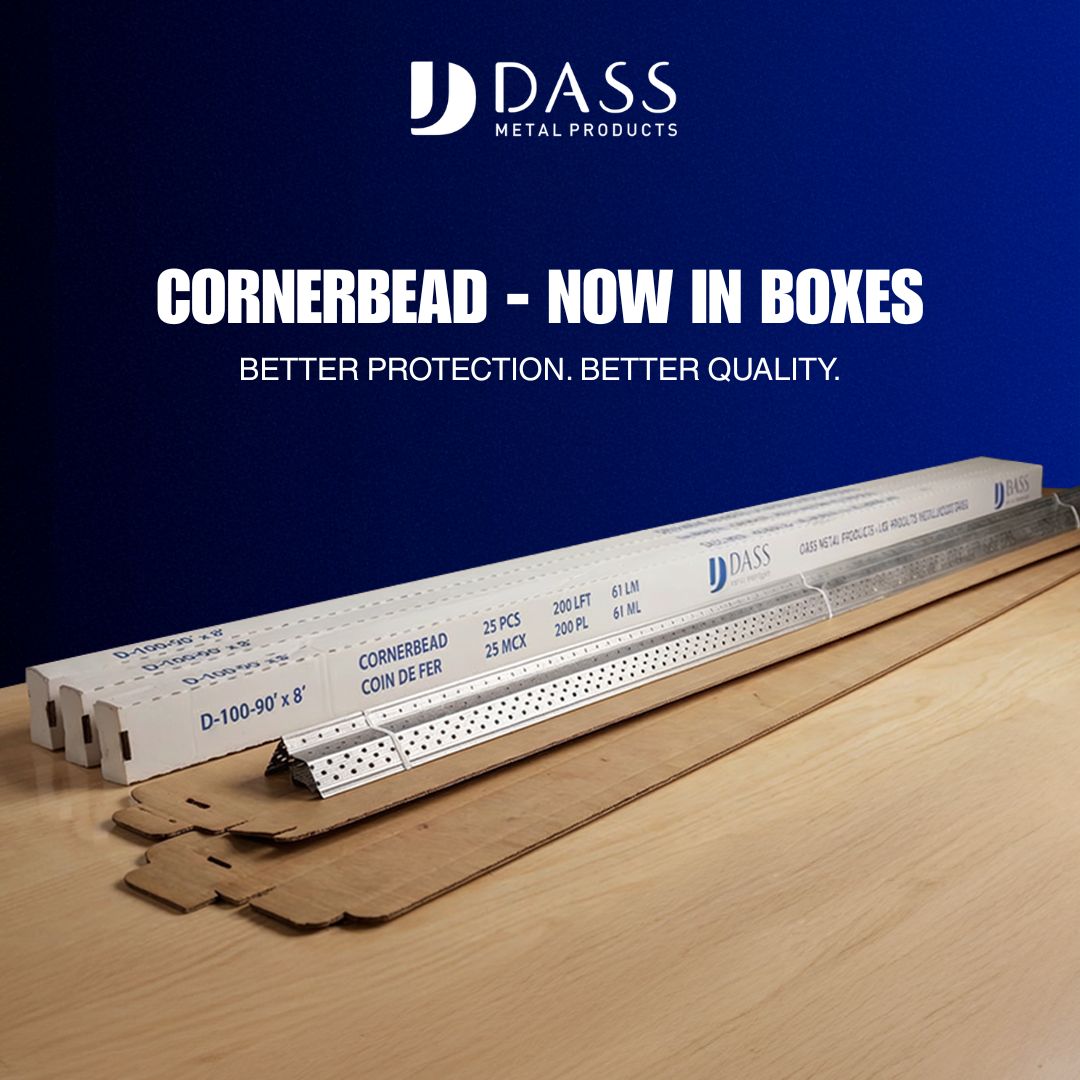
Steel stud wall framing is the assembly of cold-formed galvanized steel studs, tracks, and connectors to create straight, code-compliant walls. It delivers predictable strength-to-weight ratios and consistent dimensions that speed layout, drywalling, and inspections. For projects around 370 New Enterprise Way in Vaughan and across North America, it matters because straighter walls reduce rework and keep schedules on track.
By Navjot Dass • Last updated: May 17, 2026
Above-the-fold overview
Use steel stud wall framing to build straighter, faster, and safer. Light gauge interior studs optimize drywall-ready walls, while heavy gauge members handle load-bearing and exterior conditions. With standardized sizes, slots, and connectors, crews frame consistently, pass inspections, and keep projects on schedule.
Here’s the thing: most schedule overruns in wall framing aren’t about speed—they’re about rework. This complete guide distills what our engineering team has refined over 40+ years: proven specs, field checks, and submittal tactics that help you avoid callbacks and hit finish quality the first time.
Quick summary
Steel stud systems combine studs, tracks, channels, and clips into a predictable kit of parts. The result is straighter walls, cleaner inspections, and reliable acoustics and fire performance. Select gauge by height and loading, use slotted deflection track where movement is expected, and verify bridging and fasteners before board.
- Light gauge for non-load-bearing interiors; heavy gauge for structural/tall spans.
- Standard, deep, and slotted tracks address general framing, stiffness, and deflection.
- Resilient channel boosts STC/IIC when installed continuously and correctly oriented.
- Typical spacing: 16 in. or 24 in. on center; confirm with tested assembly requirements.
- Submittals with load tables and details shorten approval cycles and reduce RFIs.
Table of contents
- What is steel stud wall framing?
- Why steel stud framing matters
- How steel stud framing works
- Profiles, types, and methods
- Best practices that prevent rework
- Comparison and selection table
- Tools and resources
- Case studies and examples
- Related articles in our framing cluster
- Frequently asked questions
- Conclusion, key takeaways, and next steps
What is steel stud wall framing?
Steel stud wall framing is a building method that uses cold‑formed galvanized steel studs and tracks to create straight, dimensionally stable walls. The components resist warping and termites, support consistent drywall finishes, and assemble with screws, clips, and channels that meet modern fire, acoustic, and deflection requirements.
In practical terms, you’re building a repeatable kit of parts. Studs seat into tracks, fasten with self-drilling screws, and align with factory knockouts for services. Slots in slotted deflection track allow the structure to move vertically without telegraphing cracks. Bridging and clips keep lines true and resist racking.
- Dimensional stability: no cup, twist, or shrink—walls stay straight over time.
- Predictable engineering: published section properties and load/deflection tables support design.
- Faster close-in: pre-punched knockouts simplify MEP runs and reduce field drilling.
- Clean jobsite: less dust and offcuts; steel is easily recycled.
In our experience supporting builders from Vaughan to the U.S. Midwest, well-documented steel stud packages consistently shorten inspections. Why? Inspectors can match your submittals to visible features: head-of-wall deflection slots, listed firestopping, and resilient channel orientation. That confidence saves days on fast-track interiors.
Why steel stud framing matters
Steel stud framing improves straightness, speed, and safety while supporting energy, fire, and acoustic performance. Standard gauges and connectors cut layout time, while noncombustible materials help meet code obligations in multifamily, healthcare, education, and commercial projects.
Owners judge walls by flatness and cracks. Inspectors judge by compliance. Crews judge by how fast they can hit layout and hang board. Steel stud systems align those incentives, especially where deflection, firestopping, and STC targets are enforced on public and institutional work.
- Schedule control: consistent profiles reduce layout friction; crews maintain 16 or 24 in. spacing easily.
- Quality control: less variability yields tighter finish tolerances and fewer punch items.
- Compliance: noncombustible, published properties simplify approvals and documentation.
- Lifecycle: corrosion-resistant zinc coatings protect over time in conditioned spaces.
Take a typical school modernization: long, impact-prone corridors, STC-rated classrooms, and strict head-of-wall deflection requirements. With standardized steel stud framing and slotted deflection track, you preserve finish integrity during live load movement and reduce door-jamb cracking near high-traffic openings.
How steel stud framing works
A typical assembly sets floor and ceiling track, inserts studs at 16 or 24 inches on center, braces with bridging, and integrates specialty components like slotted deflection track and resilient channels. Crews screw-fasten connections, maintain plumb/line, and coordinate fire and acoustic details before board goes up.
Here’s a field-proven sequence our teams recommend when coordinating trades and inspections. It’s the backbone of our framing cluster and aligns with our steel framing guide for larger structural scopes.
- Layout and lines: snap chalk lines; laser-establish ceiling track. Check floor flatness—shim as permitted.
- Set track: anchor bottom track with specified fasteners; align ceiling track directly above.
- Insert studs: size for wall height and deflection criteria; leave required head gap with deflection track.
- Brace and align: install bridging/carrying channel and clips at intervals noted in engineering.
- Openings: frame doors and windows with jamb/king studs; use box headers or slip connections as designed.
- Services: route MEP through factory knockouts; protect with grommets when specified.
- Specialty components: add resilient channel for acoustics; confirm orientation and fastener pattern.
- Quality checks: verify plumb/line, fastener spacing, and continuity of fire/acoustic components.
Head-of-wall movement and deflection
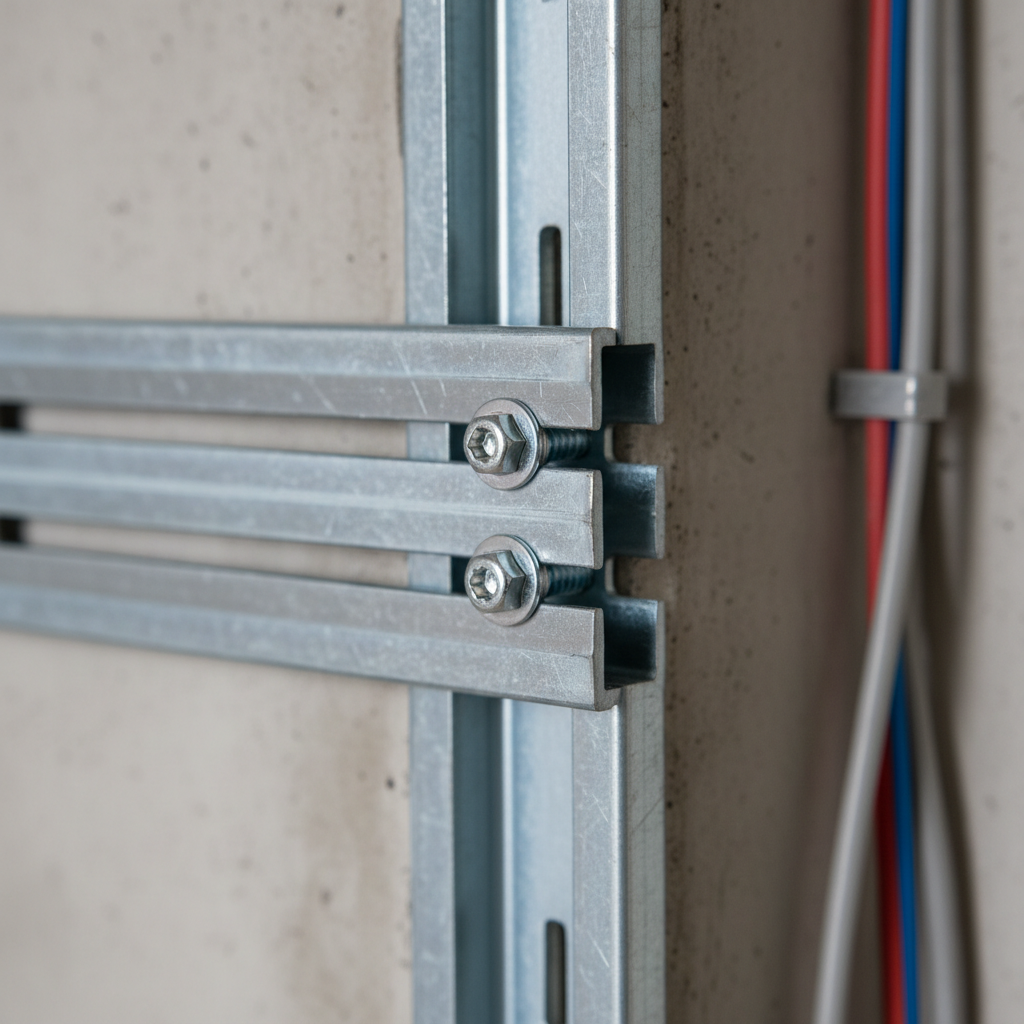
Deflection criteria protect finishes from live loads and drift. Slotted deflection track allows the top of the stud to float within elongated slots while the structure above moves. In many commercial interiors, a head gap is maintained to meet deflection limits—verify the design note and maintain gap uniformity along each run.
Acoustic decoupling
Resilient channel reduces vibration transfer by decoupling gypsum from studs. When installed continuously and oriented correctly, it can add meaningful STC points in tested assemblies. Avoid short-circuiting with extra screws driven into studs through the channel flange.
Profiles, types, and methods
Choose light gauge studs for non‑load‑bearing interiors and heavy gauge for structural spans. Pair standard, deep, or slotted tracks with bridging channels, resilient channels, and purpose‑built clips. Select gauges and widths based on wall height, deflection limits, and acoustic or fire requirements documented in product data.
Core profiles (from Dass Metal Products)
- Non Load Bearing Steel Studs (Light Gauge): interior partitions; typical 25–20 gauge; widths like 1-5/8, 2-1/2, 3-5/8, 6 in.
- Load Bearing Stud Framing (Heavy Gauge): structural members; often 18–16 gauge and deeper sections; engineered per span.
- Standard Track: floor/ceiling runners for general partitions; fastened to substrate per spec.
- Slotted Deflection Track: accommodates vertical movement to protect finishes at head-of-wall.
- Deep Track: adds engagement for taller walls or stiffness criteria; useful on long, straight runs.
- Bridging/Carrying Channel: lateral bracing to hold plumb and resist racking; used with bridging clips.
- Resilient Channel: decoupling member to improve STC/IIC in walls and ceilings.
Finishing and accessories
- 90°/130° Cornerbead: crisp corners and impact resistance for high-traffic areas.
- L/J Trims & J Track: clean terminations at edges, ceilings, and reveals.
- Clips (deflection side, webslide, bridging): engineered connections with repeatable fastener patterns.
- Wire and strips: hanger/tie wire and flat strips support ceilings and services.
Need a curve, niche, or specialty geometry? Our U-Flex Track and special profiles streamline arcs and radius walls. When designers push creativity, we match it with custom profiles manufactured to spec—delivered reliably across Canada and the U.S.
Best practices that prevent rework
Control layout, fasteners, and bracing. Document head-of-wall deflection, firestopping continuity, and acoustic decoupling. Use manufacturer load tables and submittals to pre-answer inspector questions. Walk each area before board to fix lines, penetrations, and clip spacing.
Layout and tolerances
- Confirm stud length vs. design head gap when using slotted deflection track.
- Hold 16 or 24 in. on-center precisely—drywall seams depend on it.
- Check with a 6-foot level or laser; string-line long corridors to keep walls true.
Connections and bracing
- Use specified self-drilling screws; verify corrosion class for environment.
- Install bridging at heights/intervals per engineering notes; tag clips for inspection.
- At openings, double jambs where required; align headers with slip connectors if designed.
Acoustics and fire
- Maintain continuous resilient channel; avoid short-circuiting with extra fasteners.
- Seal perimeters with acoustical sealant; preserve listed firestopping at penetrations.
- Match gypsum type and layers to the tested assembly; confirm screw spacing.
We expand on these topics in our internal framing series, including metal stud framing time-savers and a drywall mistakes checklist. For structural scopes, see our framing systems guide.
Comparison and selection table
Select your wall system by matching height, loading, and performance targets to stud gauge, track type, and accessories. Use this quick reference to align field conditions with tested assemblies and standard practices before you submit.
| Wall Type | Typical Gauge | Spacing (o.c.) | Track Type | Key Accessories | Notes |
|---|---|---|---|---|---|
| Non-Load-Bearing Interior | 25–20 | 16 or 24 in. | Standard | Resilient channel (if STC), bridging | Use factory knockouts; maintain plumb/line |
| Tall Interior Partition | 20–18 | 16 in. | Deep | Bridging channel, clips | String-line runs; verify deflection limits |
| Head-of-Wall Movement | Per design | Per assembly | Slotted deflection | Listed firestopping | Maintain head gap uniformly |
| Load-Bearing/Exterior | 18–16 (or per engineer) | Per engineer | Standard or deep | Windbrace, structural clips | Requires structural design and inspection |
Tools and resources
Pair layout tools—laser, chalk, screw guns—with manufacturer data: load tables, product submittals, and MSDS. Use checklists for pre-board inspections, and lean on engineering support for unusual heights, high STC targets, and drift/deflection conditions.
Field tools
- Laser level, 6-foot level, string line for plumb/line verification.
- Self-drilling screw guns with depth control; metal snips or chop saw with appropriate blade.
- PPE for handling galvanized steel: gloves, eye protection, and hearing protection.
Technical documentation
- Section properties and deflection tables for stud selection and spacing.
- Submittal packages: product data, test reports, and head-of-wall/fire/acoustic details.
- MSDS for safe handling and environmental notes.
Looking beyond walls? Our affiliated team from JDass supports reinforcement scopes—see this rebar fabrication overview for coordination tips on mixed concrete-and-stud schedules.
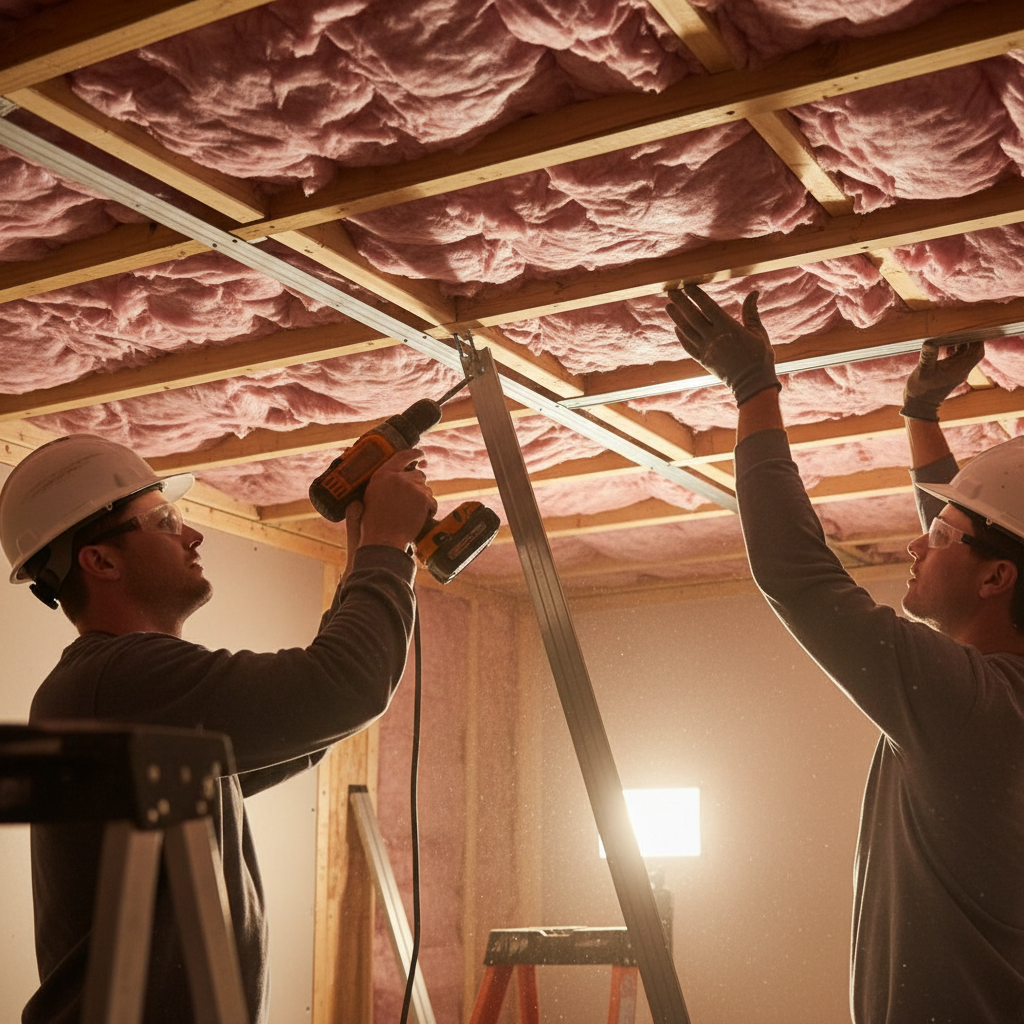
Need project-specific guidance? Our engineers help select gauges, track types, and clip spacing for your exact heights and STC targets—then assemble submittals that move approvals faster. Reach out via our website to start a technical review.
Case studies and examples
On fast-track interiors, standardized steel stud packages align trades and reduce rework. Slotted deflection tracks protect finishes under live load movement, while resilient channels lift STC to meet code. Engineering-backed submittals speed approvals and help crews hit drywall-ready tolerances sooner.
Healthcare tenant improvement: An outpatient clinic required STC 50 partitions. Using 3-5/8 in. studs, acoustic insulation, and resilient channel, crews achieved the target with continuous perimeter sealant and controlled screw patterns. Door frames were reinforced with boxed jambs to resist impact.
School corridor modernization: Long, straight runs adopted deep track and measured bridging intervals to hold line. A consistent head gap with slotted deflection track prevented finish cracks from live load movement above.
Office fit-out, mixed-use tower: Early submittals bundled load tables, clip data, and head-of-wall details. Inspectors cleared areas faster, allowing board to start sooner and keeping downstream trades on schedule.
Local considerations for 370 New Enterprise Way
- Seasonal humidity swings affect finishes; prioritize head-of-wall deflection detailing and allow acclimation time before taping.
- Winter mobilizations raise condensation risks; stage studs dry and indoors when possible.
- Coordinate early with local inspectors on tested firestopping and STC assemblies common to institutional work in the area.
Related articles in our framing cluster
Deepen your framing playbook with guides that tackle planning, mistakes to avoid, and when to scale from interior partitions to structural scopes. These resources complement this wall-focused guide and help you standardize across projects.
For strategic context, see our take on why steel framing matters. If you’re weighing materials, compare approaches in steel studs vs. wood. Ready to tighten execution? Our drywall framing mistakes checklist and light gauge framing guide are designed for field crews and PMs.
Frequently asked questions
Builders ask about gauges, spacing, and when to use deflection or resilient channels. Walls typically space studs 16 or 24 inches on center; light gauge is for non-structural partitions, heavy gauge for load-bearing or tall spans. Use slotted deflection track at head-of-wall where vertical movement is expected.
When should I use slotted deflection track?
Use slotted deflection track at the head-of-wall wherever the floor above can move under live load, wind, or seismic drift. The slots let the structure move without crushing the wall or cracking the finishes below.
What stud spacing is typical for drywall?
Most interior partitions use 16 inches on center, though 24 inches is common with appropriate board thickness and assembly design. Always follow the tested assembly and manufacturer guidance for spacing and fasteners.
How do resilient channels improve acoustics?
Resilient channels decouple gypsum from the studs, reducing vibration transfer. In an STC-rated wall, they can add several points when installed continuously, with correct orientation, and without short-circuiting via extra screws into studs.
What’s the difference between light and heavy gauge?
Light gauge studs (e.g., 25–20 gauge) are for non-structural interior partitions. Heavy gauge studs (e.g., 18–16 gauge and deeper) handle load-bearing or tall spans and require structural design and specific connectors.
Conclusion, key takeaways, and next steps
Steel stud wall framing delivers straighter walls, fewer callbacks, and smoother inspections. Select profiles and accessories based on height, deflection, fire, and acoustics; document with load tables and submittals. Walk every area before board—then enjoy drywall that hangs clean and finishes flat.
Key takeaways
- Match stud gauge and width to height, loading, and deflection criteria.
- Use slotted deflection track where head-of-wall movement is expected.
- Install resilient channel correctly to improve STC without short-circuiting.
- Plan bridging and clip spacing; tag for inspection.
- Bundle load tables and details into submittals to accelerate approvals.
Action steps
- Confirm wall heights and performance targets with your design team.
- Select profiles from our interior framing lineup and request submittals.
- Schedule a pre-board walk to verify plumb/line, fasteners, and head-of-wall details.
Ready to standardize your framing package? Our engineering team in Vaughan supports projects across Canada and the United States with CSSBI-certified products and fast turnarounds. Explore our resources like estimating metal studs or compare materials in steel vs. wood, then contact us to align specifications.