Steel framing dimensions define the depth, flange width, return (lip), and gauge of cold-formed studs, tracks, and channels used to build walls, ceilings, and soffits. Standard sizes (for example, 3-5/8 in. and 6 in.; 25–12 gauge) determine capacity, height limits, and finish quality. For work near 370 New Enterprise Way in Vaughan, accurate sizing shortens schedules and avoids rework.
By Navjot Dass • Last updated: May 30, 2026
Quick Summary
Steel framing dimensions drive strength, wall height, and finish performance. Choose web depth for span/height, flange width for board support, and gauge for load. Confirm wind/seismic and deflection with load tables, then coordinate acoustics and fire requirements. This complete guide turns codes and tables into clear field decisions you can apply today.
- What dimensions mean: web, flange, return, gauge, leg height.
- How dimensions affect wall height, deflection, and finish flatness.
- Step-by-step workflow for fast, accurate selection on site.
- Best practices, mistakes to avoid, and inspector-ready documentation.
- Examples from offices, healthcare corridors, and exterior curtain walls.
What are steel framing dimensions?
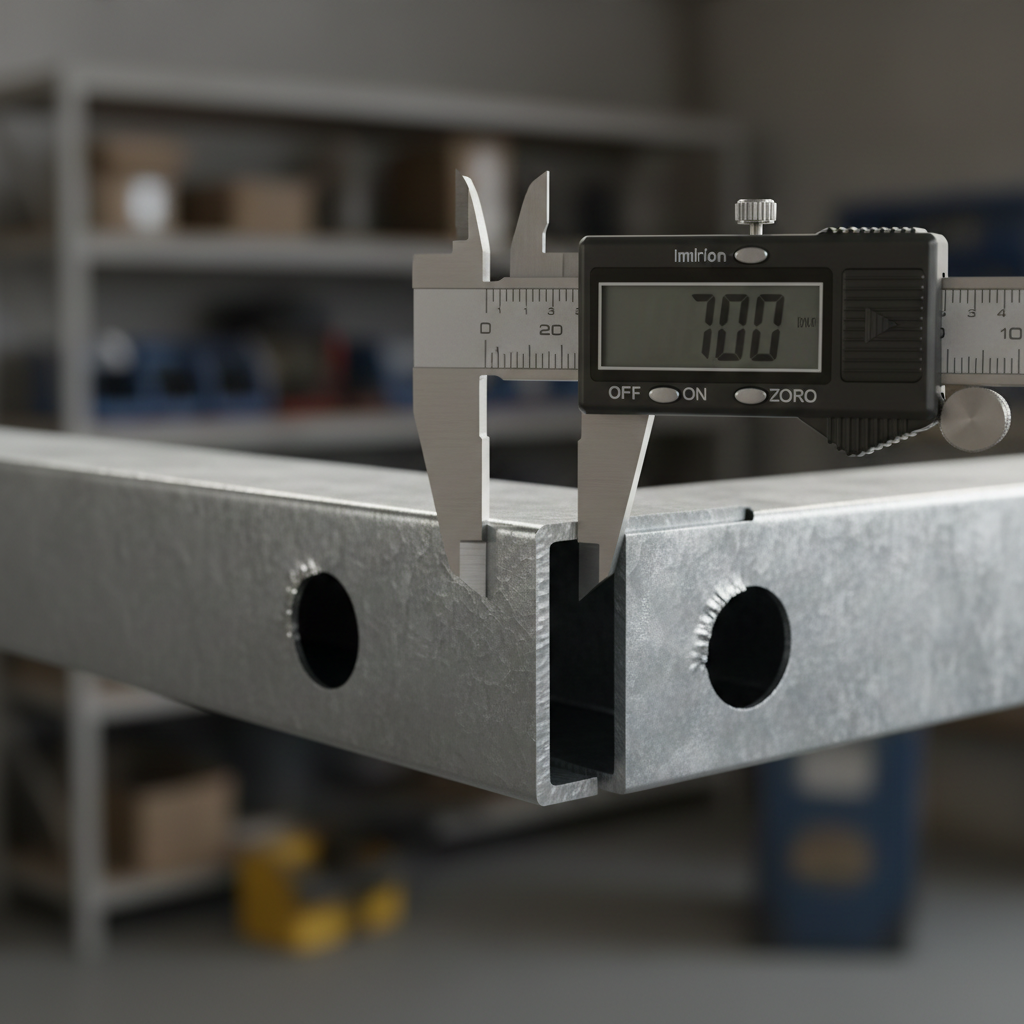
Steel framing dimensions are standardized measurements of cold-formed components—web depth, flange width, return (lip), and material gauge. These values control structural capacity, maximum wall height, screw edge distance, and finish quality. Coordinating them with tested assemblies and load tables ensures both performance and compliance.
In plain language, dimensions describe the shape and thickness of what you’re building with. Web depth (for example, 1-5/8 in., 2-1/2 in., 3-5/8 in., 6 in., 8 in.) largely dictates wall height and stiffness. Flange width (commonly 1-1/4 in. to 1-5/8 in.) affects gypsum support and screw edge distance. The return (lip) locks the profile’s torsional stability. Gauge (25–12) sets capacity and fastener behavior.
- Stud web depth: The vertical dimension that tracks to height/deflection targets.
- Flange width: The face supporting board and resisting screw pull-through.
- Return (lip): The fold that stabilizes the section for straighter finishes.
- Gauge (thickness): Base metal thickness per ASTM A1003; heavier gauges carry more.
- Track leg height: Important for deep leg and slotted deflection tracks to absorb movement.
On interior non-load-bearing partitions, 25–20 gauge at 16 or 24 in. o.c. is common. Exterior curtain conditions and shaftwall typically move to 18–12 gauge. When in doubt, verify with manufacturer load tables and your specifications before ordering. For an at-a-glance refresher, see our steel studs guide and this metal framing systems overview.
Why steel framing dimensions matter for schedule and risk
Right-sized steel framing prevents callbacks, preserves finish flatness, and keeps schedules tight. Undersized studs wave and crack finishes; oversizing adds weight and labor. Matching web depth, flange width, and gauge to height, wind/seismic, and movement conditions reduces rework and inspection delays.
- Finish quality: Too-light studs can telegraph at joints; correct flange width prevents edge blow-outs.
- Speed: Story-height studs minimize cuts; deep track absorbs slab crowns for faster drops.
- Risk: Proper slotted deflection track prevents head-of-wall cracking during building movement.
- Compliance: Dimensions tie to design limits and listed acoustical/fire assemblies.
We’ve seen on fast-track interiors that standardizing 3-5/8 in. studs in 20 gauge at 16 in. o.c., paired with slotted deflection track, delivers flatter walls and fewer touch-ups. For a deeper dive into avoiding rework, review our drywall framing mistakes guide.
How sizing works: a step-by-step field method
Use a three-pass method: confirm height and spacing; choose web depth and gauge from load tables; then select track type for movement and tolerance. For projects in the Regional Municipality of York, including around 370 New Enterprise Way, locking these choices early keeps inspections and finishes predictable.
- Define constraints: Wall height, spacing (16/24 in. o.c.), openings, door loads, and top/bottom conditions.
- Consult load tables: Select web/gauge meeting L/240 or L/360 deflection under design loads.
- Pick the track: Standard, deep leg, or slotted deflection based on head movement and slab variance.
- Coordinate acoustics: If resilient channel is specified, confirm flange width and screw types.
- Finalize submittals: Document dimensions, standards, assembly listings, and labeling plan.
On exterior curtain walls or shafts, add wind pressure, clip selection, and anchor design to the checklist. For a fast orientation to head movement detailing, see our slotted deflection track guide.
Common profiles, gauges, and where they fit
Most interiors use 1-5/8 in., 2-1/2 in., and 3-5/8 in. studs in 25–20 gauge for non-load-bearing walls. Taller or exterior spans step up to 6–8 in. webs in 18–12 gauge. Track options include standard, deep leg, and slotted deflection for head movement control.
- 1-5/8 in. (162S): Short partitions, soffits, bulkheads; light gauge; great for services.
- 2-1/2 in. (250S): Restrooms, chases; more space for plumbing and electrical.
- 3-5/8 in. (362S): Offices/classrooms up to typical ceilings; balanced strength and weight.
- 6 in. (600S) & 8 in. (800S): Tall interiors, cores, exterior curtain conditions; heavier gauges.
- Tracks: Standard (fast, economical), deep leg (absorbs slab deviation), slotted deflection (head movement).
| Stud web | Typical gauge range | Typical spacing | Typical applications |
|---|---|---|---|
| 1-5/8 in. | 25–20 | 16 or 24 in. o.c. | Soffits, short partitions |
| 2-1/2 in. | 25–20 | 16 or 24 in. o.c. | Restrooms, chase walls |
| 3-5/8 in. | 25–18 | 16 or 24 in. o.c. | Typical offices/classrooms |
| 6 in. | 20–16 | 16 in. o.c. | Tall interiors, exterior curtain |
| 8 in. | 18–12 | 16 in. o.c. | Tall cores, high loads |
If you’re scoping a large package and want to avoid mismatch, our primer on steel stud size outlines naming conventions so purchase orders align with shop drawings.
Interior vs. exterior: dimensional rules of thumb
Interior partitions prioritize finish flatness and acoustics, so 3-5/8 in. at 16 in. o.c. in 20 gauge is a common baseline. Exterior curtain walls must satisfy wind and drift; that typically pushes to 6–8 in. webs in heavier gauges with engineered clip spacing and anchors.
- Interior priority: Finish quality, speed, consistent runs; leverage story-height studs.
- Exterior priority: Wind pressure, drift, thermal movement; coordinate clip/anchor patterns.
- Shaftwall: Follow listed CH-stud systems; do not swap stud sizes without approval.
When details are ambiguous, align with your framing pillar concepts in our steel framing systems guide and escalate questions during submittal review instead of at the lift.
Track and accessory types compared
Standard track is fast for fixed heads; deep leg track absorbs slab crowns; slotted deflection track allows vertical movement. Accessory choices—bridging channels, resilient channels, and clips—lock in performance and must match the selected stud depth and gauge.
| Component | Primary purpose | Best use case | Key dimensional note |
|---|---|---|---|
| Standard track | Fixed head/base attachment | Non-movement walls | Leg height typically equals stud flange |
| Deep leg track | Absorb slab variation | Long corridors; wavy slabs | Taller leg eases stud drop-in |
| Slotted deflection track | Vertical movement at head | Structure live/thermal drift | Slot length must meet movement spec |
| Bridging/carrying channel | Lateral bracing | Tall or heavy-gauge studs | Channel depth must clear services |
| Resilient channel | Acoustic decoupling | STC targets in offices/hospitality | Follow listed spacing and screw pattern |
| Deflection side/web clips | Slide connection at structure | Exterior curtain and tall interiors | Clip slot must match drift |
Accessories only perform as designed when their dimensions and slots align with the selected stud and the expected movement. If you need help coordinating clips with your web depth, our team can bundle the right webslide and deflection side clips by area.
Best practices for submittals, labeling, and install flow
Standardize dimensions by zone, request story-height studs, and pre-label bundles by area and height. Include load table references, assembly IDs, and fastener notes in submittals. This trims layout time, improves finish flatness, and removes ambiguity for inspections.
- Zone the floor: Pick one web/gauge per zone; avoid mixing gauges in a run.
- Story-height ordering: Reduce cutting, speed installation, and keep bottoms square.
- Pre-label: Tag bundles with area, height, gauge, and sequence (A/B/C).
- Include standards: Cite relevant cold-formed steel design and assembly listings.
- Field QA: Verify flange width and lip before boarding; check deflection slots are clear.
These practices align with our everyday observations on large interiors and match the guidance in our heavy gauge framing guide.
Movement, acoustics, and fire: dimensional choices
Head movement demands slotted deflection track; acoustics benefit from resilient channel and staggered studs; fire assemblies require listed framing dimensions. Selecting web/gauge, track leg height, and accessory clearances early prevents rework and preserves compliance.
- Head-of-wall: Choose slotted deflection track sized to expected movement; keep slots unobstructed.
- Acoustics: Resilient channel needs adequate flange width; maintain fastener spacing per listing.
- Fire: Use listed assemblies; do not substitute stud size/gauge without engineering approval.
Acoustic goals are easiest to hit when framing is consistent. If you’re chasing a target STC, lock stud spacing and resilient channel layout before ordering, not after boarding starts.
Tools and resources for accurate selection
Use manufacturer load tables, recognized design standards for cold-formed steel, and listed fire/acoustic assemblies. Digital takeoff tools, labeling systems, and pre-bundled deliveries cut waste and accelerate installation while keeping submittals aligned with shipments.
- Manufacturer load tables (imperial and metric) for non-load-bearing and structural studs.
- Design standards for cold-formed steel; reference them in submittals and shop drawings.
- Listed assemblies for fire and sound; follow spacing and screw patterns exactly.
- Field tools: laser levels, story-height studs, and pre-punched service holes to simplify routing.
For residential pros looking for additional framing fundamentals, see the basement framing contractors guide. Code-focused readers may also review this concise take on basement framing rules as a general primer. For commercial estimating context, here’s how metal stud framing is estimated in practice.
Case examples from fast-track jobs
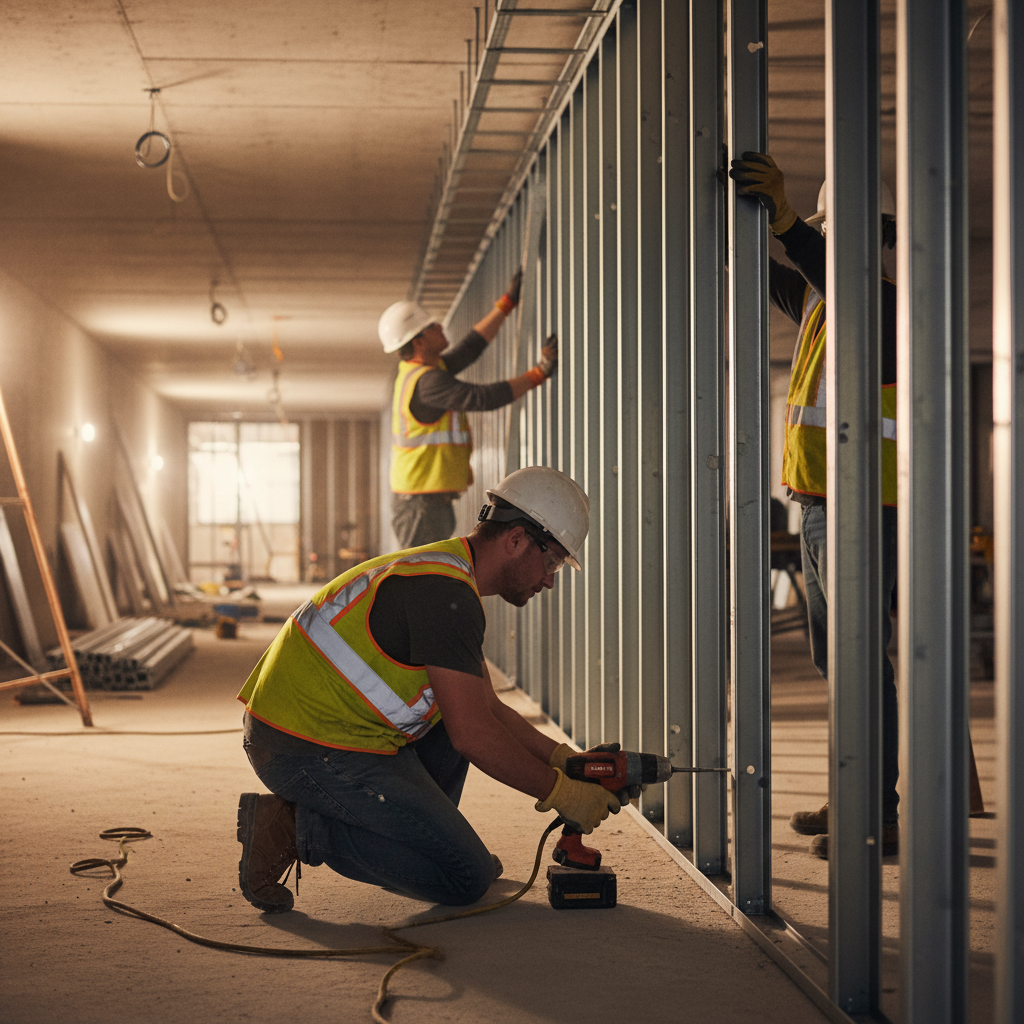
Standardizing dimensions—like 3-5/8 in. 20 gauge at 16 in. o.c. with slotted deflection track—cuts layout time and improves finish flatness. On long corridors, deep track absorbs slab waviness so studs drop without shims, while resilient channel boosts acoustics when specified and installed correctly.
- Office fit-out: Switching to story-height 3-5/8 in. studs removed dozens of cuts per day and delivered flatter finishes.
- Healthcare corridor: Deep leg track absorbed 3/8 in. slab variance, keeping studs plumb and inspection-ready.
- Exterior curtain: 6 in. 16 gauge, paired with tested clips, satisfied deflection limits under design wind.
Local considerations for 370 New Enterprise Way
- Plan deliveries to avoid peak traffic along the Highway 50 corridor; coordinate dock times for smoother turns.
- Winter slabs in the Regional Municipality of York can crown; deep leg track speeds plumb setup on corridors.
- For cross-border work, align IBC/AISI references in submittals with Canadian documentation to streamline review.
Frequently Asked Questions
Builders often ask about stud sizes for 10–12 ft walls, when to use slotted deflection track, and whether resilient channel changes spacing. These direct answers summarize field-tested practices so you can keep moving.
What stud size works for a 10–12 ft interior wall?
Many office and classroom partitions in this range use 3-5/8 in. studs at 16 in. o.c. in 20 gauge, coordinated to the required deflection limit. Always verify with current manufacturer load tables and your project specifications before ordering.
When should I use slotted deflection track?
Use slotted deflection track when the structure above is expected to move from live, thermal, or seismic effects. The slots allow the head to slide while the wall stays plumb, preventing cracks at the ceiling line during movement.
Does resilient channel change stud spacing?
Resilient channel doesn’t by itself change stud spacing, but listed acoustic assemblies specify both stud and channel spacing. Follow the listing to achieve the intended STC rating and keep inspector sign-off straightforward.
Can I mix gauges in the same wall run?
Avoid mixing gauges within a single run. Variations in stiffness can telegraph through finishes and complicate inspections. Keep each run consistent; if conditions change, start a new run and label it clearly on drawings and bundles.
Conclusion and next steps
Select steel framing dimensions by matching wall height and movement to web depth, flange width, gauge, and track type. Lock acoustic/fire details early, standardize by zone, and label deliveries. Verify everything with load tables so your schedule stays clean and finishes stay flat.
- Match web depth and gauge to height and deflection targets; use listed assemblies.
- Choose deep or slotted track to handle slab crowns and head movement.
- Standardize dimensions by zone; request story-height studs to reduce cutting.
- Capture standards and listings in submittals; label bundles by area and height.
Key takeaways
- Steel framing dimensions control strength, height, and finish quality—get them right first.
- Slotted deflection track at heads prevents cracks as structures move.
- Consistent dimensions across a floor speed crews and simplify inspections.
- Submittals that mirror shipments eliminate guesswork on site.
Ready to size your next floor? Send us heights, spacing, and movement notes. Our engineers—backed by 40+ years in steel framing—will confirm dimensions and coordinate accessories so materials arrive ready to install.