J tracks are deep-leg steel perimeter tracks used with steel studs to frame walls, soffits, openings, and shaftwall edges. They guide stud placement, transfer loads to substrates, and allow for movement where needed. At our Vaughan facility at 370 New Enterprise Way, Dass Metal Products engineers and rolls J track profiles that integrate cleanly with Canadian and U.S. jobsite practices.
By Navjot Dass — Dass Metal Products
Last updated: 2026-05-29
At a Glance: Summary and Table of Contents
This guide explains what J tracks are, why builders rely on them, and how to specify and install them with steel studs. You’ll see practical comparisons (standard vs deep vs slotted), step-by-step methods, and field tips we use daily. Use it to reduce rework, speed layout, and meet movement/deflection requirements.
Here’s how to get the most value from this complete guide on J tracks and steel stud framing systems.
- Who it’s for: Builders, GCs, drywall and framing contractors, architects, and distributors.
- What you’ll learn: Definitions, use-cases, types, sizing, installation steps, QA checks, and submittal tips.
- Why it matters now: Non-load-bearing partitions, soffits, and shaftwall interfaces demand precise movement control. Deep-leg J tracks help achieve clean, crack-free finishes.
- Quick facts: Common gauges span 25–16 (interior to heavy-duty), legs range ~1-1/4–3 inches, and typical lengths are 10 or 12 feet. Fastener spacing often runs 16–24 inches on center depending on substrate and spec.
What we’ll cover
- What is J track? How it differs from U track and L track
- Why J tracks matter for movement, acoustics, and clean detailing
- How J tracks work in a complete steel stud framing system
- Types of J tracks and where each type excels
- Best practices for specifying and installing J tracks
- Tools, accessories, and shop drawings/submittals
- Field-tested examples from Dass Metal Products
- FAQ and next steps
Prefer a quick orientation before diving deeper? Skim the comparison table in the “Types” section and the punch-list in “Best Practices.”
What Is J Track?
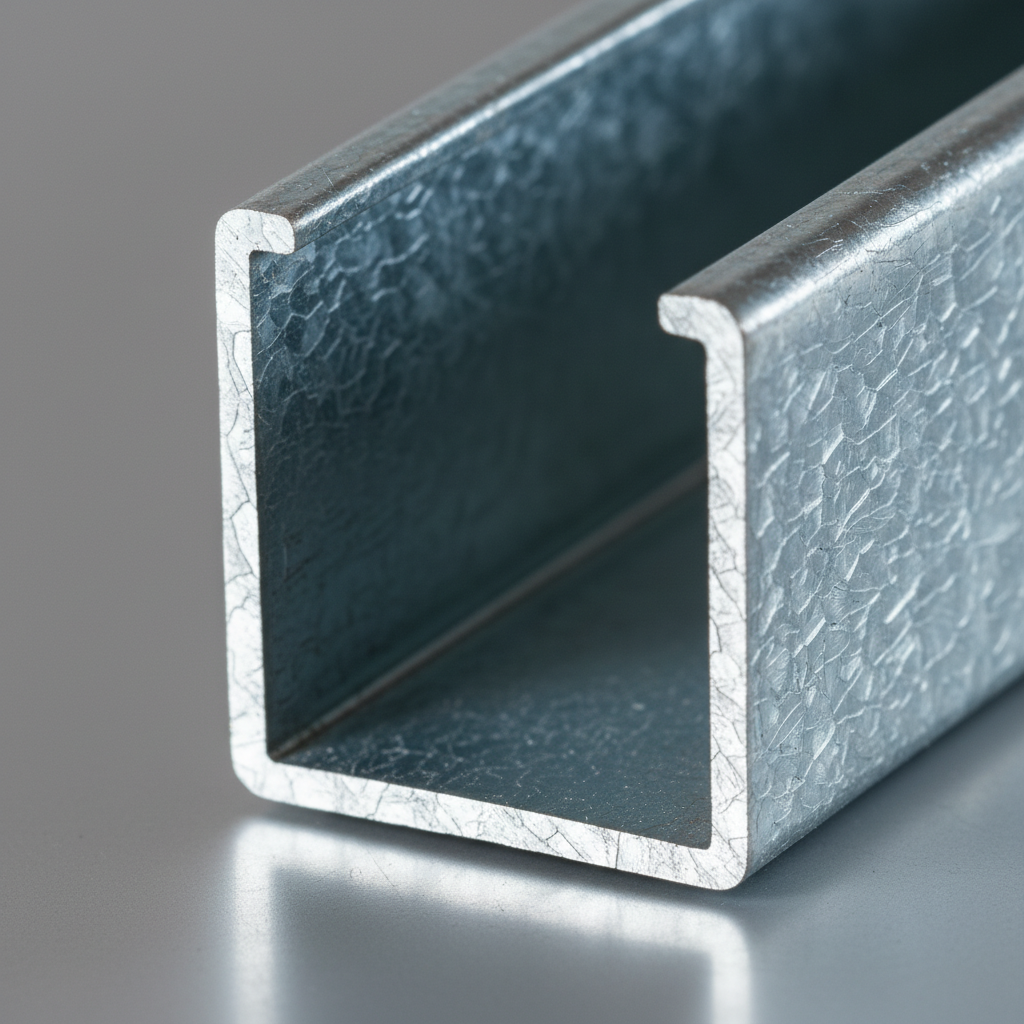
J track is a cold-formed steel perimeter profile with one deep leg and one shorter leg. It receives studs, defines edges, and can accommodate movement at tops of walls and soffits. Unlike U track, J track offers deeper engagement and cleaner terminations at ceilings, floors, and openings.
In practice, J tracks are rolled from galvanized steel for corrosion resistance and jobsite durability. You’ll see them used to:
- Guide studs at floors, ceilings, bulkheads, and soffits.
- Frame openings and terminations where a deeper leg improves capture.
- Accommodate deflection and movement when paired with slotted variants and clips.
- Create crisp edges that improve drywall alignment and finishing quality.
Common dimensions for interior partitions include legs around 1-1/4 to 3 inches, web widths matching stud sizes (e.g., 1-5/8, 2-1/2, 3-5/8, 6 inches), and material thickness from light-gauge (25) to heavy-gauge (16) depending on duty. Typical stock lengths run 10 feet and 12 feet for site efficiency.
For a deeper introduction to track fundamentals and how they interact with studs and clips, see our internal perspective on metal stud track selection and our high-level steel studs overview.
Why J Tracks Matter
J tracks matter because they control alignment, movement, and finish quality at perimeters. In the Regional Municipality of York and projects near 370 New Enterprise Way, deep-leg profiles prevent cracked joints, speed layout, and simplify inspections—especially where ceilings move independently from non-load-bearing partitions.
Here’s the thing: perimeter conditions make or break the wall. A track that’s too shallow or mis-specified can telegraph cracks, cause wavy finishes, or trap movement. J track solves these issues by offering deeper capture, predictable fastener planes, and better tolerance of minor substrate variation.
- Cleaner finishes: Deeper engagement helps keep gypsum board in plane, reducing skims and callbacks.
- Movement control: Where slotted or clip-supported, J track supports vertical deflection and thermal drift without damaging finishes.
- Faster layout: Installers locate studs quickly when the boundary is crisp and consistent, which improves productivity on high-volume floors.
- Inspection clarity: Uniform fastening patterns and obvious capture points simplify QC and sign-offs.
In our experience supporting Ontario and U.S. sites, crews save measurable hours per level when perimeter track selection matches the movement and acoustic requirements. On multifamily corridors, for example, specifying deep-leg J track with resilient channels can cut touch-ups by dozens of hours over a typical floor stack.
Local considerations for 370 New Enterprise Way
- Coordinate early with ceiling trades near Highway 50 – Zum Queen Stop EB–adjacent projects; deliveries cluster at shift changes, so morning offloads keep interior aisles clear for framing.
- Winter humidity swings in the Regional Municipality of York encourage conservative deflection allowances at tops of partitions to protect finished joints.
- For rush phases, pre-bundle J track and matching studs by area; our Vaughan plant sequences loads to match your floor-by-floor install plan.
How J Tracks Work in a Steel Stud Framing System
J tracks establish the boundary for studs and transmit forces to substrates. Installed true and anchored correctly, they set stud spacing, accept bridging, and—when slotted or clipped—permit vertical deflection at ceilings. The result is straighter walls, fewer cracks, and faster finishing.
Think of J track as the reference line for everything that follows. The sequence below keeps crews aligned and reduces rework:
- Layout: Snap lines, mark door frames, and confirm stud widths. Verify deflection needs from structural notes.
- Anchor the J track: Use approved fasteners for concrete, steel, or wood. Typical spacing runs 16–24 inches on center; follow submittals.
- Insert studs: Seat studs in the track, crown oriented consistently. Maintain on-center spacing (often 16 or 24 inches).
- Add bridging/carrier channel: Lock studs plumb. Use clips as specified to achieve rigidity without over-constraining movement.
- Account for deflection: For non-load-bearing tops, use slotted J track and deflection clips; maintain the specified gap (frequently 1/2–1 inch).
- Inspect and document: Photograph anchor spacing, leg engagement, and clearances before board goes up.
When J track goes in straight, everything downstream is easier: drywall flies, cornerbeads land tight, and acoustic details remain intact. On large interiors, that consistency ladders up to real schedule gains.

Types of J Tracks and When to Use Each
J tracks come in standard, deep-leg, and slotted-deflection variants. Use standard where movement is minimal, deep-leg where capture and tolerance are priorities, and slotted where vertical deflection is required at non-load-bearing tops or soffits.
Choosing the right profile prevents cracks and speeds inspections. Here’s a straightforward comparison you can hand to crews and consultants.
| Profile | Primary Use | Typical Gauges | Where It Excels | Notes |
|---|---|---|---|---|
| Standard J Track | Perimeter guide where movement is limited | 25–20 | Light interior partitions | Pairs with resilient channel for acoustics |
| Deep-Leg J Track | Improved capture and tolerance | 22–16 | Corridors, bulkheads, shaft edges | Reduces wavy finishes and callbacks |
| Slotted J Track | Vertical deflection at non-load-bearing tops | 22–20 | Interfaces with moving structure/ceilings | Maintain specified head-gap (often 1/2–1 inch) |
| L Track (related) | Edge trim, drywall returns, reveals | 25–22 | Clean visual terminations | Not intended for stud capture like J |
| U (Standard) Track (related) | General perimeter for studs | 25–16 | Floors/ceilings where equal legs are fine | Use J when deeper capture is required |
Explore product-level details for J Track specifications, and see related perimeter options like slotted deflection track and standard track profiles for mixed conditions across a project.
Best Practices: Specifying and Installing J Tracks
Specify J tracks by stud size, gauge, leg depth, and movement needs; install them straight, anchored at the required spacing, and with head-gaps preserved where deflection is needed. Document everything with photos and quick QC checklists to avoid punch-list delays.
Specification checklist
- Match stud sizes: 1-5/8, 2-1/2, 3-5/8, 6 inches (and beyond) must align with web width.
- Pick gauge for duty: 25–22 for light interior, 20–16 for heavy-duty or corridor conditions.
- Leg depth: Use deeper legs (2–3 inches typical) for tolerance and better capture on uneven substrates.
- Deflection requirement: Choose slotted variants and clips where vertical movement is specified. Maintain the head-gap.
- Corrosion protection: Galvanized coatings suited to the environment; coordinate with specifications.
Installation checklist
- Snap clean lines and pre-drill where substrates are hard to fasten.
- Anchor spacing at 16–24 inches on center unless notes state otherwise.
- Confirm plumb with bridging or carrying channel; add clips where specified.
- Respect head-gaps (often 1/2–1 inch) at non-load-bearing tops; don’t over-screw into the structure.
- Photograph QC of anchorage, capture depth, and clearances before board.
For more context on movement and finishing, our teams often cross-reference this deflection track guide and this field-tested advice on avoiding drywall framing mistakes. When J track, studs, and channels work together, the system behaves predictably under live loads and seasonal swings.
Soft CTA: Need a quick spec review for an upcoming floor stack? Our engineering team can align J track, studs, and movement details to your schedule. We fabricate standard and special profiles in Vaughan with cross-border delivery.
Tools, Accessories, and Resources
Successful J track installations depend on the right fastening tools, compatible clips/channels, and clear submittals. Align anchors, bridging, and movement hardware; then submit manufacturer data and shop drawings so inspectors sign off without surprises.
Field tools
- Powder-actuated or gas-actuated tools for concrete/steel substrates.
- Rotary hammers and drivers with approved anchors and screws.
- Laser layout for straight, repeatable lines and height control.
Compatible components
- Bridging/Carrying channel to hold studs plumb and stiff.
- Resilient channel for acoustic decoupling where specified.
- Deflection side clips and webslide clips to preserve head-gaps and allow movement.
- Windbrace where lateral stiffness is required on tall or open partitions.
For quick background on slotted and standard perimeter tracks across a project, check our primers on slotted deflection track and broader slotted track applications. Share those links in your precon meeting to align the team.
Case Studies and Real-World Examples
On high-turnover interiors, switching to deep-leg J tracks reduced wall waves and sped board by a full crew-hour per 1,000 square feet. Coordinating slotted tops with resilient channels also cut visible cracks at head-of-wall joints during seasonal movement.
Multifamily corridor, York Region: A GC outfitting a 12-story build used deep-leg J track at corridors with 3-5/8 studs and resilient channels. By maintaining a 3/4-inch head-gap and documenting anchor spacing at 16 inches on center, the team reduced finish repairs after the first heating season.
Healthcare tenant fit-out, Vaughan: For bulkheads over patient corridors, crews installed slotted J track and deflection clips. Preserving a 1/2-inch vertical clearance at tops prevented ceiling/wall conflicts and helped pass inspections on the first round.
Transit-facing retail bays near Queen St / Highway 50: With frequent vibration, installers paired deep-leg J track with additional bridging. That combination kept glass returns tight and limited rework despite daily footfalls and door slams.
Need examples tailored to your drawings and sequences? We can walk a set with you and mark up the J track details most likely to improve speed and finish quality.
Frequently Asked Questions
These quick answers address common questions about J tracks, deflection, and compatibility with steel stud systems. Each response is concise and field-tested so you can make fast, defensible decisions on active projects.
What is the difference between J track and standard U track?
J track has a deeper leg that captures studs more securely and creates cleaner edges, while U track has equal legs and is more general-purpose. Use J track when you want better tolerance, improved finishes, or you need to accommodate movement with slotted variants.
When should I use slotted J track at the top of a wall?
Use slotted J track when non-load-bearing partitions meet a structure or ceiling that moves under live load or thermal effects. The slots and clips allow vertical deflection while preserving the head-gap, reducing the chance of cracked joints or popped fasteners.
What gauges are typical for J track in commercial interiors?
Light interior work often uses 25–22 gauge, while corridors, bulkheads, or high-traffic areas may use 20–16 gauge for stiffness and durability. Always match the gauge to stud size, span, and any movement or acoustic requirements in the specification.
Can J track improve acoustic performance?
Indirectly, yes. J track helps keep walls straight and consistent so resilient channels and insulation perform as intended. Pairing J track with resilient channel and proper sealing at perimeters typically yields more reliable STC results than uneven framing alone.
What documentation should I include in my submittal?
Include product data (gauge, dimensions, coating), load or span references where applicable, movement details for slotted tops, and accessory clips/channels. Add shop drawings marking anchor spacing and head-gaps. Photos from similar builds can speed approvals.
Key Takeaways and Next Steps
Choose deep-leg or slotted J tracks where capture and movement matter most. Install straight, anchor correctly, and preserve head-gaps. Document with photos and concise checklists to speed inspections and reduce finish repairs.
- Right profile, right place: Standard for simple perimeters; deep-leg for tolerance; slotted for deflection.
- Match sizes and gauges: Align with stud widths and duty level.
- Plan movement: Respect head-gaps, use clips, and don’t over-screw into the structure.
- QC early: Photograph anchors, engagement, and gaps before board.
Next steps for your team:
- Review track selection guidelines and share them with foremen.
- Mark up drawings with head-gaps and slotted top locations before procurement.
- Align tools, clips, and channels using our practical slotted deflection track guide.
Ready for a spec review? If you’re working near 370 New Enterprise Way or anywhere across Ontario and the U.S., we’ll tailor J track and stud packages to your sequencing and documentation needs.