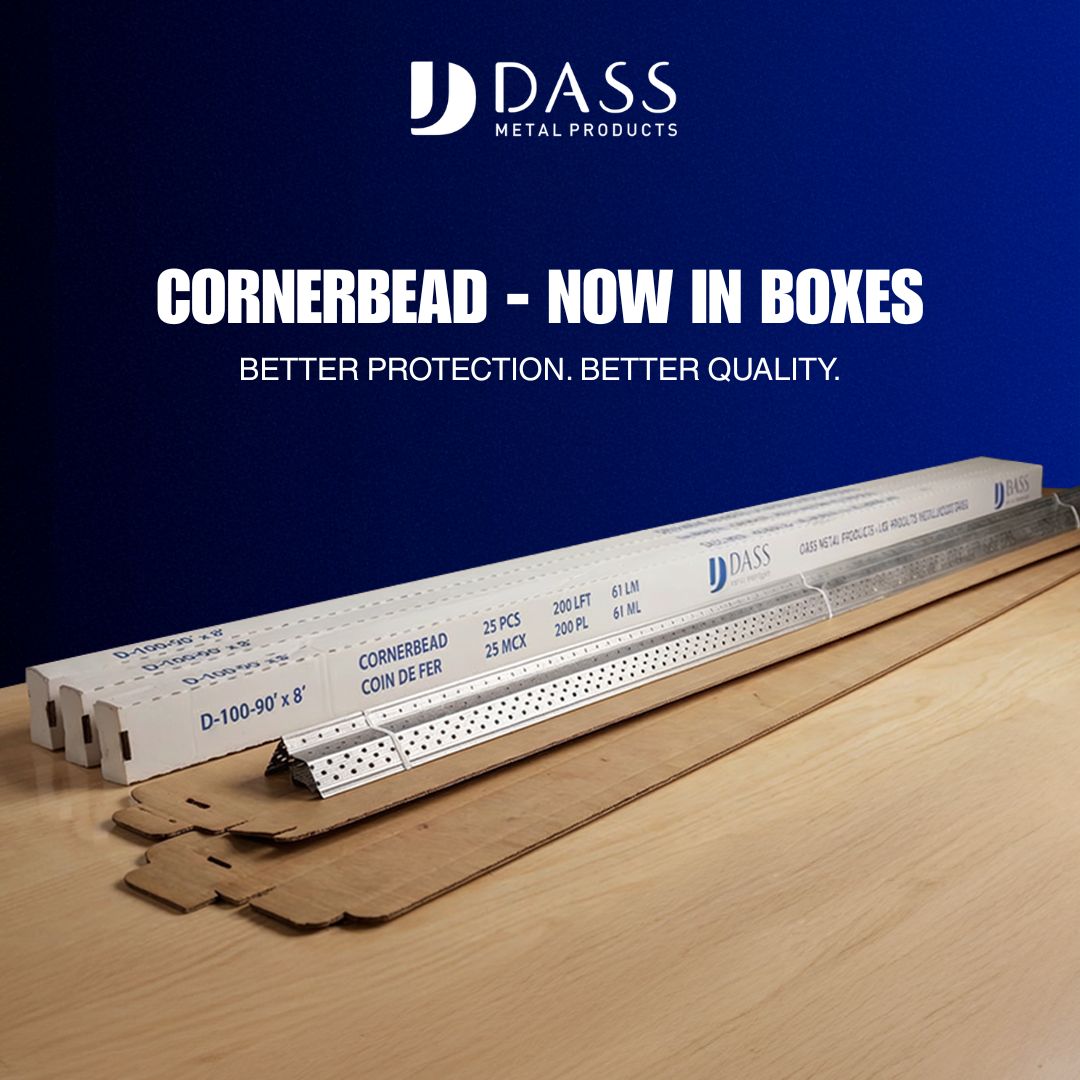
What J trim and L trim are and how their profiles differ
Contractors and specifiers commonly use two edge trims when finishing gypsum board, tile, and metal cladding: J trim and L trim. The profile name describes the basic shape and how it captures or finishes the substrate edge on site.
Profile shape and function
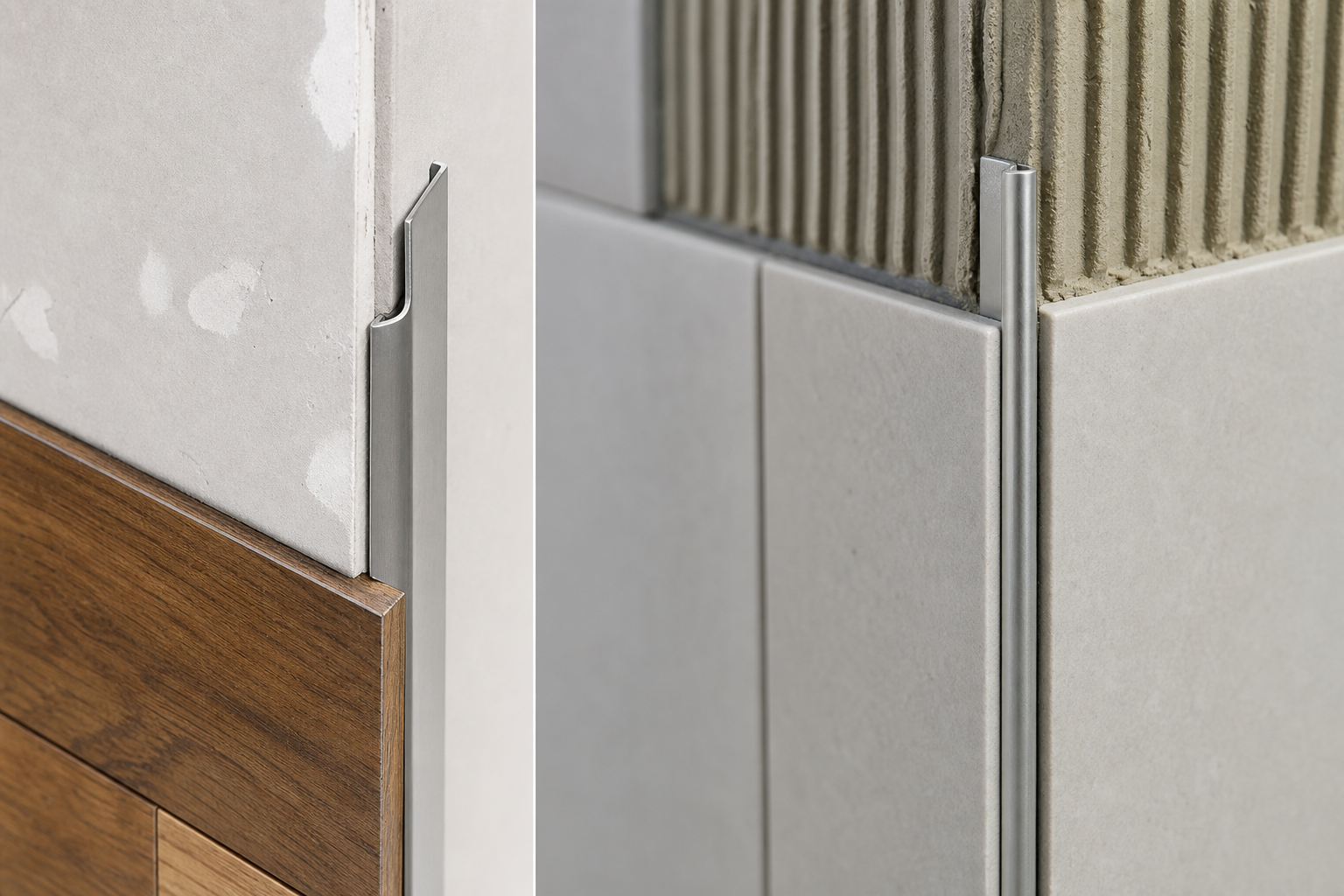
J trim has a channel or hooked edge that receives and hides the finished material edge, leaving a narrow reveal. It is often used where the finishing material terminates into a framed opening or at soffit returns. L trim is an L-shaped angle that creates a crisp, square finished edge. It wraps the substrate edge and is commonly used as a visible, neat termination at exposed perimeters. For product dimensions and datasheets, see Dass Metal’s L trim product page and the Dass Metal website.
Common materials and typical lengths
Both trims are commonly manufactured in cold formed steel, aluminium, or stainless steel and supplied in factory lengths for jobsite cutting. Dass Metal lists L trim in its drywall finishing sections and can provide gauge and finish options appropriate for interior and exterior use; confirm material and length options on the L trim product page.
Where each profile is sold as a finishing trim
J trim is available from siding, tile, and drywall accessory suppliers. L trim is a standard finishing item and is included in Dass Metal’s drywall finishing sections. For specification documents, submittals, and product inquiries use the Dass Metal website.
Decision criteria contractors use when choosing edge trim
Choosing between J trim and L trim is rarely about which profile is objectively better. Use the following consistent criteria to match the profile to the job.
Application and substrate
Match the profile to the substrate and finish. J trim suits materials that need an inserted or dropped reveal. L trim suits perimeters that require a square, visible edge. Consider whether the trim must capture loose edges or provide a face-bearing stop for finishes.
Visible profile and architectural intent
If the architect or owner expects a clean, square reveal with a crisp corner, L trim is usually the better choice. If a small recessed reveal is acceptable or desired, J trim can conceal the raw edge and offer a softer termination line.
Material compatibility and corrosion resistance
Choose trim material to match cladding and coatings. Aluminium resists corrosion with masonry or exterior cladding but may galvanically react with some steels. Stainless steel is appropriate where exposure or corrosion risk is high. Dass Metal’s product pages list finishes and gauge options for specification guidance; verify compatibility before ordering.
Exposure to weather and watertightness
Exterior terminations demand drainage, flashing and proper sealant detailing. L trim gives a neat visible edge and integrates easily with flashings. J trim can be used where an inserted edge is intended, but additional waterproofing details are required. Coordinate the trim choice with the overall waterproofing strategy for the assembly.
Finishing method
If the edge will be taped and mudded, L trim provides a stronger face to apply compound to. If tile with a finished edge or a vinyl return is being installed, J trim can receive the tile edge or membrane while hiding cut edges.
Installation speed and labour
L trim is typically quicker to install where a straight square stop is needed because it fastens directly to the substrate face. J trim sometimes requires a tighter fit and additional trimming to ensure the finish nests into the channel cleanly. Factor cutting and fit-up time into labour estimates.
Availability and cost considerations
Trim cost depends on material, finish, and gauge. L trim is a common, economical profile. Custom or specialty materials increase cost. For Canadian-made options and custom profiles consult Dass Metal to confirm availability and pricing.
Which to use: common job scenarios and the recommended trim
Drywall returns and reveals
Recommendation: L trim for exposed perimeter stops, J trim where a nested reveal is acceptable. L trim supplies a crisp, paint-ready edge for corridors and visible soffits. When the drywall edge must be concealed into a channel, J trim is appropriate, but ensure the channel offers sufficient bearing for finishing work. Reference Dass Metal’s L trim product page when preparing submittals.
Tile edges and wet-area terminations
Recommendation: Use trim selected for tile edges and corrosion resistance. For square exposed tile edges use an aluminium or stainless L trim. For details where tile nests into metal, J trim can provide a receiving channel, but coordinate waterproofing and tile manufacturer guidance to avoid staining or water migration.
Exterior siding and cladding terminations
Recommendation: L trim for visible perimeters and to integrate with flashings. L trim’s face-bearing angle simplifies sealant and flashing interfaces. J trim can be used where panels or siding insert into the trim, but extra sealing and drainage are required to maintain long-term watertightness.
Metal panel or flashing returns and exposed edges
Recommendation: Match trim material to the metal panel for galvanic compatibility. L trim provides a neat visible return and straightforward fastener placement. If a hooked or receiving channel is required by the panel profile, J trim may be the correct choice. Confirm material and finish with Dass Metal engineering if uncertain.
Material and finish tradeoffs: steel, aluminium, coatings and corrosion
Steel options
Galvanized steel is commonly used for interior L trim because it is stiff, paintable, and cost effective. For exterior use, specify the appropriate coating or stainless grade to prevent corrosion. Dass Metal manufactures steel finishing trims and provides specification resources on its site; consult product pages for current finishes.
Aluminium
Aluminium trims are lighter and naturally corrosion resistant. They are attractive for tile edges and exterior cladding but can react with certain steel fasteners. Match fasteners and substrate to avoid staining or electrochemical issues.
Stainless steel
Use stainless where long-term exposure, hygiene, or high corrosion resistance is required. Stainless is more expensive but reduces maintenance over time.
Paintability and compound compatibility
All trims intended for gypsum finishing should be paintable and accept joint compound where required. Verify that the trim finish is compatible with adhesives, sealants, and joint systems before specifying.
Installation and specification notes contractors need to include
Cutting and fastening best practices
- Cut trims with snips or power shears designed for the material to avoid deformation.
- Fasten per manufacturer recommendations and avoid overdriving screws which can distort the profile.
- Refer to Dass Metal product datasheets for recommended fasteners and spacing.
Required clearances and interface with finishes
Maintain the clearance recommended by the trim manufacturer between the substrate face and adjacent assemblies. For movement joints or deflection tracks do not pin the trim to structures that must move. Always reference the manufacturer spec sheet for clearances.
Sequencing with mud, corner bead and tile
Install trim so that it supports the finishing sequence. L trim typically allows direct mud application to the trim face. J trim may be installed before tile or vinyl returns so the finish nests into the channel.
Movement and deflection considerations
Do not assume trim will bridge building movement. When terminations occur at expansion or deflection joints specify dedicated joint systems. If in doubt consult Dass Metal engineering for profile or fastening detail recommendations.
Waterproofing and sealant interfaces
For wet areas or exterior work detail sealant joint widths and backing materials. Trim alone is not a waterproofing membrane. Coordinate trim placement with flashing and membrane transitions to maintain drainage paths.
Ordering, specs and Ontario context for Dass Metal projects
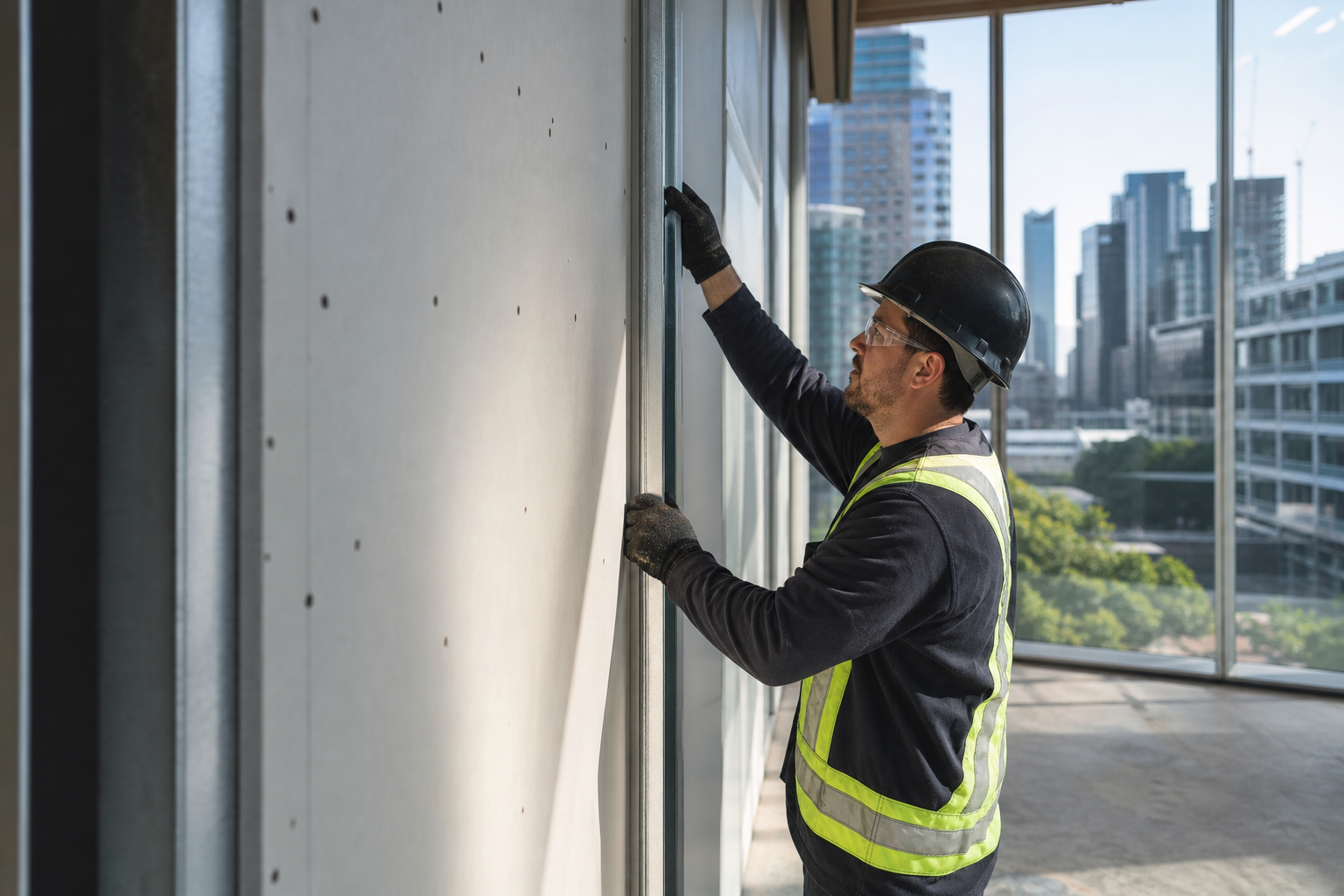
Dass Metal Products manufactures trims and framing components in Vaughan, Ontario and supports Canadian projects with local production and cross-border delivery into the US. For product brochures, load tables, standards, and MSDS documentation consult the Dass Metal website. For L trim specifics use the company’s L trim product page. Contact Dass Metal for delivery, pickup, and lead-time confirmation.
What to include on purchase orders and submittals
- Profile name and catalogue number, for example the Dass Metal L trim product reference from the L trim page.
- Material, finish, gauge, and required factory lengths or custom lengths.
- Required quantity, delivery location, requested lead times, and any project-specific packaging instructions.
- Request for a submittal package including product data, finish samples, and MSDS if required for the project file.
Custom lengths and special profiles
Dass Metal offers custom profiles and can produce lengths to order. Provide profile drawings, required tolerances, quantities, and desired lead time when requesting a quote. Use the Dass Metal contact channels via the website for technical and sales support.
Real objections, tradeoffs and a quick decision checklist
Common contractor objections and short answers:
- “Won’t J trim hide the edge better?” — J trim hides raw edges but can complicate waterproofing and finishing if not detailed properly.
- “Is one trim stronger or more expensive?” — Strength and cost depend on material and gauge more than on profile. Specify gauge and finish to control cost and performance.
- “Which is watertight for exterior work?” — Neither trim guarantees watertightness alone. Detail flashings and sealants where water exposure matters.
Quick decision checklist
- Drywall visible perimeter: L trim, galvanized steel, paint-ready.
- Drywall concealed reveal: J trim, confirm channel depth and finish.
- Tile edge exposed: L trim in aluminium or stainless for corrosion resistance.
- Exterior visible stop with flashing: L trim, coordinate with flashing details.
- Metal panel return: Match trim material to the panel and confirm galvanic compatibility.
Frequently asked questions
Can J trim and L trim be used interchangeably on drywall returns and reveals?
They are not strictly interchangeable. L trim provides a visible, square stop that is better for paint-ready perimeters. J trim conceals the edge in a channel and is better where a recessed reveal is acceptable. Choose based on architectural intent and finishing method.
Which trim is better for tile edges in wet areas such as showers and tub surrounds?
For exposed tile edges use a corrosion-resistant L trim in aluminium or stainless steel. If the tile is designed to sit into a receiving channel, J trim may be acceptable, but ensure the wet-area waterproofing and sealant details are carefully coordinated.
Do you offer L trim in stainless or galvanized steel for exterior applications?
Dass Metal lists L trim in its drywall finishing section and offers a range of materials and finishes. Review the L trim product page and contact Dass Metal for confirmation of available gauges and finishes for exterior use.
What specification details should I include on a submittal when ordering trim from Dass Metal?
Include profile name and catalogue number, material, finish, gauge, length, quantity, and any required custom tolerances. Request product datasheets and MSDS from Dass Metal to complete submittals and confirm compatibility with other finishes.
How do I request custom lengths or special profiles from Dass Metal and what information do you need?
Provide drawings or sketches, material and finish requirements, gauge, tolerances, quantities, and desired lead time. Use the Dass Metal website contact form to request a quote and ask for a submittal package to confirm details.
Dass Metal Products can supply product datasheets, submittal packages, and custom profile quotes for L trim and other finishing trims. To get product data, request a quote, or speak with engineering about profile selection for your project, visit the Dass Metal website or the L trim product page.