Deflection side clips are small parts with a big role: they isolate vertical movement so floor, roof, or structural deflection does not transfer loads into non-structural or curtain walls. Used with slotted track and bypass framing, the right clip prevents stress, cracking, and premature finish failures. Before you specify or buy deflection side clip uses, run through a concise technical checklist that catches compatibility, material, movement, installation, and procurement risks.
What do deflection side clip uses actually do and when are they required
Deflection clips, sometimes called slide clips or drift clips, allow vertical movement between primary structure elements and secondary framing. They are commonly specified for exterior curtain walls, bypass framing, and conditions where the slab, beam, or roof will move vertically relative to the wall. The clips normally seat against a slotted or deep track and provide a guided slide so the wall remains stable while the primary structure moves. For a technical overview of how deflection clips enable building movement see the US Frame Factory note that describes slotting and travel as the method to isolate vertical forces in curtain wall and bypass systems.
Treat a clip as a performance device that must match the track, stud, expected movement, and exposure of your project. Dass Metal Products lists a dedicated deflection side clip product and publishes slotted track guidance that should be consulted when you specify clips.
Which compatibility questions must you ask about track and stud profiles
Wrong profile pairing is the single most common specification error. Ask these questions and require evidence from the supplier.
- Is the clip designed for your track type — slotted track, standard track, or deep track? Ask for a manufacturer statement of compatibility and a fit drawing.
- What are the track internal dimensions and slot positions that the clip engages? Confirm track depth, flange width, and slot location with a shop drawing or sample fit verification.
- Does the clip seat on the stud flange or the track web and which stud flange widths are supported? Misreading the seating face can cause misalignment and binding.
- Can you get a physical sample or gauge template before procurement? A one-piece mockup on site eliminates guessing and prevents returns.
Action item: request a simple fit drawing and, where project tolerances are tight, a sample clip fitted into your actual track profile before long-lead orders.
What slot geometry and movement capacity should you verify
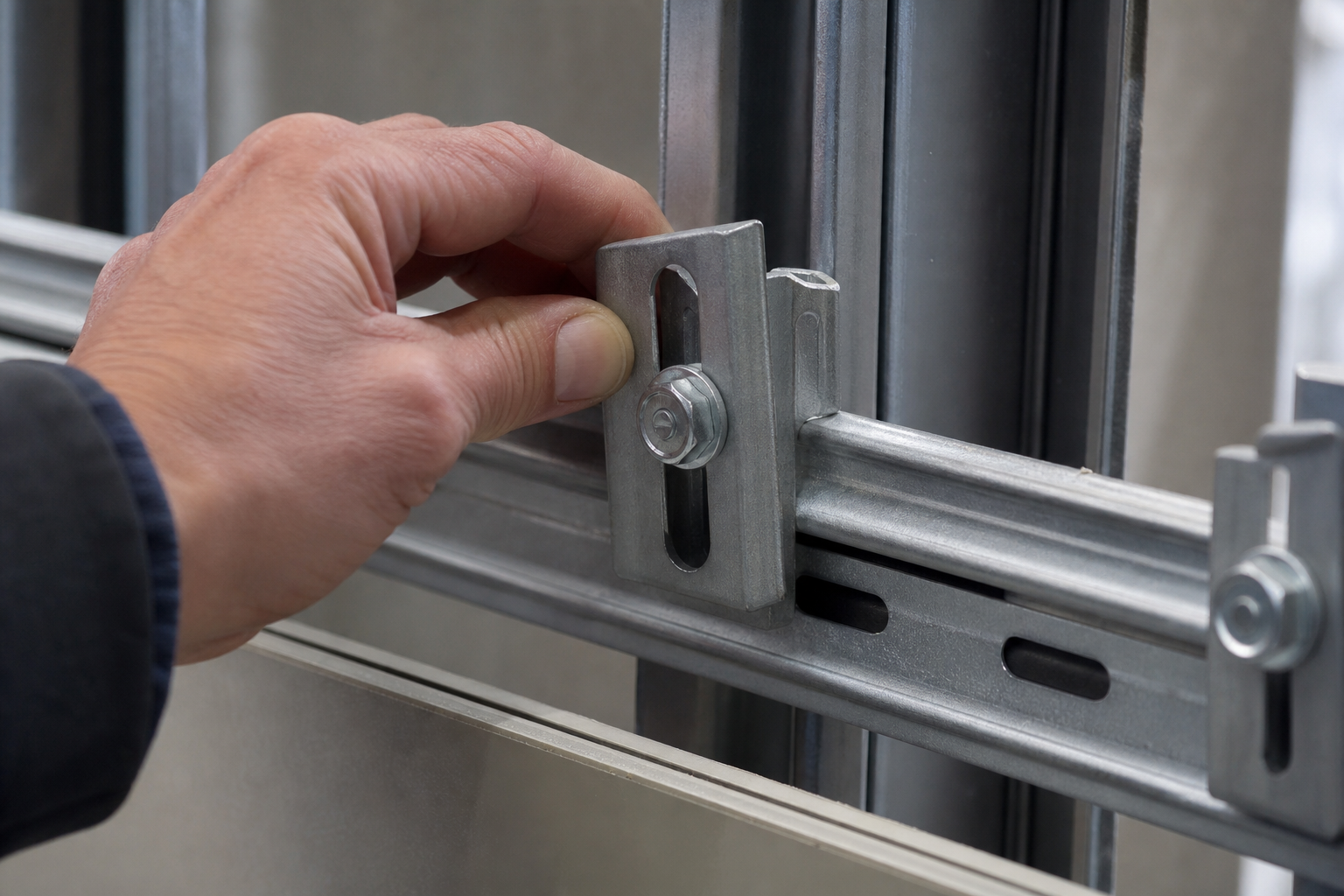
Slots are the functional heart of the system. If slot length or orientation is insufficient, the clip will bind and transfer loads that it should accommodate. Verify the following before sign off.
- Slot length and clip travel, expressed as the maximum vertical movement the clip allows. Ask the supplier to provide the slot dimensions and the measured clip travel capacity.
- Slot orientation and clearance so the clip cannot rotate or catch on the slot edge. Verify lateral clearance and whether notches or chamfers are required to avoid edge contact.
- Tolerances for field conditions. If construction tolerances or framing out-of-plumb are likely, confirm the clip can accommodate the expected misalignment without seizing or imposing lateral loads.
- Movement direction and limiters. Some clips allow only downward travel, others permit bidirectional movement. Confirm the intended movement direction for your assembly.
Ask for an installation detail showing the clip in the slot with the maximum and minimum positions marked. If the supplier cannot provide slot geometry and a travel figure, treat that as a red flag.
Which material and corrosion red flags matter for Canadian projects
Material and finish determine longevity. In Canada, exposure categories vary from inland urban to coastal marine and industrial. Confirm the following items with documented evidence.
- Base metal and gauge. Confirm the clip material, typically light gauge steel, and the gauge used. The clip gauge should be adequate for the load and service life expected.
- Galvanizing or coating standard. Request the coating type and the standard it meets. Ask for certificate of compliance or MSDS where coatings are proprietary.
- MSDS and material certification. The supplier should provide MSDS and a material certificate on request. Dass Metal publishes technical resources such as product brochures, load tables, standards, and MSDS to support specification and purchasing; ask for these documents with the quotation.
- Project exposure classification. For coastal or chemically aggressive environments specify a higher corrosion resistance and confirm whether the clip finish is compatible with adjacent galvanized or stainless components.
Action item: require MSDS and a certificate of compliance with every purchase order for clips intended for exposed or marine conditions. If you do not get documentation, consider that a procurement red flag.
How should you validate load, structural and code related assumptions
Deflection clips are not a substitute for engineered connections when loads exist. For any condition where the clip could be part of a load path, or where large spans are involved, confirm the following.
- Request load tables or test data for the clip and the slotted track assembly. Do not accept a verbal claim that the clip is sufficient for a given load without published data.
- Ask whether the supplier provides engineering support or CAD/shop drawings for the assembly. Dass Metal lists engineering support and load tables as part of its technical resources; request these before finalizing the specification.
- Require engineer sign off when the assembly is adjacent to load bearing elements or when the clip could transfer wind or seismic loads to non-structural framing.
- Check code context where your project requires specific approvals or tested assemblies. A clip must be used within its tested assembly; otherwise obtain an engineer evaluation.
Red flag: a supplier who cannot provide load tables or refuses to involve an engineer for unusual conditions. That indicates the clip has not been validated for your application.
What installation and site red flags cause failure or delays
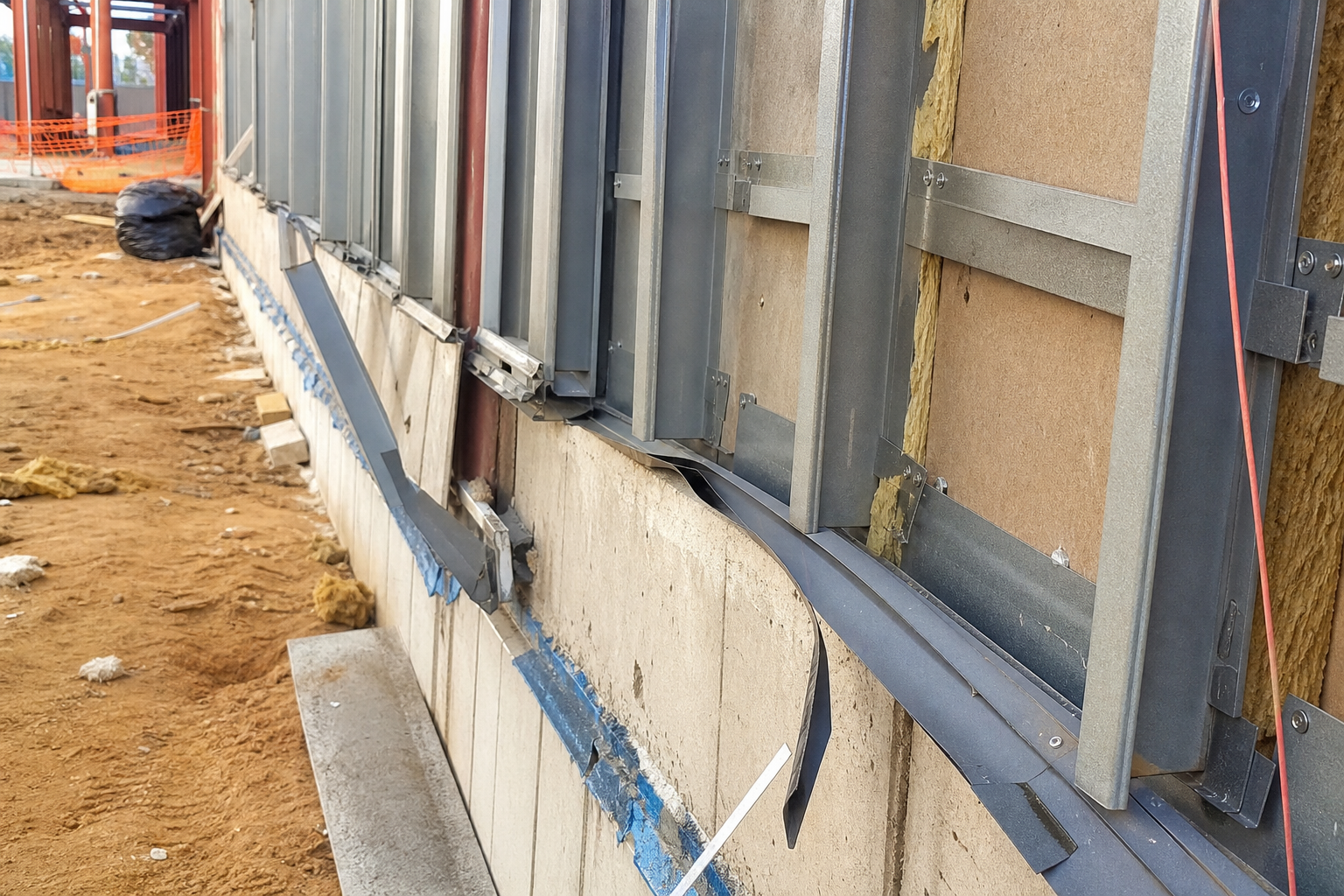
Even the correct clip will fail if installed incorrectly. Watch for these site errors and set verification steps in your quality plan.
- Wrong orientation. Clips installed upside down or rotated can block movement. Use an installer briefing and photos to show correct orientation and mark this as a hold point in your QC checklist.
- Insufficient edge clearance so the clip cannot reach its travel limits without contacting adjacent sheets, insulation, or services.
- Interference with insulation or electrical and mechanical services located in the same zone as the clip. Coordinate trades and mark clip zones on drawings.
- Incorrect fastener type or spacing. Fasteners that shear off the flange or are too short to engage properly are a common cause of failure. Use the supplier fastener schedule and specify fasteners on the PO.
- Field modification attempts. Do not allow grinding, bending, or shortening of clips on site unless the manufacturer provides written guidance that the clip can be safely modified.
Verification steps: perform a preinstallation mockup, include clip orientation photographs in the submittal package, and incorporate a hold point where the first run of clips is inspected before mass installation.
Which procurement and specification traps should you check before ordering
Procurement often introduces unexpected delays. Avoid these traps by asking the right questions when you request a quote.
- Is a product data sheet included with the quote that shows slot geometry, material, finish, and travel? If not, request it before signing the PO.
- Are MSDS and certificates available and will they be shipped with the goods? Request them as part of the contract.
- Are minimum order quantities or custom lengths required and are they documented? Custom clips or custom pre-punching can increase lead time and cost.
- What are lead times and cross border shipping terms for Canadian projects that need delivery to U.S. sites or vice versa? Ask for written shipping terms and customs handling procedures.
- Do you get installation instructions and shop drawings as part of the supply package? If not, add them to your purchase order requirements.
Use a short RFI template that requests: product data sheet, slot dimensions and travel, load tables or test data, MSDS and certificates, recommended fasteners, recommended installation detail, and lead time. If any of these items are missing from the supplier reply treat that as a red flag and escalate to the manufacturer or an independent engineer.
Quick contractor checklist to verify deflection side clip uses
- Confirm clip is specified for your track type and stud profile, request a fit drawing.
- Obtain slot geometry and measured travel capacity in writing.
- Request load tables or test data and get engineer sign off for load conditions.
- Get MSDS, material certificates, and finish specifications for corrosion evaluation.
- Require installation details, fastener schedule, and a preinstallation mockup.
- Document minimum order quantities, lead times, and cross border shipping terms on the PO.
Where to get more information and practical support
If you need product data, shop drawings, or engineering help for a specification, Dass Metal Products publishes technical resources and offers engineering support for metal framing assemblies. Review the company resources on slotted track in the slotted track guide and consult the deflection side clip page for product specifics. For an industry perspective on how deflection and drift clips are intended to work, see the technical note from US Frame Factory which details slotting and travel as the mechanism to isolate vertical movement.
Frequently asked questions
When do you need deflection side clips instead of fixed clips?
Use deflection clips when the primary structure can move vertically relative to the wall or curtain wall, for example in bypass framing or where slabs and beams will deflect. Fixed clips are appropriate when the wall and structure move together or when no differential movement is expected. If in doubt, request an engineer review and the supplier’s movement data.
What documentation should I request from a supplier before specifying deflection side clip uses?
Request a product data sheet, slot geometry and measured travel, load tables or test data, MSDS and material certificates, recommended fasteners and installation details, and lead time. If the supplier cannot provide these, treat it as a procurement red flag.
Can deflection side clips be modified on site to fit a different track depth?
Do not assume clips can be modified. Field modification can change clip behaviour and void any test data. Only modify clips if the manufacturer provides written instructions and approved details. Otherwise request the correct clip or a custom profile from the supplier.
Do deflection side clips affect fire or acoustic assemblies and how should that be checked?
Clips can change the continuity of acoustic or fire assemblies. Verify that the clip and slotted track detail are included in any tested fire or acoustic assembly, or obtain an engineer evaluation of the modified assembly. Treat the absence of tested assembly documentation as a red flag.
How do I confirm corrosion resistance for coastal or chemically aggressive environments?
Request the clip base metal, coating type, and certificate of compliance or MSDS. Specify increased corrosion resistance where appropriate, for example a heavier galvanizing or stainless steel, and require documentation on the PO. If the supplier cannot document finish performance, seek alternatives.
For product data, fit drawings, and engineering assistance, contact Dass Metal Products or review the slotted track guidance and the deflection side clip product page to start your RFI and specification package.
Ready to validate a clip for your project? Contact Dass Metal Products to request product data, load tables, and engineering support for deflection side clip uses.