
7 questions to ask before you choose drywall finishing trims
Who should use this checklist and how to apply it
This checklist is written for builders, general contractors, drywall and metal-framing contractors, architects, and procurement managers who must specify or buy drywall finishing trims. Use it when you review submittals, compare supplier quotes, or prepare purchase orders. Dass Metal Products publishes technical resources and can provide product brochures, load tables and MSDS documentation to support submittals and code compliance, so request those documents early in the specification stage where applicable (Dass Metal Products).
Seven essential questions to ask before you choose drywall finishing trims
-
1. Does the trim material match the traffic and impact conditions?
Decide whether corner and edge protection will be subject to high traffic, frequent impact, or furniture movement. Metal corner beads are typically recommended for high-traffic areas because they offer superior impact resistance, while vinyl beads suit curved or decorative corners. Paper-faced metal beads combine good durability with a smooth compound bond when a mud-on finish is required. Specify a galvanized finish for exposed commercial areas to reduce corrosion risk. For guidance on material selection and typical use cases, consult manufacturer accessory overviews that explain corner behaviour and durability (How to Choose the Right Drywall Accessories for a Smooth Finish).
-
2. Is the profile compatible with the planned finish method?
Match profile type to finish technique. A mud-on L-bead blends flush into joint compound for a seamless finish, while a J-bead or exposed bead quickly caps exposed edges when you want a clean visible reveal. Shadow beads create deliberate reveals for a modern aesthetic. If the specified finish requires a paint-ready, flush surface or a visible trim edge, state that on the submittal so the supplier confirms the correct profile. For examples of which trim suits which transition, see practical installation notes on transition trims (How to Install Drywall Transition Trim).
-
3. Are the edge details and attachment methods compatible with the framing behind the drywall?
Check how the trim will attach to the substrate and whether studs, channels, resilient elements, or deflection tracks interfere. Some trims require full bearing on studs or blocking, others can be screw-fixed to drywall. If the project uses resilient channels for acoustics or slotted deflection track for movement, confirm clearance and clip compatibility at the specification stage. Ask suppliers for installation drawings or a one-line detail showing how the trim interfaces with the framing so the installer can verify fastener locations and blocking needs before work starts.
-
4. Has the supplier provided product documentation and compliance evidence?
Require product brochures, material certificates, MSDS, and any applicable certification or reference to industry standards as part of the submittal. These documents let you verify coating types, corrosion resistance, and suitability for wet or high-humidity areas. Dass Metal Products makes technical resources available for specification and purchasing; request those files to include with your bid or PO (Dass Metal Products).
-
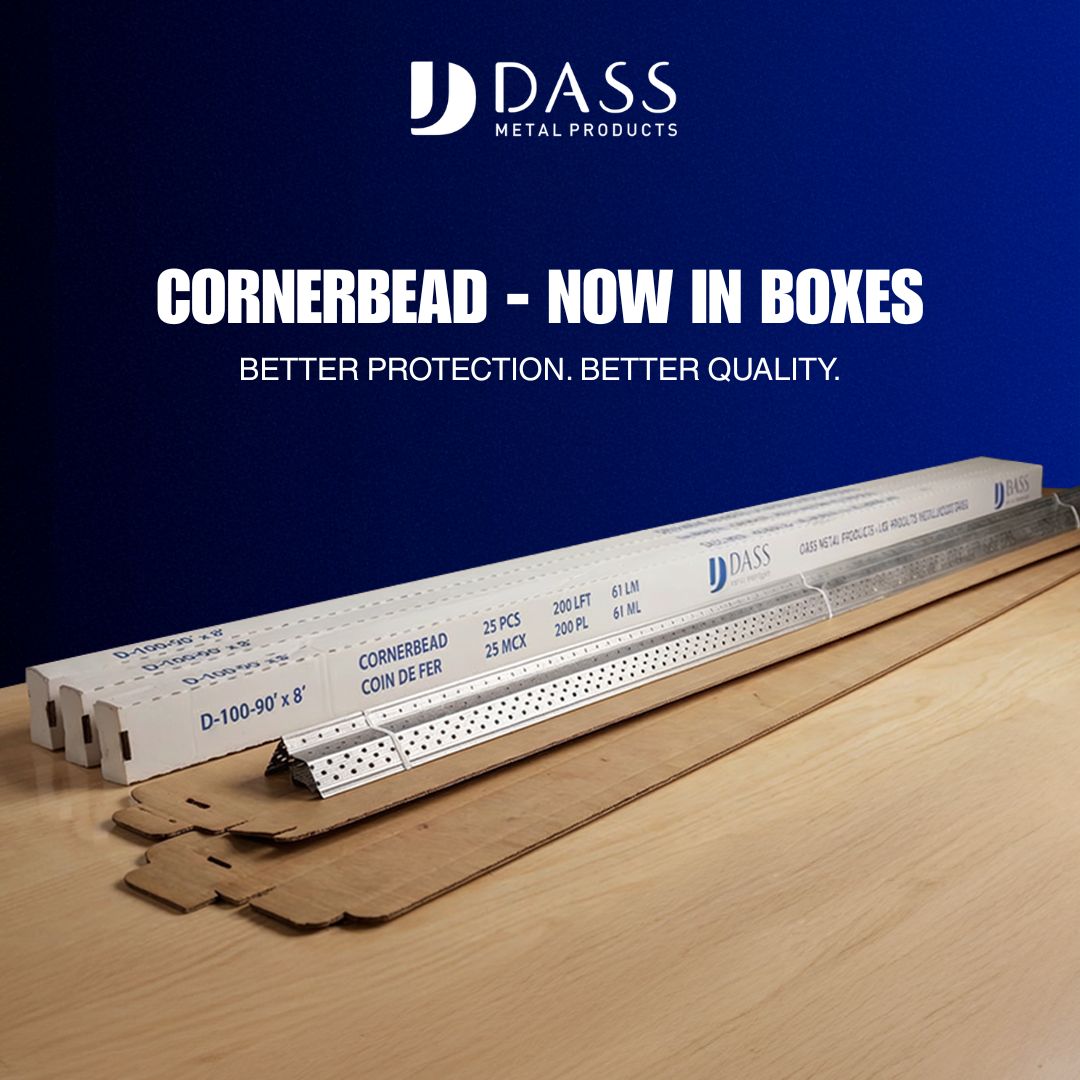
5. Are lengths, edge conditions and packaging clearly called out to avoid on-site waste?
Specify nominal lengths, finish on exposed faces, whether ends should be factory-cut or field-cut, and desired packaging such as bundles or protective wrapping. Mistakes here create handling delays and scrap. Confirm whether trims arrive pre-finished or require touch-up, and whether cut-off waste will be returned to the supplier. Clear length and packaging instructions reduce double-handling on fast schedules and help receiving plan truck offload.
-
6. What are lead times, minimum order quantities, and availability for custom profiles?
Confirm standard stock lead times and minimums, and ask separately about custom profile production. Non-standard reveals, extruded shapes, or special gauges may require tooling or longer production windows. If a job-critical finish depends on a custom piece, ask the supplier for a CAD profile, expected lead time, and any minimum order quantity before issuing a PO so the schedule and budget reflect real delivery constraints.
-
7. How will the trim choice affect finishing labour, sanding and final finish level?
Ask the drywall contractor how many coats, what sanding method they will use, and whether dust-control measures are included. Mud-on trims add finishing time and drying cycles but deliver seamless results, while exposed beads reduce finishing time but change the visual outcome. Before contract signing, compare quotes that list finish level, number of coats, sanding process and whether primer and paint are included. These pre-contract questions improve quote comparability and reduce surprises during install (Drywall Contractor pre-contract checklist).
Material and profile comparison: metal, vinyl, and paper-faced trims

Quick comparison to match material to use case:
- Metal corner beads: Best for high-traffic or commercial corridors. Provide strong impact resistance and crisp corners. Specify galvanized finish for corrosion resistance.
- Vinyl beads: Flexible for curves and decorative trims. Less impact resistance than metal but easier to form around non-linear geometries.
- Paper-faced metal beads: Offer excellent bond with joint compound and produce smooth, paint-ready surfaces. They combine durability with a finished look when a mud-on application is chosen.
Use these material qualities to decide whether aesthetics, durability, or ease of finishing is the priority on your project. See manufacturer accessory guides for further detail on when each material is recommended (Drywall accessory guide, RONA moulding questions).
Ordering and specification checklist contractors must include
Include these fields on purchase orders and submittals to prevent errors:
- Part number and profile name as provided by the supplier.
- Material type and gauge, and galvanization or coating specification if required.
- Edge condition: mud-on, exposed, J-bead, L-bead, shadow reveal, or other profile.
- Nominal dimensions and length per piece, and total linear metres.
- Finish and corrosion protection requirements.
- Packaging, bundle quantities and labelling requirements.
- Required documents: product brochure, MSDS, material certificate, CAD detail, and CSSBI reference if applicable.
- Delivery address, receiving hours, and any offload instructions.
Attach supplier submittals and shop drawings to the PO. If the supplier cannot provide a requested document, mark that item as an outstanding submittal with an agreed due date before shipping.
Installation and labour impacts that change the right trim choice

Trim choice can increase or reduce finishing hours. Mud-on trims require additional coats and feathering for a seamless result, increasing labour and drying time, but they raise the finish level. Exposed beads lower finishing time but require accurate fastening and produce a visible edge. Ask installers for the number of coats, sanding method, and whether HEPA or dust-minimizing sanding will be used. These details make bids comparable and let you budget time for drying and inspection (pre-contract questions to ask).
For standard installation details and to review recommended fastening and finishing practices, review the Dass Metal drywall bead installation guidance where applicable (Drywall bead installation guide).
When to request custom profiles or an engineered submittal
Triggers that justify custom work or engineering support:
- Unusual transitions or architectural reveals that standard trims cannot match.
- Long run corners or areas requiring heavy impact protection beyond standard beads.
- Integration with acoustic systems, slotted deflection tracks, or specialty channels where tolerances are tight.
- Specified finishes that require non-standard edge geometries for paint or gypsum reveal details.
When a custom profile is needed, request CAD profiles, shop drawings, material certificates, and an estimated lead time. Dass Metal Products offers custom profile production and engineering support; ask for a CAD detail and production schedule as part of the submittal (Dass Metal Products).
Final decision criteria and a quick PO acceptance checklist
Use this go or no-go rubric before accepting or releasing a PO:
- Compatibility with finish method confirmed, and installer sign-off obtained.
- Product documentation submitted and accepted, including brochure, MSDS, and material certificate.
- Correct part number and profile confirmed against shop drawings.
- Lead time and delivery window accepted by project schedule.
- Packaging and cut lengths specified to minimise site waste.
- Custom profile or engineering submittal completed where required.
Attach this checklist to the PO and require a signature from the project superintendent or procurement lead to reduce the risk of rework and delays.
Frequently asked questions
How do I decide between metal, vinyl, and paper-faced corner beads for a commercial project?
Choose metal for impact resistance in high-traffic areas, vinyl for curved or decorative needs, and paper-faced metal when you need a mud-on finish that blends smoothly with joint compound. Manufacturer accessory resources explain which material suits each condition (Drywall accessory guide).
When should I specify a mud-on (L-bead) trim versus an exposed J-bead or shadow bead?
Specify a mud-on L-bead when a flush, seamless wall is required and you accept additional finishing labour. Use J-bead or exposed beads where a visible, finished edge is acceptable and you want to reduce finishing time. Shadow beads are chosen for intentional reveals and modern aesthetics; align the profile to the designer’s intent and the contractor’s finishing scope (Transition trim options).
What documentation should I request from my trim supplier before issuing a purchase order?
Request product brochures, MSDS, material certificates, CAD or shop drawings, coating specifications for galvanized items, and any applicable certification references. If the supplier cannot supply these documents, treat them as outstanding submittals and set a deadline before shipment (Dass Metal Products).
How do trim choices affect on-site labour and final finish level?
Trim types influence the number of compound coats, sanding hours, and dust control requirements. Mud-on trims raise finish level but add drying and sanding work. Exposed trims reduce compound work but require accurate fastening. Ask contractors for a detailed finish scope to compare bids fairly (Pre-contract checklist).
How do I request a custom trim profile or technical submittal from Dass Metal Products?
Contact Dass Metal Products with your CAD sketch or sample, specify material and finish requirements, and request CAD profiles, shop drawings and estimated lead time. Dass Metal’s engineering team can produce custom profiles and provide the documentation needed for submittals (Dass Metal Products).
Ready to get detailed product information or a project quote? Contact Dass Metal Products for submittals, custom profile requests, and technical support: Dass Metal Products.