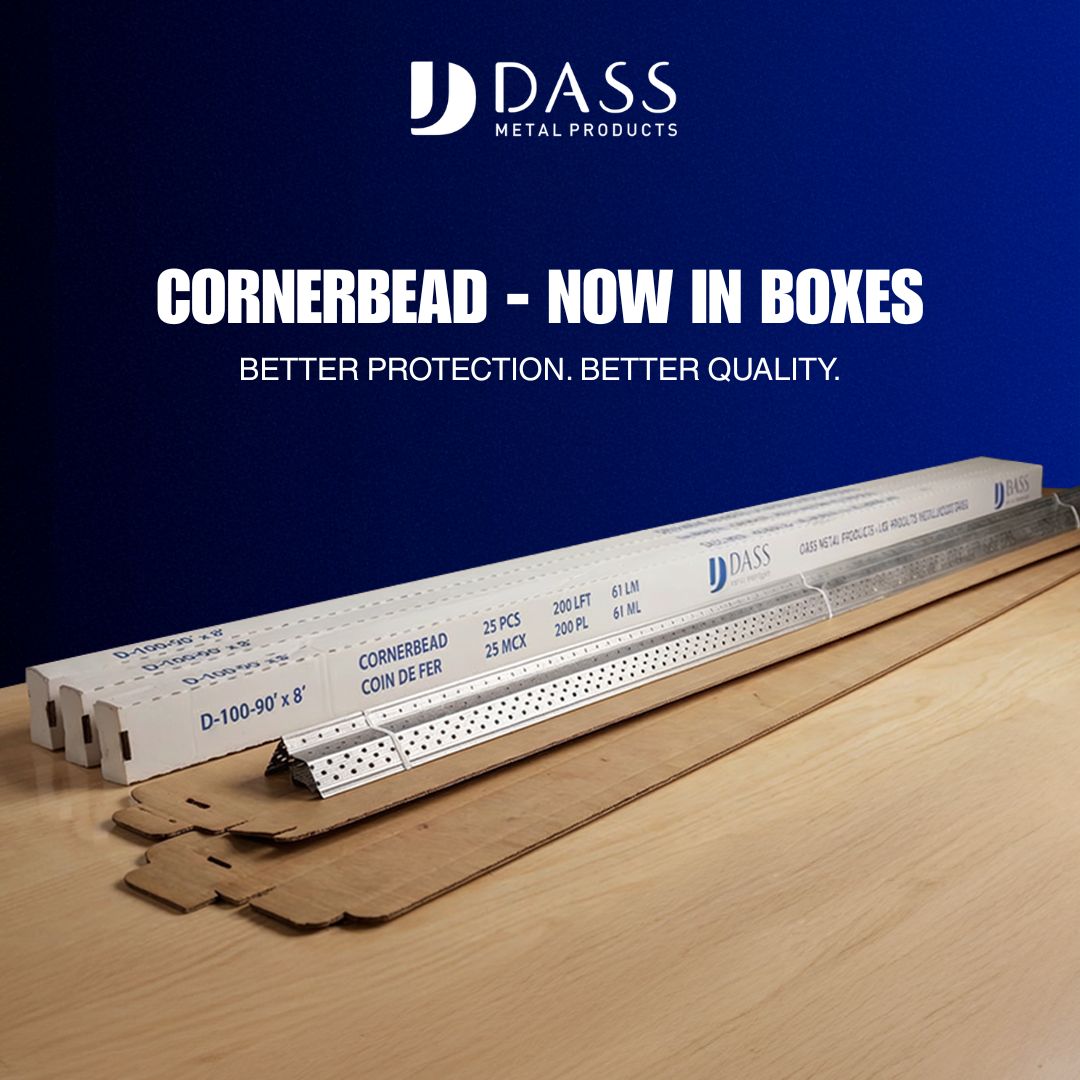
Framing studs are the cold-formed steel or wood vertical members that create the skeleton of a wall. They transfer loads to the floor, hold drywall or sheathing, and define openings. For projects near 370 New Enterprise Way in Vaughan, precision-engineered steel studs from Dass Metal keep schedules tight and performance predictable.
By Navjot Dass • Last updated: 2026-06-14
Above the Fold: Hook & Table of Contents
If you need straight, strong walls that meet code and finish cleanly, choose the right framing studs and install them methodically. This guide gives builders and specifiers a practical playbook—definitions, types, spacing, deflection, acoustics, and field tips—so crews frame faster and inspectors sign off the first time.
On most job sites, small framing decisions ripple into big schedule impacts. The right stud type, track, spacing, and connectors reduce callbacks and speed finishing. Use this guide as your field-ready reference and spec companion.
- What are framing studs?
- Why framing studs matter
- How a stud wall works
- Types of studs, tracks, and channels
- Best practices on site
- Tools and technical resources
- Local specs, delivery, and code context
- Case studies and field examples
- Frequently asked questions
- Conclusion and next steps
Summary
Framing studs define wall strength, straightness, and finish quality. Select the correct gauge, depth, and spacing; pair with compatible track; and brace properly. Follow deflection, fire, and acoustic requirements. Dass Metal’s engineered steel studs and channels simplify submittals and speed inspections.
Quick points you can use today:
- Common steel stud widths: 1-5/8, 2-1/2, 3-5/8, 4, 6, 8 inches.
- Typical light-gauge thickness: 25–20 ga (approx. 18–33 mil).
- Typical heavy-gauge thickness: 18–12 ga (43–97 mil).
- Standard spacing: 16″ o.c. or 24″ o.c. depending on loads and finishes.
- Deflection targets: often L/240 to L/360 for partitions; verify with project specs.
What Are Framing Studs?
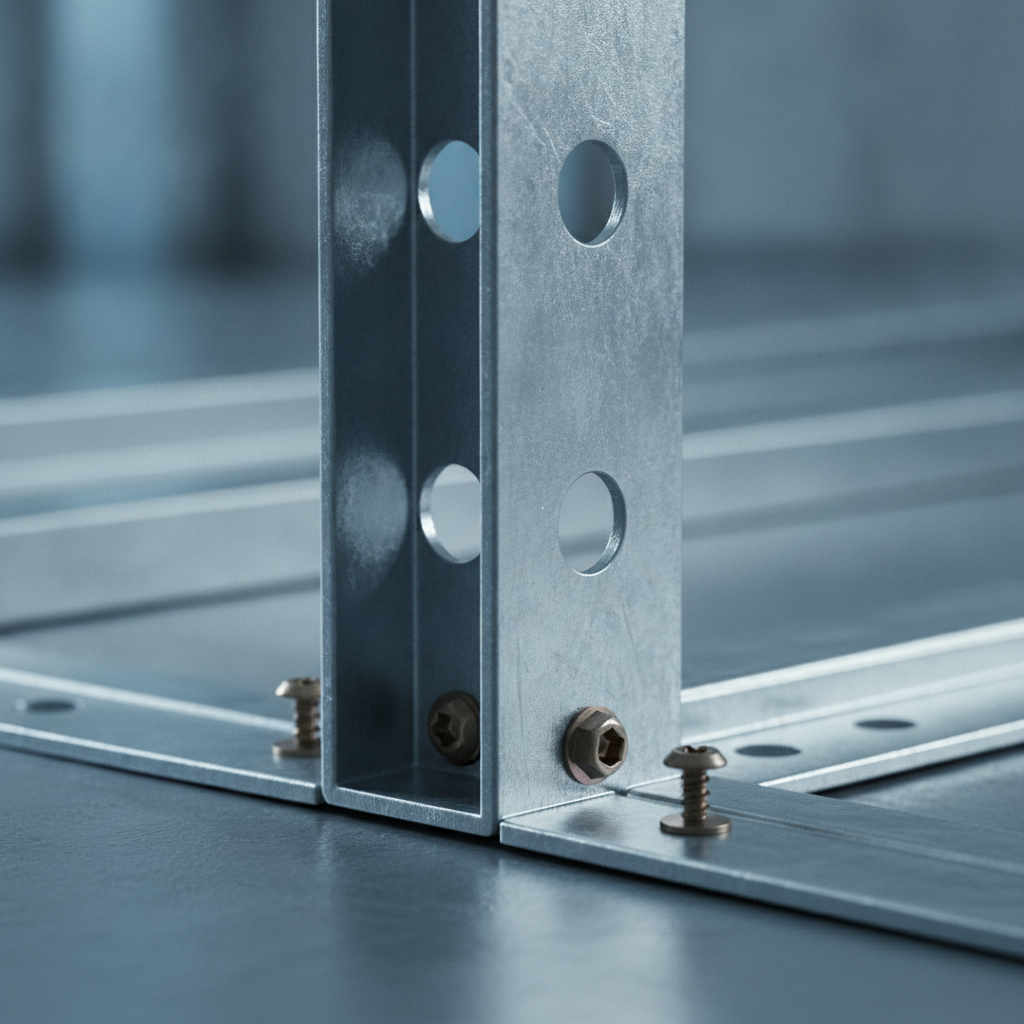
Framing studs are vertical members that form walls. In steel framing, cold-formed C-shaped studs pair with top/bottom track to carry loads, support drywall, and create openings. Proper gauge, depth, spacing, and bracing control deflection, acoustics, and fire performance.
In steel systems, studs are roll-formed with consistent dimensions, straightness, and punched service holes. They fasten to standard track, slotted deflection track, or deep track using screws or anchors. Drywall attaches to studs, while bridging channels and clips stabilize the assembly.
Core components you’ll specify
- Studs (C-shape): Vertical members; sizes from 1-5/8″ to 8″ typical.
- Track (U-shape): Guides at floor and head; available in standard, slotted, and deep profiles.
- Bridging/carrying channel: Lateral bracing to prevent stud buckling and to stiffen walls.
- Resilient channel: Decouples gypsum from framing for sound control.
- Clips and angles: Secure studs to structure while accommodating movement.
Why this matters: a wall is only as reliable as its weakest link. A 3-5/8″ 25 ga stud at 24″ o.c. behaves very differently than a 6″ 43 mil stud at 16″ o.c. Choose deliberately to control movement, cracking, and noise.
Why Framing Studs Matter
Stud selection drives schedule, finish quality, and long-term performance. Right-sized, properly braced studs reduce callbacks, resist cracks, improve STC ratings, and make inspections smoother. That saves labor hours and protects your timeline.
Here’s the thing—framing decisions cascade into taping, tiling, millwork, and glazing. Mis-sized studs or poor bracing show up as wavy walls, door binding, or cracked joints. In our experience supporting Ontario and U.S. sites, dialing in stud type and spacing early keeps interiors straight and quiet.
Performance levers you control
- Deflection control: Taller walls or tile loads often push spacing to 16″ o.c. and heavier gauges.
- Acoustics: Resilient channel, double-stud, or staggered-stud layouts can add 5–10+ STC points when detailed well.
- Fire and corrosion: Galvanized steel plus Type X gypsum forms proven fire-rated assemblies; check UL/GA designs.
- Openings and loads: Jamb studs, headers, and king studs concentrate loads—size these carefully.
Action you can take now: for non-load-bearing partitions under 10 ft with standard gypsum, start with 3-5/8″ 25 ga at 24″ o.c. and verify deflection. Increase to 20 ga or tighten spacing as wall height, tile, or millwork increases.
How a Stud Wall System Works
A stud wall transfers loads into track, braces laterally with bridging, and finishes with drywall. Movement joints at the head (deflection track) let the structure move without cracking finishes. The system succeeds when spacing, gauge, and bracing match the wall’s height and use.
Think in layers: structure above, slotted deflection track at the head, studs locked into bottom track, bridging channel at 4–6 ft vertical intervals (as required), and drywall or sheathing outside. Sealants, insulation, and resilient channel tune fire and sound. Numbers matter: 16″ or 24″ spacing changes how much a wall flexes under lateral load.
Typical installation sequence
- Snap lines and set bottom standard track; anchor per substrate.
- Install head slotted deflection track to accommodate live-load movement.
- Cut studs 1/2″ short for slip at head; seat in tracks; crown faces consistent.
- Add bridging/carrying channel and clips per span/height tables.
- Install services through factory punch-outs; protect edges with grommets as needed.
- Hang gypsum; use resilient channel where STC is a target.
- Tape, finish, and verify control joints align with substrate movement joints.
Pro tip: where tile or millwork aligns, confirm stud layout to center fasteners and reduce shimming later.
Types/Methods/Approaches: Studs, Tracks, Channels, and Clips
Choose light-gauge studs for non-load-bearing partitions and heavy-gauge for structural/load-bearing. Pair with the correct track (standard, slotted, deep), then stabilize with bridging channel, windbrace, and clips. Use resilient channel when acoustic separation is required.
Dass Metal manufactures a comprehensive range for interior and exterior work. Below are the core categories you’ll specify and install, with practical selection tips.
Light gauge: Non-load-bearing interior partitions
- Non Load Bearing Steel Studs: Commonly 25–20 ga; heights under ~12–14 ft typical; fast install.
- Resilient Channel: Improves STC; install perpendicular to studs; avoid short-circuiting at studs.
- Furring Channel and Z-Bar: Level uneven substrates; create cavities for MEP or acoustics.
- U-Flex Track: Forms curves; useful in lobbies and corridors with radiused walls.
Heavy gauge: Load-bearing and tall walls
- Load Bearing Stud Framing System: 43–97 mil with structural connectors; supports gravity and wind.
- Deep Track: Added engagement improves tall wall stiffness and alignment.
- Windbrace: Increases lateral resistance for exterior and high-wind zones.
- Shaftwall / CH Stud: For elevator/stair shafts; fire and smoke-rated assemblies.
Tracks, clips, and trims
- Standard Track: Baseline head and base runner for interior partitions.
- Slotted Deflection Track: Allows vertical building movement without cracking finishes.
- Deflection Side Clip / Webslide Clip / Bridging Clip: Transfer loads cleanly and speed install.
- L Track, L/J Trim, Cornerbead (90°/130°): Clean finishing at edges and outside corners.
Need dimensions while drafting? Review common Canadian stud sizes and depths on this concise overview of steel stud framing sizes in Canada.
Best Practices for Straight, Quiet, Code-Ready Walls
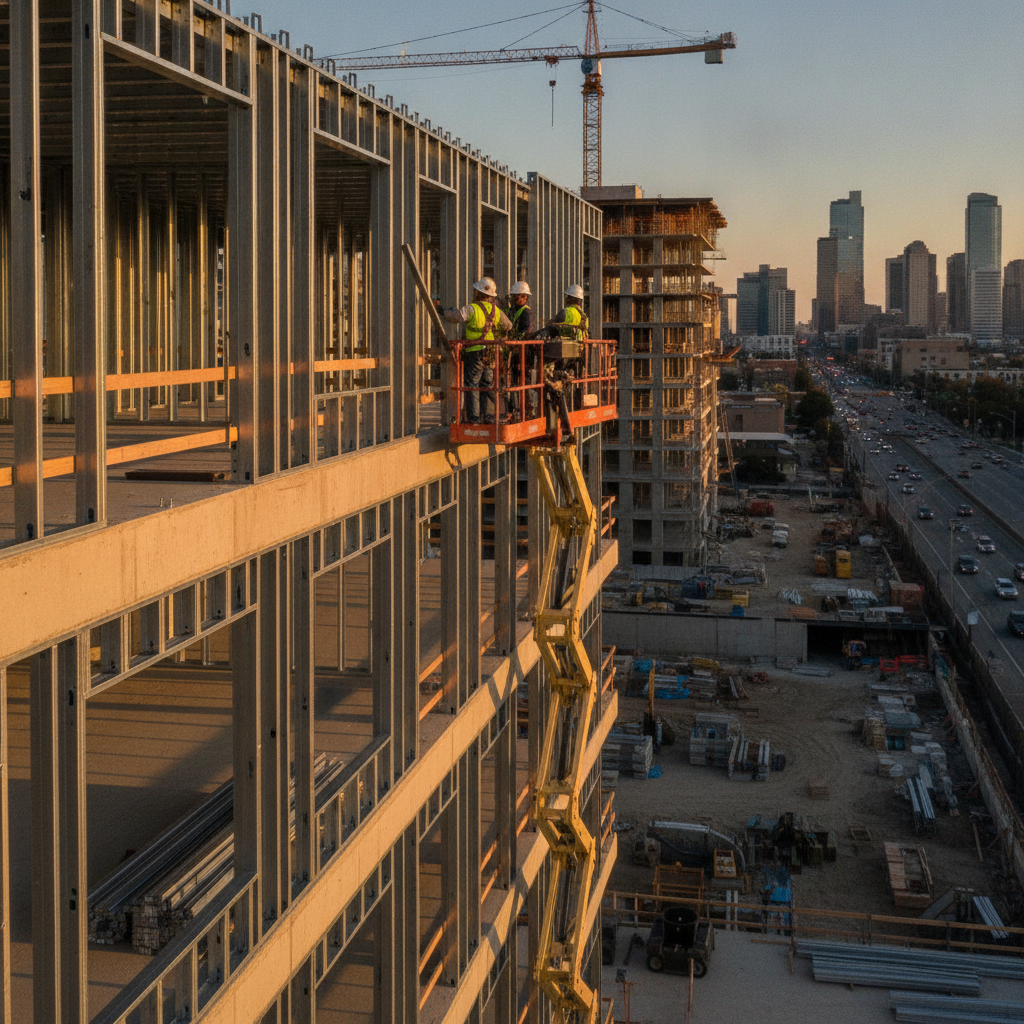
Frame straighter by sizing studs to height, tightening spacing near tile/millwork, and bracing per tables. Keep acoustics high by avoiding RC short-circuits. Use slotted track at the head to prevent cracks from building movement. Document all details in submittals.
Layout and sizing
- Match height to gauge: As wall height passes ~10–12 ft, step up from 25 ga to 20 or 18 ga.
- Mind the finish: Tile, stone, or tall glass panels favor 16″ o.c. spacing, not 24″.
- Doorways: Use jamb/king studs sized for frame weight; confirm hinge and closer loads.
- Fastener pattern: Follow manufacturer spacing; consistent screw placement reduces ridging.
Bracing and movement
- Bridging channel: Add at required intervals (commonly every 4–6 ft) to limit stud roll.
- Deflection gap: Cut studs 1/2″ short at head with slotted track to absorb live-load deflection.
- Control joints: Align gypsum control joints with substrate movement joints.
Acoustics and fire
- Resilient channel details: Use correct screw length to avoid penetrating studs; maintain 1/4″ perimeter gaps and caulk.
- Back-to-back studs: For high STC, consider double-stud or staggered-stud with cavity insulation.
- UL/GA designs: Select tested assemblies for required ratings; maintain mineral wool continuity.
Specification tip: include exact stud designation, track type, spacing, and bracing frequency in notes. That removes ambiguity for crews and inspectors.
Tools and Technical Resources
Field efficiency rises when crews have the right cutters, levels, and fastening tools—and specifiers have clear load and deflection data. Combine reliable tools with manufacturer resources and pre-approved submittals to keep work moving.
Installer’s toolkit
- Metal snips or chop saw with appropriate blade for clean, square cuts.
- Rotary laser and 6-ft level to hold plumb and align openings.
- Self-tapping screws and drivers matched to gauge and coating.
- Anchors and pins suited to slab or structural deck.
- Hearing and eye protection—simple, critical, enforce consistently.
Dass Metal resources
- See our steel studs guide for framing fundamentals and field tips.
- Start with light gauge steel studs for non-load-bearing partitions.
- Use this light-gauge framing guide to plan heights and spacings.
- Explore channel studs explained for subassembly choices.
For structural needs, review the heavy-gauge load-bearing system overview to coordinate connectors and clips with the stud designation.
Local Specs, Delivery, and Code Context (Vaughan & York Region)
Serving jobs from 370 New Enterprise Way in Vaughan, within the Regional Municipality of York, Dass Metal supports fast delivery, accurate takeoffs, and code-ready submittals. Our engineers help you align stud gauge, track type, and bracing with local inspection practices and seasonal site conditions.
Local execution improves when specs reflect real site constraints and inspection habits. We support crews with quick turnarounds and job-ready bundles labeled by zone and level.
Local considerations for 370 New Enterprise Way
- Transit access near Highway 50 – Zum Queen Stop EB helps crews stage early deliveries and stagger shifts.
- Winter framing: plan indoor cutting areas and moisture control for consistent gypsum finishing.
- Inspections: keep deflection track details visible; label bridging spacing so inspectors verify at a glance.
Comparison: Steel Studs vs. Wood Studs
Steel studs deliver straighter walls, consistent dimensions, and noncombustible performance. Wood offers easy on-site modification but varies with moisture. For predictable finishes and fire-rated assemblies, steel framing is the dependable baseline across commercial interiors.
| Factor | Steel Studs | Wood Studs |
|---|---|---|
| Straightness | Roll-formed; minimal crown or bow | Can twist, check, or warp |
| Fire performance | Noncombustible; pairs with Type X gypsum | Combustible; requires additional detailing |
| Acoustics | Pairs well with resilient channel systems | Good with RC; variability can affect finish |
| Dimensions | Consistent depths and flange widths | Nominal vs actual can vary |
| Fastening | Self-tapping screws, clips, anchors | Nails, screws, hangers |
| Environmental | Recyclable steel content | Renewable resource with proper sourcing |
Where wood makes sense: isolated furring, light blocking, or where the spec calls for it. Where steel wins: straight partitions, rated assemblies, and large-scale consistency.
Case Studies and Field Examples
Real projects show how the right stud, track, and bracing package prevents rework. These short field notes highlight choices that kept walls straight, quiet, and inspection-ready under tight timelines.
Healthcare tenant fit-out, York Region
- Challenge: Quiet exam rooms with plumbing chases and wall-hung fixtures.
- Decision: 3-5/8″ 20 ga studs at 16″ o.c.; resilient channel one side; mineral wool in cavity.
- Outcome: Clean tile lines, strong anchorage, and improved STC without schedule slips.
Mid-rise corridor renovation, GTA
- Challenge: Long hallway waves telegraphed through paint and baseboards.
- Decision: Deep track at base and head; added bridging every 4 ft; laser-aligned studs.
- Outcome: Straighter base lines and faster punch-list closeout.
Retail build-out, cross-border delivery
- Challenge: Aggressive opening date with mixed-height storefront partitions.
- Decision: Pre-labeled bundles by zone; slotted deflection track at all heads; jamb studs upsized.
- Outcome: Smooth inspections and no cracking at the ceiling finish despite structural movement.
If you’re new to light-gauge interior work, start with our galvanized steel studs guide and these stud wall framing tips to shorten the learning curve on day one.
Frequently Asked Questions
These quick answers address common on-site questions about stud choice, spacing, and when to use deflection track or resilient channel. Each tip is designed to save field time and reduce callbacks.
What spacing should I use for interior steel studs?
Most non-load-bearing walls work at 24″ o.c. with 25 ga studs, but 16″ o.c. is better for tile, millwork, or taller walls. Confirm spacing against wall height, sheathing weight, and deflection targets noted in the project specs.
When do I need slotted deflection track?
Use it whenever the structure above can move under live loads or thermal effects. The slots let the head of the wall slip vertically so ceiling and joint finishes don’t crack. Cut studs short at the head and don’t fasten the stud to the slotted leg.
How can I improve wall sound ratings (STC)?
Add resilient channel on one side, use cavity insulation, and seal perimeters. For higher performance, consider staggered- or double-stud walls. Avoid short-circuiting resilient channel with overlong fasteners or blocking.
What’s the difference between light- and heavy-gauge studs?
Light gauge (around 25–20 ga) serves non-load-bearing interior partitions. Heavy gauge (18–12 ga) carries structural or wind loads and suits tall walls. Pair heavy studs with deep or standard track, appropriate connectors, and required bracing.
Where can I find common stud sizes and designations?
Review this concise reference for steel stud framing sizes and confirm against your project’s drawings. If a wall is tall, carry tile, or include large openings, step up the gauge or reduce spacing.
Conclusion: Build Straighter, Finish Faster
Winning interiors come from matching stud gauge and spacing to height and finish, installing proper track, and bracing smartly. Use resilient channel for acoustics and slotted head track for movement. Document it all so work passes the first inspection.
- Key Takeaways
- Pick stud depth and gauge for height and finish loads.
- Use bridging at prescribed intervals to prevent roll.
- Reserve slotted track for movement at the head.
- Leverage resilient channel and insulation for higher STC.
- Next steps
- Bookmark the light-gauge framing guide for field checks.
- Coordinate structural or tall walls with our load-bearing system.
- Have a curved corridor? Specify U-Flex Track and confirm radius early.
Need a fast submittal? Our engineers can prepare a stud-and-track schedule with bridging and RC notes so your team starts clean. Book a quick review and align materials to the site sequence.
Final CTA: If you’re framing in or around 370 New Enterprise Way, schedule a quick consult—let’s ship labeled bundles to your site and keep your interiors straight from the first screw.