Specifying the correct metal framing clips prevents field delays, preserves engineered performance, and protects acoustic and deflection details. This article gives a seven point decision checklist, explains common clip types and selection signals, lists the technical criteria that matter, and shows what to provide when you need manufacturer or engineered approval. Where relevant, the guidance points to Dass Metal resources you should attach to specifications and to external engineering references for clip selection.
Quick decision checklist: 7 things to confirm before you specify
- Function first, decide whether the clip must fix a member, allow movement, transfer shear, or provide acoustic isolation.
- Profile compatibility, confirm the stud, track, or channel geometry and flange width so the clip fits without modification.
- Load path and bearing, check whether the clip carries axial, shear, or point loads and whether it bears on the stud web or flange.
- Deflection allowance, confirm roof or wall deflection limits and whether you need a floating or slotted deflection clip to prevent stress transfer.
- Material and finish, pick galvanizing, G90, or stainless grade suitable for the environment and expected service life.
- Fastening method and spacing, choose screw or weld types and verify spacing using recognized fastener guidance for metal framing connections.
- Documentation to attach, collect load tables, stud gauges, shop drawings, and MSDS so Dass Metal or the project engineer can verify compatibility.
Use these checks on site and at the specification stage. Dass Metal publishes brochures, metric and imperial load tables, standards, and MSDS documents that you should attach when requesting a compatibility review or quote. See Dass Metal’s metal framing systems guide and the framing using metal studs resource for technical downloads and product references.
Common clip types and where each is used
Clip categories reflect what the connection must allow or resist. External guidance explains clip definitions and the consequences of wrong selections, so review system engineering where clips affect performance. For a practical overview of fixed and expansion clip behaviour consult Sheffield Metals on clip selection and clip accessories.
Fixed clips
Fixed clips rigidly locate the member, transfer shear, and form a predictable load path. Use fixed clips when movement is nil or when the assembly is required to behave as a single unit. Verify that the fixed clip and fastener pattern meet the bearing area and shear capacity the engineer specifies.
Expansion or deflection clips
Expansion or deflection clips allow axial or lateral movement from thermal growth, live load deflection, or seismic displacement. These clips are essential where a rigid clip would introduce stress or cause buckling. Choose a deflection clip when the system engineering shows expected movement or when tracks are slotted to accommodate travel. Sheffield Metals warns that using the incorrect clip type can void engineered details and damage the assembly if movement is restrained in the wrong place.
Webslide and sliding clips
Webslide clips locate on the stud web and allow the flange or attached member to slide. They are typically used where the track is fixed and the stud must move vertically or horizontally. Webslide clips are common in tall partitions and multi storey connections where accumulated differential movement is expected.
Deflection side clips
Deflection side clips connect non bearing elements to a primary structure while allowing vertical deflection of the supporting element. These are often used at perimeter conditions where slab or beam movement must not transfer into the wall or ceiling finish.
Bridging and carrying clips
Bridging clips mechanically connect adjacent members to restore lateral stability or provide a continuous load path. Carrying clips transfer loads to continuous channels or carrying members. Use bridging clips where open web framing or tall studs need intermediate support to control buckling.
Acoustic and support clips
Acoustic clips isolate finishes from the structure, improving sound performance by breaking rigid paths. Support clips that incorporate acoustic features are used with resilient channels or furring channels to create a decoupled finish. When acoustic performance is contract critical, specify acoustic clips identified by the engineer and ask Dass Metal for compatible resilient channel details.
Technical selection criteria: what really matters
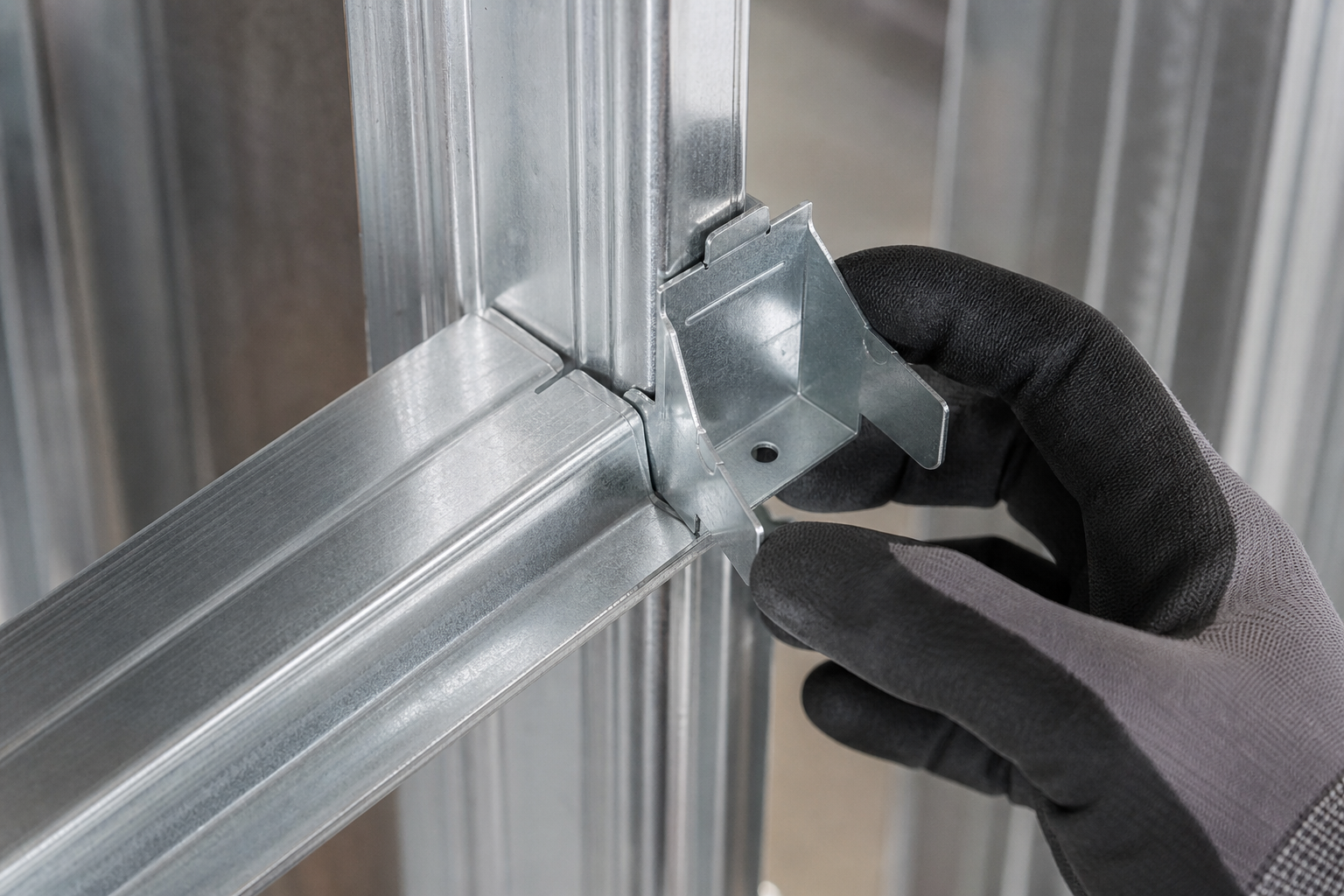
Clip choice is primarily an engineering decision. The following criteria determine suitability and are the questions Dass Metal or your project engineer will ask during a review.
Profile compatibility and geometry
- Match clip seating to stud flange width, track leg depth, or channel lips so there is no distortion during installation.
- Check that the clip does not interfere with insulation, services, or the finished surface.
Load path, bearing area and shear
- Identify whether the clip transfers shear, axial, bending, or point loads.
- Where loads are significant, include the load values and tributary widths with your request so Dass Metal or the engineer can compare against load tables.
Deflection and movement
- Design for the expected deflection from live loads, thermal movement, or differential settlement so the clip allows movement in the intended direction.
- Where a slotted deflection track is specified, verify clip compatibility with the slot geometry to permit travel.
Acoustic separation
- For acoustic applications, specify clips that provide a mechanical break and resist shear while avoiding rigid contact between the primary structure and finish.
- Attach sound rating targets and construction detail to the request so Dass Metal or a specialist acoustic engineer can confirm appropriate clip selection.
Material, coating and corrosion resistance
- Select galvanized or stainless options for exterior, humid, or corrosive environments and for projects near coastlines or chemical exposure.
- Confirm specified finish standards and reference them in the purchase order to ensure shop and field consistency.
Fastening type and spacing
Fasteners determine pullout and shear capacity. Use recognized fastener guidance when you set spacing and patterns. Include fastener schedules in construction documents so installers do not improvise and so the clip performs as intended.
When to involve an engineer or seek manufacturer approval
Engage Dass Metal or a structural engineer when clip choices affect structural integrity, acoustic or fire rating, or warranty. The following situations always require engineered verification or manufacturer approval.
- Connections that carry gravity or lateral loads from structure to finish.
- Long spans, tall partitions or heavy load bearing stud framing systems.
- Seismic or high wind design conditions that change load directions or magnitude.
- Architectural details that require movement accommodation across large joints.
- When the clip interfaces with proprietary systems where warranty or system engineering is conditional on approved components.
To accelerate an engineered clip check, provide the following project data in a single submission: plan and elevation sketches, stud and track sections and gauges, load values, expected deflection, finishes and weight, environmental exposure, and any shop drawings showing connection geometry. Dass Metal engineers can then compare the data to published load tables and recommend a clip or flag the need for a site specific calculation. For system and product reference see the Dass Metal metal framing systems guide and the framing using metal studs page.
Installation and specification mistakes to avoid
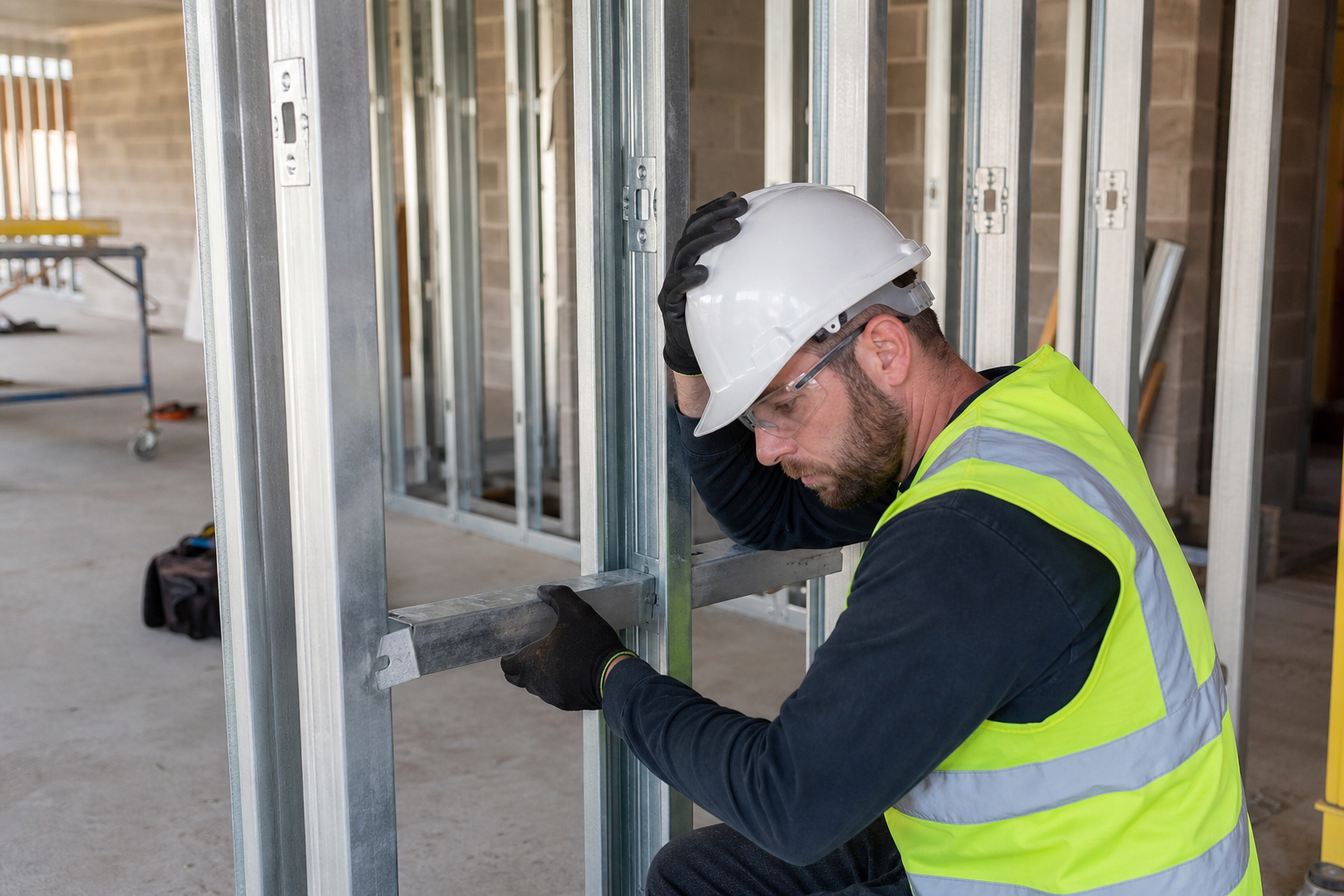
- Specifying a fixed clip where deflection is expected which can cause buckling or fastener failure.
- Failing to confirm that a clip will seat on the correct flange or web which leads to improper bearing and field rework.
- Using the wrong material finish in corrosive conditions which reduces service life and may void product expectations.
- Overlooking fastener type or length which causes pull through or insufficient embedment. Attach fastener guidance with the specification to prevent errors.
- Neglecting to include clip details on shop drawings so installers improvise solutions that may not be tested or engineered.
How clips interact with Dass Metal products and where to find datasheets
Dass Metal manufactures a comprehensive range of light and heavy gauge studs, tracks, channels, bridging products, and acoustic sections. Clips should be matched to the specific Dass product family in your design. When you prepare a specification or quote request include the Dass product names and gauges where applicable and link the clips to the relevant members.
Key product connections to cross reference are studs to standard track, studs to slotted deflection track, bridging channel to deep track, and resilient channel to finish attachments. Dass Metal publishes product brochures and metric and imperial load tables that you must attach for a compatibility review. See the Dass Metal framing using metal studs resource and the metal framing systems guide for supporting documents and downloadable technical resources.
Local procurement and next steps for Canadian projects
Buying Canadian made materials can simplify compliance with local procurement rules and reduce cross border logistics complexity. Dass Metal emphasises Canadian manufacturing and CSSBI certification as available credentials for specification. The company supports cross border delivery where projects in the United States require Canadian fabricated profiles, so mention export requirements early in the procurement request if your project is outside Canada.
Checklist for a clip compatibility or custom profile quote from Dass Metal
- Project name and location, including whether shipments cross the Canada US border.
- Architectural and structural drawings that show the connection details.
- Member specifications: stud type, track type, gauge, and finish.
- Load values, deflection criteria, and acoustic targets if applicable.
- Required documentation: attach Dass Metal load tables or request the relevant brochure from their technical team.
Submitting those items reduces iterative back and forth and speeds manufacturer review. For general system information use the Dass Metal metal framing systems guide and for stud specific references use framing using metal studs.
Frequently asked questions
When do I need an engineered clip selection rather than a standard detail?
Seek engineered selection when clips carry structural loads, when spans or heights exceed standard details, when seismic or wind loads are significant, when acoustic or fire performance is contractual, or when the clip choice affects a proprietary system warranty. If in doubt, submit the connection details to Dass Metal or a licensed engineer for review.
What project information should I provide to Dass Metal for a clip compatibility check?
Provide plan and elevation drawings, member types and gauges, connection sketches, expected loads and deflection limits, finish weights, and environmental exposure. Include any relevant Dass Metal product names to speed comparison against published load tables.
Which clip materials and coatings are recommended for exterior or corrosive environments in Canada?
Specify higher corrosion resistance such as G90 hot dip galvanizing or stainless steel for coastal or chemically aggressive environments. State the expected exposure and service life and ask Dass Metal to recommend a finish compatible with the project conditions.
Can using the wrong clip void an engineered assembly or warranty?
Yes. Manufacturer system engineering and warranties often depend on approved components. External guidance warns that the wrong clip can void engineered details, so always verify clip selection against system engineering or get manufacturer approval before installation.
How do I request a custom clip or profile quote from Dass Metal and what lead information will they need?
Request a quote by sending project drawings, desired connection performance, member gauges, and finish requirements to Dass Metal. Include whether shipments are within Canada or across the border. Dass Metal engineers will use that information to confirm compatibility, propose standard clips, or prepare a custom profile quotation.
Next steps
Use the seven point checklist to rule in likely clip types on site, collect the drawings and product data listed above, and submit a single package for a compatibility review. When a clip affects structure, acoustic performance, or warranty, ask for an engineered sign off from Dass Metal or your project engineer. For product references and technical downloads consult the Dass Metal metal framing systems guide and the framing using metal studs page.
For help with clip compatibility checks, custom profiles, or to request technical documents contact Dass Metal Products.
Additional reading: Sheffield Metals provides a concise description of clip categories and warns about the consequences of wrong clip selection. See Sheffield Metals on metal roofing clip selection and Sheffield Metals on roofing clip accessories for background on clip behaviour and engineering considerations.