Slotted deflection track is a head-of-wall track with elongated slots that let partitions move vertically under building drift or thermal change while keeping drywall intact. It prevents cracks at the ceiling line and preserves fire and acoustic performance. For projects across 370 New Enterprise Way, Dass Metal Products manufactures engineered slotted deflection track to spec.
By Navjot Dass — Dass Metal Products
Last updated: 2026-04-24
Above-Fold Overview and Table of Contents
A slotted deflection track decouples wall studs from the structure so the building can move without cracking finishes. This guide shows what it is, why it matters, how it works, selection methods, install best practices, and real-world examples for reliable, code-aligned head-of-wall joints.
Here’s what you’ll get from this complete guide:
- Plain-English definition and function of head-of-wall slotted track
- When to use it vs standard or deep leg track and clip systems
- How to size, detail, and install for movement and fire ratings
- Field tips from 40+ years in steel framing engineering
- Downloadable specs and fast local support from our team in 370 New Enterprise Way
At a glance:
- What Is Slotted Deflection Track?
- Why It Matters
- How It Works
- Types and Approaches
- Installation Best Practices
- Tools and Resources
- Case Studies and Examples
- Frequently Asked Questions
- Conclusion and Next Steps
What Is Slotted Deflection Track?
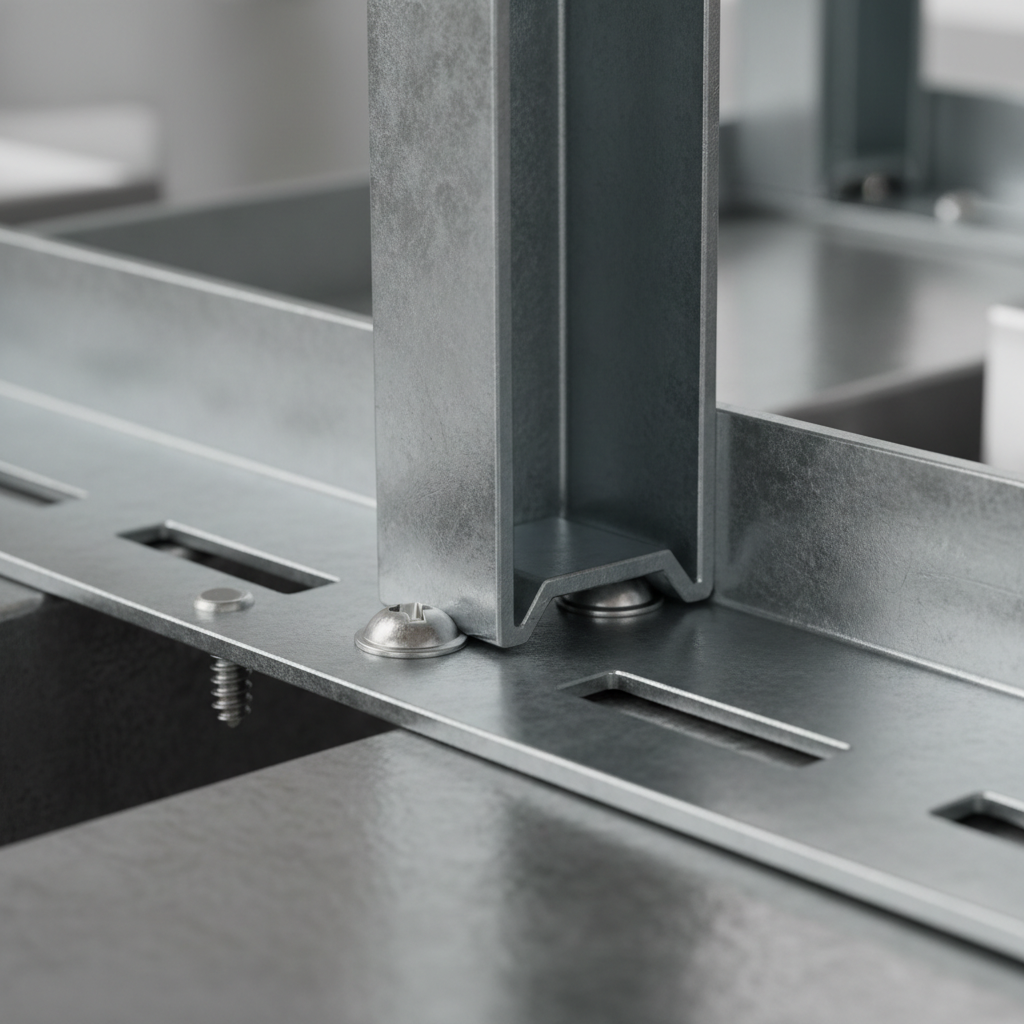
Slotted deflection track is a cold-formed steel top track with elongated screw slots that allow studs and gypsum to move vertically relative to the structure. It absorbs live-load, thermal, and seismic drift so finishes don’t crack, while preserving head-of-wall fire and acoustic performance when detailed correctly.
In simple terms, it’s a “movement buffer” at the ceiling line. Instead of hard-fixing studs to the slab or beam, the slotted web guides fasteners so the stud can slide as the structure deflects under load or temperature.
- Primary role: Separate the non-structural partition from building movement.
- Where used: Commercial interiors, corridors, demising walls, shaftwall perimeters, and exterior infill frames.
- Compatible systems: Firestopping, resilient channel ceilings, and acoustic sealants when specified.
- Typical gauges: Light to heavy gauge (e.g., 33–68 mil) based on span, height, and design loads.
At Dass Metal Products, we manufacture slotted deflection track as part of a comprehensive steel stud framing system, engineered for precision and supported by load tables and standards documentation our customers rely on every day.
Why Slotted Track Matters
Using slotted deflection track protects the wall system from structural drift and live-load deflection. It prevents drywall cracks, preserves head-of-wall fire ratings, and keeps doors, trims, and sealants performing. The result is fewer callbacks, cleaner finishes, and compliance with designer movement requirements.
Walls anchored rigidly at the top often telegraph slab movement as cracks, popped screws, or bind at door frames. Head-of-wall movement joints solve this by allowing up-and-down motion without transferring load to studs and gypsum.
- Fewer defects: Reduced cracking, popped fasteners, and paint repairs.
- Code alignment: Facilitates fire-rated joints when paired with listed systems.
- Acoustic integrity: Maintains STC when sealants and resilient members aren’t stressed.
- Schedule certainty: Less rework means smoother closeouts and inspections.
For builders and drywall contractors in our network, this choice consistently cuts punch-list friction. We’ve seen finish work stay stable through seasonal swings when head-of-wall movement is respected in detailing and installation.
How Slotted Deflection Track Works
The track’s elongated web slots guide fasteners so studs are captured, not fixed. As the structure deflects, studs slide within the slots while gypsum remains continuous to the head-of-wall. Firestopping and acoustic sealants complete the assembly per the listed joint design.
Here’s the mechanics in practice:
- Slots and screws: Screws land within slots at specified locations to allow travel. Installers avoid the slot ends so movement isn’t pinned.
- Stud capture: The track legs capture the stud flanges. Deep-leg options increase capacity and stability for taller walls or higher drift.
- Gypsum detailing: Board runs to the head-of-wall per the approved joint detail, often with a compressible spacer and sealant bead.
- Fire/acoustic continuity: Listed systems complete the joint so fire-resistance and STC values are maintained through movement cycles.
Engineering notes typically define required movement, stud gauge, and fastener patterns. Our in-house engineers review drawings to match the track profile and slot geometry with your required drift and wall height.
Types, Methods, and Approaches
There are multiple head-of-wall approaches: slotted deflection track, deep-leg track, and clip-based slide connections. Choose based on required movement, wall height, and coordination with firestopping and finishes. Each method has pros and trade-offs for speed, capacity, and detailing complexity.
Common head-of-wall options
- Slotted deflection track: Fast, integrated movement joint. Ideal for corridors and demising walls with defined vertical drift.
- Deep-leg track (non-slotted): Higher capture and stability; used when detailing a soft joint with sealant. Suits tall partitions when slots aren’t required.
- Clip-based slide connections: Deflection clips attach studs to structure with slotted clip holes. Useful where track layout must be continuous for other trades.
When to use which
- Use slotted track when the designer specifies a vertical movement allowance and a listed joint is available for the required fire rating.
- Use deep track when movement is accommodated by a compressible gap and sealant, or where slots aren’t desired near sensitive finishes.
- Use deflection clips when coordination with MEP or structure makes clip spacing preferable to continuous slotted track.
Complementary components
- Resilient channel: Helps preserve acoustic performance when slabs deflect above sensitive rooms.
- Bridging/carrying channel: Stabilizes studs to prevent buckling as they slide under drift.
- Sealants and firestopping: Maintain ratings and STC while allowing joint movement.
For product pairing, see our internal guides on standard track options, shaftwall CH studs, and furring channel—all engineered to integrate cleanly with movement joints.

Installation Best Practices (From the Field)
Successful head-of-wall joints come from disciplined layout, correct screw placement in slots, and clean integration with fire and acoustic details. Follow a measured, step-by-step approach, verify drift requirements, and document as-built conditions to minimize callbacks.
Pre-install planning
- Confirm movement: Verify vertical drift requirement on drawings and RFIs.
- Select profile: Match slot geometry and leg depth to the wall height and movement.
- Coordinate trades: Align with firestopping, ceilings, and MEP penetrations near the head-of-wall.
- Stage materials: Store track straight and dry; check gauges and lengths against the cut list.
Field installation steps
- Snap lines and position the slotted track at the head-of-wall per layout.
- Anchor the track to the structure with approved fasteners at the specified spacing.
- Seat studs fully in the track; do not hard fasten studs to the structure.
- Drive screws through slots into the stud flange, keeping screws away from slot ends.
- Install bridging/carrying channel to keep studs plumb as they slide under drift.
- Complete gypsum to the head-of-wall per the listed joint detail.
- Install sealants, firebacker, or mineral wool required by the joint design.
- Record photos of slot screw placement for closeout documentation.
Quality checks that prevent callbacks
- Screw location: Incorrect placement can pin the joint and cause cracks later.
- Debris-free slots: Keep slots clear so sliding isn’t obstructed during building movement.
- Bridging tightness: Overly tight bracing can bind studs; set and lock per spec.
- Sealant continuity: Gaps at the head cause acoustic leaks and jeopardize ratings.
We back our recommendations with engineering support and documentation. For movement-specific slide hardware, review our U-Flex track guidance and structural metal stud framing guide for context across wall types.
Tools and Resources
Use manufacturer specs, shop drawings, and listed joint designs to select, detail, and inspect head-of-wall solutions. Dass Metal provides engineering support, product literature, and load tables to help builders and architects coordinate movement, fire, and acoustic needs.
- Product literature: Profiles, gauges, and slot geometry described in datasheets.
- Engineering review: Our team tailors profiles to drift and wall height requirements.
- Load tables: Imperial/metric tables for studs, tracks, and channels.
- Accessory guidance: Pairing with steel frame bracing and framing systems.
For more specifications and tagged content, see our external resources on slotted deflection track topics and the slotted track product page. For slide-connection hardware, review the deflection side clip resource as well.
Case Studies and Real-World Examples
Head-of-wall movement detailing pays off in fewer finish defects and smoother inspections. These short examples show how contractors paired slotted deflection track with complementary components to meet drift, acoustic, and fire-resistance requirements on tight schedules.
Healthcare corridor retrofit
A contractor replacing partitions in an active healthcare corridor needed movement at the slab soffit with a 1-hour rating. Slotted track simplified layout, and listed firestopping maintained the rating. Result: clean joints, no ceiling-line cracks through the first seasonal cycle.
Education building addition
For tall demising walls in a new addition, deep-leg track stabilized studs while clip connections handled concentrated loads at mechanical transitions. Bridging channel controlled stud alignment during drift events. Doors remained square and finishes stayed intact.
Office tenant improvement
On a fast-track TI serving clients across 370 New Enterprise Way, our engineering team reviewed drawings and confirmed slotted track geometry with the GC. The crew documented screw placement and sealant continuity at closeout, reducing RFIs and accelerating occupancy.
Comparison: Head-of-Wall Options
Slotted deflection track offers fast, integrated movement control. Deep track emphasizes capture and stability. Clip systems add flexibility where continuous track isn’t ideal. Compare based on required movement, wall height, fire/acoustic detailing, and install preferences.
| Option | Best For | Advantages | Considerations |
|---|---|---|---|
| Slotted deflection track | Defined vertical drift; corridors, demising walls | Fast install; integrated movement; compatible with listed joints | Requires correct screw placement; slot cleaning/QA |
| Deep-leg track (non-slotted) | Tall walls; soft joint with sealant | High capture and stability; simple detailing | Movement managed by gap/sealant; verify ratings |
| Deflection clip system | Areas needing discrete attachments | Flexible layout; targeted capacity | More parts; coordination with ceilings and MEP |
For additional detailing insight, see our guides on furring channel layouts and standard track selection to coordinate adjacent assemblies.
Local considerations for 370 New Enterprise Way
Projects in and around 370 New Enterprise Way benefit from local engineering support, quick-turn manufacturing, and dependable delivery. Coordinate head-of-wall details early to align with regional schedules, weather swings, and inspection practices. Our team supports submittals, shop drawings, and fast clarifications.
- Plan for seasonal temperature shifts that can expand or contract long corridors; confirm movement allowances on drawings.
- Align deliveries with peak build windows; interior framing often surges after enclosure, so reserve slotted track early.
- Engage our engineering team to review head-of-wall details for local inspectors and documentation requirements.
Frequently Asked Questions
These concise answers address common questions about selection, compatibility, and installation of slotted deflection track for head-of-wall movement joints. They’re designed for quick on-site reference and submittal clarity.
What does slotted deflection track actually do?
It decouples the wall from the structure at the head-of-wall, allowing vertical movement from live loads, temperature, or seismic drift. The slots guide screws so studs can slide while finishes remain continuous. This helps prevent cracks and preserves listed fire and acoustic performance.
When should I choose slotted track over deep track?
Pick slotted track when the design calls for a defined vertical movement allowance and a compatible listed joint detail. Deep track is better when movement is handled by a soft joint and sealant, or where slots near sensitive finishes aren’t desired. Confirm with the project engineer.
Does slotted deflection track work with fire-rated assemblies?
Yes—when paired with a listed head-of-wall joint system. Ensure the firestopping method, sealants, and gypsum detailing match the system requirements so ratings are maintained through the joint’s movement range.
How do I avoid pinning the joint during installation?
Keep screws away from the slot ends, follow the specified screw location within the slot, and confirm bridging is set but not binding. Clear debris from slots before boarding, and document screw placement with photos for closeout.
Conclusion: Build Movement In, Not Problems
Slotted deflection track creates reliable head-of-wall joints that absorb structural drift while keeping finishes clean. Choose the right profile, follow disciplined installation, and coordinate fire/acoustic details. The payoff is fewer defects, faster closeout, and confident inspections.
Key takeaways:
- Movement happens—design the head-of-wall to accommodate it.
- Slotted deflection track is fast, integrated, and inspection-friendly.
- Deep track and clip systems remain valuable in specific conditions.
- Quality checks on screw placement and sealants prevent callbacks.
Next steps:
- Confirm required drift and wall heights on your drawings.
- Share submittals with our engineering team for quick validation.
- Coordinate fire-rated joint details before boarding begins.
Need project-specific help? Our team in 370 New Enterprise Way supports fast submittals and dependable supply. Let’s review your head-of-wall details together.
Related reading in the Framing cluster
Explore adjacent framing topics that often tie directly into head-of-wall movement joints, including track selection, bracing strategy, and system coordination. These resources help teams deliver straighter walls, better acoustics, and smoother inspections.
For broader system planning, review our framing systems guide. For stability under drift, see steel frame bracing practices. To coordinate adjacent assemblies, check standard track, furring channel, and U-Flex track selections.