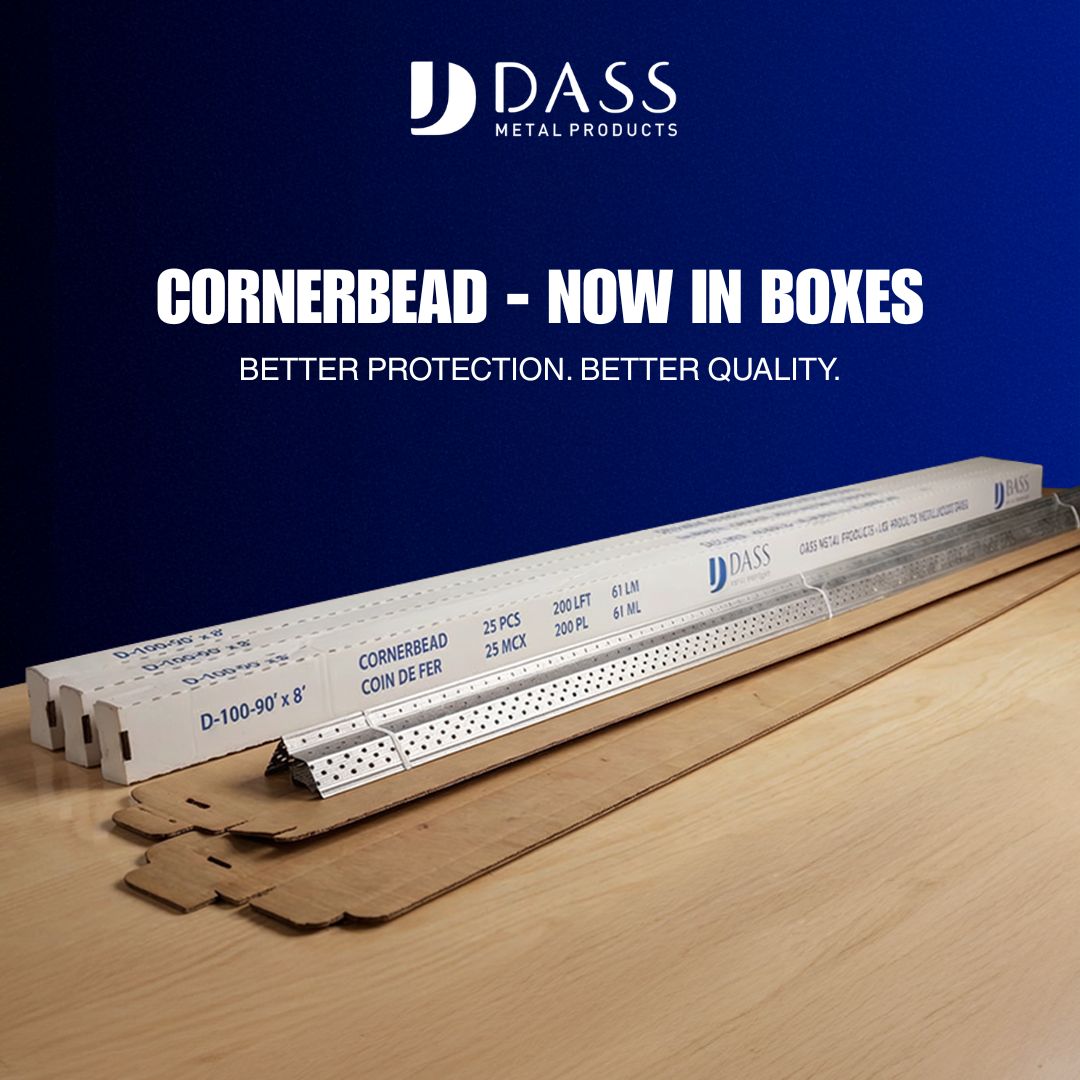
Steel framing systems are coordinated assemblies of cold-formed and structural steel components used to build walls, floors, and ceilings for commercial and residential projects. They deliver high strength-to-weight performance, consistent dimensions, and code-ready details. For builders working from Vaughan, ON and across North America, these systems help schedules stay tight and quality predictable.
By Navjot Dass · Last updated: 2026-05-26
Above-Fold Section: Hook + TOC
Steel framing systems speed up interiors, improve straightness, and simplify inspections. This guide shows what they are, why they matter, and how to deploy studs, tracks, channels, and clips for reliable results. Use it to plan non-load-bearing and load-bearing work with confidence on new builds and retrofits.
Here’s the thing: most schedules are tight, tolerances are tighter, and rework hurts margins. Builders choose steel framing for dimensional consistency, acoustic control options, and clear submittals. This complete guide delivers the playbook our customers ask for daily.
- What steel framing systems include and how they fit together
- Where light vs heavy gauge excels, with real jobsite tips
- How to detail deflection, bridging, and acoustics
- Best practices that cut rework and inspection delays
- Tools, checklists, and resources you can use today
Quick Summary
Steel framing systems pair precision-rolled studs and tracks with channels, clips, and trims to form straight, strong, code-compliant assemblies. Use light gauge for interior partitions and heavy gauge for load-bearing spans. Correct deflection details, bridging, and acoustics turn good drawings into smooth inspections and clean finishes.
- Primary use: Interior partitions, bulkheads, soffits, shaftwalls, and structural wall lines.
- Core components: Studs, standard or slotted tracks, deep tracks, bridging/carrying channel, resilient channel, and fastening clips.
- Why it wins: Straight, predictable, fire-friendly, mold-resistant, and compatible with modern finishes.
- What to watch: Deflection gaps, bracing layout, and fastener selection by gauge.
- Next step: Review our metal framing systems guide and adapt the checklists below for your submittals.
Local considerations for Vaughan, ON projects
- Seasonal humidity swings: Detail slotted deflection track at tops of tall partitions to accommodate movement from HVAC ramp-up and winter-to-summer shifts.
- Winter mobilization: Plan delivery windows and inside staging for steel studs to avoid icing and jobsite handling slowdowns during cold snaps.
- Acoustic expectations: Office and mixed-use cores often demand resilient channel strategies; coordinate STC targets with MEP early to prevent redesign.
What Is a Steel Framing System?
A steel framing system is a coordinated set of cold-formed steel studs, tracks, channels, clips, and trims that assemble into straight, strong walls and ceilings. Components are precision-rolled, available in multiple gauges, and installed with screws or powder-actuated fasteners for consistent, code-ready performance.
At Dass Metal Products, we engineer light and heavy gauge profiles so crews can frame faster with fewer callbacks. Our range spans non-load-bearing studs for interiors and heavy gauge framing for structural lines. The result is predictable straightness and robust fastening surfaces for gypsum, tile, and specialty finishes.
- Core pieces: Studs, standard track, deep track, slotted deflection track, bridging/carrying channel, resilient channel, and a family of connectors.
- Finish helpers: J trims, L trims, cornerbeads (90°/130°), Z-Bar, and accessory angles.
- Performance aids: Windbrace and bridging clips for stability; resilient channel for sound isolation; shaftwall CH studs for elevator and MEP cores.
Need a primer on profiles and sizing? See our internal steel studs guide to align gauges and flange depths with your wall heights.
Why Steel Framing Systems Matter Now
Steel framing systems reduce layout drift, support faster board-up, and deliver known fire and acoustics. In tight labor markets, crews benefit from lighter bundles, consistent gauges, and no warp, which means fewer adjustments on site and smoother inspections.
Project managers tell us consistent dimensions save measurable hours over long runs. Straight studs and crisp tracks reduce shimming and speed up board installation, especially on glass-ready partitions and long corridors. That predictability supports schedule reliability across trades.
- Labor efficiency: Steel studs arrive true—no crown hunting, fewer alignment fixes, cleaner backing for finishes.
- Quality control: Factory repeatability and CSSBI-conscious processes promote uniform fastening behavior.
- Systems thinking: Channels, clips, and tracks are designed to work together, which simplifies detailing and submittals.
- Material stability: Noncombustible, mold- and rot-resistant; ideal for healthcare, education, and TI work.
For a broader lens on wood-versus-steel planning, compare strategies outlined in this overview of why steel framing is better than lumber framing. It’s a useful context-setter when your team is deciding on a core wall approach.
How a Steel Framing System Works
Studs slide into tracks, get fastened at base and top, and are braced with channels and clips. Deflection tracks allow the structure above to move without crushing walls. Resilient channels decouple finishes to improve acoustics. The assembly behaves as a lightweight, strong, noncombustible frame.
Here’s the flow most crews follow on interiors: lay out lines, set bottom track, set top track (standard or slotted), cut studs to fit, plumb and screw, then brace with bridging or carry channel per plan. Board-up follows, with trims and beads establishing clean corners and reveals.
- Base-to-top continuity: Track anchors transfer loads to slab; fastener type and spacing depend on substrate and gauge.
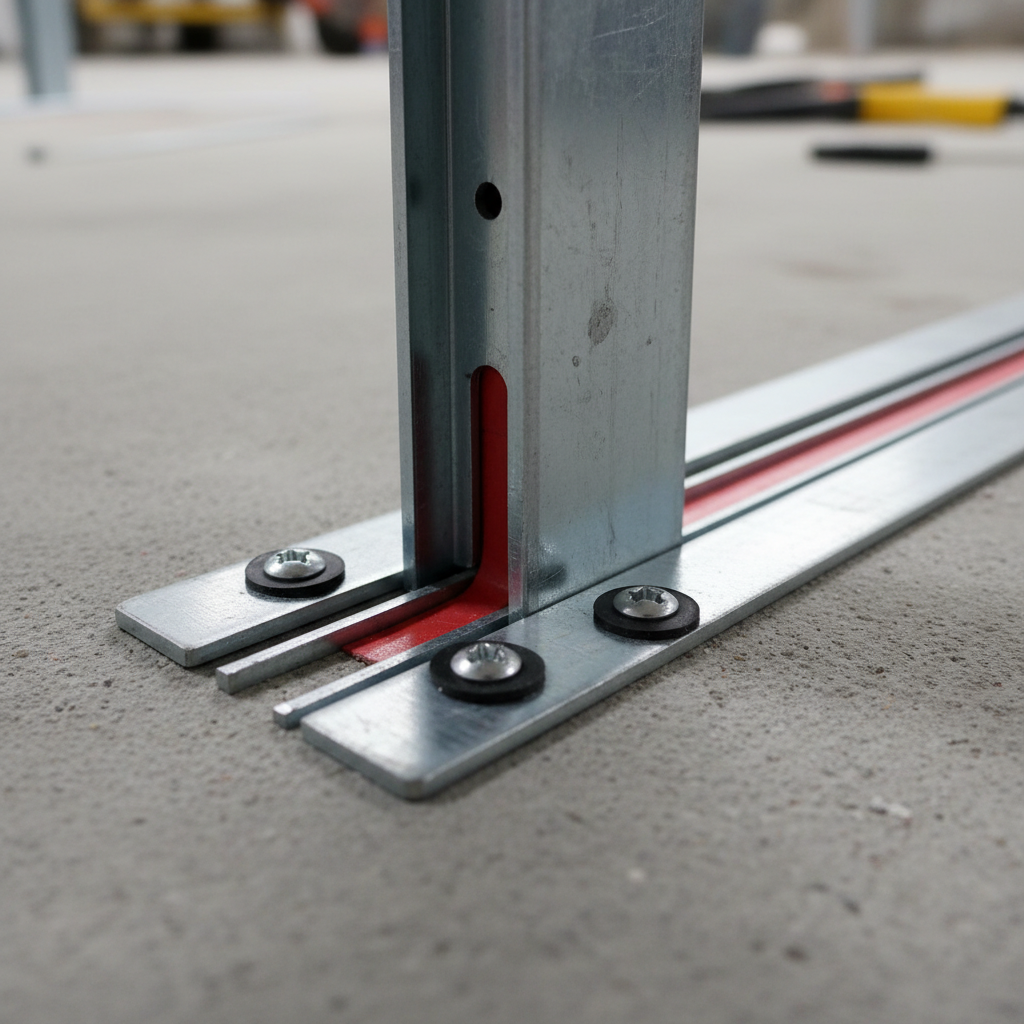
- Deflection detailing: Slotted deflection track isolates the stud from structural movement. Maintain the designed gap to the deck above.
- Bridging and lateral stability: Bridging/carrying channels and clips keep studs in plane, especially on tall walls or high-traffic corridors.
- Acoustic isolation: Resilient channel between studs and gypsum reduces vibration transfer and supports targeted STC assemblies.
When structural capacity is required, switch to heavy gauge load-bearing lines and follow the engineered layout for studs, deep or structural track, and fasteners. See the product specifics for load-bearing stud framing (heavy gauge) for design coordination.
Types of Steel Framing Systems and Components
Steel framing systems include non-load-bearing interior partitions, load-bearing cold-formed walls, shaftwall and chase walls, and ceiling/soffit frameworks. Key components are studs, tracks (standard, deep, deflection), channels (bridging, furring, resilient), and an ecosystem of clips and trims for code-ready detailing.
Non-load-bearing interior framing (light gauge)
- Use cases: Office partitions, retail build-outs, clinic rooms, corridors, and tenant improvements.
- Typical choices: Light gauge studs with standard track; add resilient channel where STC targets require decoupling.
- Accessories: J/L trims at terminations; 90°/130° cornerbeads for impact durability on busy corners.
Explore our interior offering here: non-load-bearing steel framing. It’s a practical starting point for submittals and procurement planning.
Load-bearing cold-formed steel
- Use cases: Mid-rise walls, canopy supports, mezzanine lines, and long corridor backbones.
- Typical choices: Heavy gauge studs and deep track; engineered fastener schedules and bracing.
- Accessories: Webslide or deflection side clips, windbrace, and bridging clips for lateral control.
Coordinate early with design on spans and openings so connection detailing stays simple and repeatable on site.
Deflection and movement control
- Slotted deflection track: Accommodates vertical movement from creep, shrinkage, or temperature without crushing gypsum.
- Deflection side clips: Transfer lateral loads while allowing vertical slip at head-of-wall details.
- U-Flex track: Eases curves and radiuses for feature walls and soffits without segmented faceting.
Acoustic and furring channels
- Resilient channel: Decouples gypsum from framing to raise STC—often decisive for hospitality, offices, and healthcare.
- Furring channel: Levels substrates and creates chase spaces for services or insulation.
- Z-Bar and L track: Useful for reveals, alignments, and mounting transitions.
Shaftwall and core systems
- Shaftwall CH studs: Designed for elevator cores and service chases with fire- and pressure-aware board layouts.
- Hanger/tie wire and flat strips: Suspend ceilings and stabilize assemblies per engineered spacing.
Best Practices for Design, Submittals, and Installation
Begin with accurate wall schedules, pick gauges by height and load, and detail head-of-wall movement. Sequence deliveries, stage inside, and verify fasteners by substrate. Bracing, bridging, and acoustic elements should be drawn, submitted, and installed exactly as specified.
Design coordination
- Wall heights and gauges: Select stud gauge and flange depth by span and load; maintain consistent spacing (often 16 or 24 in. o.c.).
- Head-of-wall gaps: Keep the specified deflection gap to avoid gypsum cracking when the structure moves.
- Openings and backing: Pre-plan bucks, headers, and backing for millwork, screens, and casework.
Submittals and QA
- Product data: Include profiles, gauges, and accessory details in one submittal package.
- Load tables: Provide light/heavy gauge tables in metric and imperial for quick checks.
- Mockups: Build a short corridor or a door/wall mockup to validate deflection and finish edges before full production.
Our drywall framing mistakes checklist is a solid cross-check before mobilization.
Installation sequencing
- Layout: Snap lines and confirm slab flatness; shim track only where necessary.
- Anchoring: Use appropriate anchors for concrete vs. steel deck; follow spacing patterns by gauge and load.
- Bracing: Install bridging early on tall walls to keep studs plumb and in-plane through board-up.
- Acoustics: Place resilient channel per layout; avoid fastener short-circuits into studs.
Want a deeper dive on sequencing structural lines? See our structural metal stud framing guide for field-proven steps.
Tools and Resources You Can Use Today
Build a field-ready package: product data sheets, load tables in both imperial and metric, MSDS, and a project-specific checklist. Align these with drawings, then brief crews before you mobilize. The result is faster approvals and fewer RFI loops.
- Product library: Studs, tracks, channels, and trims with gauges and dimensions.
- Load tables: Quick reference for wall height vs. gauge and spacing.
- MSDS and standards: Compliance-ready documents for safety binders and inspections.
- Submittal checklist: A one-pager listing head-of-wall detail, bridging layout, and acoustic elements.
- Internal references: Start at our steel framing system page and link profiles directly in your submittal.
Steel vs. Wood vs. Structural Steel: A Quick Comparison
Cold-formed steel framing lands between wood and hot-rolled structural steel. It’s straighter than wood and lighter than structural members, with clear fire and acoustic options. Use wood in small residential, cold-formed for interiors and mid-rise walls, and structural steel for primary frames.
| Aspect | Cold-Formed Steel Framing | Wood Framing | Structural Steel |
|---|---|---|---|
| Dimensional stability | High; no warp/crown | Variable; moisture-driven | High; precise but heavier |
| Fire resistance | Noncombustible assemblies | Requires more protection | Noncombustible |
| Weight per LF | Low to moderate | Low | High |
| Acoustics | Strong with RC/fill | Moderate | Depends on build-up |
| Speed of install | Fast; repeatable | Fast with skilled crew | Slower; crane/logistics |
For context on material selection beyond interiors, this team-level article on steel vs. lumber framing is a helpful narrative comparison you can share in kickoff meetings.
Case Studies and Field Examples
On recent Ontario and U.S. interiors, developers chose cold-formed steel to speed fit-outs and meet acoustic targets. Results: straighter corridors, fewer callbacks, and predictable inspections. The same logic scales to cores, mezzanines, and tenant improvements with custom gauges and clips.
Healthcare clinic retrofit
- Challenge: Convert open space into exam rooms with strict acoustic targets and low dust tolerance.
- Approach: Light gauge studs with resilient channel and insulated cavities; slotted deflection at head-of-wall.
- Outcome: Board-up ran clean, inspections passed first time, and punch items were minimal.
Office corridor re-stack
- Challenge: Long corridor with frequent doors; misalignment would cascade into glazing delays.
- Approach: Heavy-duty cornerbeads at intersections; early bridging to hold studs in plane.
- Outcome: Doors landed square, trims were tight, and glazing mobilized without schedule slips.
Core wall with rebar coordination
- Challenge: Integrate load-bearing cold-formed lines adjacent to concrete and rebar detailing.
- Approach: Coordinate deep track locations with embeds; review reinforcement patterns for penetrations.
- Outcome: Clean interfaces and fast top-out; related reinforcement basics are summarized here: rebar stirrups guide.
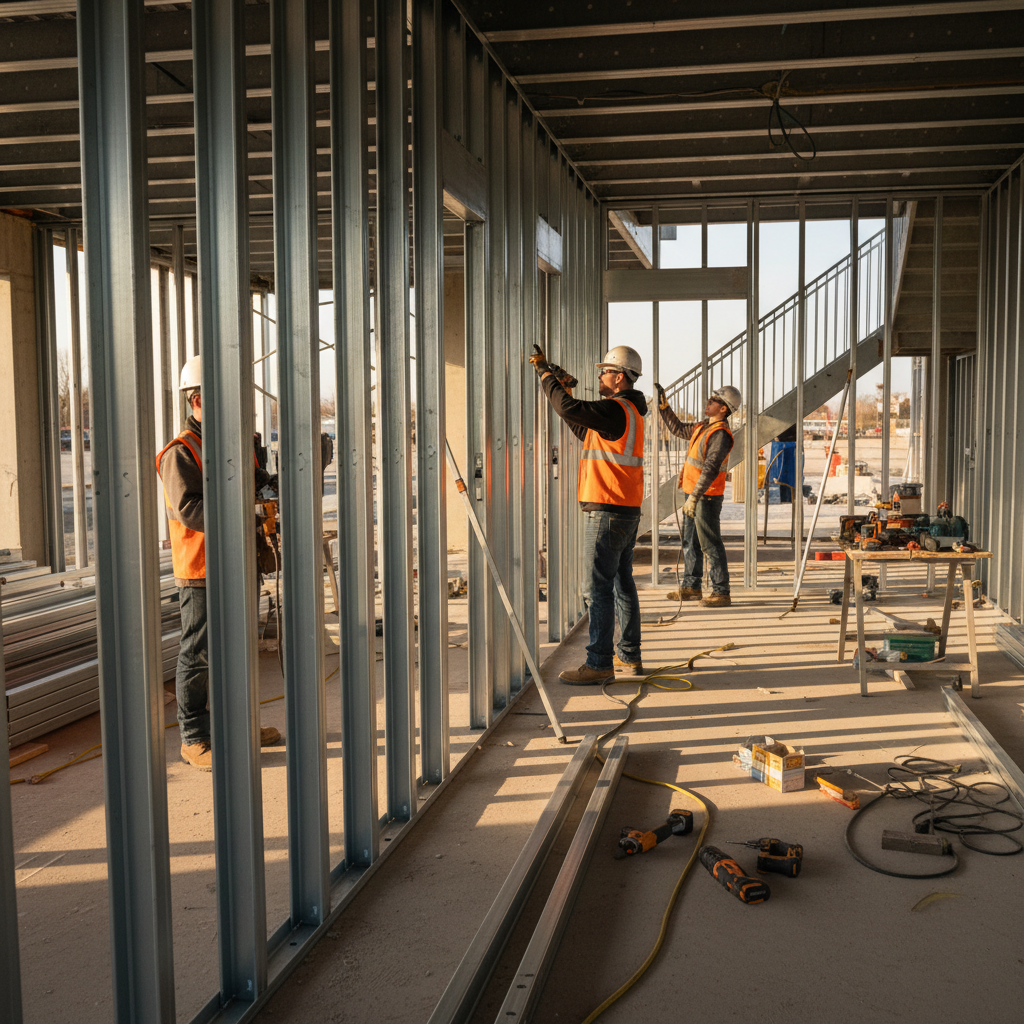
FAQ: Steel Framing Systems
These quick answers cover gauge selection, spacing, acoustics, and movement joints. Use them when aligning drawings, submittals, and crew briefings so your site team shares the same assumptions before layout and anchoring begin.
What gauges are common for interior steel studs?
Light gauge studs for interiors typically range from thin drywall studs to heavier options for taller walls; choose gauge based on height, spacing, and load. Coordinate with load tables and detail bridging where span or traffic suggests added stiffness.
When should I use slotted deflection track?
Use slotted deflection track wherever the structure above can move due to temperature, creep, or live load. It preserves the head-of-wall gap so gypsum won’t crack. Follow the specified slot orientation and fastener pattern to maintain slip behavior.
How does resilient channel improve acoustics?
Resilient channel decouples gypsum from the framing, reducing sound vibration paths and raising STC. It’s effective for offices, hospitality, and healthcare build-outs. Ensure fasteners don’t short-circuit the channel into studs, and follow the spacing layout.
Do I need bridging on every wall?
Not every wall requires bridging, but tall partitions, high-traffic areas, and load-bearing lines often benefit from it. Bridging or carrying channel keeps studs in plane, supports door openings, and reduces flutter during board-up and inspections.
What’s the difference between standard and deep track?
Standard track is common for interior partitions and ceilings. Deep track provides greater bearing and stability for taller or load-bearing walls. Select based on stud size and engineer’s details, and confirm anchor type and spacing with the substrate.
Conclusion and Next Steps
Steel framing systems deliver straight, fast, and code-conscious results when you match gauges, detail movement, and install bracing. Lock in submittals, brief crews, and stage materials inside. That’s how projects stay predictable from first track to final inspection.
- Match studs, tracks, and channels to span, load, and acoustic needs.
- Detail deflection and bracing early; verify anchors and fasteners by substrate.
- Use resilient channels to reach STC targets without redesign.
- Leverage load tables and checklists for clean approvals.
Ready to plan your next interiors package? Review our steel stud wall framing overview and set your submittal outline today. When it’s time to mobilize, we’ll help you align gauges, movement joints, and bridging so crews can run.
Related Topics in the Framing Cluster
Explore deeper topics like interior stud wall framing, shaftwall assemblies, and resilient channel layouts. These adjacent subjects help teams coordinate details, avoid rework, and accelerate inspections on both tenant improvements and core projects.
- Interior stud wall framing techniques for straight corridors and glass-ready openings.
- Shaftwall and CH stud coordination for elevator cores and service chases.
- Resilient channel patterns and pitfalls when chasing acoustic targets.
For a consolidated starting point, bookmark our high-level steel framing system page and save the internal metal framing systems guide for your team’s toolbox.