Tie wire vs hanger wire is one of the most frequent questions contractors and specifiers face when ordering small-diameter steel wire for site work. The short answer is simple: tie wire is a binding wire for tying bundles, rebar, and temporary holds, while hanger wire is a purpose-made suspension wire for acoustical ceilings, light fixtures and permanent hanger assemblies. This article compares the two across the decision criteria construction teams actually use, with practical procurement and installation notes for projects in Ontario and Canada.
Decision criteria you should use when choosing wire
Use the same set of criteria on every project so the choice aligns with the task and the spec.
- Intended use, binding versus suspension and whether the wire will carry a sustained load.
- Wire gauge and tensile strength, confirm working load and safety factor from the supplier.
- Coating and corrosion resistance, select a finish appropriate for ambient conditions.
- Compatibility with hangers and anchors, ensure the wire, termination and hardware fit together without sharp contact points.
- Code and seismic requirements, require tested assemblies and specified attachment methods when safety or seismic loads apply.
- Installation speed and workmanship, consider preformed eyes, crimps or field twisting and the crew skill level.
- Packaging and procurement, confirm spool size, pre-cut lengths and lead times to avoid site delays.
Tie wire vs hanger wire: comparison by the key criteria
Intended use and application
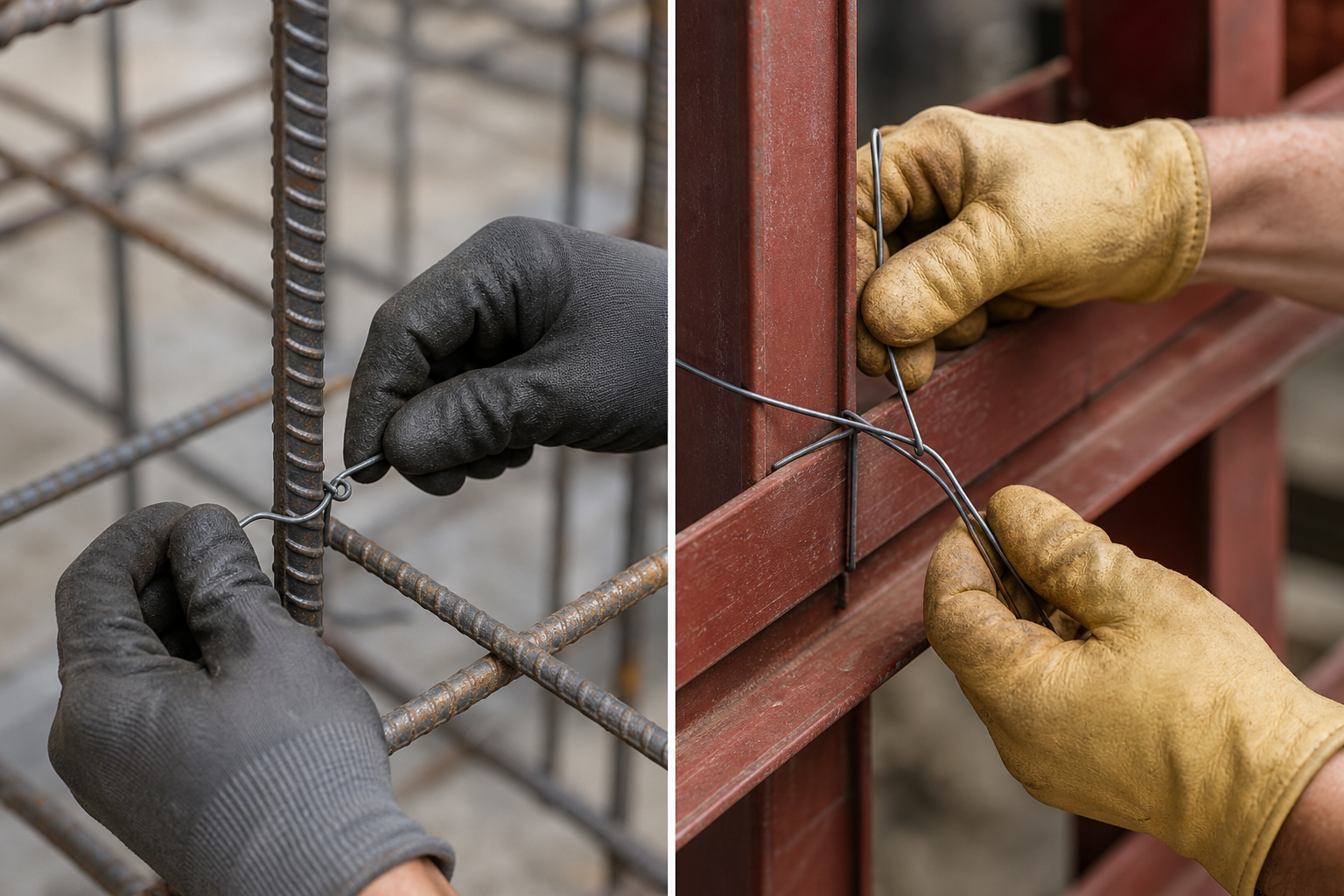
Tie wire is optimised for wrapping and twisting around materials. Typical uses include tying rebar intersections, bundling studs or pipe, and temporary bracing during erection. Hanger wire is engineered to carry vertical loads for suspended ceilings, light fixtures, and small mechanical hangers where the wire remains in service.
Example: a drywall crew will commonly use tie wire to bundle studs for transport, but the same job will specify hanger wire when installing the suspended grid for an acoustical ceiling.
Typical gauge and strength
Manufacturers offer tie wire in lighter gauges, which are easy to twist by hand or with pliers. Hanger wire is offered in heavier gauges intended for rated suspension work. Gauge gives a rough idea of size but never substitute gauge for a supplier working load. Always require the product submittal that lists tensile strength, minimum breaking load, and recommended working load.
Practical tip: if a detail calls for a rated suspension element, specify hanger wire and the termination style rather than leaving gauge to the contractor.
Coating and corrosion resistance
Plain annealed tie wire is common for dry, temporary work. For installations that remain in service, galvanizing is the usual choice to slow corrosion. Where the environment is humid, coastal, or chemically aggressive, specify hot-dip galvanizing or stainless steel options if the supplier offers them. Always check the MSDS or product data sheet for the coating type and expected performance.
Compatibility with hangers, anchors and hardware
Hanger wire is designed to pass through clevises, eyes and hardware without cutting or wearing at contact points. Thin tie wire used for suspension can abrade where it rubs or cuts on sharp edges. For permanent suspensions, select hanger wire with a compatible termination, such as a preformed eye or a crimped ferrule, and confirm the hanger manufacturer’s instructions.
Code, seismic and safety considerations
When suspended systems are part of life safety or seismic restraint assemblies, the code or project specification may require tested hanger assemblies and prescribed attachment details. Where seismic performance is relevant, reference the tested assembly and require the supplier to provide matching product data. Technical references about wire movement and abrasion are useful, for example a wire management guide that explains how motion can create a sawing effect on tied materials and cables Wire Management Guide.
Installation speed and workmanship
Field twisting of tie wire is fast and flexible for temporary tasks. Permanent ceiling suspension is faster and more consistent when crews use preformed eyes, crimped terminations, or mechanically formed loops from hanger wire. If your schedule requires many identical lengths, order pre-cut lengths or request the supplier cut coils to length to save installer time and to reduce waste.
Packaging and procurement format
Tie wire is typically sold in small spools or coils for hand use. Hanger wire is commonly offered in larger coils or in pre-cut lengths for suspension work. Confirm coil diameter and unwind method to prevent tangling on site. For busy projects, plan deliveries to match installation cadence so coil handling does not slow the crew.
Which option fits which project and role
Choose by task and by the user installing the wire.
- Drywall and framing crews, use tie wire for bundling studs, short term bracing and small ties. Require hanger wire for any overhead support that remains in place.
- Acoustical ceiling installers, specify hanger wire that matches the ceiling system manufacturer. Ask for the hanger wire submittal to be supplied with the ceiling assembly submittal.
- Mechanical and electrical contractors, use approved hanger wire or engineered suspension systems for duct, pipe and heavy fixtures. Confirm compatibility with anchors and seismic hangers when required.
- Specifiers and engineers, call out gauge, coating, termination method and referenced standards on drawings and submittals. Require manufacturer product data and termination details when safety or seismic performance matters.
Quick spec-check checklist for ordering and submittals
Use this checklist on purchase orders and submittals to avoid last minute corrections.
- Function: binding or permanent suspension.
- Wire gauge and the supplier stated tensile strength, minimum breaking load and working load.
- Coating type, for example plain, electro-galvanized, hot-dip galvanized, or stainless steel.
- Termination style, such as hand-wrapped, preformed eye, crimped ferrule, or threaded rod adaptor.
- Confirmation that the wire and termination are compatible with hangers, clevises and anchors on the project.
- Packaging and lengths, for example spool size, coil, or pre-cut lengths, and unwind method.
- Reference to project-specific seismic attachment details where they apply.
- Lead time, delivery method and cross-border documentation when shipping between Canada and the US.
Common mistakes, installation cautions and seismic notes
These are recurring issues that cause rework or safety concerns.
- Using thin tie wire to suspend permanent loads. Thin wire can fatigue at contact points and is not intended as a long term suspension element.
- Ordering plain annealed wire for a moist or corrosive environment. Specify galvanized or stainless finishes where appropriate.
- Routing wire over sharp edges or through narrow openings without protection. Abrasion and movement can cut the wire over time. The same principle appears in wire management guidance Wire Management Guide, and basic tying technique references include practical tying steps Wire Fence Construction.
- Improvising attachments in seismic zones. When seismic requirements exist, use tested assembly details and the matching hanger wire termination provided by the manufacturer.
- Buying the wrong packaging type and finding crews delayed by tangles and rewind time. Match packaging to the installation method.
Procurement and local considerations for Ontario and Canada

Buying locally can streamline approvals and logistics. Canadian-made products, CSSBI certification and a local supplier in Ontario often simplify specification review and delivery. Dass Metal Products manufactures in Vaughan, Ontario and supplies hanger wire and related framing components. Visit the hanger wire product page hanger wire for product details, and consult the main Dass Metal site Dass Metal Products for technical brochures and MSDS that support submittals.
For projects that cross the Canada US border, confirm customs lead times and request submittals early. If you need custom coatings or cut lengths, ask about the supplier’s custom fabrication and engineering support so you do not affect the procurement schedule.
Who should choose which: buyer profiles and recommended choices
- Choose tie wire when you need a low cost, flexible binding material for temporary holds, bundling rebar or tying non-suspended items that will not bear a long term load.
- Choose hanger wire when you are suspending ceilings, fixtures or mechanical equipment that require a rated suspension element and a specified termination method. Hanger wire is the correct choice for acoustical ceilings and permanent overhead support.
- Ask for engineering support when the hung load is part of a life safety system, where seismic performance is required, or when the wire passes through complex hardware. Request product submittals, termination details and, if needed, a supplier confirmation letter for the submittal.
Frequently asked questions
Can I use hanger wire to tie bundles of studs or rebar instead of tie wire?
Yes, hanger wire will bind bundles if the gauge is suitable, but it is usually more costly and is supplied in formats optimised for suspension. Tie wire is the economical choice for routine bundling and temporary ties. For permanent suspension use only hanger wire with the specified termination.
What wire gauge is typical for hanger wire and for tie wire in ceiling work?
Hanger wire is typically heavier than tie wire and is sold in gauges intended for suspension. Tie wire is commonly thinner for hand tying. Gauge alone does not define safe use. Always confirm the supplier’s product data for tensile strength, breaking load and recommended working load before ordering or installing.
Which coatings should I specify for corrosion resistance in moist or exterior exposures?
For moist or exterior exposures choose a galvanized coating or stainless steel where long term corrosion resistance is required. Specify hot-dip galvanizing or stainless when the environment or project specifications call for enhanced durability and document the choice on the submittal.
Does seismic or code guidance ever require a specific hanger wire attachment method?
Yes, seismic requirements often require tested attachment details or tested hanger assemblies. When seismic performance is relevant, reference the tested assembly in the specification and require the supplier to provide matching product data. Do not improvise attachment methods for seismic loads.
Where can I download spec sheets and MSDS for Dass Metal hanger wire and tie wire?
Dass Metal Products posts product pages, technical brochures and MSDS documentation on their website. For hanger wire details see the hanger wire product page hanger wire and visit the main site Dass Metal Products for additional technical resources and load tables.
How to get a quote or specification help
If you need product submittals, custom lengths or engineering guidance for ceiling suspension or tying applications, request a quote or specification support from Dass Metal Products. Their team can supply product data, MSDS and help match wire type and termination to your project requirements. Start at the Dass Metal Products website to request a quote or to download submittals.