Using steel studs means framing walls, ceilings, and soffits with cold-formed galvanized members instead of dimensional lumber. Builders in 370 New Enterprise Way choose steel for straightness, fire resistance, and predictable loads. Dass Metal Products supplies light and heavy gauge systems, so you can match stud, track, and channel profiles to structural, acoustic, and schedule needs.
By Navjot Dass · Last updated: 2026-04-26
Quick Summary
Steel studs excel where straightness, fire resistance, and speed matter. Choose light-gauge members for non‑load‑bearing partitions and heavier gauges for structural spans. Use slotted deflection track at the top, add bridging for stiffness, and verify spacing (16 or 24 inches o.c.) against load tables and acoustic targets.
Here’s what you’ll learn in this complete guide, tailored to contractors, architects, and distributors working with Dass Metal Products across Canada and the U.S.:
- When steel studs outperform wood (and when they don’t)
- How light gauge steel framing actually goes together
- Which tracks, channels, clips, and trims to use in common details
- Installation steps, tools, and inspection checks that prevent rework
- Acoustic, fire, and movement strategies that pass reviews the first time
Use this article as your field-ready reference. We’ve compressed 40+ years of engineering and jobsite lessons into clear steps, data points, and checklists you can apply immediately.
What Are Steel Studs? The Essentials
Steel studs are cold‑formed, C‑shaped galvanized members used to frame interior and exterior walls, ceilings, and shafts. They install with tracks, screws, and clips, offer consistent dimensions, resist fire, and reduce warping. Profiles and gauges (e.g., 25–12 ga) are selected to meet span, load, and acoustic goals.
At Dass Metal Products, “steel studs” covers non-load-bearing (light gauge) and load-bearing (heavy gauge) systems, plus the tracks, channels, clips, and trims that complete the assembly. Profiles are manufactured for reliable thickness, punch-outs, and straightness, supporting faster layout and drywalling.
- Core components: studs, standard track, deep track, slotted deflection track
- Stiffeners: bridging/carrying channel, furring channel, windbrace
- Acoustic: resilient channel for decoupling gypsum layers
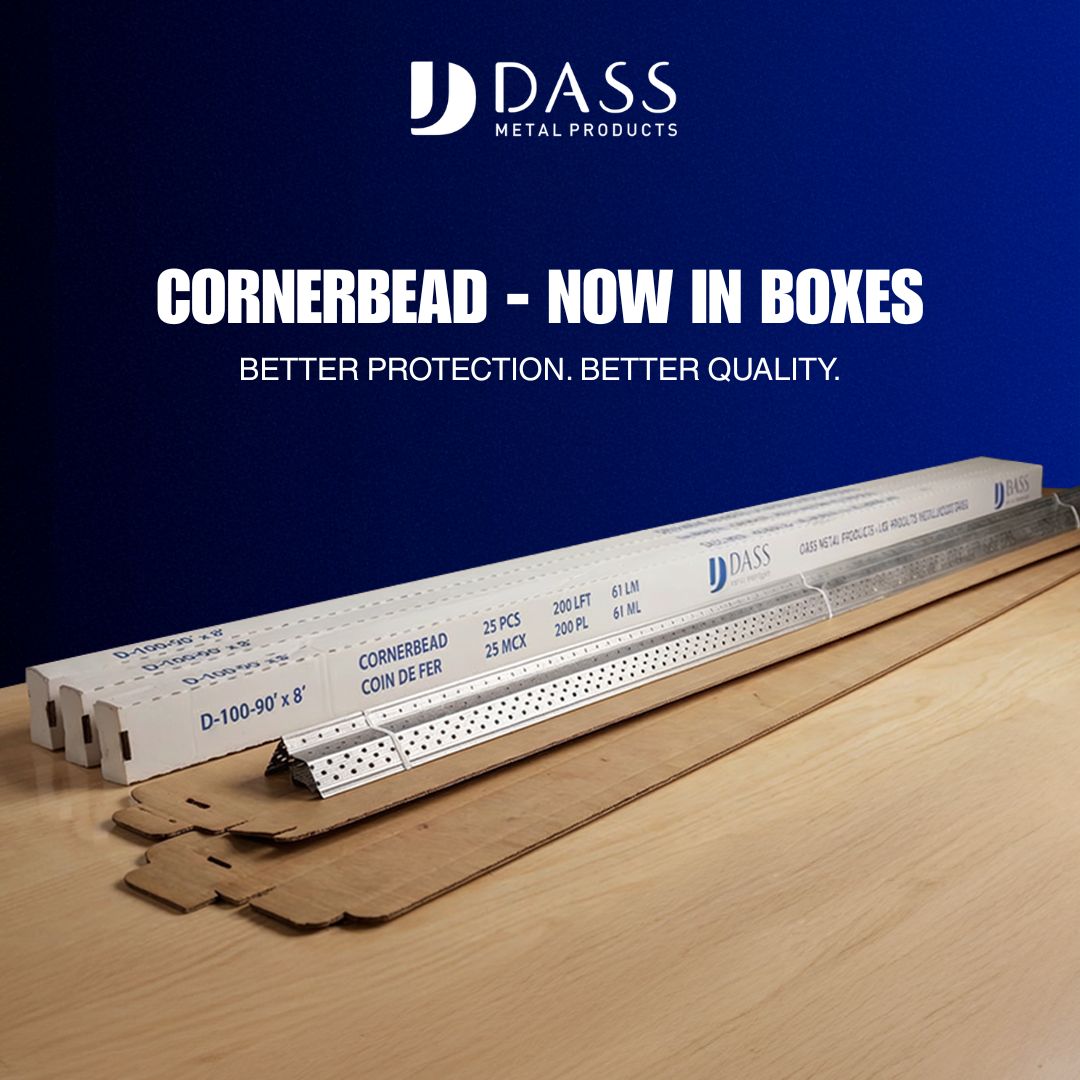
- Finishing: 90°/130° cornerbead, J trim, L trim, Z‑Bar, J track
Typical sizes and numbers used in the field:
- Widths: 1‑5/8 in., 2‑1/2 in., 3‑5/8 in., 6 in., 8 in.
- Spacing: 16 in. or 24 in. on center (o.c.) for partitions
- Gauges: light gauge ~25–20 ga; heavy gauge ~18–12 ga
- Fasteners: #6–#10 self‑drilling screws; common lengths 1‑1/4 in., 1‑5/8 in.
Because steel doesn’t shrink or warp, finished walls tend to be flatter, which means fewer callbacks for screw pops or cracked corners.
Why Using Steel Studs Matters Now
Using steel studs improves dimensional stability, fire performance, and predictability under load. Contractors reduce rework caused by warping, and inspectors recognize compliant details faster. For busy schedules, pre‑punched holes, consistent gauges, and screw‑fastened assemblies help accelerate framing and drywall.
Builders in 370 New Enterprise Way juggle schedules, inspections, and material availability. Steel offers measurable reliability:
- Straightness: Minimal crown and twist improve drywall quality and speed taping.
- Fire: Noncombustible framing supports common 1‑ and 2‑hour assemblies.
- Movement: Slotted deflection track protects walls from slab deflection (often 1/2–3/4 in.).
- Acoustics: Resilient channel helps achieve STC 50+ partitions with correct layers.
- Span: Heavy gauges and deep track handle taller walls and door clusters.
In our experience supporting Ontario and U.S. projects, predictable quality and on‑time delivery prevent cascading delays. Dass Metal’s CSSBI‑aligned production and engineering support shorten submittal cycles and reduce field RFIs.
Steel Studs vs. Wood: When Steel Wins
Steel studs beat wood when you need straight walls, noncombustible framing, and predictable spans. Use steel in high‑traffic interiors, healthcare and education, and multi‑story cores. Wood remains practical for small, simple runs where thermal bridging or tool changeovers outweigh steel’s advantages.
Use this comparison to pick the right material for each condition.
| Category | Steel Studs | Wood Studs |
|---|---|---|
| Straightness | Consistent; no crown/warp; flatter finishes | Can twist or shrink; more shimming |
| Fire | Noncombustible; supports 1–2 hr assemblies | Combustible; relies on coverings |
| Moisture | Won’t rot; zinc coating resists corrosion | Can swell, rot, or mold without protection |
| Spans/Heights | Heavy gauges handle tall partitions | Limited by member grade and quality |
| Acoustics | Resilient channel + mass = high STC | Good mass; decoupling needs special clips |
| Consistency | Manufactured to tight tolerances | Natural variability between pieces |
| Thermal | Higher thermal bridging; add insulation/thermals | Lower bridging; warmer exterior walls |
| Fastening | Screws; no splitting; reversible | Nails/screws; risk of splitting |
| Waste | Cut to length; recyclable | Cutoffs and potential warp loss |
For a deeper perspective on material choice and jobsite trade‑offs, see our in‑house comparison on steel stud vs. wood.
How Steel Stud Framing Works (Step‑by‑Step)
Steel stud framing assembles with bottom and top tracks, vertical studs at a set spacing, and bridging for stiffness. Crews anchor the bottom track, float the top in slotted deflection track, insert studs, screw both flanges, and add services through pre‑punched holes before boarding.
Below is a proven installation flow we use on Dass Metal‑supplied projects. Adjust for local codes and engineered details.
- Layout: Snap lines, mark doors and control joints. Confirm o.c. spacing (16 or 24 in.).
- Bottom track: Anchor at manufacturer‑approved spacing (often 24–48 in.). Use sealant where acoustic or smoke control is required.
- Top track: Use slotted deflection track to accommodate slab movement (target 1/2–3/4 in. clearance). Do not pin studs tight to structure.
- Stud insertion: Place studs crown‑to‑one‑side for consistency. Plumb each stud and fasten with #8 self‑drillers—both flanges—per schedule.
- Openings: Build jambs with back‑to‑back studs. Use deep track or heavy headers above doors; add jack studs based on door width/weight.
- Bridging: Install carrying/bridging channel at prescribed intervals (commonly 4 ft o.c. for tall walls). Add windbrace where specified.
- MEP: Route through pre‑punched holes; grommet where required. Avoid compromising web with field cuts.
- Boarding: Follow screw patterns; stagger joints. Use resilient channel where STC targets demand decoupling.
- Fire/Acoustic seals: Fill deflection gaps and penetrations with rated products as detailed.
- Inspection: Verify plumbness (e.g., 1/8 in. in 10 ft), screw counts, and deflection clearances before close‑in.

Need a deflection refresher? Our slotted deflection track guide clarifies movement ranges, fastener patterns, and common inspection asks.
Types, Methods, and Components You’ll Use
Steel stud systems include non‑load‑bearing light gauge studs, load‑bearing studs for structural spans, and a family of tracks, channels, clips, and trims. Choose the right combination—standard track, deep track, slotted deflection track, bridging, resilient channel—to meet height, fire, and acoustic targets.
Core framing members
- Non Load Bearing Steel Studs (Light Gauge): Fast interior partitions; typical spacing 16–24 in. o.c.; common widths 2‑1/2–6 in.
- Load Bearing Stud Framing (Heavy Gauge): For tall corridors, shafts, or exterior infill. Engineer spans, headers, and screw schedules.
- Standard/Deep Track: Select depth to match stud width; deep track helps with tall openings and jamb assemblies.
- Slotted Deflection Track: Allows vertical movement; leave and later seal the slip gap.
Stiffening and alignment
- Bridging / Carrying Channel: Controls stud rotation; commonly at 4 ft o.c. on tall partitions.
- Furring Channel: Levels surfaces; creates plenum or chase spaces; pairs with Z‑Bar for liners.
- Windbrace: Diagonal bracing to resist racking loads where specified.
Acoustic and finishing
- Resilient Channel: Decouples gypsum; typical screw spacing 12–16 in.; avoid bridging screws into studs.
- 90°/130° Cornerbead: Protects corners; fewer callbacks when studs are straight and screws are flush.
- J Trim, L Trim, Z‑Bar, J Track: Clean terminations at glazing, ceilings, and material transitions.
Explore sizes and regional conventions in our note on steel stud framing sizes. For structural scenarios and bracing logic, see the steel frame bracing guide.
Best Practices That Prevent Rework
The best practices for using steel studs are simple: maintain true layout, float the top with deflection track, reinforce openings, and stiffen tall walls with bridging. Verify screw patterns, avoid over‑driving, and document inspections early to keep schedules on track.
Layout and tolerances
- Snap crisp control lines and confirm door clusters before anchoring track.
- Hold spacing accurately; 1/8 in. drift over several studs compounds finish issues.
- Plumb tolerance target: about 1/8 in. in 10 ft for high‑finish interiors.
Deflection and movement
- Use slotted deflection track at structural tops; maintain the slip gap (often 1/2–3/4 in.).
- Don’t bridge the slip with screws, mud, or fixtures; seal with approved materials.
- For long runs, include control joints per specification (e.g., every 30–50 ft).
Openings and loads
- Double jamb studs and use deep track headers for doors; add jack studs for heavier leaves.
- Mount casework or TVs with backing plates or built‑up studs; plan before boarding.
- Coordinate MEP boxes to hit stud faces; avoid last‑minute web cuts.
Acoustic and fire
- Use resilient channel on the noisy side; maintain screw patterns (no short‑circuiting to studs).
- Seal top/bottom gaps and penetrations with rated products to preserve STC and fire hours.
- Stagger gypsum joints; mass + decoupling + sealing = reliable STC 50+ partitions.
Our interior wall framing mistakes checklist summarizes the missteps we see most—over‑driven screws, bridged slip joints, and missing backing among the top offenders.
Tools, Fasteners, and Resources
Steel stud work relies on drill/drivers, aviation snips, levels/lasers, and self‑drilling screws. Use anchors appropriate to the slab, and choose fastener lengths that achieve three full threads past material. Reference load tables and submittals to match gauges, spacing, and allowable heights.
- Core tools: laser or level, chalk line, drill/driver, impact driver, aviation snips, metal saw, crimper, clamps.
- Fasteners: #8 self‑drillers (fine thread to metal), pan or wafer heads for track; anchors per substrate.
- Accessories: grommets for MEP, acoustical sealant, firestopping, safety PPE.
- References: product submittals, load tables, and assemblies from Dass Metal engineering.
If you’re coordinating structural cores, reinforcing information from our JDass network can help with adjacent scopes; see this overview of reinforcing bar supply and a primer on 10M rebar uses for foundation interfaces.
Step‑by‑Step: Using Steel Studs on Your Next Wall
To use steel studs correctly, snap lines, anchor the bottom track, float the top with slotted deflection track, install studs at 16–24 in. o.c., add bridging for stiffness, then board with the right screw pattern. Inspect plumbness, fastener counts, and movement gaps before close‑in.
- Pre‑check: Confirm wall type (e.g., STC 50, 1‑hr), height, and door hardware.
- Material staging: Sort studs by length and gauge; store off the slab.
- Base track: Anchor per schedule; use acoustical sealant if specified.
- Slip track: Install slotted deflection track; label the required gap on layout.
- Studs: Set, plumb, and fasten; both flanges, consistent screw edge distances.
- Bridging: Install carrying channel; crimp or screw per detail; add windbrace as needed.
- Services: Pull wires and pipes through pre‑punched holes; protect with grommets.
- Boarding: Follow 12–16 in. o.c. screw spacing; avoid over‑driving.
- Seal: Fire and acoustic seal at perimeters and penetrations.
- QA/QC: Quick audit: spacing, screws, slip gap, bridging, door reinforcement.

For a homeowner‑friendly walkthrough of basement partitions, this basement steel stud framing guide is a handy refresher for new team members.
Design Choices: Heights, Spacing, and Assemblies
Select stud width, gauge, and spacing from load tables based on wall height, board layers, and openings. Many interiors use 3‑5/8 in. 20–25 ga studs at 16–24 in. o.c.; taller walls and heavy doors push you to wider, heavier members and deeper track.
- Typical interiors: 3‑5/8 in. studs, 20–25 ga, 16 in. o.c., single 5/8 in. Type X each side.
- High walls: Wider studs (6–8 in.) and heavier gauges (18–16 ga) with bridging every 4 ft.
- Acoustic walls: Resilient channel on the noise side + two gypsum layers; seal perimeters.
- Door clusters: Back‑to‑back jamb studs, deep track headers; verify hardware loads early.
When in doubt, our engineering team cross‑checks your heights, o.c. spacing, and board schedule against available gauges so the wall is stiff without over‑spending on weight. For structural framing outside the partition scope, start with our structural framing systems guide.
Frequent Mistakes to Avoid
Common mistakes with steel studs include over‑driven screws, bridged deflection gaps, missing bridging on tall walls, and under‑reinforced door jambs. Each error leads to cracks, pops, or door binding. Prevent them with a simple pre‑close checklist and photo documentation.
- Over‑driving screws: Weakens hold; creates board dimples and later pops.
- Bridging the slip: A single rogue screw can nullify deflection; mark the no‑screw zone.
- Skipping bridging: Tall studs rotate; carrying channel every ~4 ft keeps walls true.
- Door jambs: Single studs at heavy doors lead to binding; use double jambs and deep headers.
- Unplanned backing: TV mounts, casework, and rails need preplanned plates or built‑ups.
We compiled more on this in our field mistakes reference. A five‑minute pre‑close inspection prevents 50‑minute rework later.
Local considerations for 370 New Enterprise Way
For projects around 370 New Enterprise Way, plan for seasonal humidity swings, coordinate cross‑border deliveries early, and align with local inspection preferences. Dass Metal’s Vaughan manufacturing base and logistics experience help crews keep framing dates firm year‑round.
- Weather swing: Winter‑to‑summer humidity shifts favor steel’s stability; protect gypsum during transport.
- Scheduling: Book deliveries to align with site access windows and hoist times to minimize handling.
- Inspection style: Review slip‑track and firestop details with the AHJ before crews board long runs.
Mini Case Studies and Practical Examples
Real projects show why steel studs win: clean inspections, fewer call‑backs, and steady schedules. Using steel studs with the right track, bridging, and acoustic details produces flatter finishes, stable door frames, and reliable STC and fire ratings across corridor, clinic, and tenant fit‑out scopes.
Clinic corridor (interior fit‑out)
- Challenge: 12‑ft corridors with many doors and medical gases.
- Solution: 6 in., 20 ga studs at 16 in. o.c., deep track headers, bridging at 4 ft, resilient channel on the patient side.
- Outcome: Smooth inspections; door hardware aligned; STC 50 met without rework.
Educational tenant upgrade
- Challenge: Daytime work with strict dust and fire‑safety controls.
- Solution: Light gauge studs, slotted deflection track, rigorous firestopping at penetrations.
- Outcome: Noncombustible framing and clean QA photos shortened the close‑in cycle.
Core shaft wall alignment
- Challenge: Plumbing chases wandering out of plumb across floors.
- Solution: Heavy gauge studs with carrying channel and windbrace; consistent laser layout.
- Outcome: True shafts sped up riser installs and inspections floor‑to‑floor.
These are typical of the partitions and shafts we support with Dass Metal systems across Ontario and U.S. sites.
Self‑Contained Answers for Fast Lookup
Using steel studs involves selecting the right gauge and width, spacing at 16–24 in. o.c., installing with standard or slotted track, adding bridging, and coordinating MEP. Check acoustic and fire details up front. A short pre‑close inspection prevents cracks, pops, and failed sound tests.
- What spacing should I use? 16 in. o.c. for most interiors; 24 in. o.c. for selected assemblies per load tables.
- When do I need slotted track? At structural tops where slab deflection is expected; preserve the slip gap.
- How do I hit STC 50? Use resilient channel, two layers of 5/8 in. Type X on the noise side, and perimeter sealing.
- How do I stiffen tall walls? Wider/heavier studs, bridging every ~4 ft, and deep track at openings.
Frequently Asked Questions
These concise answers cover the most common field questions about using steel studs. They’re designed for quick briefings and pre‑task planning and reflect Dass Metal’s engineering support across Ontario and U.S. projects.
What gauge steel stud should I use for a 10‑foot interior wall?
Most 10‑foot partitions land in the 20–25 gauge range with 16–24 in. spacing, but confirm with load tables and gypsum layers. If you have heavy doors or wall‑hung loads, step up gauge or stud width and add deep track headers and bridging.
Do I always need slotted deflection track at the top?
Use slotted deflection track wherever the wall meets a structure that can move under load. The slip gap (often 1/2–3/4 in.) prevents cracks and door binding. Don’t bridge the gap with screws or mud, and seal it per the rated assembly.
How can I improve sound control with steel studs?
Use resilient channel to decouple one gypsum layer, add mass with two layers of 5/8 in. Type X, and seal all perimeters and penetrations. Avoid short‑circuiting the channel with screws into studs. Proper details routinely achieve STC 50+ results.
What’s the difference between standard track and deep track?
Standard track matches stud width for typical partitions. Deep track provides taller flanges that improve capture and stiffness, especially at openings and jamb assemblies. Use deep track for tall walls, heavy doors, or where bracing space is limited.
Is using steel studs different for basements?
Basements benefit from noncombustible, moisture‑resistant steel. Anchor carefully to slabs, use slip track at the top, and protect gypsum from humidity. A simple walkthrough like our basement framing refresher helps train newer crew members.
Conclusion: Make Steel Work for Your Schedule
Steel studs deliver straight walls, fast inspections, and reliable acoustic and fire performance. Choose gauges and spacing from load tables, float the top with deflection track, and add bridging. A brief QA pass before boarding saves time—especially on tall corridors and door‑heavy runs.
- Key takeaways
- Steel studs shine where straightness, fire, and speed matter.
- Slip track + bridging + correct screws = fewer callbacks.
- Plan openings, backing, and acoustics before boarding.
- Next steps
- Share this pre‑task plan with your crew.
- Send us your wall heights and targets for a quick gauge/spacing check.
- Review our framing systems overview and bracing guide before mobilizing.
Looking for project‑specific guidance? We’ll translate your drawings into a studs‑and‑track package with delivery windows that fit your phasing. Start with our framing systems overview and reach out via the website.
Related reading to go deeper
To sharpen your plan, review steel‑vs‑wood trade‑offs, movement joints, and bracing logic. These references, together with your drawings, form a reliable checklist you can brief in minutes before crews start layout.
For material choices and finishing quality, our overview of steel vs. wood studs helps set expectations. Movement handling is detailed in the deflection track guide, and alignment under lateral loads is summarized in the bracing guide. For a structural big‑picture, the steel framing systems guide shows how partition logic connects with exterior and core scopes.
Need a fast material takeoff? Share your wall schedule, STC and fire targets, and delivery windows. Our Vaughan team packages studs, track, channels, and trims to land when your crew does—no idle time, no guesswork.