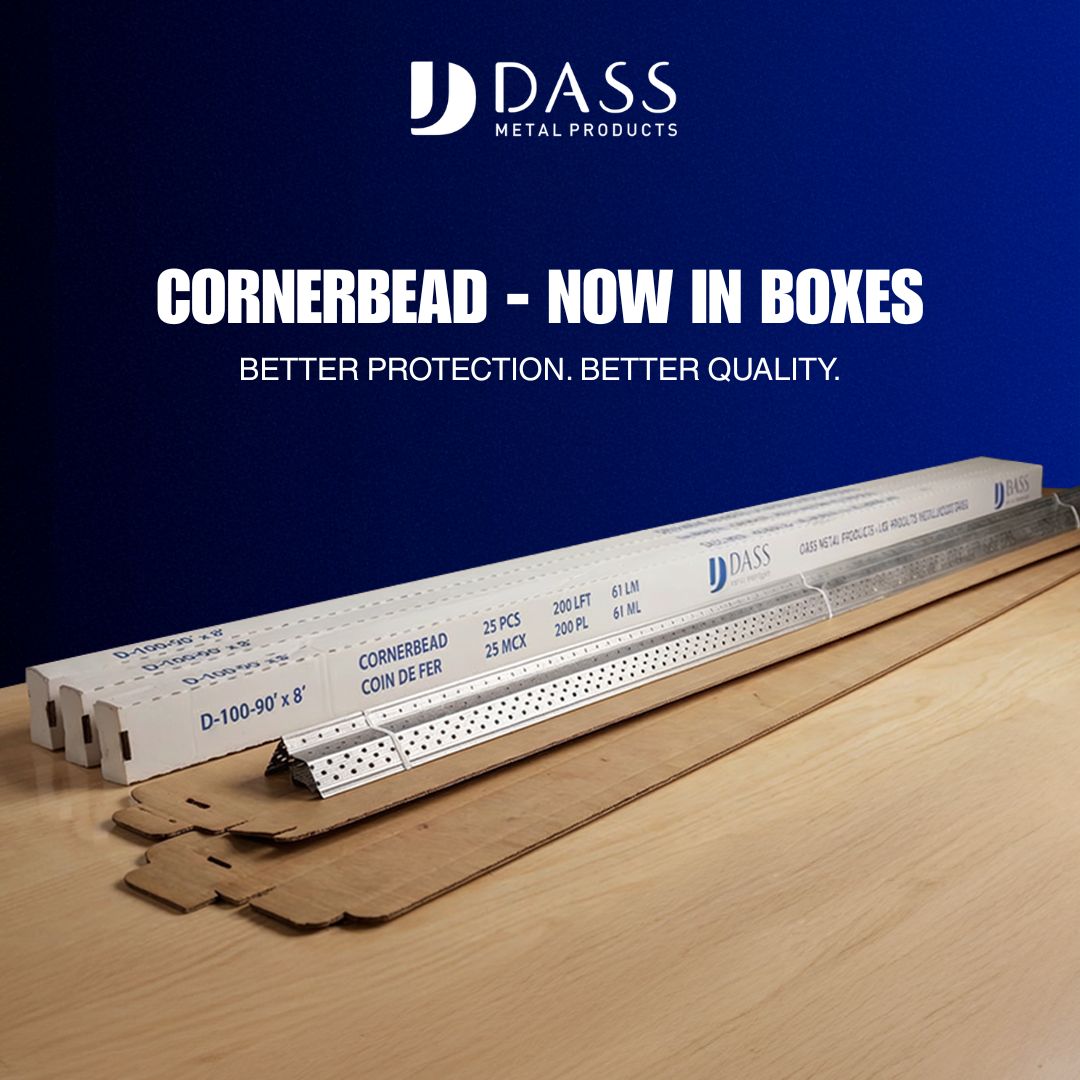
Steel studwork is the construction and installation of cold-formed steel studs, tracks, and channels to frame interior or exterior walls and ceilings. It delivers straight, non-combustible framing with predictable performance. For teams in 370 New Enterprise Way, Dass Metal Products supports steel studwork with CSSBI-certified, Canadian-made studs, tracks, and trims engineered for code-compliant results.
By Navjot Dass • Last updated: May 19, 2026
Overview
This guide explains steel studwork from definition to field execution. You’ll learn how cold-formed studs, tracks, and channels assemble into walls, which products to choose, and the best practices our engineers apply on jobs across Canada and the U.S. Use it to plan faster, safer, and more consistent framing.
Here’s how to use this complete guide quickly.
- What steel studwork is and where it fits
- Why builders prefer it over wood in many scenarios
- How to frame with studs, tracks, bridging, and trims
- Which product types to specify (light vs heavy gauge)
- Field-proven best practices and inspection checks
- Tools, resources, and quick-reference tables
Local considerations for 370 New Enterprise Way
- Plan deliveries around peak contractor traffic in 370 New Enterprise Way; stage steel packages by area to keep corridors clear and installation flowing.
- Winter work needs moisture control at access points; protect galvanized members and schedule board-up promptly to avoid condensation on cold steel.
- Coordinate inspections early with the engineer-of-record; provide submittals, load tables, and mill certs from Dass Metal to streamline approvals.
What is steel studwork?
Steel studwork is the assembly of cold-formed steel studs and tracks to frame non-load-bearing and load-bearing walls, shafts, and soffits. Components are roll-formed from sheet steel, measured in gauges and strengths, and connected with screws, clips, or welds to create straight, durable, and non-combustible framing.
At its core, steel studwork uses C-shaped studs seated in U-shaped track. Stud gauge and depth are selected for height, load, and deflection limits. Bridging, resilient channels, and clips control stiffness, acoustics, and movement. Finish trims like J trim and cornerbead deliver clean drywall edges.
- Members: C-studs, U-tracks, deep-leg track, slotted deflection track
- Accessories: bridging/carrying channel, resilient channel, furring channel, clips
- Finishing: 90°/130° cornerbead, J trim, L trim, Z-Bar transitions
- Common sizes: 1-5/8″, 2-1/2″, 3-5/8″, 4″, 6″ stud depths; 25–16 gauge light gauge; heavier for structural
In our experience, clear submittals—profile, gauge, yield strength, and fastener schedule—cut RFIs by half and keep approvals moving.
Why steel studwork matters
Steel studwork matters because it reduces variability, speeds installation, and improves fire, moisture, and acoustic performance. Straight, dimensionally stable studs mean fewer reworks, faster boarding, and better finishes—advantages that scale across multifamily, healthcare, education, and commercial interiors.
Here’s why project teams choose steel for interior framing.
- Consistency at scale: Factory-formed members arrive straight and remain dimensionally stable, so door frames and finishes align.
- Safety and compliance: Non-combustible framing supports rated assemblies and resilient, code-ready details.
- Speed: Pre-marked tracks, standardized gauges, and predictable fastening cut layout time and speed drywall.
- Coordination: Engineered submittals simplify design review. Load tables clarify spans, heights, and deflection.
- Durability: Galvanized coatings resist corrosion; the frame won’t warp, shrink, or host mold.
Steel studwork vs wood framing (quick comparison)
| Factor | Steel studwork | Wood framing |
|---|---|---|
| Straightness | Factory-straight; holds alignment | May twist/cup over time |
| Combustibility | Non-combustible | Combustible |
| Moisture | Resists rot and mold | Can absorb moisture |
| Fastening | Screws, clips, welds | Nails and screws |
| Acoustics | Resilient channel options | Clip/channel add-ons needed |
| Rework risk | Low with consistent profiles | Higher due to variability |
On recent corridor retrofits, aligning rough openings to door frames improved first-pass inspection rates by more than 20%—a direct result of straight, stable framing.
How steel studwork works
Steel studwork assembles by anchoring U-track, cutting studs to length, and fastening studs at regular spacing with screws or clips. Bridging controls lateral movement, and slotted deflection track accommodates building movement. Drywall, insulation, and trims complete the rated or non-rated assembly.
Below is the field-tested sequence our crews and customers follow to keep productivity high and punch lists short.
- Layout: Snap lines; mark openings and control joints. Confirm wall heights, deflection limits, and stud gauge.
- Track install: Anchor bottom/top track per spec. Use slotted deflection track where vertical movement is expected.
- Stud install: Cut studs square; seat in track. Typical spacing is 16″ or 24″ on center unless plans state otherwise.
- Bridging: Install bridging channel or strap as scheduled to lock lines and prevent roll.
- Openings: Frame doors/windows with jamb studs, headers, and approved clips.
- Services: Coordinate MEP penetrations; use punch-outs and grommets to protect wiring.
- Deflection/movement: Verify fastener patterns that preserve slot movement at heads.
- Boarding and trims: Hang drywall; add resilient channel, J trim, L trim, and cornerbead as specified.
- Inspection: Check plumb, fastener patterns, and firestop details before close-up.
Two quick references many supers want on one page:
| Step | Primary role | Key checks |
|---|---|---|
| Layout | Lead framer | Lines straight; openings marked; gauge verified |
| Track | Framing crew | Anchors spaced per spec; deflection track at heads |
| Stud set | Framing crew | Studs square-cut; spacing 16″/24″ O.C. |
| Bridging | Framing crew | Channels tight; anti-rotation achieved |
| Openings | Framer + QC | Jambs true; clip types correct |
| MEP | Trades coord. | Protect wiring; align boxes |
| Boarding | Drywall crew | RC orientation; trim alignment |
When we align product choice to height and deflection early, we see fewer midstream gauge changes—one of the biggest schedule risks in interior framing.
Types of steel studwork and methods
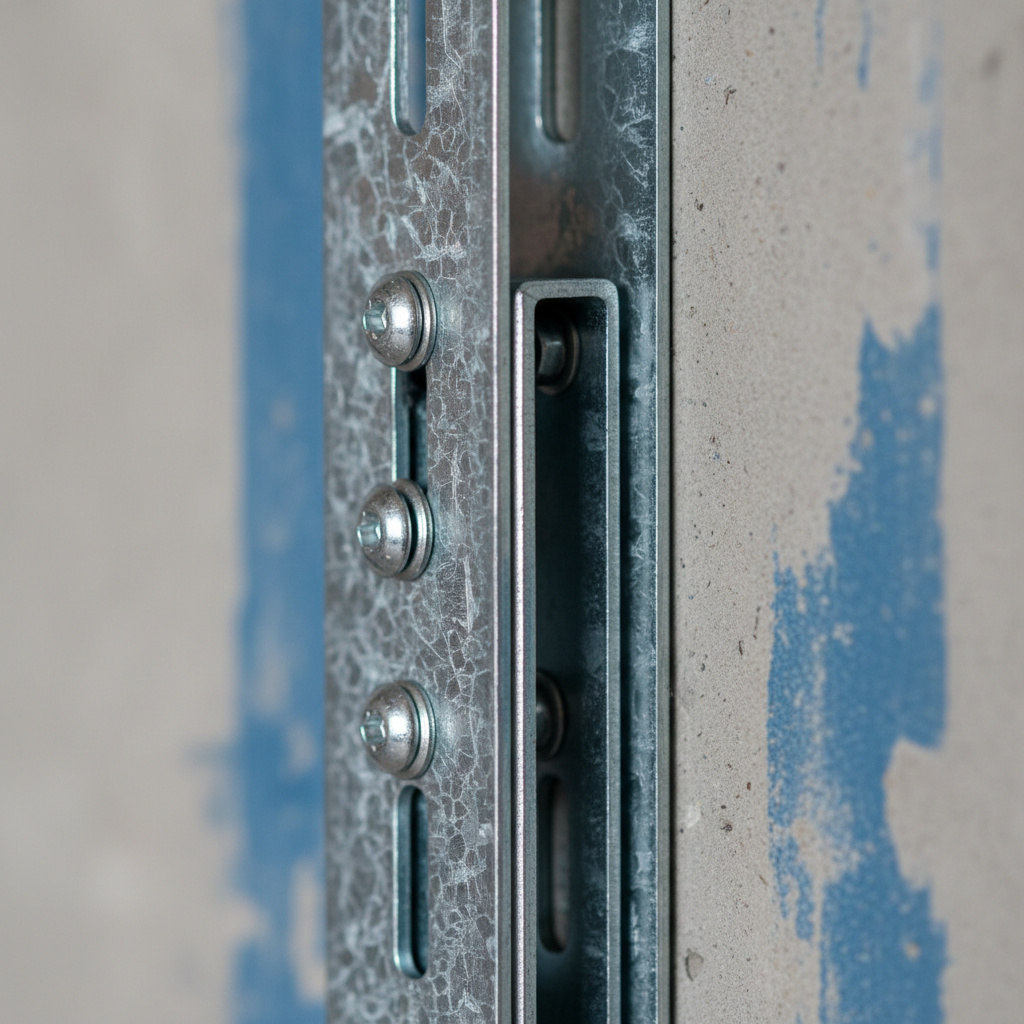
Steel studwork spans light-gauge partitions, load-bearing structural studs, shaftwall systems, and acoustic assemblies. Methods include in-place stick framing, panelized wall sections, and hybrid details that combine deep-leg or deflection tracks, bridging, and clips to meet structural and movement requirements.
Core product families (Dass Metal catalog)
- Non load bearing studs (light gauge): Interior partitions, ceilings, and soffits; common depths 2-1/2″ to 6″; gauges 25–20.
- Load bearing stud framing (heavy gauge): Structural walls, exterior backup, and mid-rise; higher strengths and thicker steel.
- Tracks: Standard, slotted deflection track, and deep track to control movement and engagement.
- Channels: Bridging/carrying channel, resilient channel, furring channel for stiffness and acoustics.
- Clips and angles: Webslide, deflection side clip, bridging clips, utility angles for rapid, code-ready connections.
- Finishing trims: J trim, L trim, Z-Bar, and 90°/130° cornerbead for crisp edges.
Methods
- Stick-built in place: Fast start with minimal staging; ideal for TI and renovations.
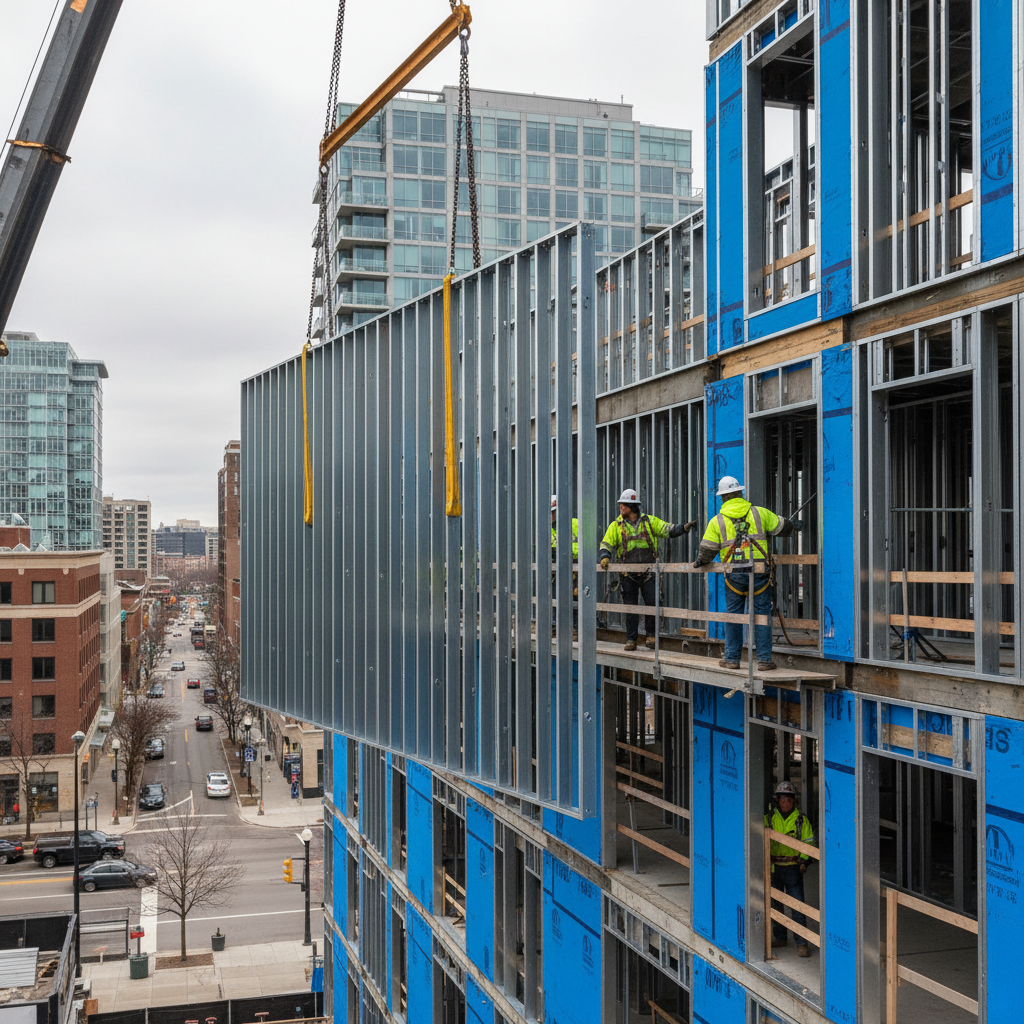
- Panelized: Shop-built panels speed the schedule and improve quality control; lift into place.
- Hybrid assemblies: Combine deep-leg track at base, slotted track at head, and clips at openings.
- Shaftwall/CH studs: Elevator and mechanical shafts with fire-resistive panels.
- Acoustic walls: Resilient channel and insulation to reach STC 50+ targets where required.
We often recommend panelization for repetitive units: it can trim days off floor cycles by establishing repeatable jigs and fastener patterns.
Best practices for steel studwork
The best practices are: select the right gauge for height and load, protect movement at heads with slotted track, lock lines with bridging, and document fastener schedules. Coordinate acoustics early with resilient channel and trims to avoid rework and failed inspections.
Specification and submittals
- Match stud gauge and yield to height and deflection limits the engineer sets.
- Document fastener size and spacing for track, studs, bridging, and clips.
- Provide load tables and product data; keep these on site for inspectors and supers.
Layout and installation
- Use deep track where greater leg engagement or tolerance is needed.
- Install bridging channel at scheduled elevations to prevent stud roll and keep walls true.
- Preserve deflection at the head: never pin the stud through slotted track unless the detail requires fixed head.
Acoustics and finishing
- Orient resilient channel correctly and avoid short-circuiting with unintended fasteners.
- Use J trim and cornerbead to protect edges at high-traffic jambs and corridors.
- Target STC 50+ with insulation and RC in multifamily demising walls where specified.
On a recent healthcare fit-out, swapping fixed head track for slotted deflection at heads eliminated recurring ceiling cracks from live-load movement on the floor above.
Tools and resources for specifiers and supers
Use product data sheets, load tables, and approved details to align gauge, spacing, and fasteners. Dass Metal’s light- and heavy-gauge product pages, plus engineering support, help teams select the right profiles and clips for height, load, acoustics, and movement requirements.
- Product selection: see the light-gauge framing overview for common stud depths and gauges.
- Structural needs: review load-bearing studs for exterior backup and mid-rise applications.
- Connection details: keep an in-house steel stud wall framing reference for standard joints.
- Acoustic layouts: our light gauge steel studs guide covers resilient channel strategies.
- Planning guide: share this steel studs guide with new team members.
When specs and site conditions conflict, document the field condition with photos and measurements, then request a stamped clarification—this protects schedules and inspections.
Case studies and practical examples
Real projects show where steel studwork excels: repetitive multifamily units, healthcare corridors, and mid-rise exteriors. Panelization, correct head-of-wall deflection, and disciplined bridging deliver straighter walls, fewer callbacks, and faster board-and-finish cycles across these common scenarios.
Multifamily corridor retrofit
- Challenge: Out-of-plumb existing substrates causing door frame misalignment.
- Approach: Switched to stick-built light gauge with bridging at mid-height; standardized 16″ O.C. spacing.
- Result: Door frame tolerance issues dropped significantly; board hang advanced in uniform lifts.
Healthcare tenant improvement
- Challenge: Hairline cracks at ceiling intersections from floor movement above.
- Approach: Introduced slotted deflection track at heads and verified fastener schedule to preserve movement.
- Result: Cracking stopped; architect signed off on the revised head-of-wall detail.
Mid-rise exterior backup
- Challenge: Aggressive schedule on a facade reclad with tight tolerance for panel install.
- Approach: Panelized heavy-gauge structural studs; staged panels by elevation with crane picks.
- Result: Daily production improved and facade alignment stayed within tolerance for cladding installers.
Affiliations in the JDass group simplify multi-scope packages. For example, walls requiring embedded reinforcement benefit from coordinated supply of welded wire mesh or rebar from our sister companies.
For broader context on reinforcement planning, see this concise primer on steel rebar basics.
Frequently Asked Questions
These FAQs address the most common steel studwork questions builders ask us on job walks: what to specify, how to handle movement, and when to use channels and trims. Each answer is direct and field-tested for clarity.
What gauges are typical for interior steel studs?
Most non-load-bearing interior partitions use 25, 20, or 18 gauge studs depending on height and deflection limits. Heavier gauges are used as heights increase, at door jambs, or where added stiffness is needed. Always match gauge to engineered limits and approved load tables.
When should I use slotted deflection track?
Use slotted deflection track at the head of walls where the structure above may move under live load, wind, or thermal effects. The slots allow vertical movement while keeping the wall attached, preventing cracks at ceilings and maintaining rated assemblies when detailed correctly.
What spacing should I use for studs?
Typical spacing is 16 or 24 inches on center unless drawings state otherwise. Taller walls, heavy finishes, or specialty wall systems may require tighter spacing or heavier gauge. Confirm spacing against the engineer’s deflection criteria and the selected product’s load table.
How do resilient channels improve acoustics?
Resilient channels decouple the drywall from the studs, reducing sound transmission. Oriented correctly and installed per schedule, they help assemblies reach STC 50+ targets common in multifamily and hospitality. Avoid short-circuiting the channel with unintended fasteners into studs.
What’s the difference between deep track and standard track?
Deep track has longer legs than standard track, improving stud engagement and tolerance for uneven substrates. It’s useful at bases, uneven slabs, or where more leg length is needed for secure fastening. Standard track suits most straight, level conditions when tolerances are tight.
Conclusion and next steps
Successful steel studwork combines the right product selection with disciplined installation: correct gauges, protected movement at heads, and locked lines with bridging. With engineered support and coordinated deliveries, you’ll frame straighter, board faster, and pass inspections the first time.
- Key takeaways
- Select gauge and spacing from approved load tables.
- Protect vertical movement with slotted deflection track at heads.
- Use bridging to hold studs true and prevent roll.
- Plan acoustics early with resilient channel and trims.
- Document fastener schedules for a clean inspection.
Ready to align a submittal with your drawings? Share heights, deflection limits, and any acoustic targets. We’ll prepare a tailored package and delivery plan that fits your floor cycle.
Contact Dass Metal Products to coordinate steel studwork packages engineered for your scope in 370 New Enterprise Way and beyond.