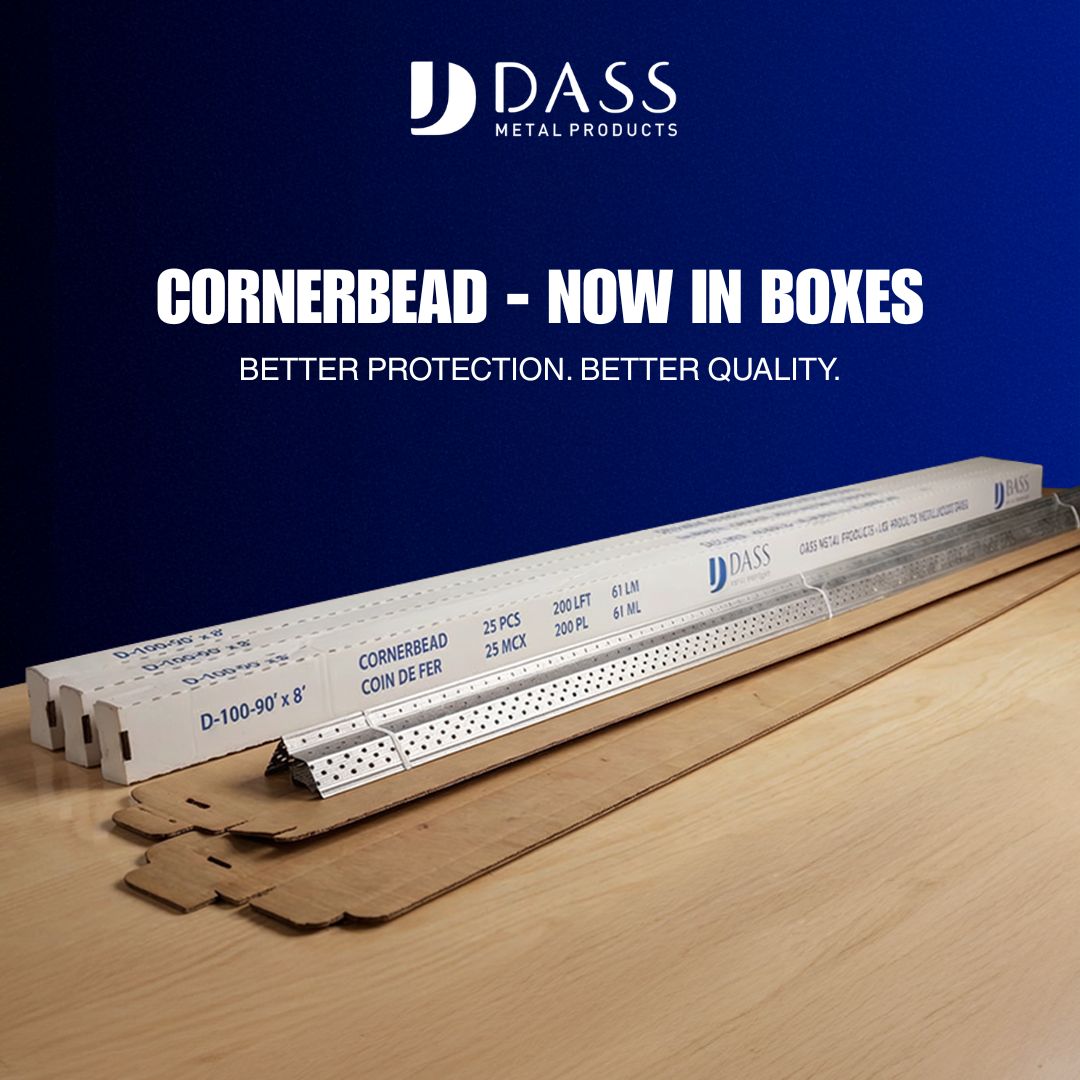
Drywall metal studs are cold-formed steel members used to frame interior partitions and some exterior infill. They install fast, stay straight, and resist rot and termites. At 370 New Enterprise Way in Vaughan, Dass Metal Products supplies engineered steel stud systems that help contractors deliver code-aligned walls on schedule across Ontario, Canada, and the U.S.
By Navjot Dass — Dass Metal Products
Last updated: 2026-06-15
Above the Fold: Hook, Summary, and TOC
Build straighter, faster drywall partitions with steel studs, tracks, and channels selected to match wall height, acoustics, and deflection. This complete guide covers selection, layout, fastening, sound isolation, and field QA—backed by Dass Metal Products’ engineering support and dependable delivery from Vaughan to projects across North America.
Here’s what you’ll take away from this expert guide for builders, drywall contractors, and GCs:
- What steel stud framing is: Common profiles, gauges, and spacing that meet code.
- Why it matters: Dimensional stability, speed, and noncombustibility reduce callbacks.
- How it works: Tracks, studs, bridging, and deflection details that keep finishes crack-free.
- Types and methods: Standard, deep, and slotted deflection track; resilient and furring channels; clips and trims.
- Best practices: Layout, fastening, doors/headers, openings, and photo-based QA.
- Tools/resources: Field kit checklist and submittal-ready terminology you can use today.
- Real examples: How crews near the Regional Municipality of York meet tough timelines.
Quick Summary
Steel studs and tracks create straight, stable, noncombustible walls for drywall. Choose gauge by height and loading, use slotted deflection at the top, add bridging for stiffness, and include resilient or furring channels where sound isolation is required. Dass Metal Products helps with selection, submittals, and on-time delivery.
- Typical spacing: 16 in or 24 in on center; verify assembly and finish loads.
- Common gauges: 25–20 ga for non-load-bearing; 18–16 ga for heavier conditions.
- Stud widths: 1-5/8 in, 2-1/2 in, 3-5/8 in, 6 in, and larger where required.
- Board screw spacing: 8 in edges, 12 in field (check system data for your assembly).
- Deflection detailing: Slotted deflection track or listed deflection clips at the head.
What Are Drywall Metal Studs?
Drywall metal studs are light- and heavy-gauge, cold-formed steel members paired with tracks to frame straight, dimensionally stable walls. They accept gypsum board with screw fastening, resist warping and moisture, and include factory punch-outs for MEP routing—speeding layout and installation on commercial interiors.
In practice, a wall is a coordinated system of tracks, studs, screws, channels, clips, and trims. Profiles are engineered for stiffness per height and loading, with gauges that range from thin, light-gauge non-structural to heavy-gauge load-bearing studs. Factory tolerances and corrosion-resistant coatings help maintain finish quality and durability.
Core components you’ll specify
- Non-load-bearing steel studs (light gauge): For most interior partitions, chases, and soffits.
- Load-bearing stud framing (heavy gauge): When axial/lateral loads or tall heights demand structural capacity.
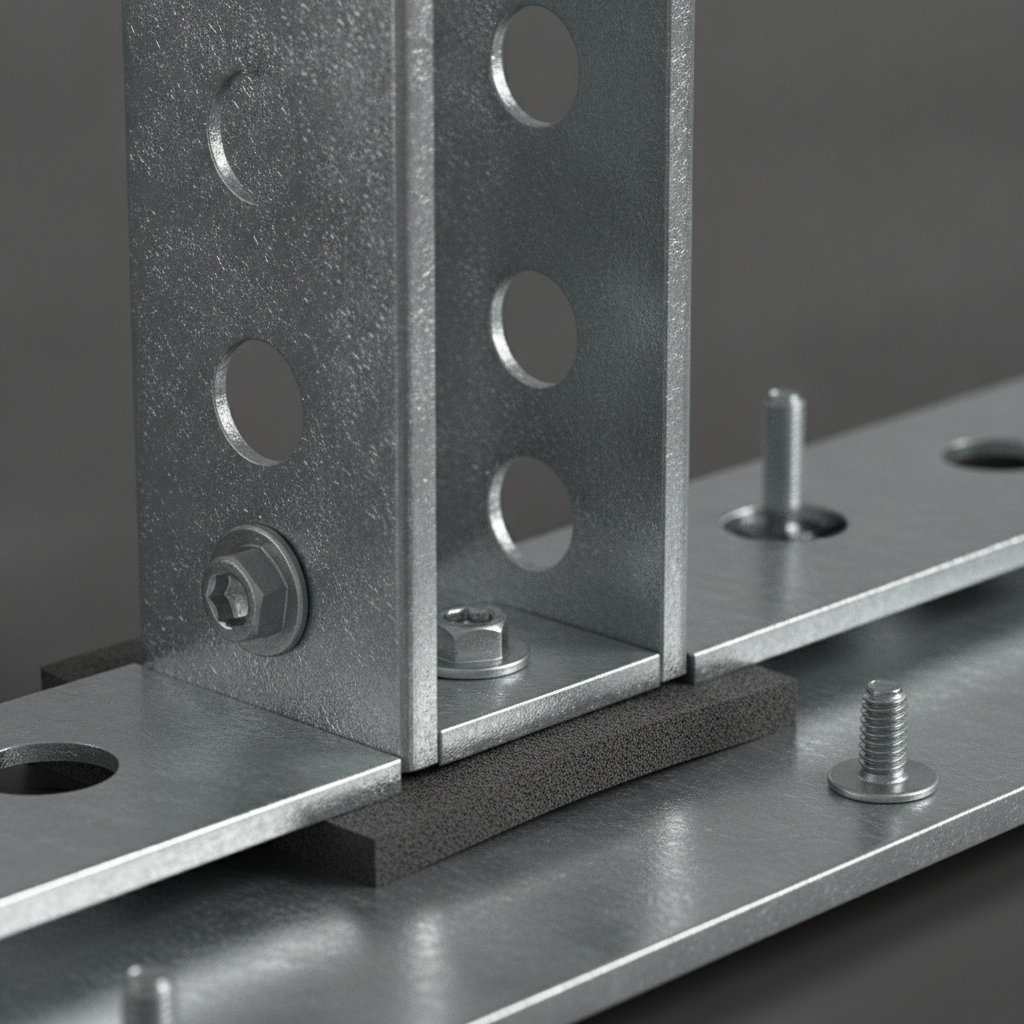
- Standard track: Top and bottom U-shaped members that receive studs; fasten to structure.
- Slotted deflection track: Head-of-wall track with slots to accommodate live-load movement.
- Deep track: Extra leg depth to handle height tolerance or slab variance.
- Bridging/carrying channel (CRC): Lateral restraint to limit stud buckling and vibration.
- Resilient channel and furring channel: Decouple gypsum for improved STC and finish planarity.
- Clips and trims: Webslide, deflection side clips, J/L trims, and 90°/130° cornerbead for clean edges.
For a deeper primer on stud fundamentals and dimensions, review our interior stud wall framing overview and this steel studs guide that contractors share with field teams.
Why Drywall Metal Studs Matter
Steel studs stay straight, resist moisture, and are noncombustible, which reduces movement cracks and callbacks. Factory punch-outs speed MEP coordination, and consistent dimensions help meet acoustic and finish tolerances. On fast-track interiors, these traits save labor hours and help schedules hold.
Performance advantages you can bank on
- Dimensional stability: Steel doesn’t shrink or warp; walls remain plumb from day one.
- Noncombustible framing: Helps satisfy fire-rated assembly design requirements.
- Corrosion resistance: Galvanized coatings perform in humid zones and ground floors.
- Predictable fastening: #6 or #8 fine-thread screws bite consistently for reliable screw-off.
- MEP-ready: Factory punch-outs (often every 24 in) simplify cabling and piping routes.
If you’re weighing steel versus wood, our comparison of traits in the table below helps. For extended discussion on where steel wins, see our steel vs. wood framing insights and practical field notes in drywall framing mistakes to avoid.
| Criterion | Steel Studs | Wood Studs |
|---|---|---|
| Dimensional stability | High (no shrink/warp) | Variable (moisture sensitive) |
| Fire performance | Noncombustible member | Combustible; relies on gypsum layers |
| Typical spacing | 16 or 24 in o.c. | 16 in o.c. standard |
| Finish quality | Consistent, straight lines | Depends on stock selection |
| MEP coordination | Factory punch-outs | Site drilling/boring |
For a homeowner-focused perspective on framing choices, one overview is shared here as general context: a basement framing guide. Commercial interiors differ, but the basics of straight, dry, and stable assemblies carry over.
How Drywall Metal Stud Framing Works
Studs seat into top and bottom tracks, fastened to structure with anchors. Lateral bracing (bridging channel) stiffens the line, and a slotted deflection head allows the floor above to move without cracking finishes. Gypsum board attaches with fine-thread screws at specified spacing for each assembly.
The framing sequence (field-proven)
- Layout: Snap chalk lines; mark doors, returns, and control joints. Verify slab flatness and tolerance (±3/8 in typical).
- Bottom track: Set and anchor per substrate (concrete or steel). Use proper fastener embedment.
- Top track: Install standard or slotted deflection track based on structural movement requirements.
- Stud install: Cut to length allowing head clearance for deflection; set 16 or 24 in o.c.
- Bridging: Install bridging/carrying channel at required elevations; secure with listed clips/screws.
- Openings: Frame doors with header track, jamb reinforcement, and king/jack studs.
- Services: Route MEP through punch-outs; protect edges with grommets where required.
- Boarding: Hang gypsum with type S screws (8 in edge/12 in field typical). Stagger seams.
- Finishing: Apply trims (J/L), cornerbeads (90° or 130°), and joint treatment per level of finish.
Want a deeper walkthrough with illustrations? Our metal studs quick guide and framing studs explainer break down the components and the order of operations.
Types, Methods, and Approaches
Match stud gauge to wall height and loading, choose the right track (standard, deep, or slotted deflection), and add channels for stiffness and acoustics. Dass Metal Products manufactures a full system—studs, tracks, channels, clips, and trims—to detail partitions correctly the first time.
Studs and tracks
- Non-load-bearing studs (light gauge): The default for interior partitions. Common gauges: 25–20 ga; common widths: 1-5/8 in to 6 in.
- Load-bearing studs: 18–16 ga and heavier for axial/lateral loads or tall heights. See submittal load tables for selection.
- Standard track products: For typical head/base conditions; use gasket where required for acoustics or smoke control.
- Deep track: Adds leg depth to cover slab variance (e.g., ±3/4 in) or to simplify tall wall fit-up.
- Slotted deflection track: Allows 1/2 in to 1 in head movement without hard-fixing studs to structure.
Channels, clips, and bracing
- Bridging/carrying channel: Controls stud bow and vibration; spacing depends on height and load.
- Resilient channel: Decouples gypsum to improve STC; often 24 in o.c. horizontally.
- Furring channel: Levels irregular substrates and carries board; useful behind tile or in acoustic builds.
- Windbrace and ties: Add lateral stability in corridors or tall, narrow walls.
- Clips: Deflection side clip and webslide clip simplify attachment to concrete, steel, or wood.
Trims and finishing
- J trim, L trim, and J track: Clean terminations at edges, returns, and material changes.
- 90°/130° cornerbead: Crisp outside corners, especially where abuse resistance is needed.
- U-Flex track: Forms radiused walls; snap to curve templates for consistent arcs.
- Z-Bar and L track: Useful for reveals, mounting details, or alignment with adjacent materials.
If you’re validating sizes for a submittal, this overview of common stud framing sizes offers practical context on widths and gauges used across Canada.
Best Practices for Speed, Quality, and Compliance
Use laser-guided layout, detail head-of-wall deflection correctly, brace lines with bridging, and frame openings with the right headers and jambs. Photograph progress at checkpoints and keep an inspection-ready log. These steps reduce rework and protect finish quality.
Layout and fit-up
- Snap and verify: Use a rotating laser; verify variance and plan for deep track if slabs fluctuate more than ±1/2 in.
- Plumb first: Stand every fourth stud and true it before committing to screw-off.
- Door kits: Pre-cut king/jack studs and header track; label by room number to save minutes per opening.
Head-of-wall and movement
- Deflection detailing: Use slotted deflection track or listed clips; leave required clearance above studs (e.g., 3/4 in).
- Do not hard-fasten: Avoid pinning studs to structure at the head; let the top float.
- Sealant strategy: Backer rod and sealant at top-of-wall where smoke or sound control is specified.
Bracing and acoustics
- Bridging channel: Install per elevation (e.g., 4 ft on center vertically for many walls); lock with rated connectors.
- Resilient channel: Maintain layout (typically 24 in o.c. horizontal) and avoid short-circuiting with fasteners into studs except where specified.
- Furring strategy: Use furring channel to true walls before board, especially behind tile or millwork.
Openings and reinforcement
- Headers: Use nested track or stud/track combos for spans; check allowable loads and deflection ratios.
- Jambs: Reinforce for door hardware; add backing for accessories at exact heights (±1/8 in tolerance).
- Blocking/backing: Steel or engineered solutions for sinks, cabinets, and rails; avoid wood where prohibited.
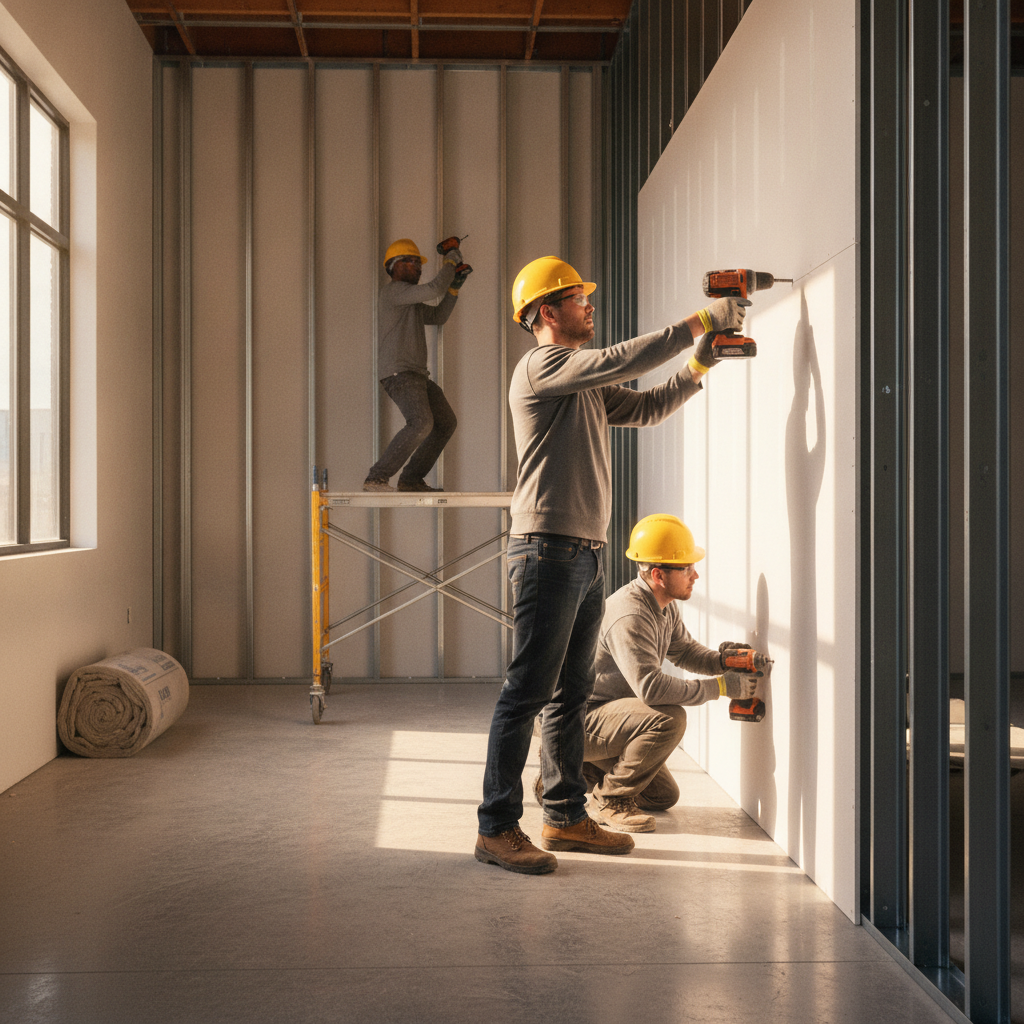
Mid-article tip: If you manage multiple floors, standardize a “wall tag” sticker showing stud gauge, spacing, head detail, and required inspections. Crews scan it, build it, and photograph it—reducing RFIs and rework.
Tools and Resources
Set crews up with layout lasers, cordless drivers, aviation snips or shears, anchors matched to substrates, and the right clips and channels staged by zone. Keep PPE and safety data sheets on the cart and pre-bundle door kits to speed openings.
Field kit essentials (ready list)
- Rotary laser, chalk line, plumb bob, markers, and story pole.
- Cordless drivers/impact, magnetic bits, aviation snips, power shears.
- Concrete/steel anchors, #6/#8 screws, self-drillers for heavy gauge.
- Bridging and deflection clips, webslide clips, and deflection side clips.
- Resilient channel, furring channel, windbrace, and grommets.
- J/L trims, 90°/130° cornerbead, U-Flex track for curves.
- PPE: gloves, eye/ear protection; SDS/MSDS binder available at all times.
For a refresher you can text to the crew, share our short metal studs guide alongside this longer reference.
Case Studies and On-Site Examples
Near 370 New Enterprise Way in the Regional Municipality of York, crews meet aggressive schedules by staging studs by room, using deep track where slabs vary, and detailing head-of-wall deflection. Dass Metal Products supports planning, shop submittals, and just‑in‑time delivery to keep corridors moving.
Tenant improvement (Ontario)
- Scope: 12-ft corridors, 3-5/8 in studs at 24 in o.c.; resilient channel for STC in shared walls.
- Tactic: Pre-assembled 40 door kits/day; hung QA boards listing inspections per zone.
- Result: Reduced touch-ups; finishers reported straighter lines and fewer defects on Level 4 finish.
Healthcare core (U.S. interior)
- Scope: Tall walls with heavy backing needs; multiple control joints and smoke seals.
- Tactic: Slotted deflection head at all movement joints; bridging channel at 4-ft vertical spacing.
- Result: Inspection sign-offs on first pass; fewer RFIs due to standardized details.
For structural coordination outside drywall, teams sometimes coordinate with rebar suppliers for embedded items. As a background resource, here’s a 20M rebar overview that site supers reference when planning anchors and sleeves.
Local considerations for 370 New Enterprise Way
- Plan deliveries to avoid peak traffic near Queen St / Highway 50. Stagger drop-offs by floor to keep corridors clear.
- Cold snaps can affect sealant cure; schedule head-of-wall sealing mid‑day during winter and confirm manufacturer temperature ranges.
- When staging near the Highway 50 – Zum Queen Stop EB, coordinate marshalling so lifts don’t block bus access; use spotters during unloading.
Detailed Specs and Dimensions
Select stud gauge and width by height, finish load, and acoustic goals. Common non-structural widths are 2-1/2 in and 3-5/8 in at 25–20 ga; heavier gauges serve tall or load-bearing walls. Use deep or slotted track to handle slab variance and structural deflection.
Quick dimension references
- Widths (typical): 1-5/8, 2-1/2, 3-5/8, 6 in; specialty sizes available on request.
- Gauges (approx. thickness): 25 ga ≈ 0.0188 in; 20 ga ≈ 0.033 in; 18 ga ≈ 0.043 in; 16 ga ≈ 0.054 in.
- Spacing: 16 in o.c. for abuse-prone areas or heavy finishes; 24 in o.c. for standard partitions.
- Screw spacing: 8 in edges; 12 in field (verify board type and assembly requirements).
- Deflection clearance: Often 1/2–1 in at head; follow project design criteria.
Need a sanity check on submittal sizes? This short overview on stud sizing conventions aligns with what crews actually install on site.
Common Mistakes to Avoid
Don’t hard-fasten studs at the head, don’t skip bridging, and don’t short-circuit resilient channel with the wrong fasteners. Pre-plan openings and backing. Photograph progress to catch drift early. These avoidable misses create the bulk of drywall callbacks.
- Missing deflection detail: Causes top-of-wall cracks when floors move under live load.
- No bridging: Leads to stud vibration and wavy finishes, especially over 10–12 ft.
- Wrong fastener length: Poor screw retention or board pull-through under abuse.
- Short-circuited acoustics: Fastening through resilient channel into studs ruins STC gains.
- Unplanned backing: Missing support for sinks, grab bars, and cabinets delays later trades.
For more field-learned lessons, skim our crew-friendly drywall mistakes guide before your next precon huddle.
How to Choose Your Steel Stud Supplier
Prioritize certified quality, engineering support, breadth of profiles, and reliable delivery windows. The right partner helps with takeoffs, submittals, and custom profiles—reducing RFIs and schedule risk. Dass Metal Products combines CSSBI-backed manufacturing with 40+ years of framing expertise.
What to evaluate
- Certification and QA: Look for rigorous quality control and documented standards.
- Engineering help: Access to load tables, detailing input, and custom-profile guidance.
- Portfolio depth: From light-gauge studs to heavy-gauge, channels, trims, and clips.
- Delivery capability: Reliable cross-border logistics to keep floors supplied.
- Personalized service: Fast responses and clear communication during submittals and change orders.
In our experience supporting contractors across Ontario and the U.S., the best projects pair shop-ready submittals with clear field standards. Our role is to help you select the right drywall metal studs, tracks, and accessories—and then deliver them when your crews are ready.
Key Takeaways
Steel stud drywall framing succeeds when you match gauge to height, detail head-of-wall deflection, brace with bridging, and protect acoustics with resilient or furring channels. A certified supplier like Dass Metal Products reduces risk with engineering support and dependable delivery.
- Choose gauges by height/loading; verify with load tables.
- Always detail head-of-wall movement (slotted track or listed clips).
- Install bridging at required elevations to keep lines straight.
- Use resilient/furring channels to meet STC targets.
- Document QA with photos at 25/50/100% completion.
Frequently Asked Questions
These are the most common questions we hear from builders and drywall contractors about steel stud walls, spacing, acoustics, and supplier selection. Each answer is concise so you can brief your team quickly.
What are drywall metal studs used for?
They frame straight, stable partitions that accept gypsum board. Crews use them for offices, corridors, shafts, and chases. Light-gauge studs cover most interiors; heavy-gauge options support tall or load-bearing conditions. Tracks, bridging, and deflection details complete the system.
Are steel studs better than wood for interior walls?
For many commercial interiors, yes. Steel stays straight, is noncombustible, and resists moisture. Wood is workable for small residential jobs or specific retrofit conditions, but steel’s consistency and punch-outs often speed scheduling and MEP layout in larger projects.
What spacing should I use for studs and screws?
Use 16 in on center for high-traffic or heavy-finish walls, and 24 in on center for standard partitions when allowed by the assembly. For gypsum screws, 8 in at edges and 12 in in the field is common—always verify with the specified assembly data.
How do I handle head-of-wall movement and prevent cracks?
Use slotted deflection track or listed deflection clips at the head. Leave the required clearance (often 1/2–1 in) and avoid hard-fastening studs to structure at the top. Seal per design where smoke or sound control is required.
Next Steps
Share this guide with your crew, finalize gauges and details, and line up deliveries for each floor. Dass Metal Products can review your heights and assemblies and build a submittal pack with profiles, load tables, and trims for a clean approval.
Soft CTA: Need help matching stud gauge to height or selecting a slotted deflection track? Contact our engineering team at Dass Metal Products in Vaughan. We’ll review your drawings and stage deliveries so your crews can build without waiting.