A Practical Guide to Metal Framing Basics
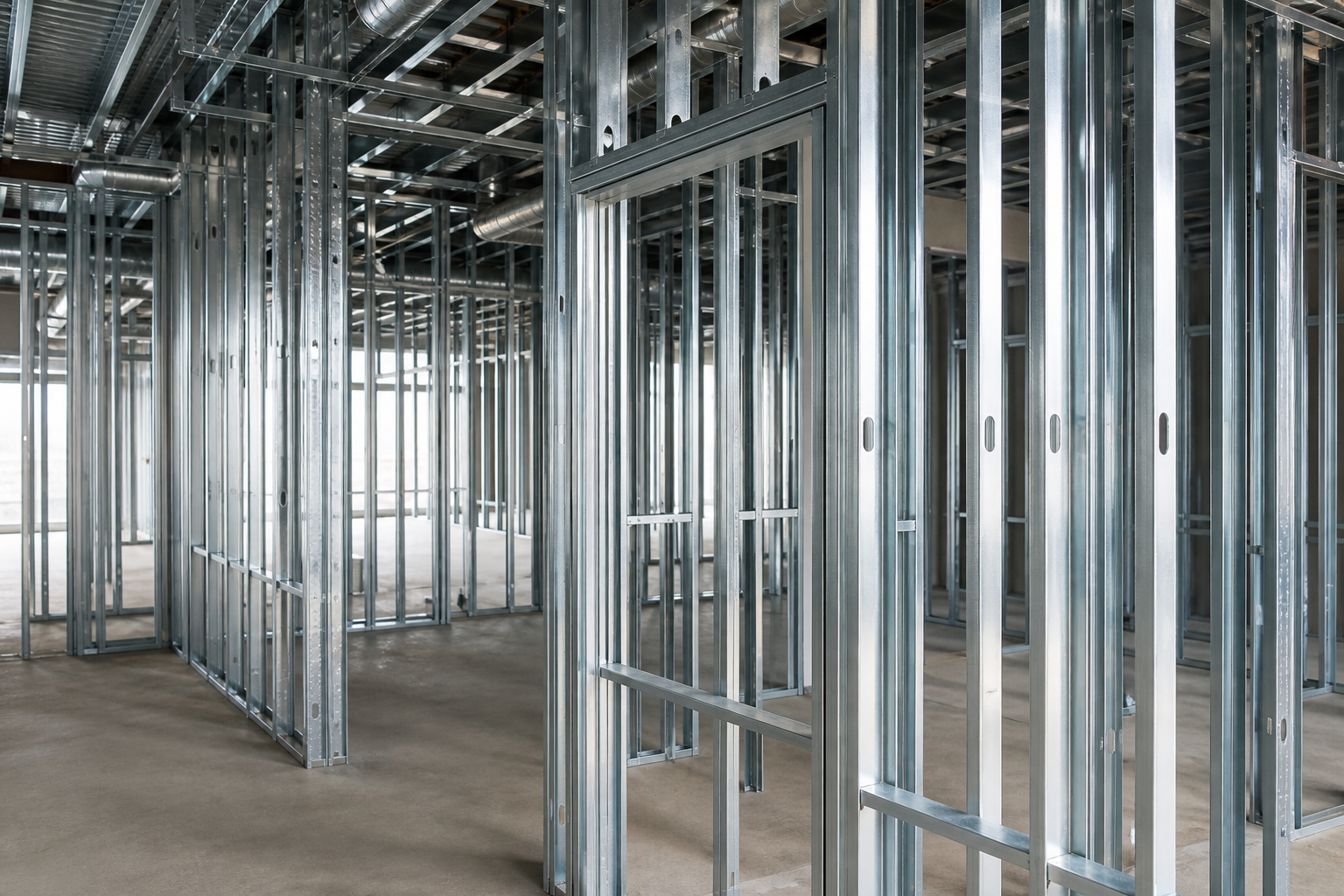
Metal framing—often called light gauge steel framing—uses cold-formed steel studs, tracks, and accessory components to build straight, predictable walls and ceilings in commercial and residential interiors. Whether you are assembling a simple non-load-bearing partition or specifying a heavy-gauge, load bearing stud framing system, understanding parts, planning, and connection details will set you up for a clean, code-conscious build. This guide covers the core concepts, component selection, and field practices that matter most on day one.
Why metal framing?
Steel stud framing provides consistent dimensions, straightness, and compatibility with modern drywall and acoustic assemblies. Studs and channels are standardized, easy to cut, and fast to connect with screws or specified clips. Common use cases include interior partitions, corridor walls, bulkheads, ceilings, shaftwall systems, and exterior curtain wall back-ups. With the right gauges and profiles, the same family of parts can support everything from non-structural partitions to engineered exterior and structural applications.
- Predictable dimensions and straight lines help produce flat walls and ceilings.
- Broad family of standardized profiles simplifies procurement and detailing.
- Compatible with fire, acoustic, and movement-control details using purpose-made channels and clips.
Core components and terminology
Knowing the names and roles of common parts helps you read drawings, place orders, and install correctly. Below are the staples you will encounter across metal framing packages.
- Steel studs: The vertical members of the wall. Width is often selected to match wall thickness and insulation needs. Light-gauge studs are typical for non-load-bearing interior partitions; heavy-gauge studs are used where loads or height demand it.
- Standard track: U-shaped horizontal members that receive studs at floors and ceilings. Tracks set wall location and width.
- Deep track: A deeper U-profile offering increased bearing and stiffness at the top or bottom of walls. Common at openings, tall walls, and base conditions where extra engagement is helpful.
- Slotted deflection track: Track with vertical slots that allow the top of the wall to move relative to the structure above. This protects finishes when floors or roofs deflect under load or temperature changes.
- Bridging/carrying channel: Horizontal members running through stud webs to restrain twisting and share lateral loads between studs.
- Resilient channel: A specialized furring profile used to decouple gypsum board from framing and improve sound isolation.
- Furring channel: Hat-shaped or similar sections used to create a stable plane for attaching finishes over uneven substrates or insulation.
- Clips and connectors: Examples include bridging clips, webslide clips, and deflection side clips designed to simplify attachment, accommodate movement, or speed field adjustments.
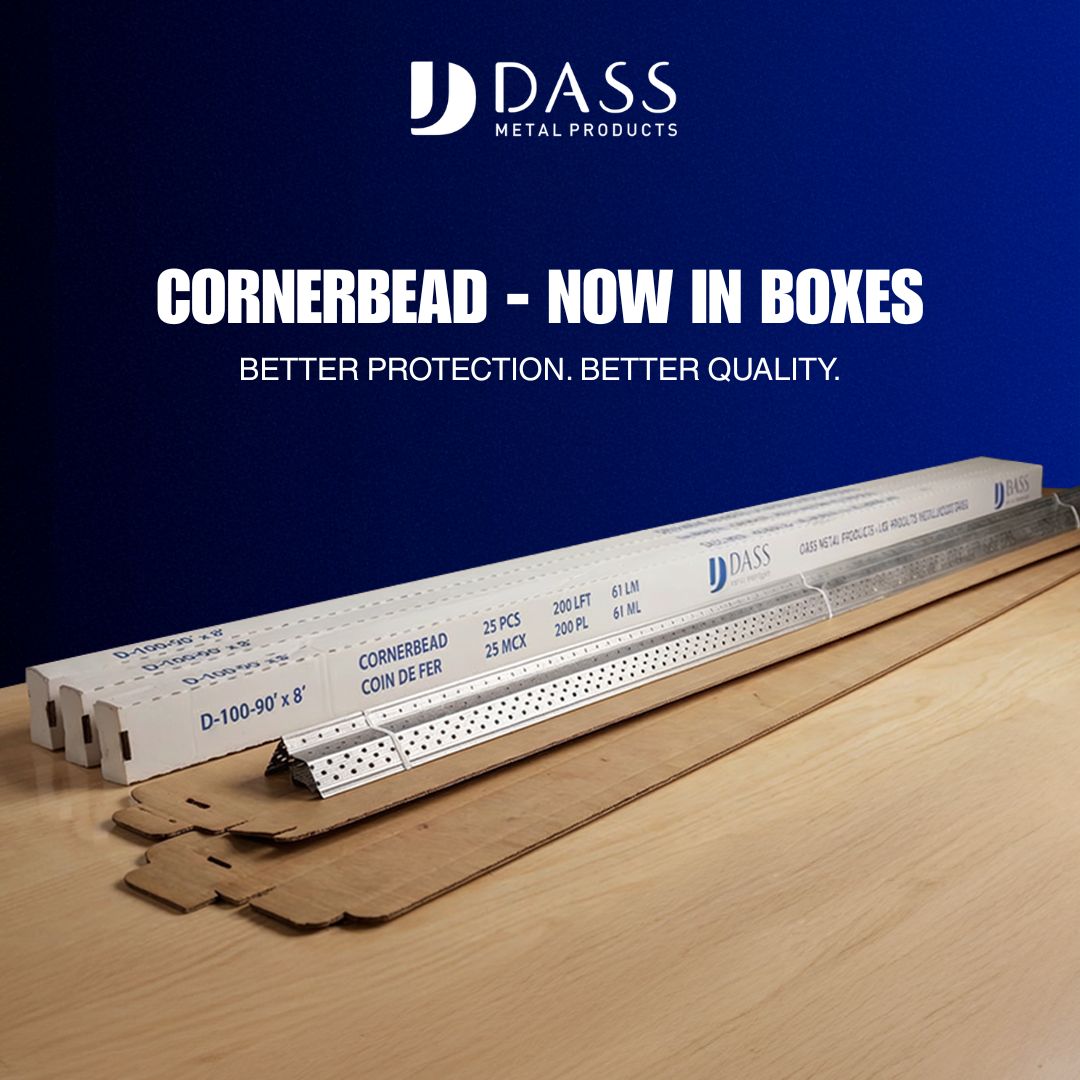
- Drywall finishing trims: L trim, J trim, 90°/130° cornerbead, Z-bar, and related profiles used to create crisp terminations and protect edges.
- Tie wire and hanger wire: Wire products used to suspend ceiling systems and secure components in overhead work.
Planning and layout essentials
A successful steel stud installation starts well before the first track is shot to the slab. Coordinate drawings, dimensions, and sequencing so framing neither clashes with MEP routing nor traps required tolerances.
- Confirm intent: Determine whether an assembly is non-structural or load-bearing. This dictates stud gauge, spacing, and connection requirements.
- Check movement: Identify where slotted deflection track or deflection side clips are needed at the head of wall or where dissimilar materials meet.
- Lay out walls: Snap chalk lines from dimensioned control lines. Mark doors, glazing, and intersections. Square and verify offsets at columns and cores.
- Coordinate penetrations: Note rough-ins for electrical boxes, plumbing, and ducts. Plan backing where fixtures or casework will be mounted.
- Confirm fire and acoustic details: Note joints requiring sealant, placement of resilient channel, mineral wool, or special trims.
Selecting studs and tracks
Choosing the right member profiles balances height, spacing, and performance. Manufacturers publish load tables in both metric and imperial units to aid selection. Always verify selections against project specifications and governing standards.
- Stud width: Common nominal widths align with typical drywall sizes and insulation. Wider studs help with service routing and higher walls.
- Gauge: Lighter gauges are suited to non-load-bearing interior partitions; heavier gauges are used for load bearing stud framing and tall or high-load walls.
- Spacing: Standard spacing is often 16 in. or 24 in. on center; higher loads or finishes may require tighter spacing.
- Track type:
- Standard track for typical head and base conditions.
- Deep track for added engagement at bases, openings, or where additional stiffness is desired.
- Slotted deflection track at tops of walls under structural members expected to deflect.
Tip: For complex geometries such as curves, flexible track systems (for example, U-shaped track that can be formed to radii) simplify layout for bulkheads and feature walls.
Connections, bracing, and deflection
Connection methods should match the assembly’s role. Non-structural walls typically use framing screws for stud-to-track and stud-to-bridging connections, while structural or exterior applications use engineered clips or anchors as specified.
- Stud-to-track: Attach studs to base track; at the head, use fixed attachment only where allowed. Where vertical movement is expected, seat studs within slotted deflection track without pinning through the slots unless directed by details.
- Bridging channel: Install at prescribed heights to limit stud rotation and distribute lateral loads. Secure with bridging clips or approved fasteners.
- Openings and jambs: Use deep track or back-to-back studs with reinforcing as shown in details for doors and windows.
- Deflection side clips: At intersections or where walls meet structure, these clips provide lateral restraint while allowing vertical slip.
- Windbrace: Where indicated, diagonal bracing or dedicated windbrace members help stabilize tall or exposed framing.
Acoustic and finishing elements
Acoustic performance and clean edges depend on the right channels and trims. Most solutions pair standardized profiles with tested assemblies.
- Resilient channel: Install perpendicular to framing on the side receiving gypsum board. Observe required screw patterns and avoid short-circuiting by over-fastening into studs.
- Furring channel and Z-bar: Create plenum space for services, level uneven substrates, or support exterior insulation layers in specific assemblies.
- Edge trims and beads: Use L trim or J trim for terminations at dissimilar materials, and 90°/130° cornerbead for durable, straight corners.
Sealants, backer materials, and insulation complete the system. Follow the assembly details for joint treatment, sealant continuity, and board layering to meet the specified acoustic or fire performance.
Step-by-step: building a non-load-bearing partition
The sequence below outlines an efficient approach for a typical interior partition using steel studs and standard track. Adapt steps to your project’s drawings and requirements.
- Layout
- Snap floor and ceiling lines from control lines. Mark doors and intersections.
- Verify plumb references and slab/soffit flatness.
- Install bottom track
- Cut track to length. Anchor per substrate requirements at the specified spacing.
- Where sound control is required, apply specified sill gasket or sealant beneath track.
- Install top track
- Use standard track for fixed conditions or slotted deflection track where movement is expected.
- Align to layout marks and fasten to structure with specified anchors.
- Place studs
- Cut studs 1/4–1/2 inch short for slip at the head in deflection track scenarios, as permitted by details.
- Seat studs in bottom track, tilt into top track, and align to on-center marks.
- Secure studs
- Fasten stud flanges to the bottom track with framing screws unless otherwise detailed.
- At the head, follow the specified attachment: fixed, clip-supported, or slip (no pinning through slots).
- Install bridging/carrying channel
- Run bridging channel continuously at the prescribed elevation(s).
- Attach with bridging clips or specified fasteners through stud punch-outs.
- Frame openings
- Build jambs with reinforced studs or deep track, adding headers/sills as shown in details.
- Confirm clearances for frames and hardware.
- Services and backing
- Install blocking/backing for fixtures, casework, and accessories.
- Route MEP services through stud punch-outs with appropriate grommets or protection plates.
- Boarding and trims
- Attach gypsum board with correct screw type and spacing. Avoid fastening through resilient channel into studs.
- Install edge trims (L trim, J trim) and cornerbead; then tape, mud, and finish per specification.
Quality checks and common mistakes
Simple checks during layout and installation prevent rework and performance issues later.
- Plumb and line: Regularly check stud plumb and wall line; shim or adjust as needed before boarding.
- Respect deflection details: Do not pin studs through slotted deflection track unless the detail calls for it.
- Bridging completeness: Ensure continuous bridging channel with secure connections at every stud.
- Acoustic integrity: Avoid short-circuiting resilient channel with screws into studs or by placing heavy fixtures directly through the channel without backing details.
- Fastener selection: Match screw type and length to gauge and layers; over-driving can strip steel and reduce capacity.
- Openings reinforcement: Verify jamb and header reinforcement aligns with door or window schedules.
- Compatibility: Use trims and accessories (e.g., cornerbead, J track, Z-bar) that match board type and finish level.
Frequently asked questions
What is the difference between light gauge and load-bearing steel stud framing?
Light gauge steel framing typically refers to non-load-bearing partitions and ceilings that are not intended to carry building or floor loads. These assemblies use thinner steel gauges and are optimized for speed and finish quality. Load bearing stud framing employs heavier gauges and engineered details to support axial, wind, seismic, or diaphragm loads as specified by the design team. Always follow project documents and consult a qualified design professional when structural loads are involved.
When should I use slotted deflection track at the top of a wall?
Use slotted deflection track where the structure above the wall can move relative to the partition—commonly at the underside of concrete slabs or roof framing. The slots allow the top of wall to slip vertically so that structural deflection does not crack finishes. Details vary by assembly; follow the specified slot capacity, stud cutback, and fastener rules.
How does resilient channel improve sound control?
Resilient channel decouples the gypsum board from the framing, reducing the direct path for vibration and airborne sound. Effectiveness depends on correct orientation, spacing, and screw placement into the channel (not into studs), as well as the complete wall build-up (insulation, board layers, sealants). For design-level sound ratings, use tested assemblies and adhere to the published details.
What are bridging channels for, and how many do I need?
Bridging channels restrain stud twisting and help distribute lateral forces across the wall. Quantity and spacing are determined by stud height, gauge, and design loads. Refer to project specifications and the relevant load tables for the stud system you are using.
Can I curve a wall with steel studs?
Yes. Curved walls are typically formed using flexible U-style track or segmented track and standard studs cut and oriented to follow the radius. Confirm minimum radius limits for the track system and coordinate board installation to avoid flat-spotting.