Steel stud framing cost is the total investment to frame walls and ceilings with cold-formed steel studs, tracks, channels, and clips. It’s shaped by wall height, stud gauge, spacing, detailing, labor efficiency, and logistics. In the United States and Canada, approvals, documentation, and dependable supply also influence outcomes and schedules.
By Navjot Dass • Last updated: 2026-06-30
Start Here: Hook and Quick Navigation
If you’re planning interiors in 2026, steel stud framing cost hinges on a few controllable levers: gauges, spacing, detailing, and delivery flow. This guide explains those levers—without pricing—so you can protect schedules, quality, and approvals across United States and Canadian projects.
Here’s the reality: framing sets the pace for every interior finish. Get it right and everything downstream moves faster.
At a Glance
Steel stud framing cost is driven by design complexity, wall height, stud gauge, spacing, and logistics. Control it by standardizing details, selecting the right gauges, and staging deliveries to match look-aheads. This guide shows how to keep interiors predictable in 2026—without discussing prices.
What you’ll learn quickly:
- How gauge, spacing, and wall height affect labor and material counts.
- Where acoustic, deflection, and fire details reshape assemblies.
- Ways to cut waste and rework while maintaining performance targets.
- Practical checklists, a steel vs. wood comparison, and real-world examples.
For a deeper overview of framing systems, see our steel framing systems guide, which connects framing choices with downstream trades.
What Is Steel Stud Framing?
Steel stud framing is a cold-formed, noncombustible system of C-shaped studs seated in U-shaped tracks. It builds straight, dimensionally stable walls and ceilings for interior and exterior applications, supported by load/span tables, MSDS, and submittal documentation.
In practice, installers lay out the track, anchor it to the slab or structure, stand studs on consistent centers, and add bridging to keep walls aligned. Typical spacing is 16 or 24 inches on center, matched to finish requirements and wall height. Light gauge profiles handle non-structural partitions; heavier gauges support tall or load-bearing conditions.
- Core components: studs, standard and deep track, slotted deflection track, carrying/bridging channel, resilient channel, and finishing trims.
- Where it’s used: commercial build-outs, healthcare suites, hospitality corridors, and educational facilities.
- Documentation: product brochures, imperial/metric load tables, and safety data to streamline approvals.
Dass Metal Products engineers and manufactures light and heavy gauge profiles backed by CSSBI-certified quality control. That consistency reduces field adjustment, which often matters more to steel stud framing cost than any single line item.
For component-level insights, explore our steel studs guide and our metal stud framing guide for practical selection tips.
Why Steel Stud Framing Cost Matters
Framing sets interior pace. Decisions on gauges, spacing, head-of-wall details, and logistics ripple through schedules, inspections, and finishes. When framing is consistent and submittals are complete, you reduce rework, protect ratings, and keep procurement aligned with the critical path.
Steel’s dimensional stability supports straighter walls and cleaner finishes. Stable substrates help door frames set true, glazing align quickly, and millwork fit first time. That lowers punch lists and change exposure, which is why early coordination beats late-stage fixes.
- Predictability: fewer wall types and aligned details reduce risk.
- Performance: acoustic, fire, and movement joints must match the design intent.
- Procurement: synchronized deliveries keep crews productive instead of waiting for material.
In our experience supporting contractors across Canada and the United States, locking details early and keeping substitutions consistent is the fastest route to schedule certainty.
How Steel Stud Framing Works
Crews layout floors and ceilings, anchor track, stand studs, add bridging, and hang board. Deflection and acoustic details fine-tune performance. The productivity gains come from repeatable modules, consistent openings, and material staged close to the work.
The sequence typically looks like this: verify structure and slab tolerances, snap lines, fasten bottom track, mark and frame openings, install head-of-wall conditions, set studs, add carrying/bridging channel, then board and tape. On tall runs, bridging at intervals—often 4 to 6 feet—improves feel and finish.
- Deflection heads: slotted deflection track or deflection side clips allow vertical movement without damaging finishes.
- Bridging/alignment: carrying/bridging channel ties studs, keeping partitions straight under load.
- Acoustics: resilient channel decouples gypsum from studs to limit sound transfer.
For a homeowner-oriented framing overview, this basement framing guide illustrates basic sequencing concepts that also apply to commercial interiors.
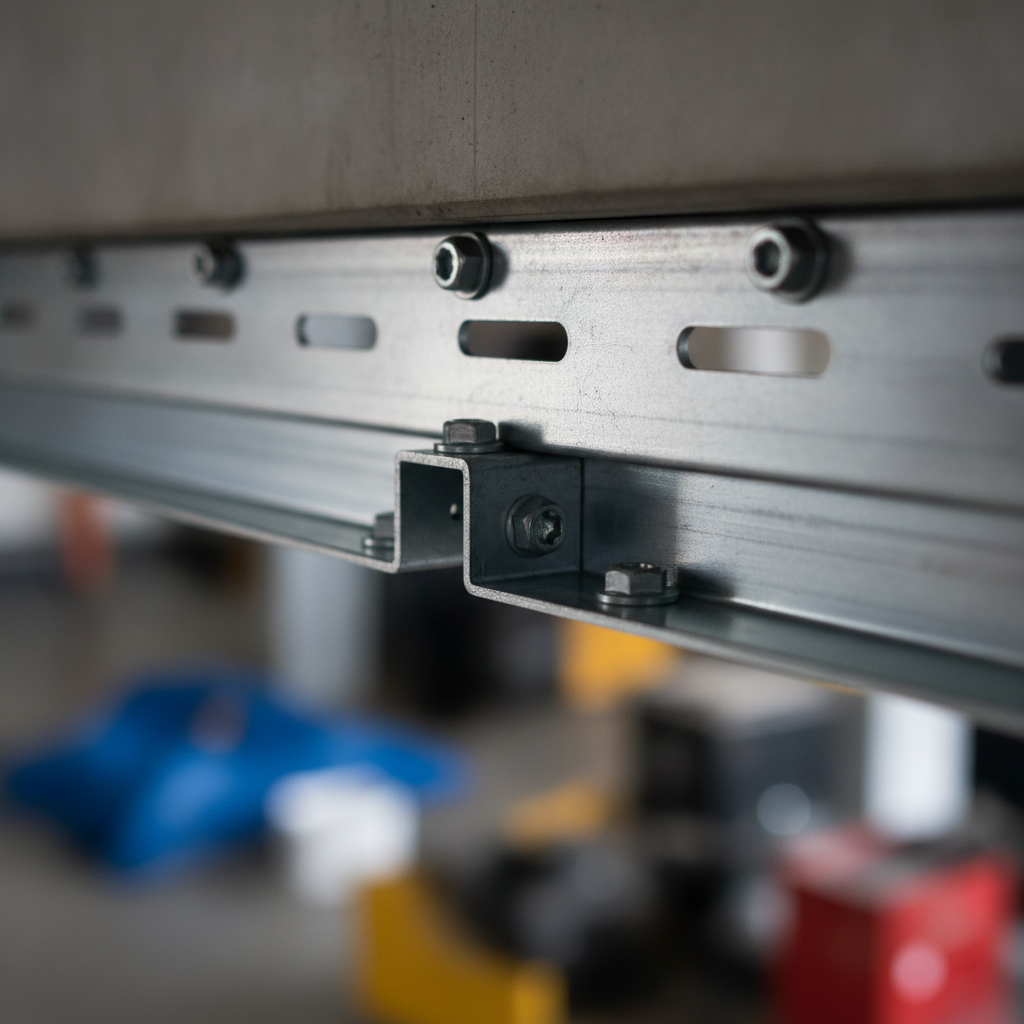
Pro tip: minimize wall type variations and standardize jamb/header packages. Those two actions alone can stabilize installation pace across large floors.
What Determines Steel Stud Framing Cost?
Seven levers drive steel stud framing cost: geometry, stud gauge, spacing, openings, performance details, labor productivity, and logistics. Control these with early coordination, standardized details, and staged deliveries to avoid idle time and rework.
1) Geometry and Height
Taller partitions require stiffer studs, additional bridging, and tighter tolerances. Curves and radii often use flexible track solutions. Soffits and ceilings introduce hangers and wire that need MEP coordination. The more complex the shape, the more sequencing attention it needs.
- Wall height increases stiffness and bridging requirements.
- Curved walls and specialty soffits add precise field steps.
- Ceilings and plenums require hangers, tie wire, and layout coordination.
2) Gauge and Spacing
Light gauge profiles are common for non-structural partitions; heavier gauges support tall or load-bearing scenarios. Spacing at 16 inches on center increases piece count but enhances stiffness; 24 inches on center reduces pieces but may need bridging or gauge changes for finish flatness.
- Right-size gauge to wall height, finish weight, and rating.
- Balance 16 vs. 24 inches on center to meet flatness and feel goals.
- Use deep track at tall walls where anchorage and engagement matter.
3) Openings and Blocking
Doors, sidelites, and storefront transitions need jambs, headers, and reinforcement. Planning backing for casework and equipment with utility angles or flat strips prevents improvised solutions later.
- Standardize jamb/header kits for all openings to streamline install.
- Pre-plan backing for TVs, millwork, and accessories.
- Keep rough openings consistent to speed storefront and door frame setting.
4) Performance Requirements
Deflection, acoustic, and fire objectives shape head-of-wall details, channels, and layer counts. Resilient channel, insulation, or staggered/double-stud layouts can deliver predictable acoustic results in sensitive rooms.
- Use slotted deflection track or side clips where floor movement is expected.
- Decouple with resilient channel for key acoustic partitions.
- Coordinate tested fire-rated head-of-wall details with inspectors early.
5) Labor Productivity
Repetition is speed. Few wall types, consistent openings, and disciplined layout accelerate crews. Material quality matters too: straight, consistent studs reduce field correction and keep lines true for finishes.
- Repeat details and reduce exceptions wherever possible.
- Use laser layout and story poles to lock elevations.
- Stage materials by zone to eliminate long carries and double-handling.
6) Procurement and Logistics
Align submittals and deliveries with schedule milestones. Complete packages—brochures, load tables, MSDS—speed approvals. Cross-border shipping plans are vital when projects span the United States and Canada; buffer for inspections and customs as needed.
- Order by floor/zone and tag bundles clearly.
- Sequence deliveries to match 2–3 week look-aheads.
- Reserve long-lead specialty clips or trims early.
7) Risk and Contingencies
Late scope changes, concealed conditions, and tolerance conflicts cascade quickly. Address structure and slab variations early, and protect exterior framing from weather to keep productivity steady.
- Verify tolerances and resolve conflicts before layout.
- Track RFIs and substitutions to avoid on-site guessing.
- Plan exposure protection for exterior or semi-conditioned spaces.
For a holistic planning view, our concise steel stud framing guide outlines how scope clarity reduces change exposure.
Types, Systems, and Approaches
Choose assemblies that meet intent with the fewest parts. Non-structural interiors typically use light gauge studs; tall or load-bearing conditions step to heavier gauges with engineered bridging. Deflection heads, acoustic channels, and trims should be added only where they deliver measurable performance.
Common approaches and where they fit:
- Non-load-bearing interiors: light gauge studs, standard track, carrying/bridging channel as height demands.
- Load-bearing/tall partitions: heavier gauges, deep track, engineered bridging intervals.
- Movement joints: slotted deflection track or deflection side clips at the head to accommodate vertical movement.
- Acoustic control: resilient channel with insulation for exam rooms, conference rooms, and hospitality suites.
- Finishing trims: 90°/130° cornerbead plus J and L trim for clean terminations.
For a fast refresher on cold-formed steel advantages, see these top reasons to use cold-formed steel, which echo the stability and fire-resistance benefits discussed here.
When walls curve or change direction frequently, flexible track solutions save labor. Where shafts are present, dedicated shaftwall studs and tracks simplify consistent clearances and inspections.
Comparison: Steel vs. Wood for Interior Framing
Steel is dimensionally stable and noncombustible; wood is familiar and easy to modify. For rated or acoustic-critical interiors, steel’s predictability often reduces rework and supports faster finishes. For simple, low-risk partitions, wood can work—verify ratings, movement, and finish expectations.
| Factor | Steel Stud Framing | Wood Stud Framing |
|---|---|---|
| Dimensional stability | Factory-formed; resists warp/twist | Moisture changes can cause movement |
| Fire performance | Noncombustible members | Combustible; relies on gypsum layers |
| Acoustics | Predictable with resilient channel | Variable; careful detailing required |
| Consistency | Tight tolerances, repeatable | Natural piece-to-piece variation |
| Field modifications | Requires appropriate tools/fasteners | Easy to notch and cut on site |
For a focused discussion, visit our steel vs. wood framing explainer, which outlines decision points for interiors.
Best Practices to Control Your Budget
You control steel stud framing cost by standardizing details, matching gauges to height and finish, and staging materials to match look-aheads. Clear shop drawings and disciplined layout protect crew productivity and finish quality.
Design and Specification
Early clarity prevents late-stage friction. Define wall types, head-of-wall details, and opening packages up front.
- Right-size gauges to wall height charts and finish criteria.
- Unify jamb and header details for all door and glazing types.
- Select a single family of trims and channels to simplify submittals.
Procurement and Logistics
Material flow must mirror the schedule. Complete documentation moves approvals faster and reduces guesswork.
- Bundle by floor/zone with clear tagging for fast distribution.
- Sequence deliveries to match weekly look-aheads and keep buffer stock minimal.
- Reserve long-lead specialty items—such as deflection clips—early.
Installation Workflow
Site setup and layout discipline are the backbone of productivity.
- Verify slab/structure tolerances before layout to avoid compounding errors.
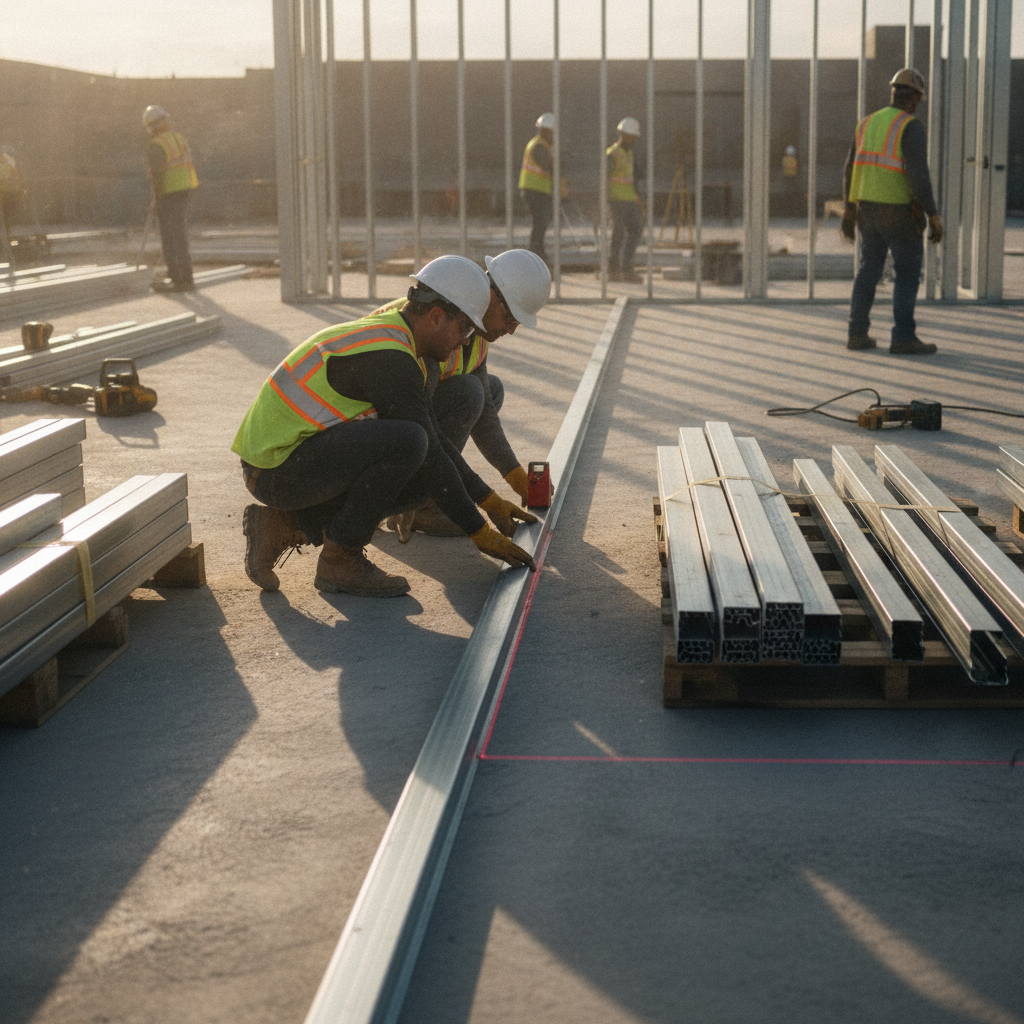
- Use laser layout and story poles for consistent elevations.
- Add carrying/bridging channel early on tall runs for straightness and feel.
Planning a basement-level project? Our walkthrough on how to frame a basement with steel studs highlights layout habits that scale to commercial floors.
Need a submittal-ready package? Dass Metal Products provides product brochures, imperial/metric load tables, and MSDS, plus dependable delivery across Canada and the United States. If your scope also includes reinforcement, see this steel reinforcement supply overview.
Tools, Standards, and Resources
Rely on proven standards and complete submittals. Product data, safety sheets, and span/load information keep approvals smooth. Using a consistent, certified product family helps procurement and QA/QC verify gauges and track types at a glance.
Key resources your team will reference throughout design and construction:
- Product brochures and load/span tables: essential for matching gauge and spacing to wall height.
- Standards and test reports: nonstructural and structural cold-formed steel standards and rated head-of-wall details.
- Safety and compatibility: MSDS and notes for trims, clips, fasteners, and corrosion resistance as environmental conditions require.
Want sizing context for common partitions? Review our overview of metal stud framing sizes to align selection with performance goals.
Process and Schedule: Where Cost Hides
Most overruns trace back to drawing ambiguity, late scope shifts, or misaligned deliveries. Lock details, issue complete submittals, and phase material flow to match look-ahead schedules. Protect productivity by eliminating stock-outs and double-handling.
| Phase | Primary Actions | Budget Impact |
|---|---|---|
| Preconstruction | Confirm gauges/spacing, rated walls, and head-of-wall details | Prevents change orders and rework |
| Submittals | Provide brochures, load tables, trims, and clip selections | Keeps approvals and procurement on track |
| Procurement | Order by zone/floor, tag bundles clearly | Eliminates idle crews due to stock-outs |
| Installation | Laser layout, anchor track, stand studs, add bridging | Improves pace and finish quality |
| QA/QC | Verify head-of-wall, ratings, and fastener patterns | Prevents punch-list inflation |
For system-level planning, our steel framing best practices article maps early decisions to downstream performance.
Case Studies and Examples
Real projects show why clarity wins. Standardizing details, selecting the right gauges, and coordinating deliveries reduce waste and protect schedules. These scenarios reflect common interiors across North America.
1) Multi-tenant Office Build-Out (United States)
Scope: Interior non-load-bearing partitions with storefront openings. Choices: light gauge studs, standard track, resilient channel at meeting rooms; consistent jamb/header kits for storefront and wood doors. Outcome: On-time storefront installation and cleaner finishes due to predictable substrate flatness.
- 16-inch on-center spacing used at high-finish walls for stiffness.
- Carrying channel added mid-height on taller runs for feel and alignment.
- Material staged by quadrant to cut transport time between bays.
2) School Corridor Retrofit (Canada)
Scope: Tall rated corridor walls experiencing vertical movement from long-span floors. Choices: heavier gauge studs, slotted deflection track, engineered bridging intervals. Outcome: Smooth inspections and reduced cracking at head-of-wall through the first year of movement cycles.
- Bridging set at intervals to meet tall wall stiffness targets.
- Deflection head selected to accommodate expected floor movement.
- Jamb/header kits unified across all door types to reduce parts.
3) Ambulatory Care Clinic (United States)
Scope: Exam and consult rooms with strict acoustic targets. Choices: staggered stud partitions at critical rooms and resilient channel in corridors; insulation added per room type. Outcome: Predictable acoustic performance and fewer commissioning call-backs.
- Standardized door frame details kept rough opening prep consistent.
- Resilient channel used primarily at shared walls where privacy mattered.
- Deliveries sequenced weekly to match area-by-area turnover.
Across these examples, the pattern is consistent: align gauges, details, and logistics with performance goals. That’s how you manage steel stud framing cost without compromising outcomes.
Frequently Asked Questions
These answers target quick decisions during design, estimating, or buyout. Save them for plan reviews and weekly look-aheads when you’re aligning labor, materials, and inspections.
What factors influence steel stud labor the most?
Repetition and clarity. Crews move faster with consistent jamb/header details, minimal wall types, and accurate layout. Tall walls, complex openings, and late scope changes slow production. Staged deliveries and pre-bundled lengths also help maintain pace.
Is steel better than wood for interior partitions?
Steel is dimensionally stable and noncombustible, which supports predictable finishes and ratings. Wood is familiar and easy to modify. For rated, acoustic, or moisture-variable conditions, steel often delivers more consistent results with fewer call-backs.
When do I need a deflection head-of-wall?
Use a deflection detail when the structure above can move relative to the partition—common near long spans or on upper floors. Slotted deflection track or side clips let the structure move without stressing the wall or damaging finishes.
How can I reduce waste in steel framing packages?
Standardize stud lengths, keep wall types simple, and coordinate openings early. Order by zone with clear tagging, and store materials near the work area. Using one family of trims and channels also simplifies inventory and reduces errors.
What’s the typical spacing for interior steel studs?
Most interior partitions use 16 or 24 inches on center. Heavier finishes, tall walls, or strict flatness requirements may push you to tighter spacing or heavier gauges. Always confirm spacing against the specified wall height and performance.
Conclusion and Next Steps
You control steel stud framing cost by aligning design intent with practical assemblies and disciplined logistics. Lock wall types early, issue complete submittals, and stage materials by zone to keep crews productive and finishes clean.
- Standardize jambs, headers, trims, and head-of-wall details.
- Match gauges and spacing to wall height and finish demands.
- Stage and tag deliveries to mirror weekly look-aheads.
- Use certified components with complete documentation for smooth approvals.
Key Takeaways
- Steel stud framing cost hinges on geometry, gauges, spacing, and logistics.
- Deflection, acoustic, and fire details change assemblies—plan them early.
- Consistency and documentation cut rework and protect schedules.
If you’re preparing a framing package, our team can help align profiles, load data, and delivery plans so your interiors stay on schedule from the first snap line.