What welded wire mesh is and how it is made
Welded wire mesh is a grid created by welding steel wires at every intersection to form rigid, evenly spaced panels or rolls. Automated welding machines join intersections simultaneously so the mesh has predictable geometry and consistent performance. Manufacturers offer mesh in panels or rolls. Panels give accurate dimensions, simple fixing, and faster installation where alignment matters. Rolls are economical for covering large continuous areas and for jobs that can tolerate on site cutting and shaping.
Common uses by sector: quick list
- Concrete reinforcement for slabs, toppings, footings and precast elements
- Perimeter and security fencing, gates and anti-climb barriers
- Industrial caging, machine guards and storage enclosures
- Gabions, mattress units and slope erosion control
- Architectural screens, sunscreens and interior feature panels
- Hygiene sensitive environments in food and pharmaceutical processing
These categories highlight where welded mesh is selected for its stiffness, ease of fixing and uniform openings.
Sector breakdown with selection notes
Concrete reinforcement
Welded wire mesh is widely used to control shrinkage cracking and provide distributed reinforcement in slabs, pavements and precast panels. When specifying for concrete, pick a mesh whose wire diameter and grid spacing match the designer’s crack control strategy and the required concrete cover. Panels are often preferred for quick placement on slab pours because they are easier to handle and secure to chairs or supports. For detailed background on welded mesh in construction see a manufacturer overview of common uses and formats.
Security and fencing
Perimeter security panels need heavier wire and closer spacing to resist tampering and cutting. Welded intersections increase panel stiffness so the mesh spans further between posts without sagging. Specify corrosion resistant finishes, panel heights and fixing details at the tender stage so fence posts, rails and fasteners are compatible with the panel geometry.
Industrial caging and partitions
Storage cages, machine guards and warehouse partitions benefit from prefabricated welded panels for speed of assembly. For high security or anti-theft applications choose smaller apertures and thicker wire. For internal partitions where aesthetics and visibility matter, lighter gauges may be chosen to balance cost and appearance.
Gabions and erosion control
Gabions and welded baskets hold rock fill for retaining walls and slope protection. Because these installations are exposed to moisture and soil, corrosion resistance is critical. Hot-dip galvanizing or polymer coated finishes are commonly used for durability. Panels manufactured to consistent sizes help reduce on site work during assembly and ensure the gabion aligns with design drawings. For general descriptions of welded mesh and finish options see technical notes from mesh manufacturers.
Architectural and interior finishes
Designers use welded mesh for sunscreens, balustrade infills and decorative partitions. Stainless steel mesh is common for visible finishes because it combines a refined look with low maintenance. Require exact panel dimensions, edge and frame details and sample panels to verify the visual effect before ordering full quantities.
Food, pharmaceutical and hygiene sensitive industries
Stainless steel welded mesh is the preferred choice where hygiene, corrosion resistance and cleanability are mandatory. Stainless mesh resists staining and is compatible with the detergents and sanitizers commonly used in processing plants. When hygiene is a primary concern, specify alloy grade, surface finish and cleaning procedures with the supplier.
How to choose material and finish: galvanized, hot-dip and stainless
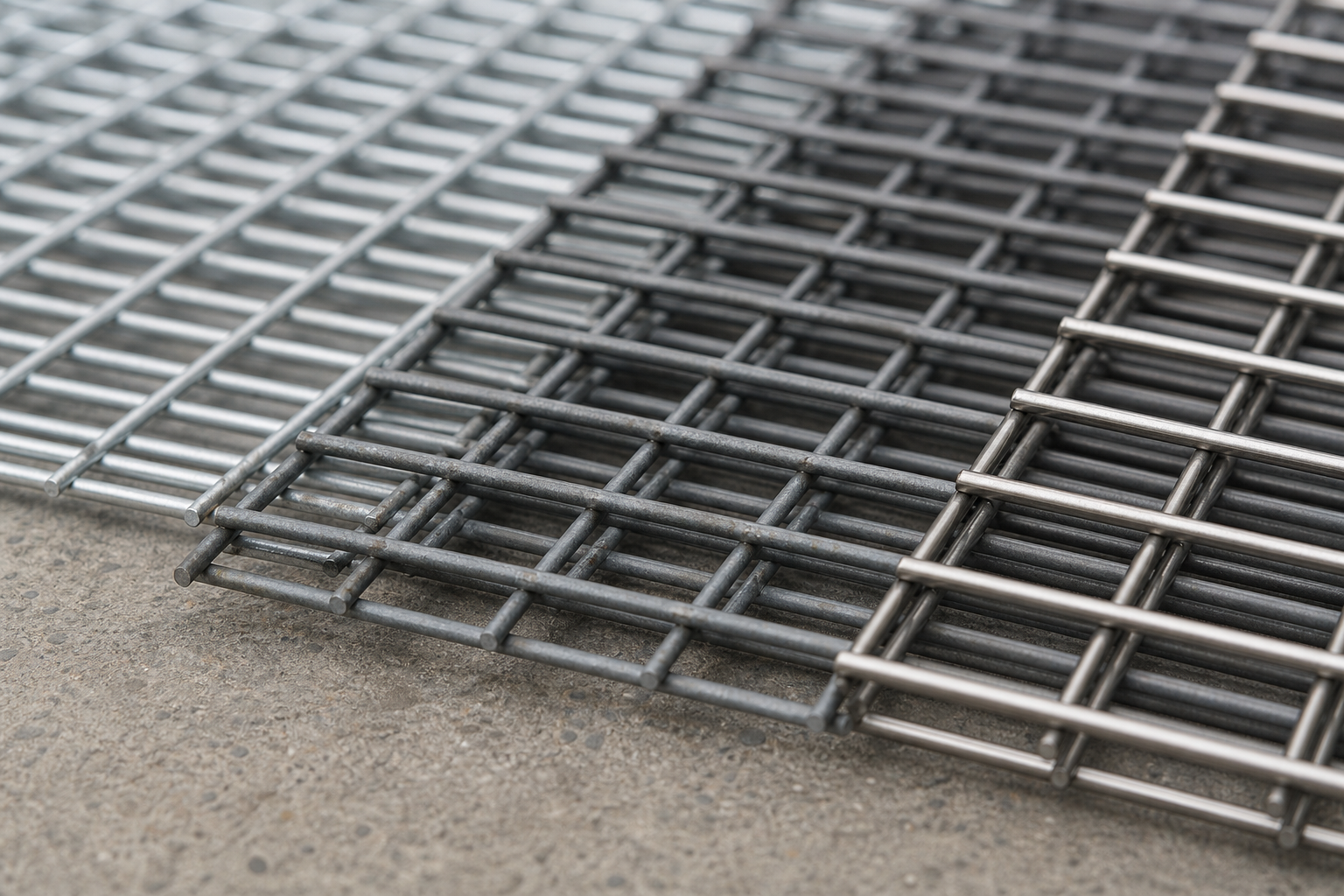
Match material and finish to the environment and expected service life. Electrogalvanized or mechanically galvanized mesh is economical for many interior and sheltered exterior uses. Hot-dip galvanizing produces a thicker, metallurgically bonded zinc layer and is often recommended for buried, coastal or permanently exposed civil applications because it provides longer corrosion protection. Stainless steel offers the best corrosion resistance and is used where chemical exposure, cleanability or aesthetics are priorities. For an introduction to types and benefits of welded mesh finishes see product resources from mesh suppliers.
Choosing wire gauge, mesh spacing and panel versus roll
Wire diameter and mesh opening set stiffness, load distribution and the size of objects the mesh will retain. Thicker wire and tighter spacing improve load capacity and tamper resistance but increase weight and cost. Use these practical selection points:
- Light duty applications, such as interior partitions, can use lighter wire and wider openings to save cost and weight.
- Slab reinforcement needs a mesh that fits within the slab depth and provides the designer’s intended crack control. Confirm that the mesh can be supported at the correct elevation so it does not sag during placement.
- Security fencing requires smaller apertures and heavier wire to impede cutting and climbing.
- Gabions and exposed civil works require heavy wire and corrosion resistant finishes with panels sized for straightforward assembly.
- Pick panels when dimensional accuracy, rapid fixing and clean edges matter. Choose rolls when continuous coverage and economy are the priority.
Always request the supplier’s wire diameter, opening dimensions, panel sizes and roll lengths so you can verify handling, overlaps and transport logistics.
Specification and installation checklist contractors must use
Use the following checklist in specifications and on site inspections to reduce errors.
- Finish specification: require the exact finish and method such as hot-dip galvanizing or stainless grade.
- Wire and mesh sizes: list wire diameter and opening dimensions in the tender documents.
- Panel sizes and format: state whether panels or rolls are required and the preferred panel dimensions.
- Lap and overlap: define lap lengths, ties and overlap methods for concrete embedment and gabion seams.
- Concrete cover and placement: confirm required cover and specify support methods to keep mesh at the correct elevation during placing.
- Edge treatment and anchorage: specify edge folding, connections and anchor details for fences and gabions.
- Inspection for damage: require the supplier to inspect coatings on delivery and to repair or replace damaged areas before installation.
- Supplier documentation: request MSDS, finish certificates and manufacturing data for the project record.
Including these details in purchase documents avoids costly on site clarifications and reduces the risk of noncompliant installations. For format and product examples check the manufacturer’s welded wire mesh product page.
Where to buy and procurement notes: Canadian-made options and engineering support
Sourcing locally can reduce lead times and simplify technical coordination. Dass Metal Products lists welded wire mesh options on its product page and can help with custom panel sizes and specification clarifications. Buying from a domestic manufacturer also makes it easier to obtain product data, finish certificates and custom prefabrication when projects have tight schedules. Visit the supplier product page to review available finishes and formats and to request project quotes.
Common objections and decision criteria: welded mesh versus alternatives
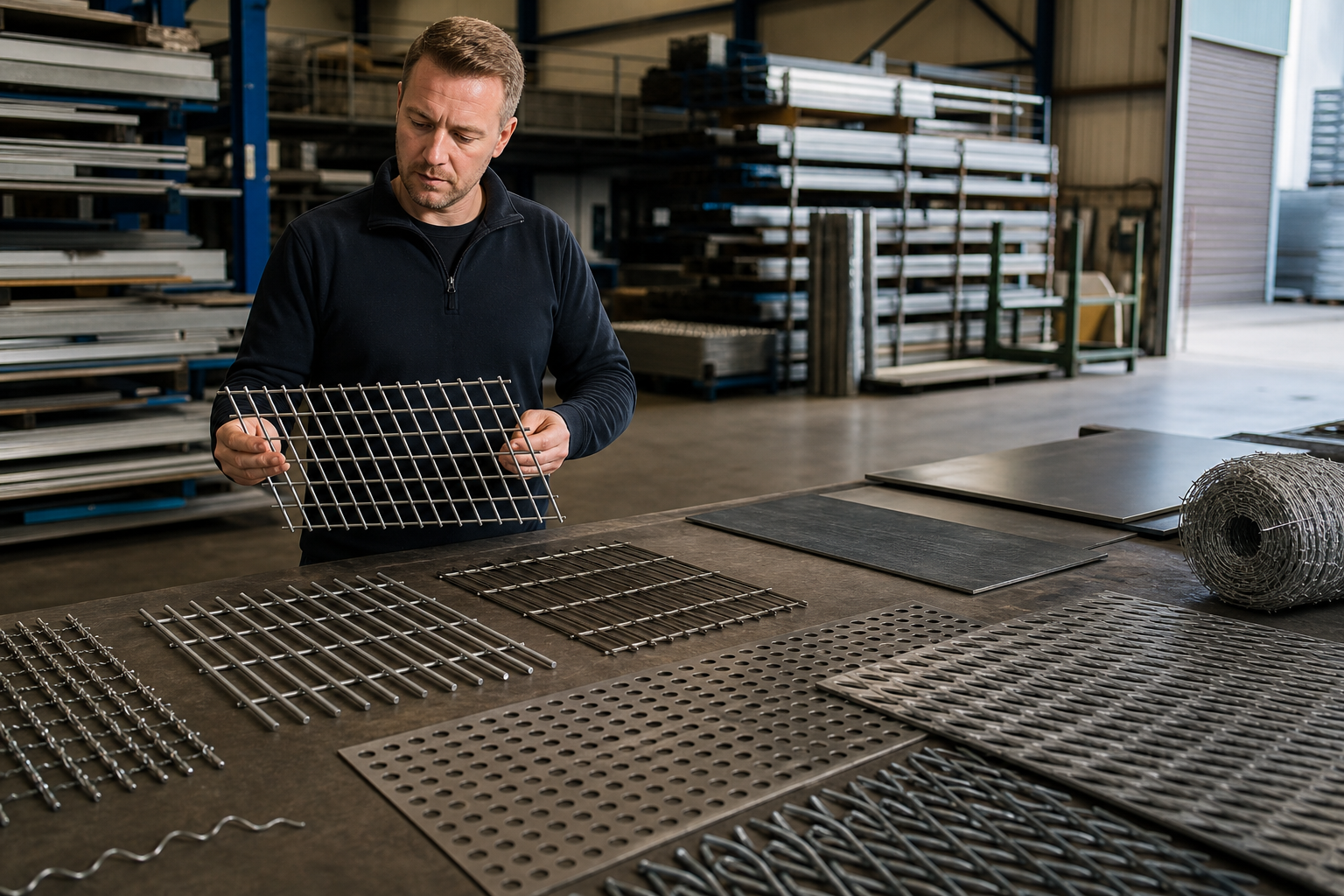
Contractors often choose between welded mesh, woven mesh and rebar mats. Key decision criteria are stiffness, ease of placement, structural contribution and cost. Welded mesh provides predictable geometry and fast placement. Woven mesh is more flexible for irregular shapes. Rebar offers higher tensile capacity where primary structural reinforcement is required. In any case, involve a structural engineer to confirm that the selected reinforcement meets code and the project design.
Quick buyer’s checklist and supplier questions
- What wire diameter and mesh opening do you recommend for my application?
- Do you supply panels or rolls and what standard panel sizes are available?
- What finish do you provide and is hot-dip galvanizing available for exposed civil works?
- Can you supply MSDS, finish certificates and manufacturing data with the order?
- Do you offer custom panel sizes or prefabrication to suit on-site fixings?
- What packaging and handling instructions do you provide to protect coatings during transport?
Use these questions when requesting quotes so you can compare offers on an equal basis. Review supplier documentation before award to confirm the finish method, wire sizes and delivery format.
References and further reading
- Welded Wire Mesh: Types, Uses, Features and Benefits, manufacturer resource
- What Is Welded Wire Mesh Used for in Construction, industry article
- What Is Welded Mesh and What Is It Used For, product guidance
- Dass Metal Products welded wire mesh, product and specification page
Frequently asked questions
Can welded wire mesh replace rebar for slab reinforcement?
Welded wire mesh is commonly used as a distributed or secondary reinforcement to control shrinkage and cracking. Rebar provides greater tensile capacity for primary structural reinforcement. Whether welded mesh can replace rebar depends on structural design and code requirements. Consult the project structural engineer to confirm suitability.
When should I specify stainless welded wire mesh instead of galvanized?
Specify stainless mesh where corrosion resistance, cleanability and appearance are essential. Typical applications include food and pharmaceutical processing, coastal locations and exposed architectural installations. Galvanized or hot-dip finished mesh is appropriate for many exterior uses where a zinc barrier is sufficient.
How do I choose wire gauge and mesh spacing for concrete reinforcement?
Choose wire diameter and spacing to meet the design’s crack control and performance objectives while fitting the slab thickness and cover. Heavier wire and closer spacing increase the mesh contribution to crack restraint. Request supplier manufacturing data and consult the engineer to match mesh properties to design requirements.
What are the common installation mistakes to avoid when using welded mesh?
Avoid inadequate lap lengths, insufficient concrete cover, damaged coatings at delivery and failure to secure mesh so it moves during pouring. Inspect mesh on arrival, check that lap and tie details are clear in the contract documents and support mesh at the specified elevation before concrete placement.
Where can I source Canadian-made welded wire mesh with engineering support?
Canadian contractors can source welded wire mesh from domestic manufacturers that offer product data, finish certificates and prefabrication. For product details and to discuss project-specific requirements visit the supplier product page or contact Dass Metal Products for quotes and specification assistance.
To review product formats and request a quote, visit the Dass Metal Products welded wire mesh product page or the Dass Metal Products home page.