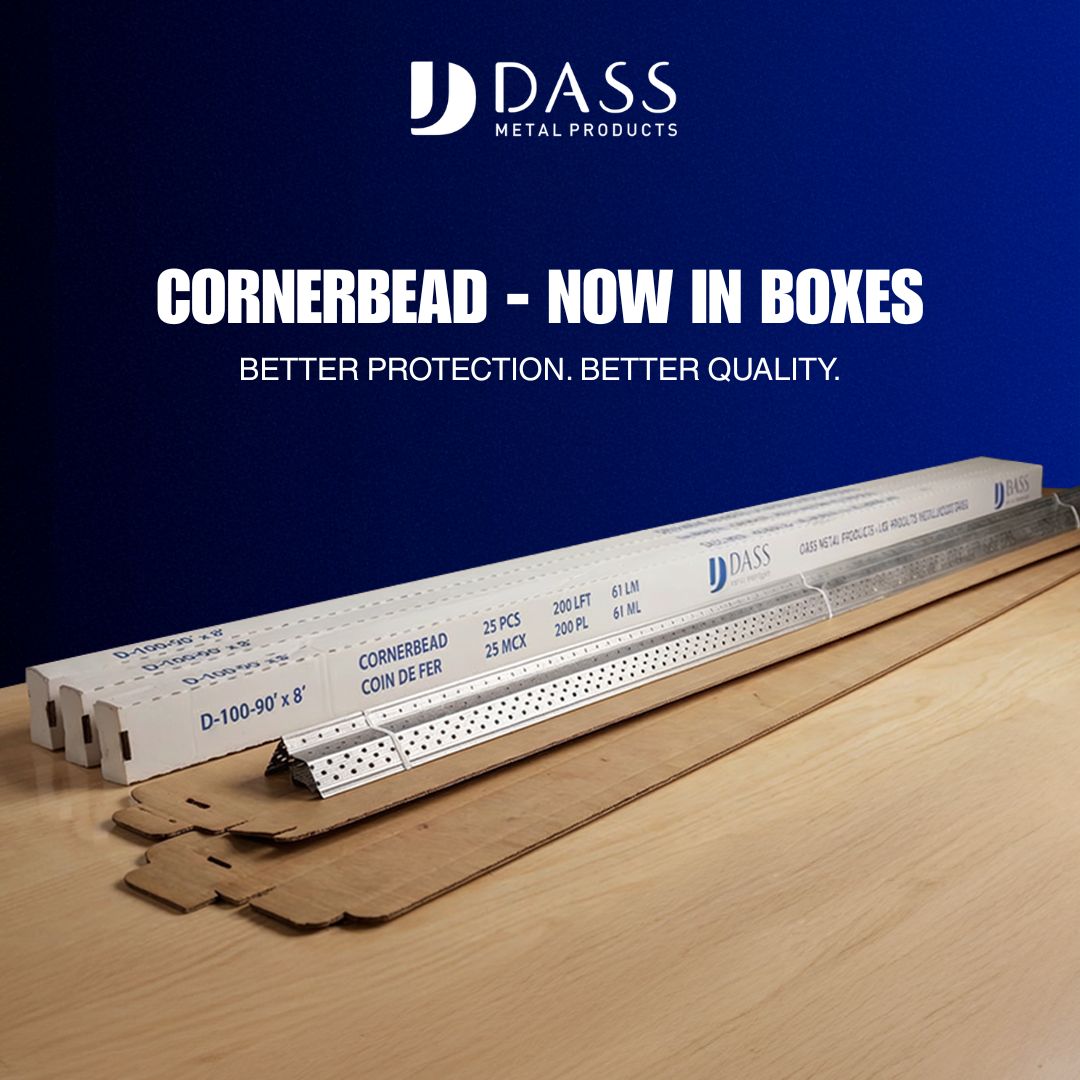
25 gauge metal studs are light-gauge, non-load-bearing steel members for interior partitions and ceilings. Use them for straight, plumb drywall walls, soffits, and bulkheads—never for structural loads or tall exterior spans. Dass Metal Products manufactures 25 ga profiles and matching tracks with CSSBI-aligned quality and engineering support across Canada and the United States.
By Navjot Dass • Last updated: 2026-07-13
| In business since | 1986 |
|---|---|
| Service area | Canada and the United States |
| Certification focus | CSSBI-aligned steel stud manufacturing |
| Core offerings | Non load bearing steel studs, Standard/Slotted/Deep Track, Channels, Trims |
| Engineering support | Experienced team with 40+ years in steel framing |
| Delivery | Reliable cross-border delivery |
| Business hours | Mon–Fri, 8:00 AM–5:00 PM |
Summary
25 gauge studs frame fast, straight, non-structural partitions up to typical ceiling heights. They shine in tenant improvements and basements. Our rule of thumb: for 8–9 ft walls at 16 in. o.c., 25 ga is appropriate; past ~10 ft or in abuse-prone corridors, move to 20 ga and tighten bracing.
Why this matters: choosing the lightest safe gauge trims labor and material while meeting deflection criteria (often L/240 for partitions or L/360 for brittle finishes). We help you hit the sweet spot by pairing studs with the correct track, bridging, and movement details from submittal to punch list.
What Are 25 Gauge Metal Studs? (Quick Technical Definition)
25 gauge metal studs are cold-formed C-studs for non-load-bearing interior framing. They deliver dimensional stability for drywall when sized to span limits and paired with the right track, bridging, and fasteners under common deflection criteria.
In our Interior Framing lineup, these light-gauge members keep walls true behind board, resist moisture better than wood in conditioned spaces, and come pre-punched for MEP. If you can feel a 25 ga flange give slightly when you squeeze it—but it springs back—you’re handling the right product: light, straight, and predictable compared with wood twists.
For background and field tips, see our metal studs guide and detailed light-gauge framing details.
Where 25 Gauge Studs Belong—and Where They Don’t
Use 25 ga for interior partitions, soffits, bulkheads, and light furring. Avoid it for structural loads, tall or exterior spans, shaftwalls, or abuse-prone areas. In busy corridors or walls with heavy fixtures, up-gauge and plan reinforcement.
- Right fit (we see wins here)
- 8–9 ft office and retail partitions at 16 in. o.c.
- Basement partitions and closets where moisture stability matters
- Soffits and simple furring over uneven substrates
- Acoustic builds with resilient channel decoupling
- Wrong fit (risk of callbacks)
- Any wall expected to take structural or out-of-plane loads
- Corridors and classrooms with frequent impact/abuse
- Shaftwalls and cores—use CH/shaftwall systems instead
- Exterior walls with wind, moisture, or thermal movement exposure
Field note: we’ve walked jobs where a 25 ga corridor wall racked before board because bridging was skipped. Thirty minutes of carrying channel would’ve saved a day of rework. If you’re debating 25 vs. 20 ga in a high-traffic zone, pick 20 ga and sleep well.
25 Gauge vs. Heavier Gauges: Choosing the Right Spec for Your Project
Pick 25 ga for speed and straightness on standard-height partitions. Choose 20 ga when height creeps toward double digits or fixtures increase. Choose 18 ga for demanding spans, heavy backing, or abuse-prone spaces. Decide by height, spacing, finish sensitivity, and lateral demand.
| Gauge | Best use | Practical guidance |
|---|---|---|
| 25 ga | 8–9 ft interior partitions | Right call for 16 in. o.c. office TIs; efficient and straight |
| 20 ga | Taller partitions; fixture loads | Use past ~10 ft, around doors/glazing, or with blocking |
| 18 ga | Abuse-prone/high load areas | Go here for heavy hardware, impact, or tighter deflection |
Deflection criteria often sit around L/240 for partitions and L/360 where brittle finishes demand it. If a 3-5/8 in. stud at 16 in. o.c. is approaching its comfortable span, don’t stretch to save a few pieces—up-gauge or tighten spacing and add bridging. That decision prevents wavy finishes and cracked joints.
Standard Sizes, Profiles, and Complementary Track Products
Common 25 ga widths include 1-5/8, 2-1/2, 3-5/8, and 6 in. class. Match with Standard, Slotted Deflection, or Deep Track. Add bridging/carrying channel for stability, resilient channel for acoustics, and trims for clean finishes.
We build 25 ga studs to align with the ecosystem that makes installs smooth:
- Standard Track: everyday base/head receiver; fast layout when slabs are level.
- Slotted Deflection Track: head-of-wall movement. If the slab above deflects, slots let structure move without telegraphing cracks into finished drywall.
- Deep Track: extra leg depth gives tolerance at uneven floors/ceilings and helps capture stud ends.
- Bridging/Carrying Channel: locks stud faces in plane, reducing ripple before board.
- Resilient Channel: decouples board for better STC in multifamily/hospitality builds.
- Furring Channel and Trims (J/L, 90°/130° cornerbead): straighten surfaces and protect edges.
Explore compatible components in our non-load-bearing framing lineup and the stud and track guide.
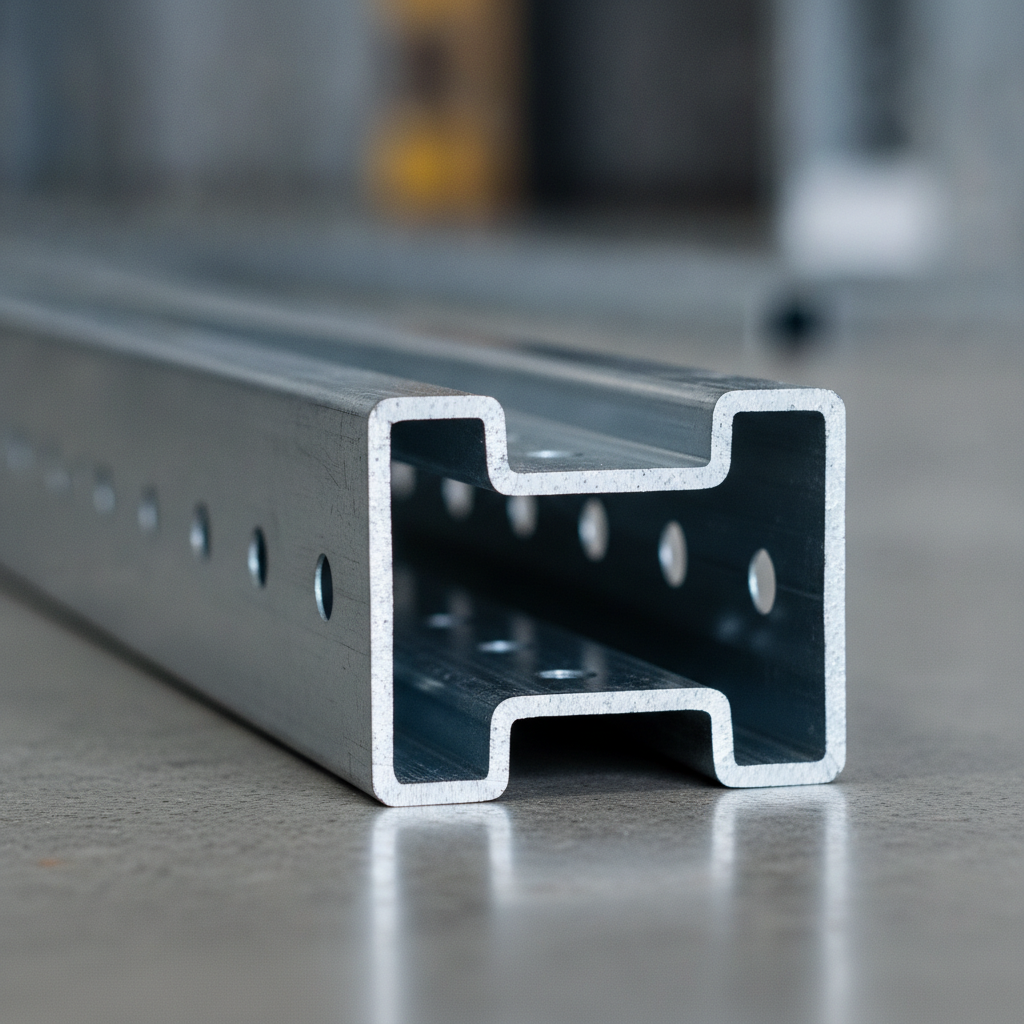
Real-world pairing example we recommend often: 3-5/8 in. 25 ga studs at 16 in. o.c. + slotted head track + one line of carrying channel mid-height. It stays straight, handles building movement, and speeds boarding.
Installation Considerations Contractors Often Overlook
Most 25 ga issues trace to spacing, bracing, or head-of-wall mistakes. Use carrying channel, align tracks, respect movement joints, and pick compatible screws. Small choices here prevent wavy finishes and service-call headaches.
- On-center spacing: 16 in. o.c. is the safe default for 8–9 ft partitions. Tighten to 12 in. o.c. where finishes are sensitive or spans are near limits.
- Bridging: Install carrying/bridging channel mid-height on taller runs to stop twist. It takes minutes and pays off at tape/paint.
- Head-of-wall: Use slotted deflection track whenever structure is designed to move independently. Without slots, even modest movement can pop joints within a season.
- Fasteners: Use #6 or #8 self-drilling screws for steel-to-steel; match length and point to stack-up. For board, follow manufacturer length guidance to avoid over-penetration.
- Openings and loads: Around doors, glazing, or wall-hung fixtures, reinforce or up-gauge and add blocking. Don’t ask a light-gauge web to do a heavy-gauge job.
- Acoustics: Use resilient channel correctly (channels perpendicular to studs, single layer attachment), and seal perimeters to avoid flanking paths.
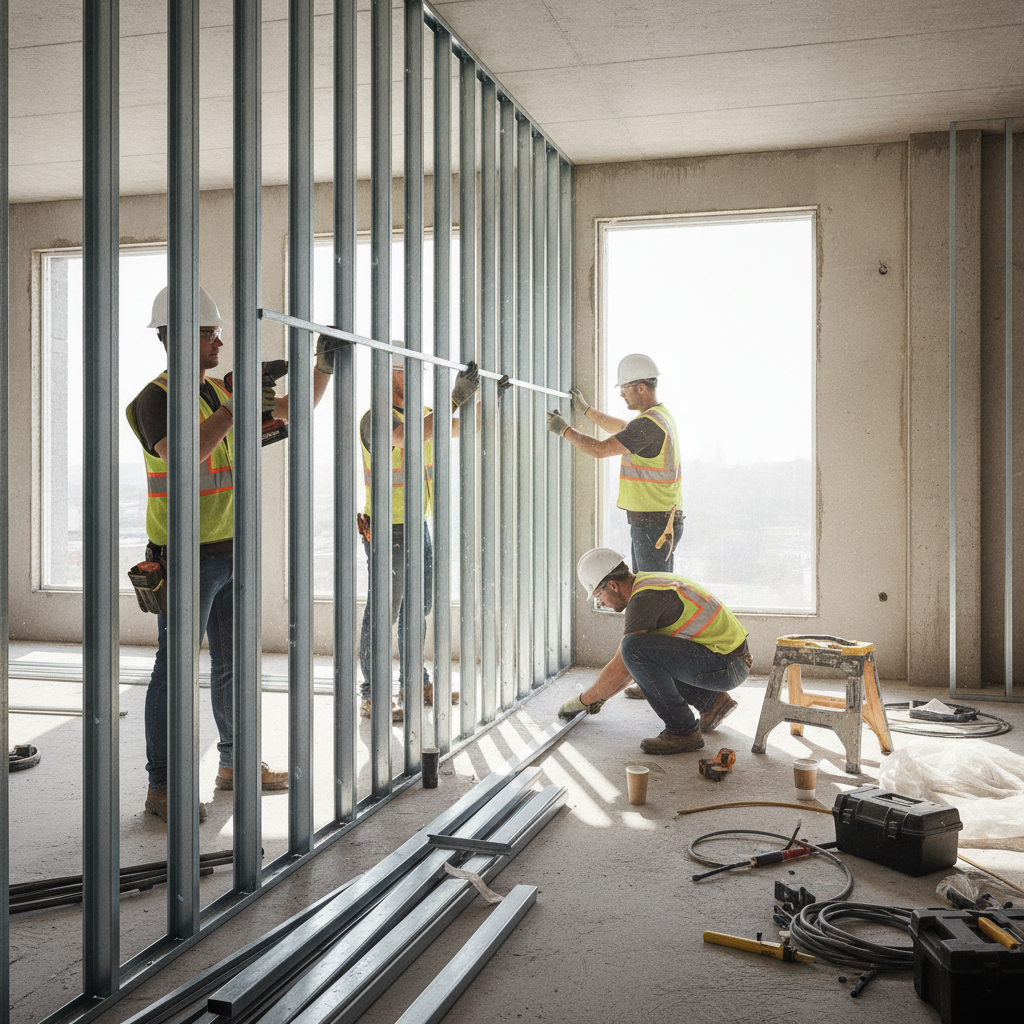
Anecdote from a recent punch walk: a beautiful conference room had hairline cracks at the ceiling joint. Cause? Standard head track under a live structure. Swapping to slotted deflection track would have preserved the finish and a handful of costly return trips.
Need a refresher on layout and heights? See stud framing sizes, our metal studs guide, and interior stud wall framing.
How to Source 25 Gauge Metal Studs: What to Ask a Manufacturer
Share wall height, spacing, board type, and movement/acoustic needs. Ask for span/deflection data, compatible tracks, and recommended bridging. Confirm certification alignment and cross-border delivery. If fixtures are heavy or spans are tall, expect a gauge change before you place the order.
- Performance data: Request span and deflection guidance aligned to your board and finish criteria.
- System match: Verify Standard, Slotted, or Deep Track options and required clips/bridging.
- Profiles/custom: Ask about custom lengths or punches to cut waste and speed services.
- Documentation: Keep submittals clean with CSSBI-aligned specs and clear installation notes.
- Logistics: Confirm dependable delivery across Canada and the United States to protect schedule.
Prep your request with our concise installation guide and this handy stud sizing reference. If your scope shifts into exterior structural or shaftwall, we’ll pivot the spec to heavy-gauge, CH stud, or track solutions from our broader lineup.
FAQ
These short answers reflect what builders ask us most about 25 gauge metal studs—fast, direct guidance you can put into a submittal today.
Are 25 gauge metal studs strong enough for interior walls?
Yes—when you stay within non-load-bearing limits. For standard 8–9 ft partitions at 16 in. o.c. with proper bridging and head-of-wall movement, 25 ga delivers straight, durable walls. Move up in gauge for tall spans, heavy fixtures, or impact-prone areas.
When should I choose slotted deflection track?
Use slotted deflection track wherever the structure above may move relative to the partition. The slots let the head-of-wall slide, protecting joints from cracks. It’s standard practice under concrete slabs and long-span roofs where deflection is expected.
Can 25 ga studs hold cabinets or wall-hung sinks?
Plan blocking or up-gauge. Light-gauge studs can handle modest loads with proper reinforcement, but heavy millwork and plumbing fixtures often warrant heavier studs plus engineered backing and fasteners rated for the load path.
What widths are typical for 25 ga studs?
Common widths are 1-5/8, 2-1/2, 3-5/8, and 6 in. class, paired with matching tracks. Choose based on assembly thickness, insulation, and services. Ask about custom lengths or punch patterns to minimize field cuts.
Key takeaways
- 25 gauge metal studs are ideal for fast, straight, non-structural partitions.
- Use 20 ga or 18 ga for taller spans, heavy fixtures, or abuse-prone areas.
- Deflection, bridging, and head-of-wall details prevent most callbacks.
- Pair studs with the right track—standard, slotted, or deep—plus resilient/bridging channels.
- Share height, spacing, and finish expectations so engineering can validate the spec before you order.