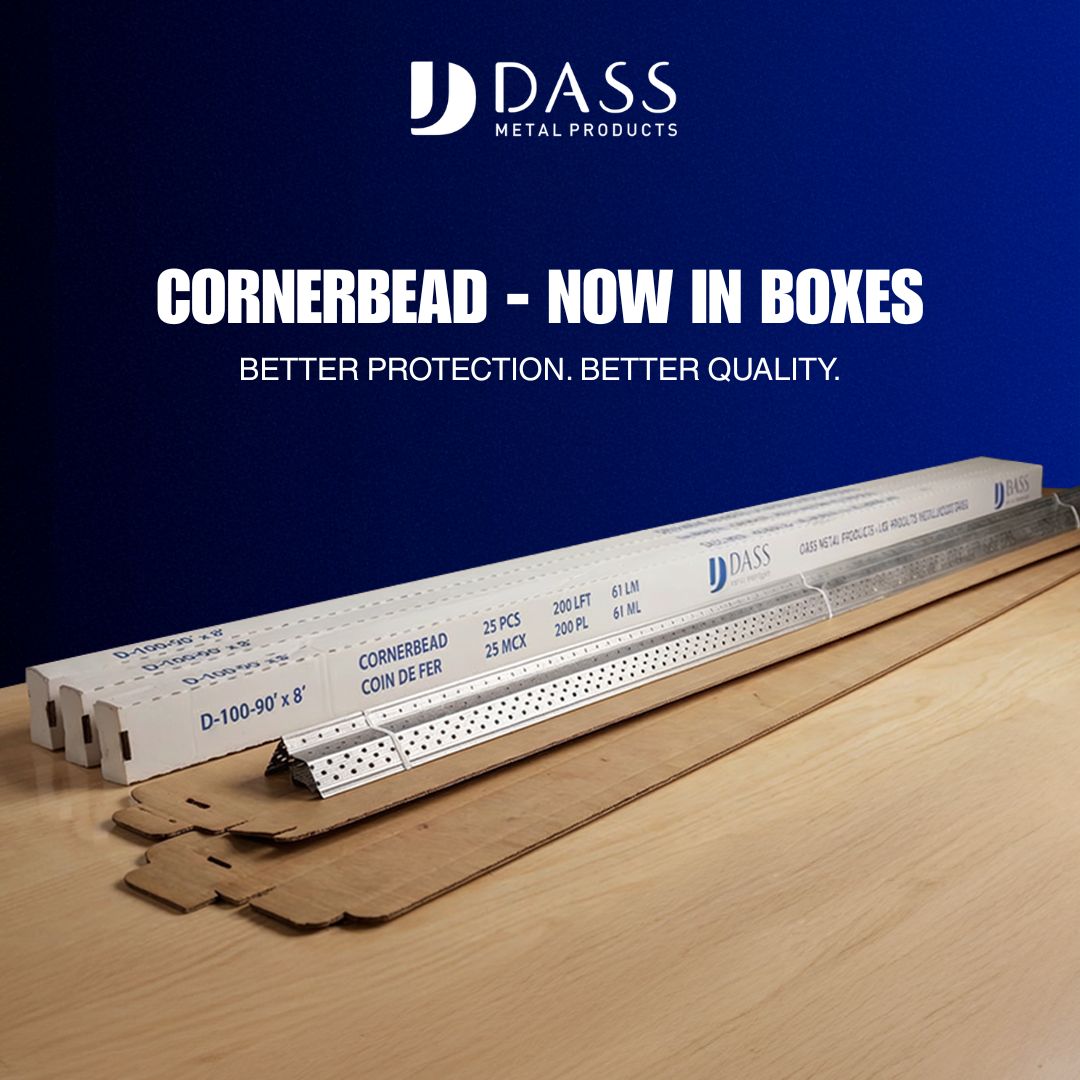
Cold-formed metal framing is the use of thin-gauge, cold-rolled steel studs, tracks, channels, and clips to build straight, noncombustible walls and ceilings. It delivers high strength-to-weight ratios for interior and exterior partitions. From Vaughan, ON, Dass Metal Products supports projects across Canada and the United States with engineered, code-ready components for reliable schedules.
By Navjot Dass • Dass Metal Products
Last updated: 2026-04-29
At a Glance: What You’ll Learn
Cold-formed metal framing speeds construction while improving wall straightness, fire performance, and acoustic control. This guide explains what CFS is, why it matters, how it works, key system types, best-practice installation checklists, tools and resources, and real-world scenarios so your team delivers clean inspections and crack-free finishes.
Use this complete guide as your field-ready reference. We wrote it for builders, drywall and framing contractors, architects, and engineers who specify or install light and heavy gauge systems. You’ll learn how to combine the right members and details to reduce rework and pass inspections the first time.
- What is cold-formed metal framing?
- Why cold-formed framing matters
- How cold-formed framing works
- Types, methods, and approaches
- Best practices (field checklist)
- Tools and resources
- Case scenarios and examples
- Frequently asked questions
- Related articles
- Conclusion and key takeaways
Summary
Cold-formed metal framing (CFS) uses light to heavy gauge steel studs, tracks, and channels to create straight, durable, and code-compliant walls. The winning formula is simple: pick the right gauge and spacing, brace correctly, and design head-of-wall movement. Do that, and you’ll install faster with fewer callbacks.
- Light gauge studs (25–20 ga) fit most interior partitions at 16 or 24 in. on center.
- Heavy gauge studs (18–12 ga) support tall or load-bearing walls with engineered bracing.
- Slotted deflection track protects finishes from structural movement at heads-of-wall.
- Bridging channel spacing typically ranges 4–6 ft. vertically to control buckling.
- Resilient channel can add 5–10 STC points in common multifamily partitions.
What Is Cold-Formed Metal Framing?
Cold-formed metal framing is steel sheet shaped at room temperature into studs, tracks, and channels for walls and ceilings. The members provide consistent dimensions, high strength-to-weight performance, and noncombustible assemblies for interiors and exteriors when paired with proper spacing, bracing, and head-of-wall movement design.
Think of cold-formed members as precision-rolled “C” and “U” shapes cut from galvanized coil. The process yields tight tolerances compared with site-sawn lumber. That accuracy reduces shimming, speeds board installation, and results in flatter finishes. Typical interior studs run 2-1/2 to 6 inches deep; exterior and structural walls often use 6 to 14 inches.
- Studs (C-studs): Web, flanges, and return lips resist buckling; factory punch-outs support services and bridging.
- Tracks (standard, deep, slotted): U-shaped receivers at base and head; slotted versions allow vertical slip for live-load and thermal movement.
- Channels (bridging/carrying): Lateral bracing that keeps studs aligned and controls lateral-torsional buckling.
- Acoustic decouplers: Resilient channel breaks vibration paths to increase partition STC.
- Clips and connectors: Deflection clips, webslide clips, angles, and stiffeners transfer loads without binding the wall.
Because members are noncombustible and dimensionally stable, CFS integrates cleanly with rated gypsum assemblies and modern codes. In interiors, G40 or better zinc coatings resist corrosion; exteriors may require higher coatings and sheathing for weather resistance.
For an overview that connects this topic to the broader Framing pillar, see our metal framing systems guide, which explains how interior and exterior systems work together on complex projects.
Why Cold-Formed Framing Matters
Cold-formed framing matters because it helps teams build straighter walls faster while meeting fire, acoustic, and structural targets. It reduces rework, controls movement cracks, and simplifies code coordination. When you align gauge, spacing, bracing, and head-of-wall details, inspections go smoother and finishes stay clean.
Here’s why project teams choose CFS for interiors and building envelopes in the first place.
- Speed and predictability: Factory-formed studs, tracks, and channels install fast with screw connections. Layout is repeatable. Crews routinely hang board the same day framing tops out.
- Straightness and stability: Steel doesn’t shrink, twist, or cup. Walls stay flat, and door frames stay square. That reduces taping waves and popping fasteners.
- Noncombustible assemblies: Integration with rated gypsum systems is straightforward. Fire, smoke, and head-of-wall seals are easier to maintain when the frame doesn’t burn.
- Acoustics: Resilient channel, double or staggered studs, and mineral wool combine to push many partitions past STC 50 targets common in multifamily and hospitality.
- Design flexibility: Curved tracks (like U-Flex), special profiles, and cut-to-length studs solve tricky geometries without on-site guesswork.
In our experience supporting Ontario- and U.S.-based contractors, the biggest risk isn’t the stud, it’s the detail. Miss a head-of-wall slot or under-spec bridging and finish cracks appear within the first seasonal cycle. Get those right, and you’ll avoid most callbacks—especially on tall walls and glass-heavy lobbies.
For deeper structural context, our structural framing systems guide explains load paths, drift, and why deflection clips and deep track matter on tall or exterior walls.
How Cold-Formed Framing Works
Cold-formed framing assembles lightweight steel members into stiff, planar walls using screws, clips, and bracing. Studs transfer loads to tracks; bridging prevents buckling; sheathing adds diaphragm action; and slotted head-of-wall tracks or clips allow the primary structure to move without cracking finishes.
At its core, this is a parts-and-process system:
- Selection: Choose stud depth, gauge, and spacing based on wall height, finish loads, and environmental exposure.
- Base and head: Anchor base track true and level; use slotted deflection track or compatible clips at non-load-bearing heads.
- Stud install: Cut square, seat fully, plumb, and fasten per schedule (commonly two screws per connection, per flange).
- Bracing: Install bridging channel at specified vertical intervals (often 4–6 ft.) and tighten connections to control lateral-torsional buckling.
- Close-in: Hang gypsum; maintain required joints for fire/smoke seals and movement at heads-of-wall.
Movement is the silent killer of interior finish quality. Floors can deflect 1/2 inch or more under load; roofs can shift seasonally; wind drift moves exterior frames millimeters to centimeters. Slotted tracks and tested head-of-wall joints preserve the gap so finishes don’t bind and crack.

Field checkpoints that prevent 90% of issues
- Head-of-wall slip: Never hard-fasten studs through a slotted track; leave the movement gap.
- Bridging torque: Tight connections turn flimsy walls into stiff planes; loose screws lead to flutter and board cracks.
- Service coordination: Use factory punch-outs; avoid cutting large webs without reinforcement.
- Finish loads: Heavy millwork or stone? Increase gauge or add stiffeners at jambs and headers.
For a practical primer on slotted systems, see our slotted deflection track guide. It shows how to detail the joint so the wall can move without sacrificing ratings.
Types, Methods, and Approaches
Cold-formed systems span from light-gauge partitions to heavy-gauge structural walls. Non-load-bearing interiors typically use 25–20 ga studs; tall or exterior walls rely on 18–12 ga with deeper tracks, robust bridging, and engineered clips. Acoustic assemblies use resilient channel or staggered studs to raise STC without major thickness.
Common system types
- Non-load-bearing interiors: 2-1/2 to 6 in studs at 16 or 24 in o.c.; resilient channel for sound; slotted tracks at heads-of-wall.
- Load-bearing stud framing: 6 to 14 in studs in 18–12 ga with engineered connectors and bracing; used in mid-rise and long-span exterior walls.
- Tall exterior walls: Heavier gauges with deep track, drift-compatible clips, sheathing, and weather-resistive barriers.
- Acoustic partitions: Resilient channel, double studs, or staggered studs to elevate STC 5–15 points depending on assembly.
Accessories that solve real problems
- Slotted deflection track: Absorbs live-load, thermal, and drift movement so finishes don’t crack.
- Deep track: Increases engagement and stiffness for tall walls or load transfer conditions.
- Bridging/carrying channel: Keeps walls plumb; typical vertical spacing 4–6 ft.
- Resilient channel: Simple, proven way to improve sound control, often to meet STC 50+ goals.
- Clips (deflection, webslide): Transfer loads cleanly while permitting slip or micro-adjustment.

Comparison: light gauge vs heavy gauge
| Attribute | Light Gauge (Non-Load-Bearing) | Heavy Gauge (Load-Bearing/Tall) |
|---|---|---|
| Typical thickness | 25–20 ga | 18–12 ga |
| Common depths | 2-1/2–6 in | 6–14 in |
| Spacing | 16 or 24 in o.c. | Engineered; often 16 in o.c. |
| Primary use | Interior partitions, ceilings | Exterior walls, mid-rise bearing |
| Key accessories | Deflection track, resilient channel | Deep track, clips, robust bridging |
Looking for a layperson-friendly walkthrough? Our light gauge steel framing guide breaks down interior partition choices in simple terms you can share with the whole team.
Best Practices (Field Checklist)
The best cold-formed projects start with clear submittals and end with straight, crack-free walls. Verify gauges and spans, respect movement joints, brace per plan, coordinate services, and document head-of-wall details before close-in. These checklists reflect what we’ve seen save time and reduce callbacks across dozens of builds.
Preconstruction
- Match stud depth and gauge to wall height, finish loads, and exposure; confirm against load tables.
- Use slotted deflection track or compatible clips at all non-load-bearing heads-of-wall.
- Lay out door and window openings; specify jamb/king stud reinforcement and headers early.
- Coordinate MEP penetrations with factory punch-outs; plan fire/smoke sealing around services.
- For acoustic goals, select resilient channel or staggered studs; target STC 50+ where required.
Installation
- Anchor base track true and level; shim to meet tolerance rather than forcing studs out of plumb.
- Cut studs square; seat fully in both tracks; plumb and screw per fastener schedule.
- Install bridging channel per plan (commonly every 4–6 ft. vertically) and tighten all connections.
- Maintain head-of-wall gap; never hard-fasten through slotted track slots.
- Protect zinc coating; if cut edges are exposed to harsh environments, follow approved touch-up protocols.
Quality and documentation
- Measure and record wall plumb/flatness before board to catch issues early.
- Photograph head-of-wall and bracing details prior to close-in for your QA record.
- Use listed firestops and smoke seals at movement joints; verify continuity at intersections.
- Update as-builts if field conditions require gauge, spacing, or bracing changes.
For bracing nuance, our steel frame bracing guide explains how to keep tall walls straight under real-world loads.
Need submittal-ready specs? Dass Metal Products provides brochures, load tables, and engineering support so your cold-formed submittals move fast and pass review the first time. Share your heights, spans, and targets—we’ll align studs, tracks, and accessories for a clean handoff.
Tools and Resources
Successful cold-formed framing relies on accurate specs, load tables, and detailing. Use manufacturer brochures, engineering support, and standards references. For curved walls, tall spans, or heavy finishes, request custom profiles and cut-to-length studs to save field cutting time and reduce waste.
- Product brochures for studs, tracks, channels, clips, and drywall trims.
- Imperial/metric load tables for interior/exterior partitions and tall walls.
- Standards references and MSDS documentation for safe handling.
- Engineering review for tall walls, concentrated loads, and drift conditions.
- Custom profiles and cut-to-length options to reduce onsite labor.
Curious how estimators build their takeoffs? See this practical overview of how metal stud framing is estimated to improve your bids and procurement sequence.
Case Scenarios and Examples
Across commercial interiors and envelope retrofits, cold-formed framing delivers schedule speed and consistent finishes. The most reliable results pair the right gauge and spacing with proper head-of-wall details and bridging. These mini-scenarios show how teams translate drawings into clean inspections on tight timelines.
Healthcare corridor retrofit
- Challenge: Long corridors need strict STC and dust control under active occupancy.
- Approach: 3-5/8 in, 20 ga studs at 16 in o.c.; resilient channel each side at patient rooms; slotted tracks at heads.
- Result: Night-shift installation maintained STC goals and cleared inspections without rework.
Tall lobby feature wall
- Challenge: 24-ft wall with heavy finishes in a high-traffic atrium.
- Approach: 8 in, 16–14 ga studs; deep track; robust bridging; engineered deflection clips.
- Result: Plumb wall that stayed crack-free through move-in and seasonal cycles.
Mid-rise exterior infill
- Challenge: Exterior cladding over studs in a windy zone with notable drift.
- Approach: Heavier gauges; sheathing for diaphragm action; drift-compatible head details at each floor line.
- Result: Predictable inspection path and consistent cladding reveals.
For a broader primer on studs versus wood, share our explainer on when steel studs beat wood for interior partitions, durability, and fire performance.
Frequently Asked Questions
Get quick, direct answers to common cold-formed framing questions—gauge selection, movement joints, acoustics, and when to involve engineering. Each answer is designed for rapid review by supers, PMs, and specifiers during precon and in the field.
What is the difference between light and heavy gauge studs?
Light gauge (25–20 ga) is typically used for interior, non-load-bearing partitions at 16 or 24 inches on center. Heavy gauge (18–12 ga) supports taller walls, exterior conditions, or bearing applications and is engineered for spans, loads, and required bracing.
Why use slotted deflection track at the head of walls?
Slotted deflection track allows the primary structure to move due to live load, thermal changes, or drift without cracking the wall below. The slots let the stud flanges slip so finishes and fire/smoke seals stay intact over time.
How does resilient channel improve acoustics?
Resilient channel decouples gypsum from studs, reducing vibration transfer and raising STC ratings. It’s a straightforward way to boost sound isolation in multifamily, hospitality, and healthcare partitions without major thickness increases.
When should I call for engineering support?
Engage engineering for tall walls, large or numerous openings, heavy finish loads, high wind or seismic zones, or any condition outside published load tables. Early review streamlines submittals and avoids field rework.
Local considerations for Vaughan and the GTA
- Seasonal temperature swings drive building movement; use slotted heads-of-wall on all non-load-bearing partitions to protect finishes.
- Plan winter sequences to keep materials dry and maintain inspection windows when temperatures drop.
- On dense urban sites, request cut-to-length studs and pre-bundled packs to speed hoisting and reduce onsite waste.
Related Articles
Explore supporting articles that deepen your team’s understanding of framing choices, bracing, and common pitfalls. These reads connect details to outcomes so you can plan submittals, coordinate trades, and keep schedules on track from precon to punchlist.
If you’re building your internal playbook, bookmark our interior wall framing mistakes explainer, the broader metal framing systems guide, and our structural framing systems guide for tall walls and exterior conditions.
For foundations and anchorage coordination with envelope framing, these helpful primers from our affiliated team at Dass Rebar outline typical reinforcement patterns: a concise concrete footing rebar guide and a foundation rebar overview for common layouts.
Conclusion and Key Takeaways
Cold-formed metal framing delivers straight, durable, and code-ready walls when you match gauge and spacing to span, brace correctly, and design head-of-wall movement. With clear submittals and the right accessories, teams install faster and hand over cleaner finishes with fewer post-occupancy issues.
- Verify gauges, spacing, and bracing early using current load tables.
- Use slotted tracks or tested clips at heads-of-wall to absorb structural movement.
- Employ resilient channel where acoustics matter; target STC 50+ as required.
- Photograph critical details before close-in to prevent disputes.
- Lean on engineering support for tall walls, heavy finishes, and drift-prone conditions.
Next step: Share your wall heights, loads, and any acoustic or fire requirements. We’ll align studs, tracks, and accessories with submittal-ready documentation so your schedule stays on track.