Interior stud wall framing is the layout, anchoring, and assembly of non‑load‑bearing partitions using steel studs, tracks, and channels. Crews create straight, plumb walls that meet fire, acoustic, and movement requirements so drywall installs cleanly. From our base at 370 New Enterprise Way in Vaughan, we engineer Canadian steel studs to speed professional interior framing.
By Navjot Dass • Last updated: 2026-06-01
Overview and table of contents
This guide explains interior stud wall framing from definitions to step‑by‑step execution. You’ll learn methods, tools, best practices, and code‑aligned details like head‑of‑wall deflection and acoustic decoupling. Use the checklists, tables, and examples to build straighter partitions, finish faster, and pass inspections the first time.
- What is interior stud wall framing?
- Why interior stud walls matter in 2026
- How interior stud walls are built: step‑by‑step
- Types, methods, and approaches
- Best practices for consistent results
- Tools, materials, and resources
- Local codes, logistics, and scheduling
- Case studies and real‑world examples
- Steel vs. wood interior partitions (comparison)
- Frequently Asked Questions
- Key takeaways and next steps
Quick summary
Interior stud wall framing uses light‑gauge steel studs and tracks to build non‑load‑bearing partitions that are straight, fire‑resistant, and acoustically tuned. Success comes from precise layout, correct gauge selection, head‑of‑wall deflection details, and disciplined fastening practices that keep walls true while accommodating building movement.
- Primary materials: Steel studs, standard/deep track, slotted deflection track, bridging channel, resilient channel, trims.
- Typical spacing: 16 in. o.c. for most partitions; 24 in. o.c. where design permits.
- Movement: Head‑of‑wall slots typically allow 3/4 in. vertical deflection without crushing gypsum.
- Acoustics: STC 50+ is achievable with double‑layer gypsum and resilient channel.
- Fire: Assemblies are often rated 1–2 hours with the right gypsum schedule and insulation.
What is interior stud wall framing?
Interior stud wall framing is the process of laying out, anchoring, and assembling light‑gauge steel partitions inside buildings. It combines studs and tracks with clips and channels to produce straight, plumb, code‑conforming walls that accept MEP rough‑ins and gypsum finishes without rework.
On most commercial and multifamily jobs, interior partitions make up a large share of daily production. Consistent layout, correct gauge selection, and fastener discipline reduce rework and punch‑list time. Done right, framing speeds every downstream trade—especially MEP and drywall.
- Core elements: Non load‑bearing steel studs, standard or deep track at floor, slotted deflection track at head, bridging/carrying channel mid‑height, and trims (J, L, cornerbead).
- Why steel: Predictable dimensions, straight walls, and compatibility with fire‑ and sound‑rated assemblies.
- Where it fits: Offices, schools, healthcare, retail, apartments, tenant improvements, and adaptive reuse.
For a deeper primer on layout and sequencing, see our in‑depth steel stud wall framing guide and our companion metal studs overview.
Why interior stud walls matter in 2026
Interior stud walls drive schedule reliability, finish quality, and building performance. Straight, code‑aligned partitions improve drywall productivity, help meet STC and fire ratings, and reduce callbacks. In 2026, labor constraints make predictable, faster installations with steel studs more valuable than ever.
Crews succeed when materials are engineered, dimensionally accurate, and delivered on time. That’s why our team designs Canadian steel studs with strict quality control and supports orders with engineering resources and dependable logistics throughout Canada and the United States.
- Schedule control: Framing pace often dictates drywall start dates and inspection milestones.
- Acoustic targets: Many multifamily and office partitions aim for STC 45–55; resilient channel and insulation are common tools to hit those numbers.
- Fire resistance: 1–2 hour ratings are commonly detailed using specific gypsum layers, joint treatment, and mineral wool.
- Movement compliance: Head‑of‑wall deflection details protect finishes from building drift and live‑load deflection.
To align design intent and field execution, we publish framing dimensions and selection tips in our steel framing dimensions guide and our steel studs guide.
How interior stud walls are built: step‑by‑step
Interior framing follows a repeatable sequence: layout, fasten tracks, stand studs, install bridging, frame openings, detail head‑of‑wall, rough‑in MEP, and prep for drywall. Precision at layout and head‑of‑wall prevents cracking, waves, and inspection delays.
- Verify layout lines: Snap control lines, confirm wall thickness, door swings, and chase widths. Check plumb at columns and glazing returns.
- Set floor track: Use standard or deep track on concrete. Apply sealant where required. Fasten per spec (e.g., 24–32 in. o.c. with approved anchors).
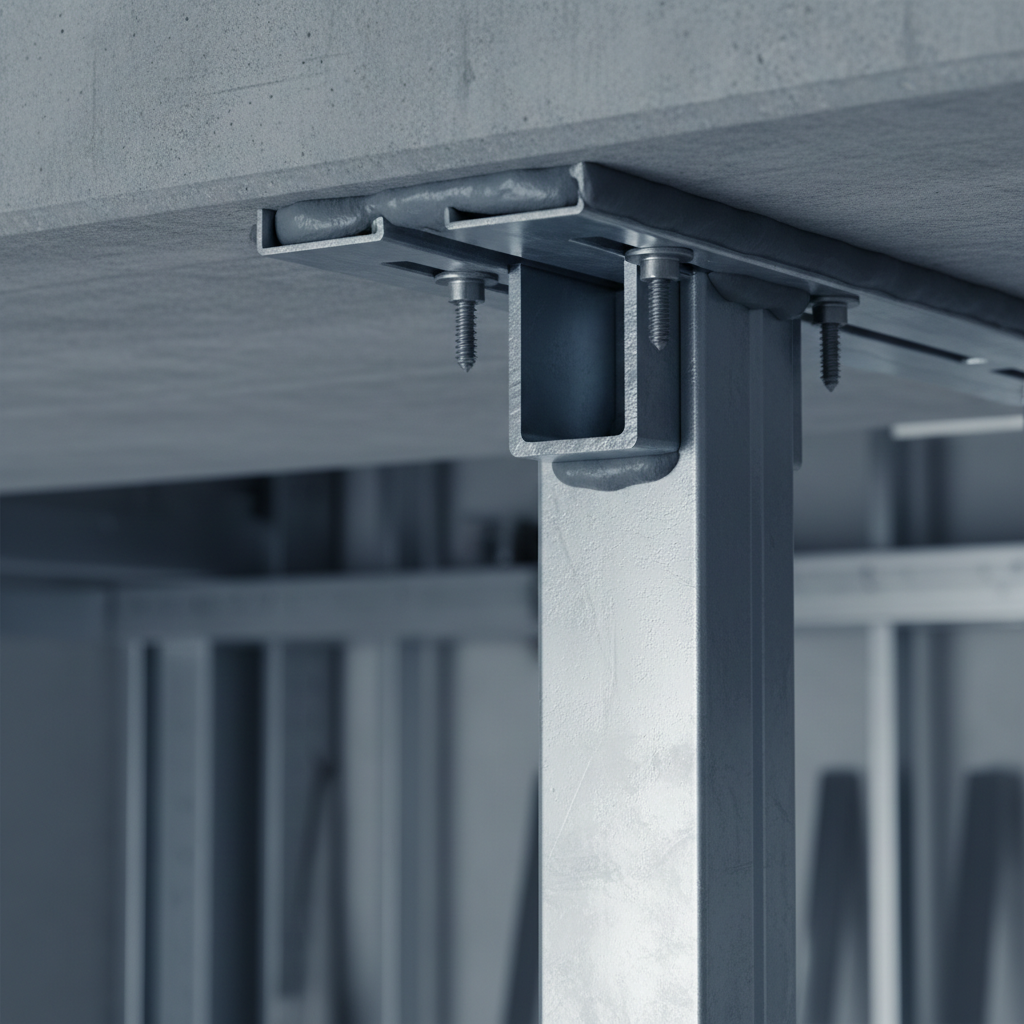
- Install head track: Use slotted deflection track where required. Maintain the designed slot clearance (often up to 3/4 in.). Do not pin studs to the structure when deflection is specified.
- Stand studs: Insert studs into track, crown aligned, cut to length minus head clearance. Typical spacing: 16 in. o.c.; some assemblies permit 24 in. o.c.
- Bridging/carrying channel: Install at prescribed elevations to control stud twist and maintain plane, especially at 12–14 ft heights and door jambs.
- Frame openings: Jamb studs, headers, and sills sized per schedule. Reinforce for hardware and glazing per shop drawings.
- MEP coordination: Use factory knockouts where provided; avoid excessive web cutouts. Protect edges with grommets.
- Head‑of‑wall detailing: Fasten studs to slotted track per clip/fastener schedule; maintain free‑slip for vertical movement.
- Acoustic decoupling: Add resilient channel where specified; maintain screw spacing and avoid short‑circuiting with extra fasteners.
- Inspection and handoff: Verify fastener patterns, stud gauge, and deflection gaps. Hand off for insulation and board.
For a structural perspective on heavier walls and tall studs, review our structural metal stud framing guide.
Types, methods, and approaches
Interior partitions use a family of compatible components: non‑load‑bearing studs, standard/deep track, slotted deflection track, bridging channel, resilient channel, shaftwall studs, clips, and trims. Selecting the right gauge, spacing, and decoupling method balances straightness, acoustics, and speed.
Studs and tracks
- Non load‑bearing steel studs (light gauge): The backbone of interior stud wall framing. Select gauge and web size based on height, board layers, and service loads.
- Standard track: Common at floors; deep track increases tolerance for slab variance and makes standing studs faster.
- Slotted deflection track: Provides vertical movement at the head; essential under structural steel, long‑span decks, or drift conditions.
Stability and straightness
- Bridging/carrying channel: Controls stud roll and keeps the wall plane true. Place near mid‑height or per schedule.
- Windbrace (interior shear needs): Used selectively for interior shear lines or tall partitions exposed to airflow or pressure differentials.
Acoustic and fire components
- Resilient channel: Decouples gypsum from studs for higher STC. Maintain 24 in. o.c. channel spacing unless otherwise specified.
- Mineral wool and gypsum schedules: Mineral wool infill and double‑layer 5/8 in. gypsum routinely achieve STC 50+ and 1–2 hour ratings when detailed correctly.
Special conditions
- Shaftwall/CH studs: For elevator and mechanical shafts; coordinate with rated board systems and closure angles.
- Curved partitions with U‑Flex track: Pre‑slotted track speeds smooth curves; check radius limits and stud segmentation.
- Trims and accessories: J trim, L trim, J track, and cornerbeads deliver clean terminations at ceilings, returns, and glazing.
When you need a refresher on sizes and options, our dimensions guide and step‑by‑step framing article detail common selections with diagrams.
Best practices for consistent results
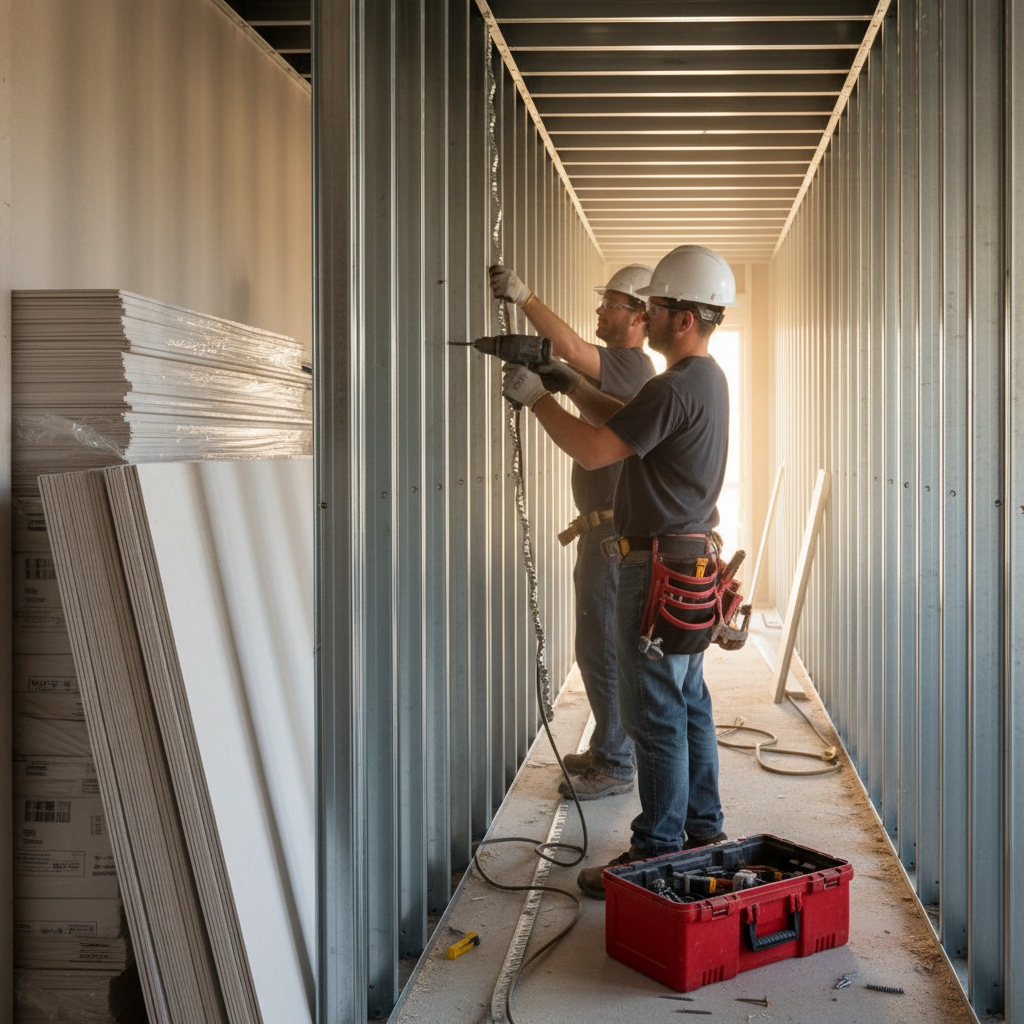
Focus on layout precision, correct fastener schedules, gauge discipline, and movement joints. Use deep track where slabs vary, maintain head‑of‑wall clearance, and avoid short‑circuiting acoustic systems. Document each wall type with a repeatable checklist to reduce rework.
Layout and tolerances
- Control lines: Pull from a stable baseline; verify door locations and ADA clearances before track goes down.
- Plumb/level checks: Laser walls at starts/returns; shim deep track instead of forcing studs out of plane.
- Openings: Pre‑cut jamb studs and headers to reduce field fit‑up.
Fastening discipline
- Track to slab: Follow anchor pattern and edge distances; over‑fastening at corners can telegraph waves into the wall.
- Stud to track: Observe specified screw types and counts. Where deflection is required, use approved clips or slot fasteners and keep the stud free to slide.
- Resilient channel: Hit channel, not studs, with board screws to preserve decoupling. Avoid adding extra fasteners “just in case.”
Quality control and documentation
- Wall tags and checklists: Label wall types by room; record gauge, spacing, insulation, and board schedule.
- Photo verification: Capture head‑of‑wall slots, bridging, and MEP penetrations before close‑in.
- Punch‑list prevention: Confirm backing for casework, railings, and wall‑hung fixtures before drywall.
For a broader context on safety and performance considerations, see our perspective on why steel framing matters.
Tools, materials, and resources
A productive interior framing kit pairs layout tools with cutting/fastening systems and the right steel components. Keep a reference set—wall type index, stud gauges, and head‑of‑wall details—so foremen can resolve questions at the point of work.
Field tools
- Layout: Laser, chalk, plumb bob, and tape measures with 1/16‑in. readability.
- Cutting: Chop saw with cold‑cut blade or snips for light gauges; track miter jig for accuracy.
- Fastening: Screw guns with depth stop, impact drivers for anchors, and powder/epoxy systems as specified.
- Handling: Dollies and carts rated for bundle weight; gloves and eye protection.
Steel components we supply
- Non load‑bearing steel studs (light gauge) in common web sizes and lengths.
- Standard track, deep track, and slotted deflection track for head‑of‑wall movement.
- Bridging/carrying channel, resilient channel, windbrace, and Shaftwall/CH studs.
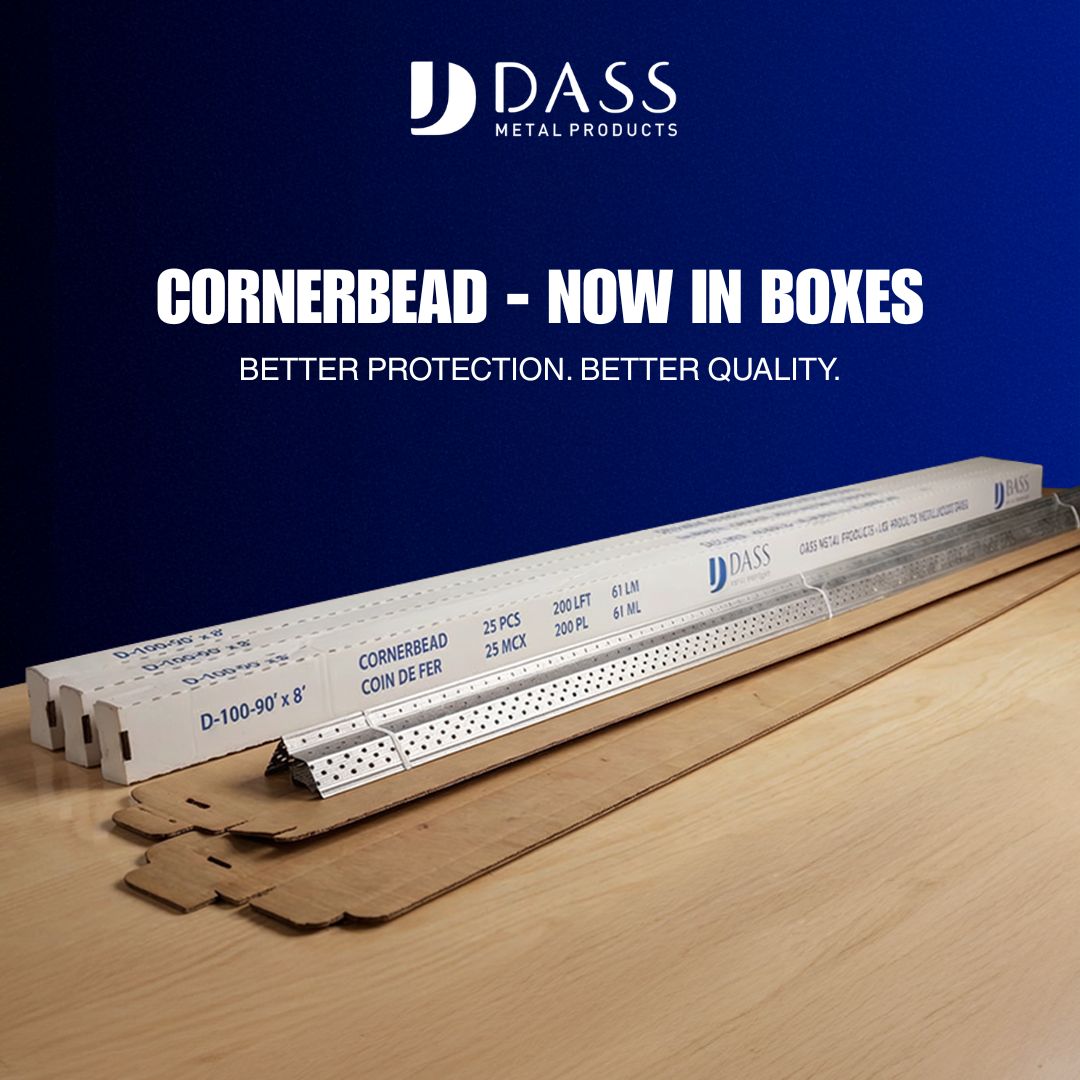
- Finishing trims: J trim, L trim, J track, and 90°/130° cornerbead.
Related reinforcement for adjacent scopes often includes welded wire mesh and rebar in slabs and walls. For reference on placing reinforcement near partitions, see this practical overview of foundation wall rebar details.
Local codes, logistics, and scheduling
For projects near 370 New Enterprise Way and across the Regional Municipality of York, plan for seasonal weather swings, inspection lead times, and delivery access windows. Staging steel studs and track close to the workface and sequencing by zone keeps crews productive even during peak indoor construction months.
Local considerations for 370 New Enterprise Way
- Coordinate deliveries to avoid peak traffic near the Highway 50 – Zum Queen Stop EB corridor; schedule off‑peak drops when possible.
- Winter months shorten daylight; plan interior framing to capitalize on enclosed, heated zones and keep adhesives within temperature ranges.
- Inspection timing varies by municipality; pre‑bundle wall type documentation so AHJs can verify head‑of‑wall and firestopping quickly.
On multi‑story work, a zone‑based plan—core, perimeter, then interior—reduces material handling. When elevators aren’t live, rolling carts sized to hallway widths cut travel time. We routinely stage steel by floor and sequence deliveries so framing begins as soon as areas are weather‑tight.
Case studies and real‑world examples
Across office, healthcare, and multifamily projects, consistent stud gauges, deep track at slabs, and disciplined head‑of‑wall detailing reduce rework. The fastest crews pair zone‑based deliveries with resilient channel standards, hitting STC goals and keeping inspections clean on the first pass.
- Office tenant fit‑out (11 floors): Using deep floor track and pre‑cut jamb studs, crews reduced layout corrections and stood 300+ linear feet per day per team.
- Outpatient clinic: Specified resilient channel at exam rooms. Standardized screw spacing and avoided short‑circuiting, achieving STC targets verified by field tests.
- Multifamily corridors: Head‑of‑wall slots preserved a 3/4‑in. deflection gap under long‑span decks, preventing board crushing after live‑load cycles.
- Adaptive reuse: U‑Flex track formed tight radii for a lobby feature wall; consistent stud segmentation delivered a smooth curve with minimal skim.
For more field‑tested guidance, review our steel studs guide and our practical framing walkthrough.
Steel vs. wood interior partitions (comparison)
Steel studs deliver straighter walls, consistent dimensions, and simpler fire and acoustic detailing compared with wood. Wood may suit short runs or small residential remodels, but commercial and multifamily teams prefer steel for speed, repeatability, and compliance.
| Factor | Steel Stud Partitions | Wood Stud Partitions |
|---|---|---|
| Straightness/plane | Very consistent; minimal shimming | Variable; crowns and cupping need shims |
| Fire resistance | Simple rated assemblies using 5/8 in. gypsum | More variables; charring and shrinkage dynamics |
| Acoustics | Easy STC 50+ with RC and mineral wool | Achievable but sensitive to fastener/spacing choices |
| Movement at head | Slotted track enables vertical deflection | Custom detailing required for slip joints |
| Material variability | Low; engineered profiles and gauges | Higher; moisture and species differences |
| Typical spacing | 16 in. o.c.; 24 in. o.c. when permitted | 16 in. o.c. common in light commercial |
| Field cutting | Snips or cold‑cut saws, no odors | Saws; dust management needed |
Frequently Asked Questions
Common questions focus on spacing, deflection, acoustic details, and when to use specialty studs or tracks. The answers below give clear, code‑aligned guidance you can apply on today’s jobsite.
What is the standard spacing for interior steel studs?
Most interior partitions use 16 inches on center for predictable board support. Some designs permit 24 inches on center for light finishes or shorter spans. Always follow the wall type schedule and confirm that stud gauge, height, and board layers match the spacing assumption.
Why do I need slotted deflection track at the head of wall?
It provides a vertical slip joint so the structure can move under live loads or thermal changes without crushing the gypsum. The studs fasten to the slotted track per the clip/fastener schedule, preserving the clearance—often up to 3/4 inch—needed for safe movement.
How does resilient channel improve sound ratings?
Resilient channel decouples the gypsum from the studs, breaking vibration paths. Combined with mineral wool and double‑layer 5/8‑inch board, it commonly achieves STC ratings above 50 for multifamily and office partitions. Correct screw placement is critical to avoid short‑circuiting the system.
When should I choose deep track over standard track?
Deep track is helpful when slabs vary in elevation or you want easier stud insertion and shimming. It increases tolerance for minor floor variations and helps maintain plane. Use deep track at long corridor runs, tall walls, or anywhere precise alignment matters.
Do interior partitions ever require structural studs?
Yes—tall walls, high load concentrations (like large door frames), or interior shear requirements can trigger heavier gauges and structural details. Review the drawings and specifications; when in doubt, consult engineering before substituting heavier members.
Key takeaways and next steps
Build interior partitions faster by standardizing layouts, using gauge‑appropriate studs, and preserving head‑of‑wall movement. Stage materials by zone, verify fastener schedules, and document wall types so inspections clear on the first pass.
- Use light‑gauge steel studs and deep track to stand straighter walls faster.
- Maintain deflection slots and resilient channel details to protect finishes and acoustics.
- Sequence deliveries by floor and zone to cut handling time.
- Document wall types with photos before close‑in.
For more detailed walkthroughs, explore our step‑by‑step framing article and our dimensions guide. If you’re planning a complex layout, this practical take on basement framing planning shows how field sequencing improves outcomes.
Need a second set of eyes on your wall types? Our engineering team in Vaughan supports Ontario, Canada, and U.S. projects with gauges, spans, and head‑of‑wall details you can build fast. Let’s review your drawings and align on the fastest path to close‑in.
For scope coordination that touches reinforcement, this primer on foundation wall rebar layout can help you visualize hand‑offs. For code‑minded readers, an at‑a‑glance summary of local framing do’s and don’ts is outlined in this field code checklist.