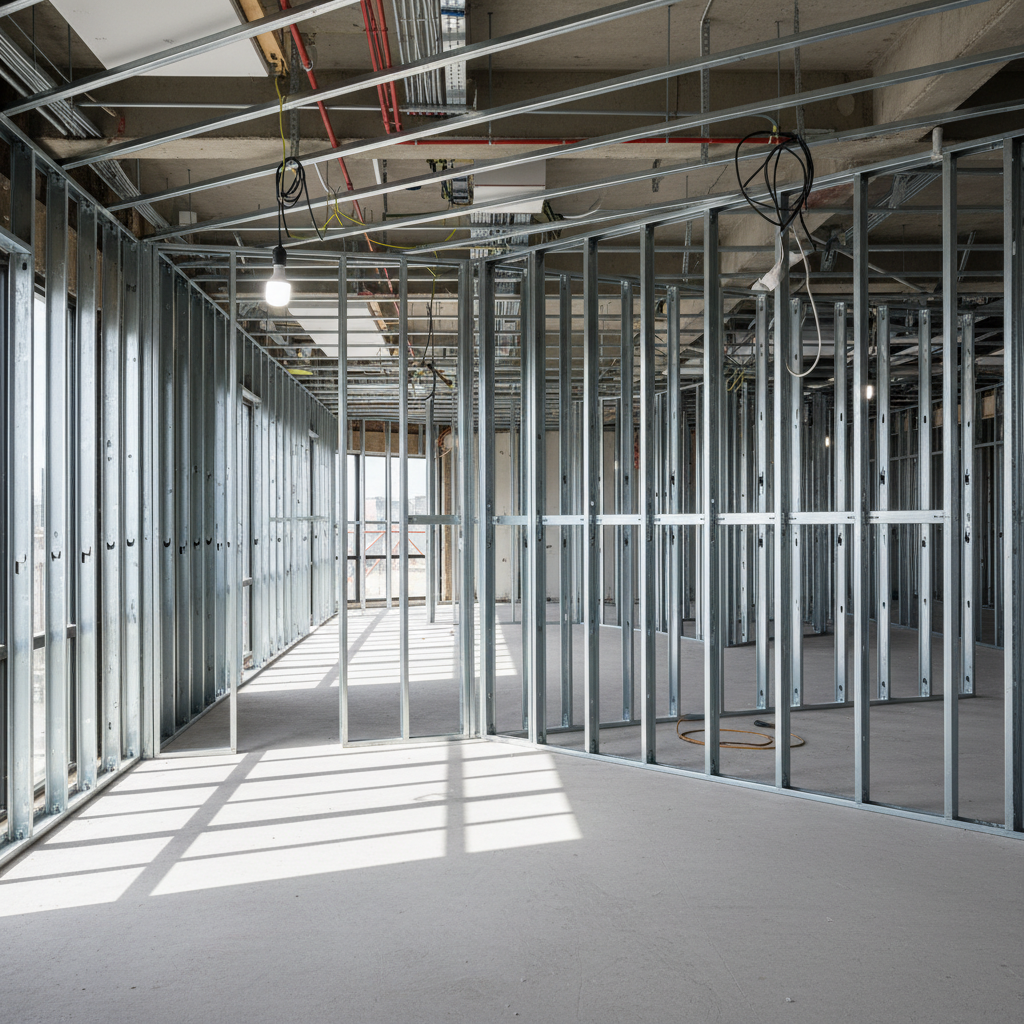
Metal framing channel refers to cold-formed steel profiles—such as bridging/carrying channel, resilient channel, and furring channel—used to stiffen, align, and acoustically decouple walls and ceilings. From our base in 370 New Enterprise Way, Dass Metal Products supplies engineered channels that improve build speed, code compliance, and finish quality for interior framing across Ontario, Canada, and the United States.
By Navjot Dass • Dass Metal Products
Last updated: May 11, 2026
Above-Fold: Why Channels Matter + What You’ll Learn
Use metal framing channels to control stud movement, improve drywall finish, and speed installation. The right channel—bridging, furring, or resilient—adds stiffness, alignment, or sound isolation where you need it, reducing callbacks and punch-list work while keeping schedules on track.
Here’s the thing: walls and ceilings don’t forgive sloppy alignment. Channels make cold-formed steel frames behave—fast.
- What a metal framing channel is and where each type fits
- How channels cut rework and speed inspections
- Best-practice spacing, fastening, and QA checks
- When to choose resilient vs. furring vs. bridging channel
- How slotted deflection track protects drywall at the head
- Field-tested tips from our engineering team in 370 New Enterprise Way
Table of contents
- Overview
- What is a metal framing channel?
- Why channels matter
- How channels work
- Types, methods, approaches
- Best practices
- Tools and resources
- Case studies and examples
- FAQ
- Key takeaways
- Conclusion & next steps
- Related articles
Overview: Metal Framing Channel at a Glance
Metal framing channels are auxiliary cold-formed steel shapes that add bracing, leveling, and acoustical performance to stud-and-track assemblies. Pair them with quality studs, tracks, and clips to reduce wall waviness, control torsion, and meet acoustic or movement criteria without slowing down install crews.
Think of channels as inexpensive insurance for straight walls, quiet rooms, and clean reveals. When paired with proper tracks and clips, they transform how walls perform under load, foot traffic, or building movement.
- Bracing and alignment: Bridging/carrying channel ties studs together to resist twist and bow.
- Leveling plane: Furring channel creates a flat surface for board or finishes over uneven substrates.
- Acoustics: Resilient channel decouples gypsum from studs, improving sound isolation.
- Movement: Slotted deflection track lets the structure move independently of non-load-bearing walls.
- Compatibility: Integrates with standard and deep track, light and heavy gauge studs, and engineered clips.
What Is a Metal Framing Channel?
A metal framing channel is a cold-formed steel profile used with studs and tracks to brace, level, or acoustically isolate walls and ceilings. Common formats—bridging/carrying channel, furring channel, and resilient channel—solve different problems and install with screws or clips.
In our work manufacturing Canadian steel studs and interior framing components, we see channels dramatically reduce drywall finishing issues. They tame stud rotation, straighten planes, and help meet acoustic criteria without exotic assemblies.
- Bridging/Carrying channel: Runs horizontally through stud punchouts to limit lateral movement.
- Furring channel: Provides a uniform mounting surface over masonry, concrete, or uneven frames.
- Resilient channel: A spring-like profile that decouples gypsum from the structure to reduce flanking paths.
- Where used: Tenant fit-outs, schools, healthcare, hospitality, and anywhere straight, quiet walls matter.
Here’s what most people don’t realize: a few well-placed channels can erase hours of skim-coating and sanding. That’s schedule you get back.
Why Metal Framing Channels Matter
Channels save time, stabilize walls, and protect finishes. They reduce stud rotation, flatten surfaces before drywall, and isolate sound—all of which lower rework, speed inspections, and help meet design goals without reinventing the assembly.
We build framing systems every day, so we see the same pain points repeat: uneven studs, cracked joints at deflection points, and rooms that transmit more sound than intended. Channels tackle each issue head-on.
- Fewer callbacks: Straighter walls and protected head-of-wall joints mean fewer finish repairs.
- Faster board install: A truer plane lets tapers fly—less fighting with proud studs.
- Predictable acoustics: Resilient channel creates reliable decoupling without complex clips.
- Better inspections: Braced studs read solid under laser lines and deflection gaps look intentional.
- Team alignment: Clear, repeatable details reduce interpretation errors between trades.
How Metal Framing Channels Work
Channels change how forces move through a wall. Bridging restrains torsion, furring creates a uniform plane, and resilient profiles interrupt vibration paths. Together, they stabilize studs, protect joints at movement points, and cut sound transmission for more predictable performance.
The physics is simple but powerful.
- Bridging/carrying channel: Adds a lateral tie between studs so loads distribute across a group, not one member.
- Furring channel: Moves the attachment plane forward, averaging out irregularities and accommodating insulation or services.
- Resilient channel: Introduces a compliant connection that reduces direct vibration transfer into gypsum layers.
- Deflection track: Slots at the head allow vertical structural movement while keeping gypsum intact.
On site, the result is tangible: frames feel solid, fasteners bite consistently, and finished surfaces read straight under raking light.
Types, Methods, and Approaches
Choose bridging channels for lateral bracing, furring channels for flat planes, and resilient channels for sound isolation. Use deep or slotted tracks where height, movement, or load demands require them. The best assemblies mix types to meet structural and acoustic goals.
Bridging/Carrying Channel (Alignment + Lateral Bracing)
- Primary use: Controls stud twist and bow; improves screw engagement and drywall flatness.
- Installation: Thread through stud punchouts, then fasten with bridging clips or self-drilling screws.
- Spacing guide: Often 48–60 inches vertically in non-load-bearing walls; tighten in high-traffic or tall partitions as required by design.
- Where it shines: Corridors, long runs, walls carrying cabinets or wall protection, and any partition with visible raking light.
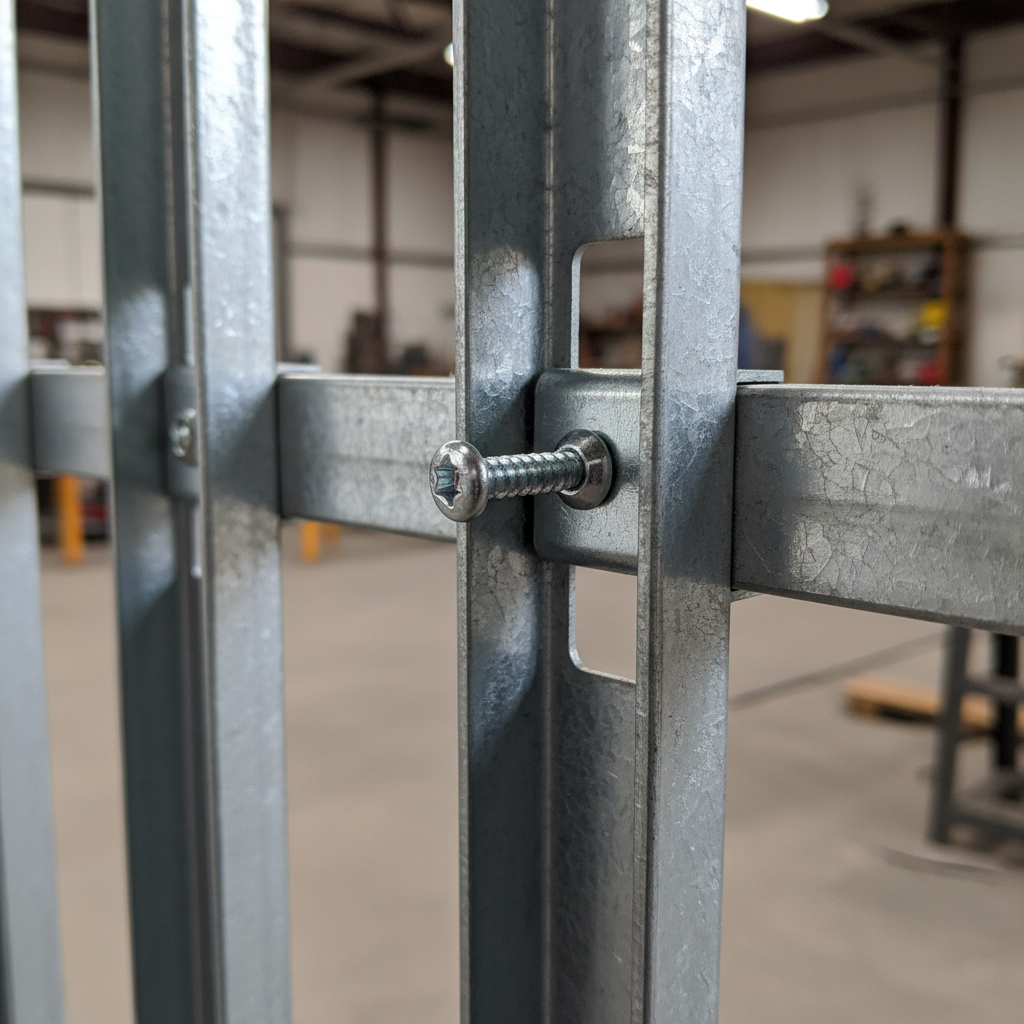
For Ontario hospital corridors, we frequently combine bridging channel with engineered metal framing systems so handrail impacts don’t telegraph into joints. The extra restraint helps maintain finish integrity in high-abuse zones.
Furring Channel (Leveling + Clearance)
- Primary use: Create a new attachment plane over uneven substrates; provide chase space for services or insulation.
- Installation: Run perpendicular to studs or over masonry; shim as needed to establish a true plane.
- Spacing guide: Commonly 16 or 24 inches on center; follow board manufacturer limits.
- Where it shines: Retrofits, demising walls over block, and areas demanding impeccable flatness.
See our dedicated product page for common profiles and uses of furring channel.
Resilient Channel (Acoustical Decoupling)
- Primary use: Reduce direct mechanical coupling between studs and gypsum layers.
- Installation: Horizontal on walls, perpendicular to ceiling joists; one face attaches to studs, the other supports board.
- Spacing guide: Follow drywall manufacturer limits; keep fasteners out of studs to preserve decoupling.
- Where it shines: Multi-family, hospitality, clinics, and offices where privacy matters.
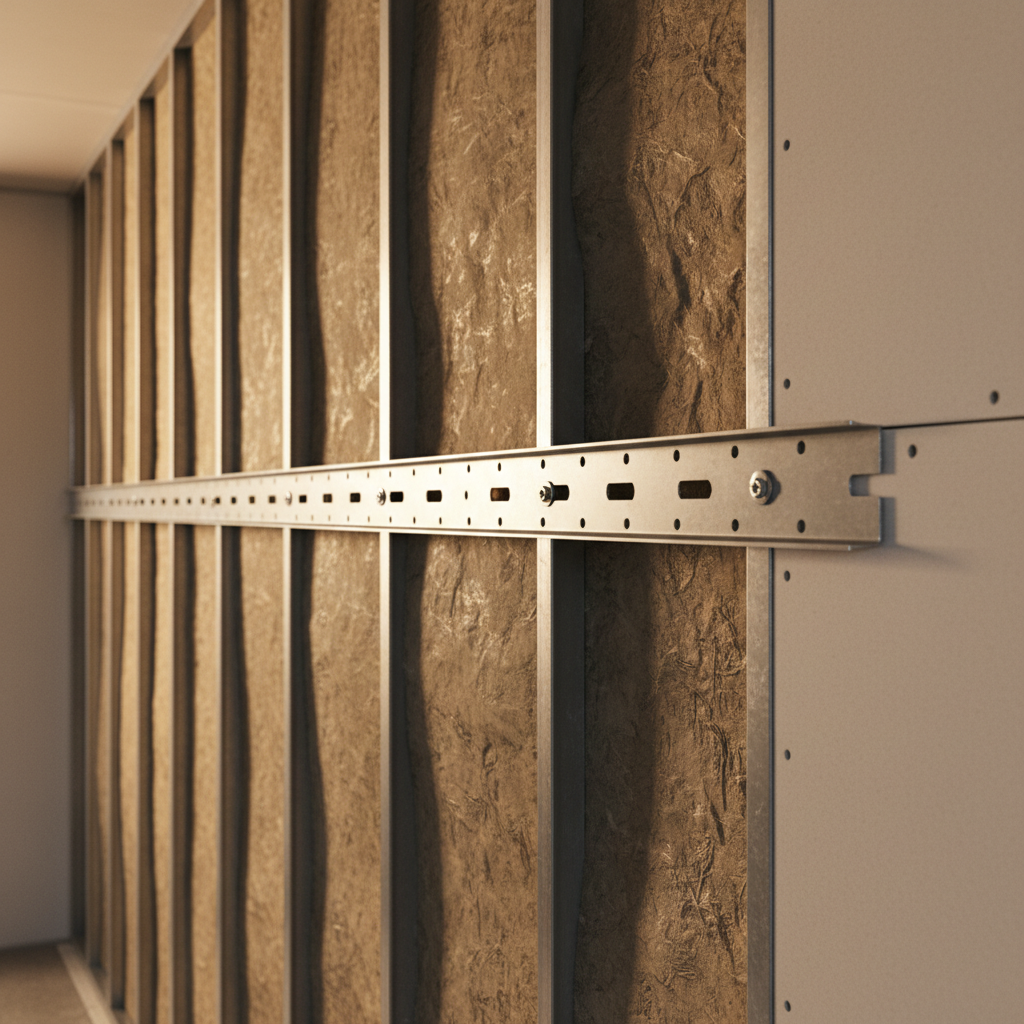
We often pair resilient channel with mineral wool in clinic exam rooms to help confidential conversations stay that way. It’s a simple, proven upgrade when specified and installed correctly.
Deep Track (Tolerance + Height)
- Primary use: Provide extra leg depth to capture studs, absorb tolerances, or support taller non-load-bearing walls.
- Installation: Use with compatible stud sizes; verify fastener edge distances and clip details for tall partitions.
- Where it shines: Long runs, uneven slabs, and conditions needing more capture at the base or head.
Deep track is a quiet hero for keeping lines straight when substrates wander. It gives installers the wiggle room they need without compromising restraint details.
Slotted Deflection Track (Movement + Finish Protection)
- Primary use: Allow vertical structural movement at the head-of-wall while maintaining drywall integrity.
- Installation: Fasten studs within track slots using approved fasteners; maintain specified deflection gaps and sealants.
- Where it shines: Any non-load-bearing wall under a moving structure—typical for interior partitions.
For a deeper dive into head-of-wall details, see our guide on slotted deflection track.
Drywall Channels vs. Strut Channel
Don’t confuse drywall framing channels with utility strut (electrical/mechanical support). They serve different masters.
| Feature | Drywall Framing Channels | Strut Channel (Utility) |
|---|---|---|
| Primary function | Brace studs, level surfaces, isolate sound | Support MEP components, racks, hangers |
| Common types | Bridging, furring, resilient | Slotted/solid U-channel, spring nuts, fittings |
| Attachment | Screws, framing clips | Bolts, clamps, fittings |
| Design scope | Interior wall/ceiling performance | Equipment and service support |
Use the right tool: drywall channels shape the surface and behavior of partitions; strut supports systems.
Best Practices (From Our Engineering Team)
Lay out channels early, keep spacing consistent, and protect acoustical intent. Pre-punch studs help speed bridging; verified deflection gaps protect finishes. A short pre-task briefing and a laser check at each lift prevent most alignment issues.
Planning and Layout
- Define intent by zone: Identify runs needing acoustics vs. straightness vs. movement tolerance.
- Pre-mark locations: Snap lines for channel elevations and mark stud faces for crews.
- Coordinate MEP: Keep furring thicknesses consistent so device rings and trims finish flush.
- Use pre-punch: Where available, align bridging channels through factory punchouts to save drilling.
Installation Details
- Fasteners: Self-drilling screws sized to gauge; avoid over-driving on resilient channel.
- Orientation: Verify resilient channel leg orientation per manufacturer; wrong way defeats decoupling.
- Edge distances: Respect minimums at clips and ends to maintain capacity.
- Deflection gaps: Maintain specified head gaps and seal with approved materials.
Quality Control
- Laser check: Scan for proud studs before boarding; adjust with furring as needed.
- Sample mock-up: Build a small bay to validate spacing, fasteners, and acoustic details for sign-off.
- Documentation: Photograph head-of-wall slots before concealment for closeout and warranty files.
For a broader context on framing discipline, see our interior wall framing mistakes checklist and our overview of why steel framing matters.
Tools and Resources (Specs, Tables, and Checklists)
Pair channels with the right studs, tracks, and clips—then confirm spans and spacing against load tables. Field-friendly checklists and estimator notes keep details consistent across crews and shifts.
- Stud and track selection: Start with light gauge for non-structural partitions; escalate to heavy gauge for height or load.
- Load/deflection checks: Confirm allowable spans and serviceability before committing layouts.
- Acoustics notes: If using resilient channel, protect decoupling at every penetration and backer.
- Estimator guidance: Practical walk-throughs—like this framing estimator primer—help align takeoffs with field reality: metal stud estimating basics.
Explore our framing system considerations in the metal framing systems guide and product specifics for furring channel profiles. For head-of-wall movement, reference the slotted track guide our team assembled for installers and specifiers.
Case Studies and On-Site Examples
Real projects show where channels pay off: long corridors, acoustic suites, and retrofits over irregular substrates. When layouts, gauges, and clips are coordinated up front, crews move faster and finishes read flatter—especially under raking light.
Healthcare Corridor Retrofit (Ontario)
- Challenge: Existing slab variations telegraphed into wavy partitions along a long corridor.
- Solution: Deep track at base, bridging channel at 48-inch intervals, furring to true the plane.
- Outcome: Faster board hang, straighter handrail lines, fewer joint repairs post-punch.
Pairing disciplined framing with the right accessories matters more than any single product. It’s the system that wins.
Office Tenant Fit‑Out (370 New Enterprise Way Projects)
- Challenge: Speed-to-open demands with mixed STC targets between collaboration zones and focus rooms.
- Solution: Resilient channel on critical walls, mineral wool, and consistent fastener discipline.
- Outcome: Predictable acoustics and punch-list shrink, even with overlapping trades.
Our team in 370 New Enterprise Way frequently supports GCs with pre-install huddles so crews protect the acoustical intent while keeping pace.
School Modernization (Cross-Border Delivery)
- Challenge: Uneven block walls in classrooms required a flat finish quickly.
- Solution: Furring channel over masonry, bridging at stud lines for adjacent partitions.
- Outcome: Clean finish under strong daylight; boards landed without fighting the substrate.
Where slab elevations varied room to room, deep track absorbed the tolerance so walls lined up with doors and glazing.
Local considerations for 370 New Enterprise Way
- Plan deliveries around peak construction seasons in 370 New Enterprise Way; coordinate channel, track, and stud drops to reduce double-handling on busy sites.
- Winter dampness can affect taping schedules; using furring channel to create an air space helps finishes dry more evenly in colder months.
- For fast-turn interiors, align channel elevations with typical ceiling grid heights common in regional office fit-outs to speed layout and inspections.
Need a second set of eyes? Our engineers can review your wall types and suggest channel spacing, gauges, and compatible clips. Start with our metal framing systems guide, then reach out for a quick consult.
Frequently Asked Questions
Get direct answers to the questions contractors ask most about bridging, furring, resilient, and head-of-wall channels. Each response is concise so your crew can act immediately.
What does bridging channel do in a stud wall?
Bridging channel ties studs together to resist twisting and bowing. It stabilizes the frame so drywall lands on a flatter plane, which speeds hanging and reduces finish repairs. Install through stud punchouts with clips or screws at consistent elevations.
Is resilient channel better than double drywall for sound?
They solve different problems. Resilient channel decouples the board from studs to reduce vibration transfer. Additional layers increase mass. Many acoustic walls use both: resilient channel for isolation plus multiple layers for mass. Detail penetrations carefully to preserve performance.
How far apart should I space furring channel?
Follow the board manufacturer’s limits and project specs. In practice, many walls use 16 or 24 inches on center. For ceilings or heavier finishes, tighten spacing. Keep lines straight, and shim as needed for a flat plane before boarding.
When do I need slotted deflection track?
Use slotted deflection track whenever a non-load-bearing partition sits under a structure that moves—common in most buildings due to live loads and thermal changes. The slots allow vertical movement while protecting the drywall finish at the head-of-wall.
What’s the difference between furring channel and hat channel?
In many regions they refer to similar profiles used to create a leveling plane for finishes. The exact geometry and naming vary by manufacturer. Always match clips and fasteners to the specified profile to maintain capacity and flatness.
Key Takeaways
Use bridging for alignment, furring for flatness, resilient for sound, and slotted track for movement. Lay out channels early, protect acoustical intent, and document head-of-wall slots before close-in to avoid rework.
- Channels are small parts with outsized impact on speed and finish quality.
- Bridging and deep track stabilize tall or long partitions under raking light.
- Resilient channel only works if fasteners avoid studs and penetrations are detailed.
- Furring channel delivers clean planes over uneven block and retrofit surfaces.
- Deflection details protect gypsum so finishes survive building movement.
Conclusion & Next Steps
Pick the channel for the job, verify spacing against specs, and brief crews before first fastener. The payoff is straighter walls, quieter rooms, and faster inspections—results you can measure in fewer punch-list items.
Ready to streamline your next interior framing package? Start with light gauge studs and the right channels, then add slotted track where movement demands it. Explore our guidance on metal framing systems and light gauge steel studs, and reach out if you need a custom profile or engineering review.
Next step: If your scope includes rebar or welded wire mesh for related scopes, our sister teams can help you coordinate sequencing and deliveries—see integrated supply guidance here: rebar stirrups overview and rebar fabrication guide.
Related Articles
Want to go deeper into our Framing cluster? Our team regularly publishes hands-on guides about studs, tracks, channels, and finishing trims—all focused on practical installation details that reduce rework and keep schedules on track.