Steel stud framing is the assembly of cold-formed galvanized steel studs, tracks, and channels used to build noncombustible walls, ceilings, and structural frames. It delivers straight lines, predictable strength, and fast installation. From our facility at 370 New Enterprise Way in Vaughan, Dass Metal supplies engineered studs and tracks used across the United States and Canada.
By Navjot Dass • Last updated: June 17, 2026
Start here: your steel stud framing game plan
Use a clear, repeatable plan: confirm design criteria, choose the right studs and tracks, lay out with lasers, stage materials, then frame methodically from track to studs to bridging. Document fastener patterns and inspections. This sequence prevents rework, keeps schedules tight, and produces code-compliant walls and ceilings.
- What you’ll learn: definitions, sizing, layout, fastening, deflection, bracing, and acoustic decoupling.
- Who this is for: builders, drywall and framing contractors, architects, engineers, and construction managers.
- Why trust this guide: CSSBI-certified manufacturing, engineering support, and 40+ years of steel framing experience.
- Table of contents:
- At a Glance • What Is It? • Why It Matters (2026)
- How It Works • Types & Components • Best Practices
- Tools & Resources • Local Planning • Case Studies • FAQ • Key Takeaways
At a Glance
Steel stud framing replaces combustible wood with precise, cold-formed steel profiles—studs, tracks, and channels—that create straighter, lighter, and noncombustible walls and ceilings. It speeds layout, resists warping, and simplifies inspections. Standardized gauges and dimensions integrate cleanly with drywall, sheathing, and finishes for repeatable quality.
Think of the system as three layers working together: tracks define boundaries, studs carry loads and align drywall, and bracing/bridging controls lateral movement. When selected and installed correctly, the result is consistent performance and clean finishes across commercial interiors, schools, healthcare, hospitality, and mid-rise façades.
- Performance: predictable strength-to-weight, corrosion resistance, and noncombustibility.
- Speed: fast layout with lasers and snap lines; easy handling; fewer adjustments around MEP.
- Quality: straight walls; minimal callbacks from shrinkage, twisting, or screw pops.
To go deeper on system-level thinking, see our steel framing systems guide covering how channels, clips, and trims work together in demanding assemblies.
What is steel stud framing?
Steel stud framing is a building method using cold-formed steel studs and tracks to assemble interior partitions, shaft walls, soffits, ceilings, and exterior curtain-wall or load-bearing frames. Members are roll-formed to tight tolerances and joined with screws, anchors, and clips for code-compliant assemblies.
Members are identified by web depth, flange width, and gauge (thickness). Components include studs, standard track, deep track, slotted deflection track, bridging/carrying channel, resilient channel for acoustics, and a range of clips and trims. Designers select profiles by load, height, spacing, openings, and expected building movement.
- Common applications: tenant fit-outs, hospitals, schools, hotels, corridors, stairwells, elevator shafts, and exterior non-load-bearing façades.
- Typical spacing: 16 or 24 inches on center for interiors; structural work varies by engineering.
- Deflection considerations: head-of-wall deflection is handled with slotted deflection track and compatible clips.
If you’re comparing systems, our primer on steel stud wall framing explains when light gauge members outperform wood and how to plan for fixtures, backing, and penetrations.
Why steel stud framing matters in 2026
Demand is rising for noncombustible, dimensionally stable framing that supports tight schedules and clean finishes. Steel studs deliver repeatability, reduced waste, and compatibility with modern codes and acoustics. In 2026, standardized profiles and robust supply chains help projects stay on schedule despite labor constraints.
Teams face schedule compression, skilled labor gaps, and stricter energy and fire codes. Steel framing addresses these by eliminating moisture-related movement, providing clear limiting heights, and accommodating deflection and drift at floor lines. Assemblies integrate with mineral wool, gypsum, and resilient channels to hit fire and sound targets without redesign.
- Schedule gains: preplanned cuts, lighter handling, and precise studs reduce layout friction around MEP.
- Risk reduction: noncombustible members reduce fire risk during construction and occupancy.
- Performance clarity: published load data and standards simplify engineering reviews and approvals.
Local considerations for 370 New Enterprise Way
- Coordinate morning deliveries around Queen St / Highway 50 to stage bundles close to hoists and main entrances.
- Cold snaps call for interior staging: keep studs dry to avoid ice in tracks during early installs.
- For inspections near Highway 50 – Zum Queen Stop EB, organize submittals by assembly (interior, shaftwall, exterior) to speed review.
For context on interior workflows, review our field notes in interior stud wall framing, including backing, blocking, and fixture coordination tips we see on busy multi-trade sites.
How steel stud framing works: step-by-step
Framing flows from layout to fastening: snap lines, install bottom and top tracks, stand studs, square and brace, then add bridging and blocking. Finish with inspections and documentation. Following this order ensures straight walls, compliant head-of-wall gaps, and clean interfaces with MEP and drywall.
- Preconstruction: verify wall heights, live/dead loads, and drift/deflection limits (e.g., L/240 or as specified).
- Layout: snap chalk lines and laser-plumb control points; mark stud spacing at 16 or 24 inches on center.
- Track install: anchor bottom track; set top track (standard, deep, or slotted deflection) per design.
- Stud install: cut to height; seat flanges fully; check crown and plumb; screw per pattern.
- Openings: frame doors and windows; use king/jack studs and headers sized by span.
- Bridging/Bracing: install carrying/bridging channel, straps, and clips to control buckling.
- Interfaces: coordinate MEP penetrations; add backing for fixtures and accessories.
- Inspection & sign-off: verify fastener patterns, edge distances, and head-of-wall gaps; document with photos.
| Component | Primary purpose | When to choose |
|---|---|---|
| Standard track | Defines wall footprint; seats studs | Typical interior partitions with minimal movement |
| Deep track | Extra stud engagement | Tall walls; increased lateral stability |
| Slotted deflection track | Vertical movement at head-of-wall | Floors with live-load deflection or story drift |
| Bridging/carrying channel | Controls stud buckling | Heights above ~10 ft; wind/seismic zones |
| Resilient channel | Improves acoustics | Multifamily, healthcare, classrooms |
Curious how crews manage layout speed on fast-track projects? We break down sequencing in our practical explainer on steel studs, including tips for staging bundles and reducing trips back to the saw.
Types and components of metal framing
A complete system includes light-gauge non-load-bearing studs, heavy-gauge load-bearing studs, standard/deep/slotted tracks, bridging channels, resilient channels, and specialty clips and trims. Selecting the right combination ensures strength, acoustic control, and clean finishes with fewer callbacks.
Core stud and track families
- Non load bearing steel studs (light gauge): interior partitions, soffits, and ceilings where gravity loads are minimal.
- Load bearing stud framing (heavy gauge): cold-formed structural walls and mid-rise framing engineered to loads.
- Standard track: baseline two-leg channel; fasten to slab and structure to seat studs.
- Deep track: taller legs increase engagement; helpful for tall walls and lateral control.
- Slotted deflection track: elongated slots at head-of-wall allow floor movement without drywall cracking.
Stability and acoustic control
- Bridging / carrying channel: runs through stud punch-outs; ties studs together to reduce buckling.
- Resilient channel: decouples drywall from studs to improve STC in multifamily and healthcare spaces.
- Windbrace and straps: add racking resistance in corridors and higher wind exposure zones.
Trims, clips, and specialty profiles
- U-Flex track: pre-notched track for curves and arches—speeds complex layouts with consistent radii.
- Shaftwall / CH stud: elevator and stair shafts using fire-rated gypsum liner panels.
- Furring channel, Z-Bar, L track: create plenum spaces, level surfaces, and carry finished materials.
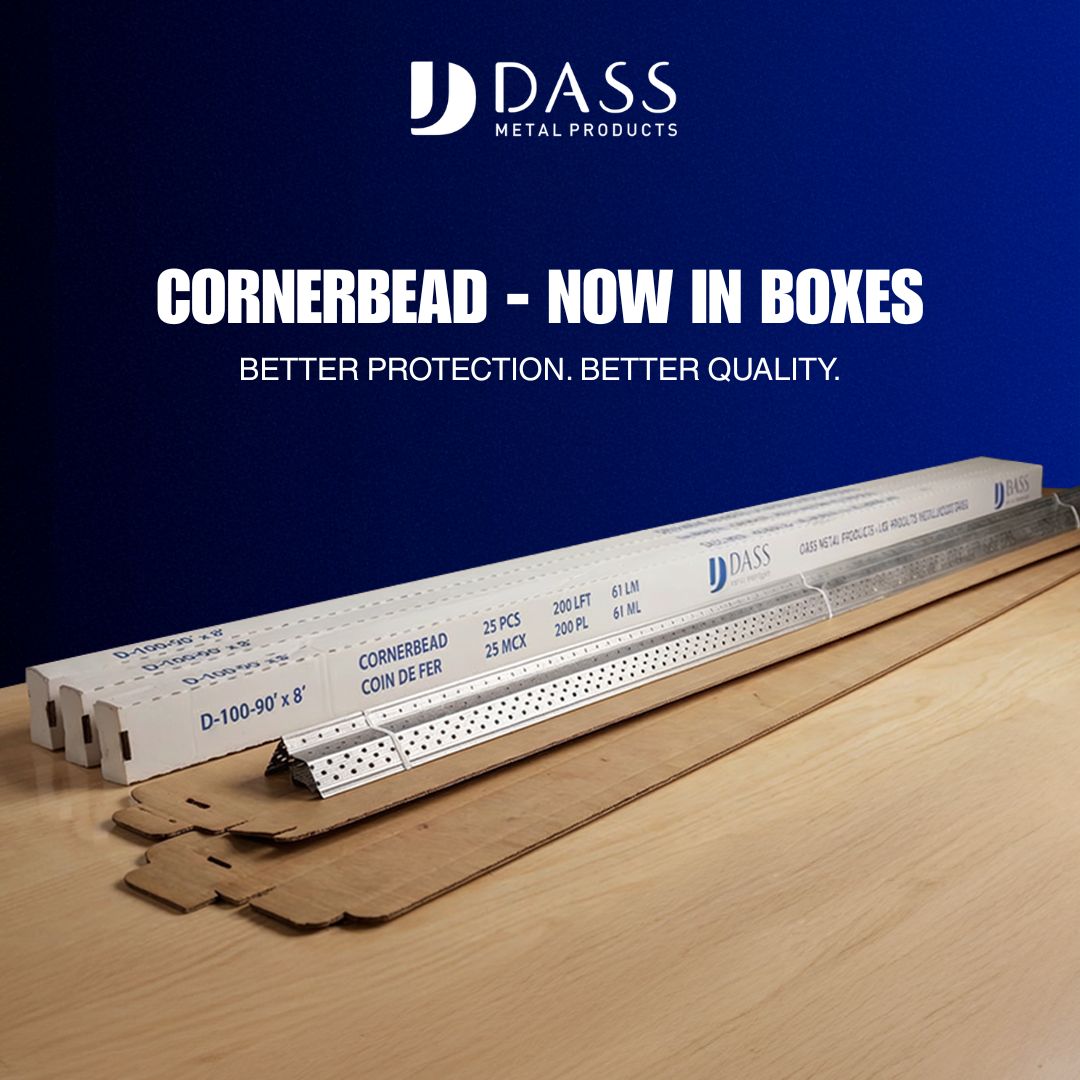
- 90°/130° cornerbead, J/L trims, J track: protect edges and deliver durable corners and reveals.
- Clips (deflection side, webslide, bridging): manage movement, connections, and fast installation of lateral bracing.
Match components to assemblies. For example, pair slotted deflection track with compatible deflection clips at the head-of-wall, and specify resilient channel where STC targets are called for. Curved corridors install faster with U-Flex track versus field-notching standard track—another place where planning saves hours.
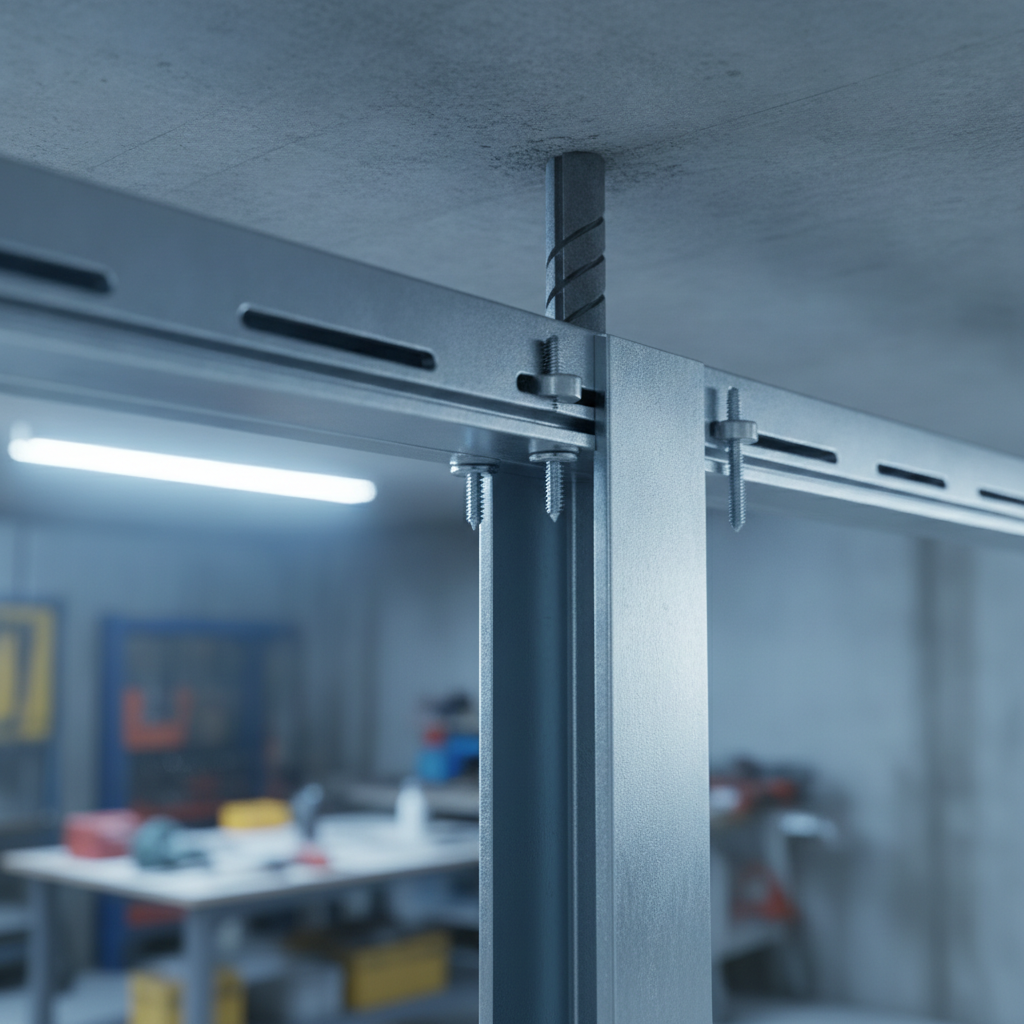
For heavy-gauge examples, see this overview of load-bearing stud framing and how bracing and clips come together on mid-rise exteriors.
Steel stud framing best practices
Follow a disciplined approach: verify loads and limiting heights, choose compatible tracks and clips, control stud buckling with bridging, and document fastener patterns. Maintain head-of-wall gaps and decouple gypsum where sound ratings apply. These habits help projects pass inspections on the first visit.
Field-proven tips
- Confirm design criteria: wall height, spacing, axial/bending loads, and deflection limits (e.g., L/240 or L/360).
- Mind the head-of-wall: use slotted deflection track and matching clips; maintain the specified gap and avoid hard-fastening through slots.
- Stiffen tall walls: add carrying/bridging channel at manufacturer-recommended intervals.
- Acoustic decoupling: run resilient channels perpendicular to studs; avoid short-circuiting with back-to-back screws.
- Fasteners matter: respect edge distances and patterns; use corrosion-resistant screws where humidity is present.
- Document everything: pre-pour photos, anchor spacing, clip IDs, and inspection sign-offs.
For a quick refresher on limiting heights and common sizes, bookmark our reference on metal stud framing sizes—handy during takeoff and preconstruction meetings.
Tools, specs, and resources for submittals
Successful submittals combine manufacturer brochures, load tables, MSDS, and installation guides that match your assemblies. Package documents by wall type—interior, shaftwall, or exterior—and highlight gauges, spacing, and deflection details. Clear submittals speed approvals and prevent mid-project substitutions.
- Brochures and catalogs: include studs, tracks, channels, trims, and clip data with dimensions and gauges.
- Load tables (imperial/metric): axial, bending, and limiting heights by gauge and spacing.
- MSDS and coatings: corrosion protection details for humid or exterior zones.
- Installation guides: resilient channels, shaftwall, deflection, and bridging details.
- Engineering support: collaborate with experienced engineers for unusual spans, drift limits, or custom profiles.
Looking for a condensed playbook? Our team compiled action steps and framing tips in stud wall framing tips you can share with foremen before mobilization.
Planning in 370 New Enterprise Way and the Regional Municipality of York
Projects near 370 New Enterprise Way in the Regional Municipality of York benefit from local manufacturing, short delivery routes, and fast engineering feedback. On busy multi-trade sites, nearby supply reduces downtime and keeps framing crews productive through coordinated drops during the day.
- Neighborhood advantage: short-haul deliveries reduce staging time and material handling risk.
- Inspection readiness: organize submittals by wall type to streamline plan review and onsite checks.
- Cross-border work: standardized profiles and documentation support U.S. and Canadian projects without redesign.
If your scope includes facades, compare considerations in our field guide to exterior metal stud framing, including sheathing interfaces and bracing patterns for wind and seismic zones.
Case studies and real-world examples
The best proof is in the field. Recent interiors and exterior façades show how standardized studs, tracks, and clips shorten schedules while meeting acoustic and fire ratings. Strategic slotted head-of-wall details prevent cracking and eliminate rework after building movement.
- Healthcare corridor retrofit: 12-foot partitions with resilient channel met STC targets; slotted head track absorbed floor deflection during occupancy, preventing visible joint cracking.
- School addition: deep track and bridging stabilized tall walls; coordinated backing supported casework and signage without change orders.
- Mid-rise facade: heavy-gauge load-bearing studs with correct bracing created clean sheathing lines and faster cladding install across multiple elevations.
- Retail fit-out: U-Flex track delivered smooth curves; coordinated MEP penetrations reduced field cuts and kept layout moving.

For homeowners exploring safe basement upgrades, this practical basement framing guide offers a broad primer on sequencing and safety. For code awareness and inspection readiness, see a concise overview of framing code basics useful during early planning.
Need stamped submittals or a quick spec check? Our engineering team can review gauges, spacing, and head-of-wall details and recommend the right profiles for your schedule. Share drawings and height/spacing for a fast response.
Frequently Asked Questions
Common questions center on sizing, spacing, deflection, and acoustic details. The short answers below help teams avoid redesigns and pass inspections the first time. For project-specific spans and heights, consult load tables and engineering support.
What gauges are typical for interior partitions?
Light-gauge studs are common for non-load-bearing walls. Typical selections range from thinner gauges for low heights to thicker gauges for taller spans or added abuse resistance. Always confirm with published limiting heights and the engineer of record.
How do I handle head-of-wall movement?
Use slotted deflection track at the top and compatible clips that allow the stud to move under live load or drift. Maintain the required gap and avoid hard-fastening through slots so gypsum can flex without cracking.
When is bridging required?
Bridging or carrying channel is recommended for tall walls or where wind and seismic forces could drive lateral buckling. Install at intervals per the manufacturer or engineer of record, tying studs together for stiffness and alignment.
Do resilient channels really improve sound ratings?
Yes—resilient channels decouple drywall from studs to reduce sound transmission. Correct orientation, fastener placement, and avoiding short-circuiting are essential to achieve the intended STC performance in the field.
Key takeaways
Choose the right profiles, respect deflection and fastening rules, and document everything. With standardized gauges, clips, and channels, steel stud framing delivers straight walls, cleaner inspections, and fewer callbacks—protecting schedules and elevating finish quality.
- Confirm loads, heights, spacing, and deflection early—document them in submittals.
- Pair slotted head track with matching clips and maintain the required gap.
- Control buckling with bridging and straps on tall walls.
- Use resilient channel where STC improvements are targeted.
- Package brochures, load tables, and MSDS by assembly to speed approvals.
Conclusion and next steps
Steel stud framing is a fast, reliable way to build noncombustible interiors and mid-rise structures. Align design criteria, select compatible components, and keep documentation tight. This approach protects schedules, helps pass inspections, and improves long-term durability.
If you’re planning interior framing or exterior structural framing, align your submittals with the assemblies in this guide and engage engineering support for unusual spans or drift limits. For a side-by-side view of options, check our comparison in when steel studs beat wood and keep your crews focused on first-pass quality.
Related reading in our Framing hub
Deepen your expertise with focused guides on interior framing, exterior structural framing, acoustic assemblies, and finishing trims. Each article expands on best practices and real-world details for clips, channels, and tracks.
Start with our steel stud wall framing overview, then explore system-level best practices and practical framing estimation workflows you can use on your next project.