Light gauge steel framing details are the specific connections, components, and installation practices that make non-load-bearing and light structural walls perform to code. These include studs, tracks, channels, clips, and acoustic elements that control strength, deflection, fire, and sound. Getting these details right reduces rework, speeds inspections, and improves finish quality across the United States and Canada.
By Navjot Dass — Dass Metal Products
Last updated: 2026-06-28
Overview and Table of Contents
This guide explains the essential light gauge steel framing details—from tracks and studs to deflection, bridging, and acoustics—so your walls pass inspection and perform as designed. Use it to plan, install, and verify interior partitions and light exterior framing with fewer RFIs and punch-list surprises.
Use this complete guide to plan, install, and verify light gauge partitions with confidence. It combines field-tested know-how from our engineering team with practical checklists you can share on site.
- What light gauge steel framing is and how it differs from structural steel
- Why details like deflection, bridging, and resilient channels matter
- How to lay out, assemble, and inspect non-load-bearing walls
- Which tracks, clips, channels, and trims to use—and when
- Best practices that reduce call-backs and drywall cracking
- Field tools, submittals, and QA steps that speed approvals
Jump to a section:
- What Is Light Gauge Steel Framing?
- Why Light Gauge Details Matter
- How Light Gauge Steel Framing Works
- Types, Methods, and Approaches
- Best Practices Checklist
- Tools and Resources
- Case Studies and Examples
- FAQ
- Key Takeaways
- Conclusion and Next Steps
What Is Light Gauge Steel Framing?
Light gauge steel framing is a cold-formed building system that uses thin sheet steel formed into studs, tracks, and channels for interior partitions and light exterior walls. It delivers straightness, fire resilience, and predictable performance when installed to code with correct connections, spacing, and bracing.
In practical terms, “light gauge” refers to non-load-bearing interior walls and certain light structural applications that use cold-formed steel (CFS) members. These components are precision-rolled and punched for consistent quality and fast assembly.
- Core components: studs, standard track, deep track, slotted deflection track, bridging/carrying channel, resilient channel, and framing clips.
- Typical spacing: 16 in. or 24 in. on center (verify against drawings and board requirements).
- Common gauges: light partitions often use 25–20 gauge; heavier or taller walls may require 18–16 gauge per engineering.
- Performance drivers: member sizing, fastening patterns, drift/deflection allowances, bracing, and acoustic isolation strategies.
For a broader context on framing systems, see our high-level overview of structural steel framing systems and our hands-on steel stud wall framing guide.
Why Light Gauge Steel Framing Details Matter
Details control outcomes. Correct track selection, deflection allowances, bridging, and acoustic isolation prevent drywall cracks, door binding, and sound bleed. Well-detailed walls install faster, pass inspections sooner, and reduce change orders—especially on tall partitions and long corridors.
We see the same pattern across projects: small misses at the detail level create big site headaches. A slip track omitted at a slab that moves seasonally. Bridging that’s spaced too far apart. A doorway head without proper deflection clearance. Each issue can cascade into rework and schedule risk.
- Deflection: Movement from wind or live load requires a slip connection at the top of non-load-bearing walls—commonly 1/2 in. to 1 in. total travel, as specified.
- Acoustics: Resilient channel, staggered studs, and sealants help achieve STC targets. Improper fastening can short-circuit isolation.
- Bridging: Carrying channel or stud bracing keeps members from twisting and reduces wall flutter. Spacing is engineer- or spec-driven.
- Fire: Clearances around penetrations, proper fastener patterns, and rated assemblies maintain listings; deviations risk approvals.
For a primer on benefits specific to interior partitions, explore this accessible discussion of benefits of steel in non-load-bearing walls.
How Light Gauge Steel Framing Works
Light gauge framing assembles like a kit: lay out tracks, place studs, brace, and allow for building movement with slip details. Consistency comes from pre-engineered steel profiles, repeatable fastening, and inspection-friendly patterns that tie directly to drawings and submittals.
Below is a practical, field-oriented sequence for a straight, stable, and code-compliant interior partition. Adapt numbers to your drawings and submittals.
- Control layout: Snap lines; confirm wall locations, openings, and control joints. Mark deflection requirements at heads.
- Set bottom track: Standard or deep track fastened per schedule; continuous sill gasket where required for acoustics or fire.
- Install top track: Use slotted deflection track when movement is specified; verify the available slip travel against design drift.
- Place studs: Insert studs at 16 or 24 in. o.c.; rotate into track; do not fasten to slotted track’s vertical legs unless specified.
- Frame openings: Box studs at doors and windows; use jamb studs sized for hardware loads; install headers with slip detail where required.
- Bridging: Add bridging/carrying channel and clips at engineered spacing; plumb and true the wall before sheathing.
- Services: Pre-punch or use factory knockouts for MEP; avoid field cuts that compromise member capacity.
- Sheathing and board: Hang per manufacturer; respect RC orientation and fastener limits to preserve STC ratings.
- Sealants and firestopping: Backer rod, acoustical sealant, and listed firestop systems at perimeters and penetrations.
- Verification: Document fastener spacing, bridging intervals, and slip gaps with quick photos for QA and inspections.
If you’re new to light gauge, our concise light gauge framing guide covers foundational concepts you can share with apprentices and site supervisors.
Types, Methods, and Approaches
Choose components to match performance goals. Standard track for typical partitions, deep track for tall walls or load transfer, slotted track for movement, bridging channel for stability, resilient channel for sound, and specialty clips for drift, bypass, and slab edge transitions.
Studs and Tracks
- Non-Load-Bearing Studs: Light gauge studs for interior partitions; verify depth and gauge to meet wall height and board loading.
- Standard Track: For base/top where no slip is required; height typically matches stud depth.
- Deep Track: Taller legs improve stud engagement on tall walls, corridors, and where added stiffness is desired.
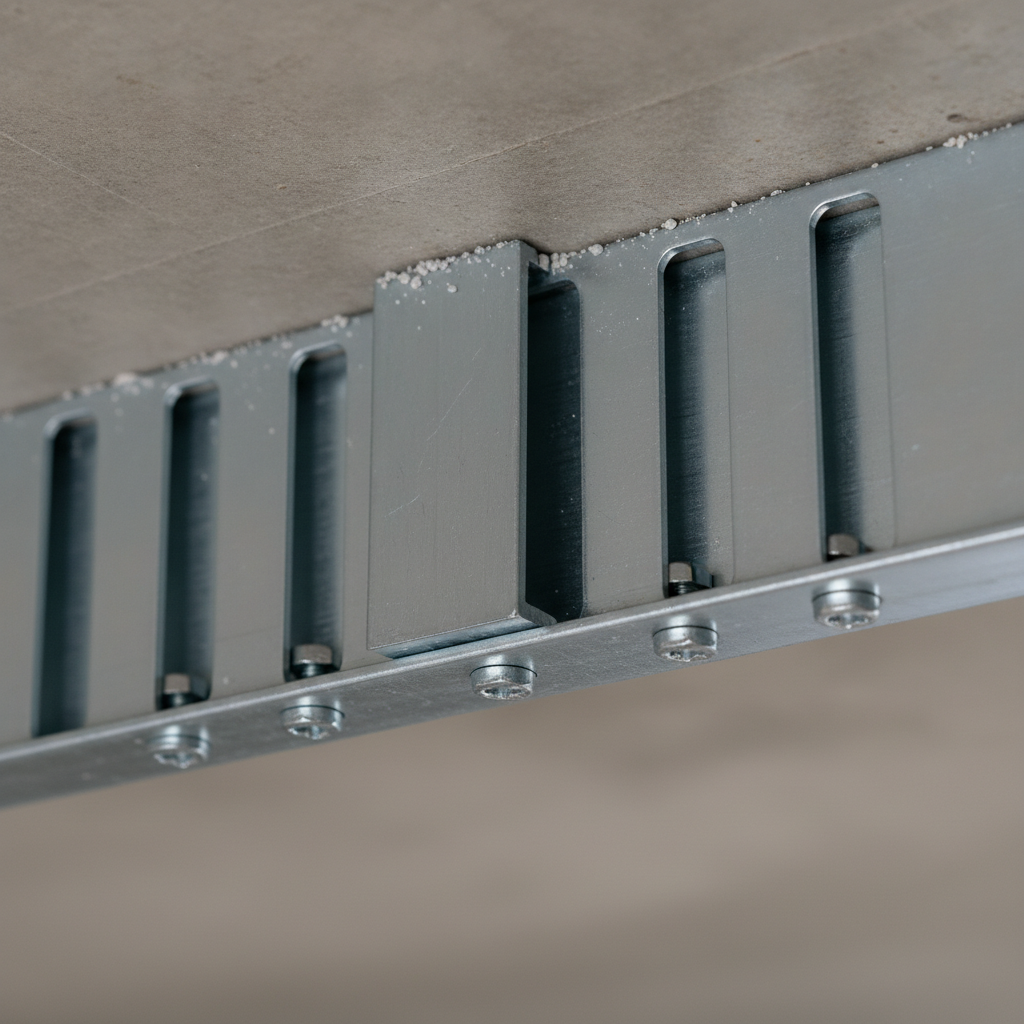
- Slotted Deflection Track: Slots enable vertical slip to accommodate building deflection; pair with proper screw-in-slot practice.
| Track Type | When to Use | Notes |
|---|---|---|
| Standard | Low walls, no slip or drift | Economical; verify deflection isn’t required |
| Deep | Tall walls, corridor runs | Improves capture of stud ends; helps plumbness |
| Slotted Deflection | Any wall under moving structure | Provides 1/2–1 in. typical slip (per spec) |
Bridging and Channels
- Bridging/Carrying Channel: Controls stud twist and panel flutter; spacing per engineering (often 4–8 ft intervals on tall walls).
- Bridging Clips: Pre-engineered connectors that simplify installation and provide repeatable capacity.
- Furring Channel: Levels substrates, creates plenum space, or supports isolation layers behind finishes.
Acoustics and Isolation
- Resilient Channel: Decouples gypsum from framing to raise STC; oriented correctly (stamped leg toward installer) and fastened only to framing.
- Sealants and Gaskets: Perimeter acoustical sealant and sill gaskets reduce flanking paths.
- Staggered Studs/Dual Studs: Increase separation for high-STC partitions in theaters, healthcare, and hospitality.
Openings and Headers
- Jamb Studs: Boxed or back-to-back for door loads; consider reinforcement plates for hardware.
- Slip Headers: Allow vertical movement above doors and windows without binding.
- Deflection Side Clips: Provide lateral restraint while permitting vertical slip at jambs.
Curves and Special Profiles
- U-Flex Track: Forms curves for feature walls and soffits; maintain minimum radius per product data.
- Special Profiles: Custom angles, Z-Bar, and trims resolve tricky transitions and geometry.
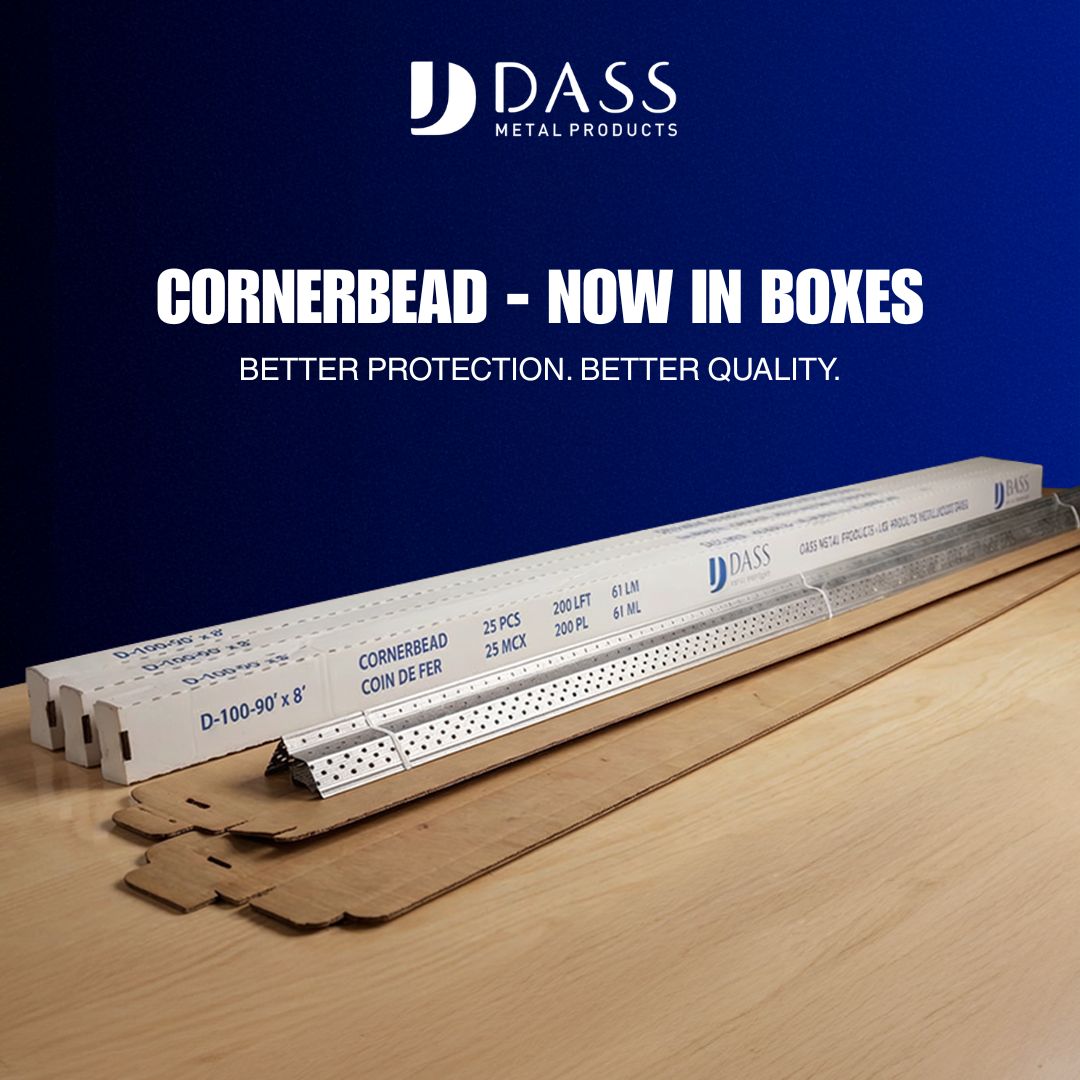
- Drywall Finishing Sections: J trim, L trim, and cornerbead cleanly terminate and protect edges.
Explore practical stud choices and missteps in our light gauge steel studs explainer.
Best Practices Checklist
The fastest path to clean inspections is disciplined installation: correct track type, verified stud gauges, documented bridging, protected acoustics, and measured slip gaps. Use photos to prove compliance and reduce back-and-forth with the design team.
Planning and Submittals
- Confirm wall heights, deflection criteria, and STC goals before procurement.
- Submit product data: studs, tracks, clips, resilient channel, and any specialty profiles.
- Include load tables and fastener schedules in submittals for ready reference.
Installation Discipline
- Use slotted deflection track where movement is specified; verify slot length covers total anticipated travel.
- Do not hard-fasten studs to the vertical legs of slip track unless details require it.
- Install bridging/carrying channel at engineered spacing; add mid-height bridging on tall, narrow stud bays.
- Respect resilient channel rules: correct orientation, spacing, and screw length; avoid short-circuiting into framing.
- Maintain a measurable slip gap (often 1/2–1 in.) above board at deflection heads; do not tape this gap.
- Use jamb reinforcement at heavy doors; include slip detail at headers to prevent binding.
Quality Assurance
- Photograph: fastener patterns, bridging intervals, and slip gaps before board.
- Measure and record: stud spacing, clip counts, and RC layout per room or zone.
- Protect: openings and edge trims from damage prior to finishing trades.
For a field refresher on system basics, skim our quick framing primer.
Need a second set of eyes? Our engineering team has more than 40 years of experience with code-compliant light and heavy gauge framing. Share your wall schedule, and we’ll help you confirm profiles, gauges, and slip details before you order.
Tools and Resources
Speed approvals by organizing data. Keep product brochures, load tables, MSDS, and fastening schedules in a single submittal packet. On site, carry a one-page checklist that verifies track types, stud gauges, bridging, and acoustic measures for each wall type.
- Dass Metal resources: brochures, standards, and load tables in both metric and imperial for quick lookups.
- Field checklist: wall height; stud size/gauge; track type; bridging spacing; RC spacing; sealant notes; firestop references.
- Photo documentation: slip gaps, clip installations, and resilient channel layout before gypsum goes up.
- Coordination tips: mark MEP zones at pre-punched stud knockouts to minimize field drilling.
You can also cross-reference light vs. heavy framing strategy in our heavy gauge framing guide and see application ideas in steel frame houses.
Case Studies and Examples
Small detailing changes deliver outsized results. Curved corridors with U-Flex track, tall lobby walls with deep track and robust bridging, and acoustic suites using resilient channel each show how the right component choice prevents callbacks and accelerates closeout.
Curved Feature Wall (Interiors)
- Challenge: Architect specified a tight-radius curve for a public corridor.
- Solution: U-Flex track with consistent stud spacing and template jigs to hold radius during board install.
- Result: Faster board fit-up and a smooth radius ready for finish without extra skim-coating.
Tall Corridor Partition
- Challenge: 14–16 ft partitions prone to flutter and screw pops.
- Solution: Deep top/bottom track, added mid-height bridging channel, and verified screw patterns.
- Result: Noticeably stiffer wall; clean board seams through first inspection.
Acoustic Suite (Hospitality)
- Challenge: Meet an elevated STC target between guestrooms.
- Solution: Resilient channel with correct orientation and fasteners limited to channels only, plus perimeter sealants.
- Result: Target STC achieved with fewer layers than initially assumed.
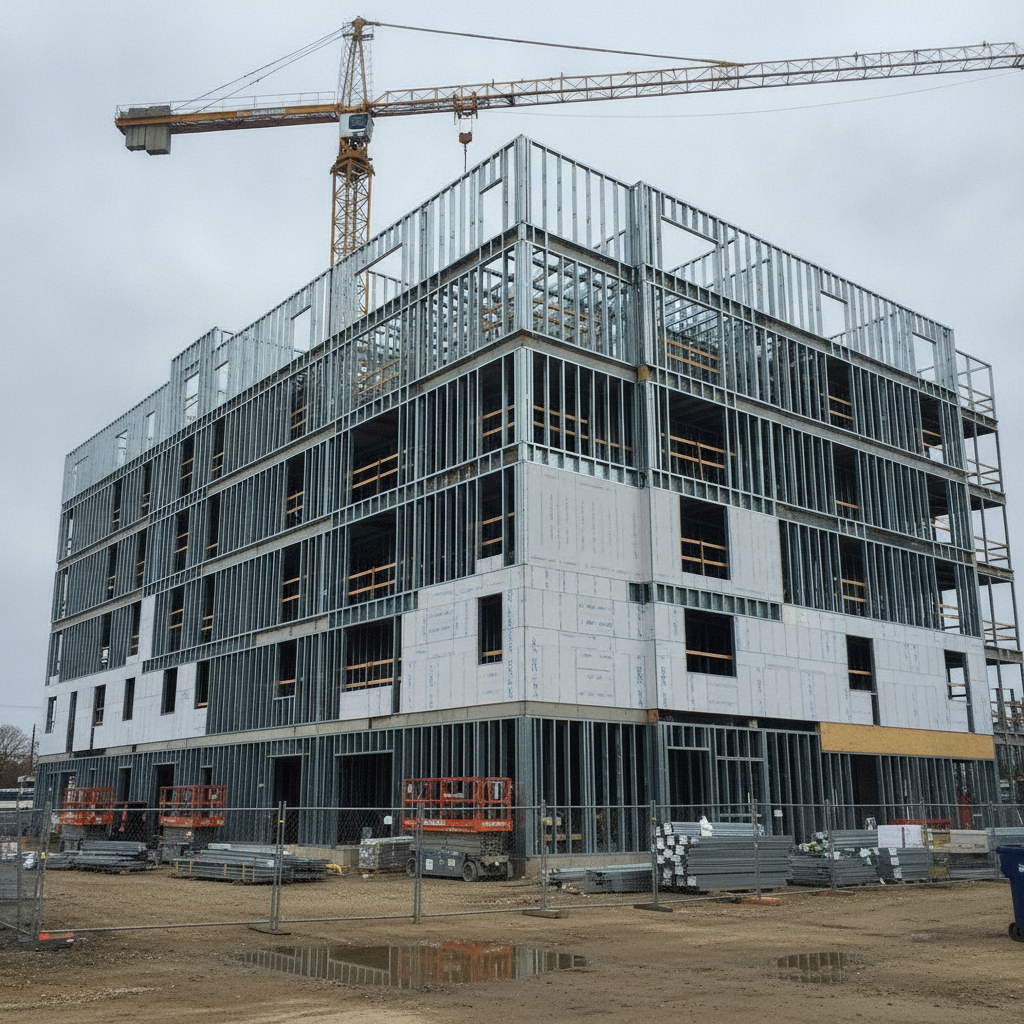
Bypass Framing at Slab Edge
- Challenge: Exterior cold-formed wall needed to bypass slab edges with drift allowance.
- Solution: Deflection clips sized for drift; slot lengths verified; sheathing left clear at slip zones.
- Result: Smooth movement through seasonal cycles; no cracking at floor lines.
For related reinforcement topics on sister scopes, see this overview of retaining wall rebar details for structural coordination.
Frequently Asked Questions
These quick answers cover common field questions about light gauge steel framing details—from slip track use to resilient channel do’s and don’ts. Share this section with installers and inspectors to align expectations before work begins.
When do I need slotted deflection track?
Use slotted deflection track whenever drawings specify vertical movement at the head of a non-load-bearing wall. Typical conditions include floors with live-load deflection, roof expansions, or exterior drift. Verify slot length covers the total required slip and keep a measurable gap above the gypsum.
How far apart should bridging channel be installed?
Bridging spacing is engineer- or spec-driven based on wall height, stud gauge, and loads. On tall interior partitions, you’ll often see intervals between 4 and 8 feet. Follow project documents and photograph each run for QA before closing the wall.
What are the most common resilient channel mistakes?
Common errors include installing RC backward, screwing gypsum through RC into studs (short-circuiting), spacing channels incorrectly, and using fasteners that are too long. Always orient RC correctly, fasten drywall only to the channels, and confirm spacing with the board manufacturer.
Can I hard-fastened studs into slotted track?
Not unless the detail requires it. Hard-fastening studs to the vertical legs of a slip track eliminates the intended movement and can lead to cracking or door binding. Follow the project’s deflection detail and use screws in the slots as specified.
What documents should be in my framing submittal?
Include product data for studs, tracks, channels, and clips; load tables; MSDS; fastening schedules; and any acoustic assemblies. Add a one-page field checklist that verifies track type, stud gauge, bridging spacing, and resilient channel layout for each wall type.
Key Takeaways
Light gauge framing success is predictable: match components to design intent, respect deflection and acoustics, and document the work. With the right track, studs, bridging, and RC details, you’ll deliver straighter walls, fewer callbacks, and faster inspections.
- Use the right track: standard, deep, or slotted deflection based on movement needs.
- Verify stud gauge and spacing against wall height and finish requirements.
- Install bridging to control twist and flutter; photo-document intervals.
- Protect acoustic performance by installing resilient channel correctly.
- Maintain slip gaps and listed clearances for code and finish quality.
Conclusion and Next Steps
Choose components deliberately, install with discipline, and verify with photos. That trifecta—design intent, execution, and documentation—turns light gauge steel framing details into durable, inspection-ready walls with fewer surprises at punch.
Dass Metal Products manufactures CSSBI-certified studs, tracks, channels, and trims with rigorous quality control and dependable delivery across the United States and Canada. If you’re planning tall corridors, acoustic suites, or complex geometries, our engineers can help you select the right profiles, gauges, and slip details before you order.
For more context and planning tips, see our structural framing guide and this concise walkthrough of light gauge framing. For a homeowner-focused framing explainer, here’s a general-purpose basement framing guide that illustrates terminology and sequencing.