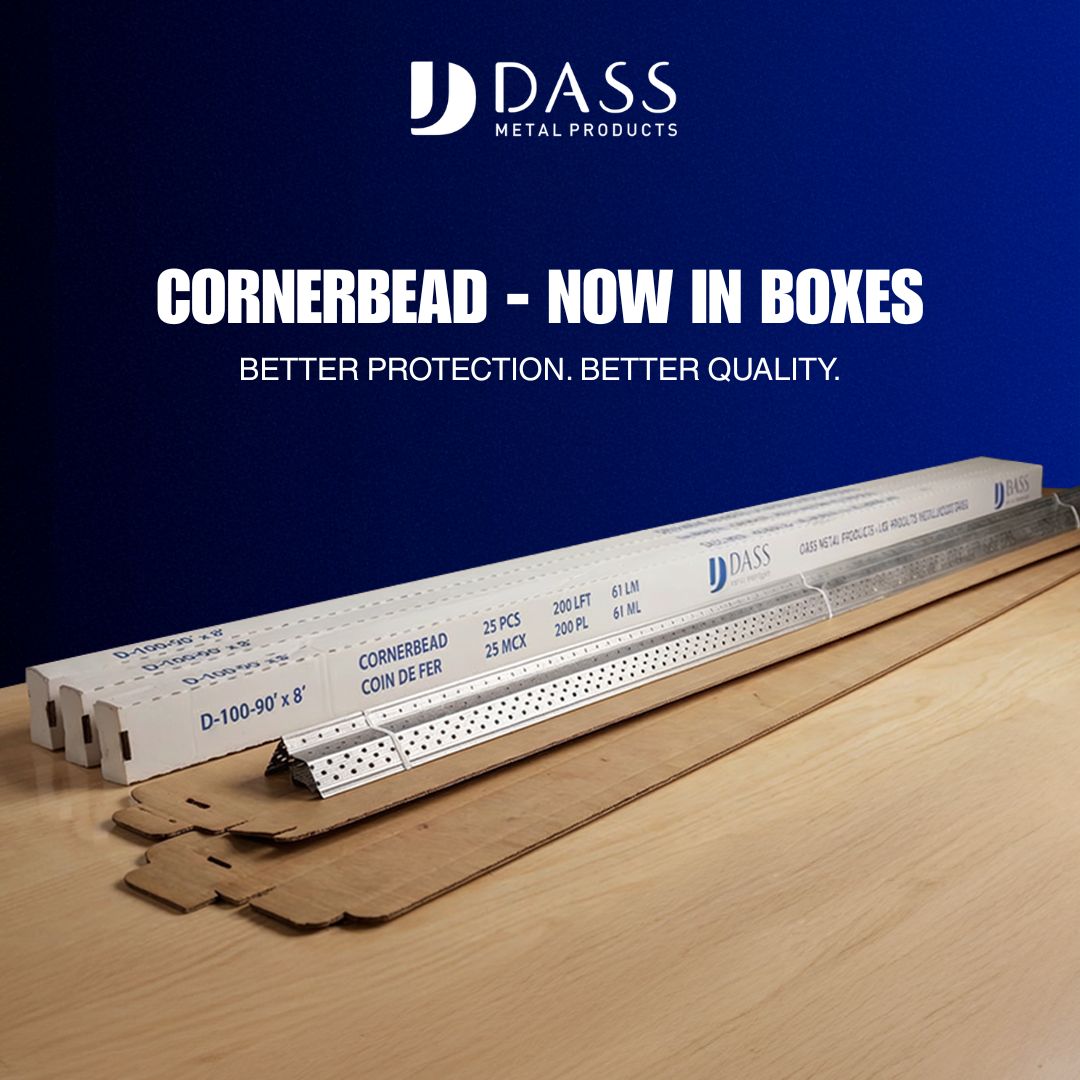
Metal studs are cold-formed steel members used to frame non-load-bearing and load-bearing walls, soffits, and ceilings. They deliver straight, stable lines that resist warping and shrinking, which helps teams in 370 New Enterprise Way (Vaughan, ON) build faster and more predictably. As a Canadian manufacturer, Dass Metal Products supplies profiles engineered for code-compliant performance.
By Navjot Dass — Dass Metal Products
Last updated: 2026-05-21
Overview: Why this complete guide matters
This guide explains what metal studs are, where they perform best, and how to design and install them without rework. You’ll learn profiles, gauges, tracks, clips, acoustic details, and QA steps—plus practical examples from Dass Metal’s engineering support and Canadian-made supply.
Whether you manage interiors, specify cold-formed steel, or supervise field installs, you need practical detail that saves time onsite. This article distills 40+ years of framing experience into clear steps, proven details, and checklists.
- Understand stud, track, and channel roles—including slotted deflection and deep track
- Match gauges and spacing to typical heights and drywall systems
- Coordinate acoustics with resilient channel and perimeter gaps
- Prevent common errors around deflection, corrosion, and firestopping
- Use Dass Metal resources: load tables (imperial/metric), standards, MSDS, brochures
Use these quick jumps:
- What are metal studs?
- Why metal studs matter
- How metal stud framing works
- Types, tracks, and components
- Best practices
- Tools and resources
- Case examples
- Frequently asked questions
What are metal studs?
Metal studs are cold-formed steel framing members—typically 25 to 12 gauge—used with steel track to build walls, soffits, and ceilings. They install at standard spacing (often 16 in. or 24 in. o.c.), provide straightness, and integrate with drywall, insulation, and acoustic systems for predictable, code-compliant assemblies.
When we say “stud,” we mean a C-shaped member seated in U-shaped track. Profiles range from light gauge (non-load-bearing) to heavy gauge (structural). Common widths include 1-5/8 in., 2-1/2 in., 3-5/8 in., 6 in., and 8 in., each paired with track of matching width and appropriate leg height.
- Light gauge (non-load-bearing): Often 25–20 ga (18–33 mil). Typical spacing: 16 or 24 in. o.c. Typical wall heights: ~8–14 ft depending on gauge and spacing.
- Heavy gauge (load-bearing): 18–12 ga for structural studs in exterior walls, stair/elevator cores, and tall interior partitions.
- System approach: Studs + tracks + channels + clips + trims = a coordinated framing system that carries gypsum, support, and finishes.
Dass Metal Products manufactures both non-load-bearing and load-bearing profiles, plus the tracks, channels, clips, and finishing trims to complete the system. Engineering support ensures selected gauges, spacing, and details align with project loads and deflection criteria.
Why do metal studs matter for modern projects?
Metal studs matter because they stay straight, install quickly, and integrate cleanly with fire, acoustic, and movement joints. Their dimensional stability reduces callbacks, and standardized profiles speed layout, cutting, and fastening while meeting common code deflection and fire-resistance requirements.
Teams choose steel for consistent geometry. Wood can move with moisture; galvanized steel stays straight. In ceilings and tall partitions, predictable L/240 to L/480 deflection goals are easier to hit with known gauges and slot details.
- Speed and repeatability: Pre-punched holes simplify MEP passes; screw fastening is fast and consistent.
- Coordination: Stud widths match gypsum sizes; accessory trims (J/L trims, cornerbeads) finish edges cleanly.
- Acoustics: Resilient channel decouples gypsum for higher STC targets (e.g., multifamily partitions aiming for STC 50+ assemblies).
- Fire and structural: Published load tables support height/spacing choices; fire-rated assemblies are standardized with known layers and fasteners.
In our experience, the biggest gains come from designing the whole assembly early—selecting stud gauge, slotted deflection track, and resilient channel together so the resulting wall meets height, movement, and sound goals without site improvisation.
How metal stud framing works
Metal stud framing seats C-shaped studs into U-shaped track, fastened at top and bottom. Studs are plumbed, spaced (often 16 or 24 in. o.c.), braced with channels, and detailed for deflection at the top. Drywall, insulation, and trims complete code-listed assemblies for fire and acoustics.
At its core, the process is systematic: lay out the wall line, anchor bottom track, install slotted deflection or standard top track, then set studs, brace, and sheath.
- Layout: Snap lines, mark door openings, and set control joints. Verify slab flatness and ceiling height (laser levels help maintain plumb stud lines over long runs).
- Track installation: Use powder-actuated or screw anchors appropriate to substrate. For head-of-wall movement, use slotted deflection track with specified slot orientation and allowable vertical movement (commonly 1/2–1 in.).
- Stud placement: Insert studs at 16 or 24 in. o.c., web openings aligned for MEP. Fasten with #8 or #10 self-drilling screws per manufacturer recommendations.
- Bracing: Install bridging/carrying channel at required intervals; use bridging clips to lock lateral stability.
- Sheathing and finishes: Hang gypsum, maintain perimeter clearances where required, and apply trims (J/L trim, 90°/130° cornerbead) for clean edges.
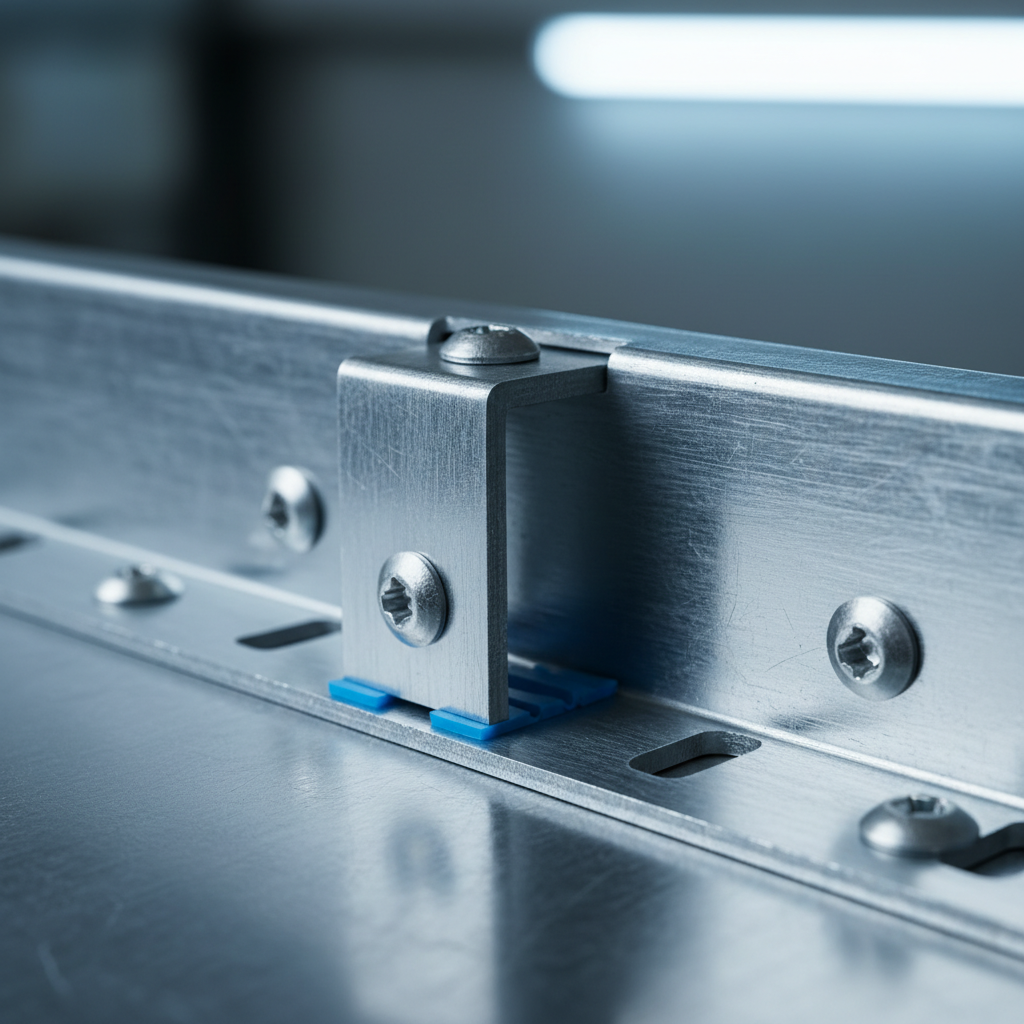
For a visual of head-of-wall movement detailing, see the close-up below. It shows a cold-formed stud seated in slotted deflection track—one of the most important details to avoid ceiling or slab load transferring into non-load-bearing walls.
For a stepwise walk-through, review this practical resource on how to install metal studs before mobilizing crews.
Related internal guidance on optimizing workflow is covered in our steel stud wall framing overview and our practical field notes on framing using metal studs.
Types, tracks, channels, and finishing components
A complete steel framing system includes non-load-bearing and load-bearing studs, multiple track types (standard, slotted deflection, deep), channels for bracing and acoustics, and clips and trims that lock assemblies together. Matching gauges and compatible accessories prevent rework and ensure listed performance.
Stud families
- Non-load-bearing studs: 25–20 ga. Used for interior partitions, soffits, furred walls. Heights typically up to ~14 ft at 16 or 24 in. o.c., per load tables.
- Load-bearing stud framing: 18–12 ga structural members for exterior walls, corridor shafts, and tall interior runs. Often paired with structural sheathing and windbrace.
Track options
- Standard track: U-shaped, sized to stud width; leg heights selected for screw edge distance and deflection needs.
- Slotted deflection track: Slots permit vertical movement at the head-of-wall. Specify allowable movement (e.g., 1/2–1 in.) and correct fastener placement.
- Deep track: Taller legs for added engagement and tolerance; useful with tall studs or uneven slabs.
Channels and bracing
- Bridging/carrying channel: Controls stud bow and vibration; spacing per table based on stud height and gauge.
- Resilient channel: Decouples gypsum for acoustics; installed perpendicular to studs at specified spacing (commonly 24 in. o.c. on walls).
- Furring channel: Levels surfaces, carries finishes, or creates cavities for services or insulation.
Clips and connectors
- Deflection side clip: Allows vertical motion at connections while restraining lateral loads.
- Webslide clip / bridging clip: Fast bridging installation without notching; improves lateral stability.
- Windbrace: Diagonal bracing for exterior stud walls where required by wind loads.
- U-Flex track: Curvable track for radius walls—specify radius and width to suit design.
Finishing trims
- 90°/130° cornerbead: Reinforces outside corners at right or obtuse angles.
- J trim, L trim, J track: Clean terminations at ceilings, openings, or panel edges.
- Z-Bar, L track: Utility profiles for reveals, transitions, or substrate changes.
Explore our primer on light-gauge selection in light gauge steel studs and a broader perspective on using steel studs for consistent quality.
Best practices that keep schedules on track
Define height, spacing, and gauge early, select the right top track for movement, and lock in bracing, fasteners, and trims before mobilization. Field crews move faster when design decisions are clear and materials arrive cut-to-length, labeled, and compatible across the assembly.
Design coordination
- Start with height and deflection: Choose gauge and spacing to meet L/360 (typical partitions) or project-specific criteria.
- Head-of-wall movement: Use slotted deflection track where slabs or roofs move; confirm required vertical allowance (commonly 1/2–1 in.).
- Acoustics: For STC 50+ targets, coordinate resilient channel, cavity insulation, and perimeter sealant gaps per tested details.
Field installation
- Anchor selection: Match anchors to substrate; respect edge distances and embedment.
- Screw selection: #8 or #10 self-drilling fasteners are common; use correct tip and corrosion class.
- Bridging: Install carrying channel as specified; secure with approved clips to prevent stud twist.
- Plumb and line: Laser lines and story poles reduce cumulative error over long corridors.
Quality assurance
- Checklists: Verify gauge, spacing, and track type per drawings before hanging board.
- Perimeter clearances: Maintain specified gaps at the head and jambs for movement and acoustics.
- Firestopping: Install approved materials at rated penetrations and joints; coordinate with drywall sequencing.
We cover frequent jobsite pitfalls in our field-focused piece, drywall framing: avoid mistakes, and expand on system thinking in our steel studs guide.
Tools and resources you can use today
Dass Metal provides product brochures, imperial and metric load tables, MSDS documentation, and drawing support. These resources streamline specification, help confirm heights and gauges, and reduce RFIs, especially on fast-track interiors and cross-border projects.
- Load tables (imperial/metric): Select gauge and spacing for target heights; verify bridging intervals.
- Standards and MSDS: Confirm coating, handling, and safety requirements before delivery.
- Engineering support: Engage our team to review tall partitions, shaftwall/CH stud details, or unusual geometries.
- Accessory compatibility: Align resilient channel, furring, and trims with specified gypsum thickness.
For structure coordination, keep reinforcement in view as well. This overview of steel rebar basics pairs well when interior framing interfaces with structural concrete. And for schedule-sensitive pours, see rebar fabrication planning to align trades.
For a beginner-friendly walkthrough, our team curated a starter reference on drywall and metal studs that complements this deep dive.
Case studies and real-world examples
When design, detailing, and supply align, projects move faster. These condensed examples show how proper gauges, tracks, and trims—paired with timely delivery—cut rework and help teams meet acoustic, fire, and movement criteria on live jobs.
Healthcare tenant improvement, 10-foot walls
- Challenge: Tight weekend turnover; walls at 10 ft with multiple penetrations.
- Approach: 20 ga studs at 16 in. o.c., standard bottom track, slotted deflection top track with 3/4 in. vertical allowance, bridging channel at mid-height.
- Outcome: Straight finishes and smooth MEP routing through pre-punched webs; zero rework on head-of-wall inspections.
School classroom wing, STC-focused partitions
- Challenge: Meet district acoustic guidance (target assemblies STC 50+ where specified).
- Approach: 25 ga studs at 24 in. o.c. with resilient channel at 24 in. o.c., cavity insulation, and J/L trims to maintain perimeter gaps.
- Outcome: Verified sound isolation metrics during punch; trims simplified clean, consistent edges at ceilings and openings.
Mid-rise exterior, wind-braced stud walls
- Challenge: Exterior studs to resist wind loads; coordinate continuous insulation and sheathing.
- Approach: Heavy gauge structural studs (per engineer), deep track for tolerance, windbrace, and specified sheathing pattern.
- Outcome: On-time inspections and cladding crews working to plumb, level substrates.
Custom radius corridor with U-Flex track
- Challenge: Architectural radius wall in a public corridor; maintain gypsum integrity along curve.
- Approach: U-Flex track to specified radius; studs clipped for smooth curvature; J trim at ceiling termination.
- Outcome: Clean continuous curve; reduced board cracking thanks to even stud spacing and controlled bend.
Elevator shaftwall with CH studs
- Challenge: Rated shaft enclosure in a congested core.
- Approach: Shaftwall/CH stud system per listing; careful layout of door frames and firestopping at penetrations.
- Outcome: Inspection-ready enclosures with documented materials traceability.
For reinforcement trades interfacing with framing around cores and podium levels, our partners’ primer on concrete rebar planning helps maintain sequence flow.
Metal studs vs wood: quick comparison
Metal studs provide consistent straightness, integrated fire and acoustic details, and simplified MEP coordination. Wood can be faster for very small scopes, but steel’s stability and standardized accessories make it the go-to for commercial interiors and many exterior systems.
| Factor | Metal studs | Wood studs |
|---|---|---|
| Straightness over time | Excellent (no warp/shrink) | Variable (moisture-driven) |
| Standard spacing | 16 or 24 in. o.c. | 16 or 24 in. o.c. |
| Head-of-wall movement | Slotted deflection track options | Requires slip details; less standardized |
| Acoustics (STC assemblies) | Resilient channel and trims integrate cleanly | Works, but detailing varies widely |
| Fire-rated assemblies | Widely listed with specific layers/fasteners | Listed options exist; more substrate variability |
| Cutting and fastening | Snips or shears; self-drilling screws | Saws; nails or screws |
| Environmental stability | Unaffected by humidity; galvanized coating | Moisture-sensitive; treatment may be required |
For an extended discussion of tradeoffs on labor and quality, see our perspective on why metal studs are better than wood studs.
Local considerations for 370 New Enterprise Way
Local project success hinges on logistics and seasonality. Dass Metal’s Vaughan, ON manufacturing base supports reliable delivery, while early coordination on winter pours, interior mobilization, and acoustic goals keeps schedules aligned across Ontario and cross-border U.S. jobs.
- Plan winter mobilization: schedule interior framing after envelope close-in; confirm slotted deflection track requirements with expected slab/roof movement during freeze–thaw cycles.
- Align pours and partitions: coordinate stud deliveries with concrete milestones; review reinforcement logistics with rebar fabrication planning to avoid corridor shutdowns.
- Design for acoustics early: multifamily and healthcare targets often require resilient channel, insulation, and perimeter sealants—finalize these before procurement to prevent multi-trip deliveries.
Need shop drawings, custom profiles, or fast delivery?
Get engineering-backed help choosing gauges, tracks, and accessories for your next scope. Dass Metal manufactures in Vaughan, ON with reliable cross-border delivery, so you receive the right dimensions and quantities, on time—backed by product documentation.
Talk with our engineers about tall partitions, shaftwall/CH stud systems, or acoustic targets. We’ll help match gauges, spacing, and trims to your drawings and prepare documentation for submittals.
Explore our practical overview on drywall and metal studs or dive into steel stud wall framing workflows to prep your crews.
Frequently asked questions (FAQ)
These answers address the questions we hear most from builders and drywall contractors. They focus on design choices, installation details, and where different gauges and accessories fit best.
What gauge metal stud should I use for a 10-foot interior wall?
Many 10-foot partitions work with 20 ga (33 mil) studs at 16 in. o.c., but always confirm with load tables and project requirements. Bracing, gypsum layers, and openings can change the selection. When in doubt, engage engineering support before ordering.
Do I need slotted deflection track on every wall?
Not every wall needs it, but any partition beneath moving slabs or roofs typically requires head-of-wall movement. Use slotted deflection track where vertical movement is expected; standard track is fine when the structure is not expected to deflect into the partition.
Can metal studs be used for load-bearing exterior walls?
Yes. Heavy gauge cold-formed steel studs (often 18–12 ga) are used in engineered, load-bearing exterior systems. They require proper bracing, sheathing, fasteners, and detailing. Always follow engineered drawings and manufacturer documentation.
What’s the difference between resilient channel and furring channel?
Resilient channel decouples gypsum for acoustics and is typically lighter with a spring-like profile. Furring channel levels uneven substrates or creates service cavities and is used more broadly for alignment rather than sound isolation.
Key takeaways
Choose the right gauges and tracks, plan for movement, and coordinate acoustics and trims early. These steps keep crews productive and inspections smooth—especially on tall partitions, shafts, and exterior walls.
- Metal studs stay straight and predictable; design for L/360 or project deflection criteria.
- Use slotted deflection track where vertical movement occurs; maintain perimeter gaps.
- Resilient channel, insulation, and trims help hit acoustic targets (e.g., STC 50+ assemblies).
- Lock bracing, fasteners, and firestopping early; verify with checklists before board.
- Partner with a manufacturer that provides load tables, MSDS, and engineering support.
Next steps
Send us your drawings and target performance so we can confirm gauges, spacing, and accessories. Our Canadian-made supply and cross-border logistics help your team frame straighter, faster, and with fewer surprises.
Ready to move? Share wall heights, rated assemblies, and any radius or shaftwall needs. We’ll align profiles, delivery windows, and submittals—so your crews start hanging drywall without delays.