Deflection track is a slotted top track that lets nonstructural walls move with the structure above while staying straight and crack‑free. It manages vertical deflection and limited drift at head‑of‑wall joints. For teams building around 370 New Enterprise Way in Vaughan, ON and across North America, using deflection track prevents finish damage from live load, creep, wind, and seismic movement.
By Navjot Dass • Last updated: May 22, 2026
Overview: why deflection track matters now
Use deflection track to keep gypsum-lined partitions intact when the deck above moves. The slotted top track lets studs slip vertically, absorbing movement without loading the wall. Expect straighter lines, fewer callbacks, and smoother inspections when the head-of-wall joint can actually move.
This complete guide from Dass Metal Products explains what deflection track is, why it matters, how it works, and how to specify and install it correctly. You’ll see practical details, checklists, and examples drawn from interior framing projects we support across Canada and the United States.
- What deflection track is and when to use it
- How head-of-wall slip protects finishes and door frames
- Specification, detailing, and installation best practices
- Coordination tips for firestopping and acoustics
- Real-world examples, field checklists, and talk tracks for inspections
At a glance: contents
- What is deflection track?
- Why it matters
- How it works
- Types and comparisons
- Best practices
- Tools and resources
- Case studies and examples
- Frequently asked questions
- Conclusion and key takeaways
- Related articles
Local considerations for 370 New Enterprise Way
- Seasonal temperature swings around Vaughan can shift slab camber and live-load deflection; plan realistic head-of-wall movement allowances, often 3/4 to 1-1/2 inches on interior partitions.
- Winter sequencing compresses interior schedules; pre-stage slotted track and compatible clips so framing continues without delays when exterior work pauses.
- Mixed-use corridors frequently pair tall walls with acoustic targets; coordinate slip details, resilient channels, and movement-capable firestopping early with your engineer.
What is deflection track?
Deflection track is a cold-formed steel top track with elongated slots that allow studs to slide as the structure above deflects. It decouples nonstructural walls from vertical movement and in-plane drift, protecting gypsum finishes and keeping partitions plumb.
In light gauge interior framing, the head-of-wall joint is where structural movement shows up first. A slotted top track turns that joint into a controlled slip connection. The wall remains non-load bearing, and motion happens inside the slot rather than through cracked corners or popped fasteners.
- Where it’s used: Corridors, demising walls, shafts, lobbies—any partition beneath concrete or steel decks with measurable deflection.
- Movement types handled: Vertical live-load, creep, thermal effects, and limited in-plane drift when detailed with compatible clips.
- Typical slip range: Many interiors plan 1/2 to 1-1/2 inches of vertical slip; verify exact values on structural notes and shop drawings.
For builders and drywall contractors, slotted head-of-wall track is a simple way to avoid call-backs. We manufacture slotted deflection track as part of our Interior Framing lineup, alongside standard track profiles and channels that coordinate with tested firestop and acoustic details.
Why deflection track matters for quality, compliance, and schedule
When you don’t allow head-of-wall movement, deck deflection transfers into the wall. The result is cracked joints, misaligned reveals, door binding, and failed inspections. Proper deflection detailing absorbs that movement and preserves finishes and door clearances.
Movement is built into every structure. Concrete slabs often design to L/360 or L/480 live-load deflection; thermal swings and long-term creep add more. If the wall can’t slip at the top, that motion shows up as cracking and out-of-plumb frames. On turnover, those issues become noise complaints, door problems, and warranty calls.
- Finish protection: Clean reveals and corners after occupancy reduce patching and repainting cycles.
- Door and hardware performance: Frames stay square; closers and latches work predictably months later.
- Inspection confidence: Clear details for slip, firestop, and acoustics speed approvals and reduce RFIs.
In our experience supporting Ontario and U.S. projects, framing crews that standardize on slotted head-of-wall details report fewer punch-list items and less rework. That directly supports aggressive interior schedules and smooth handoffs to finishing trades.
How deflection track works at the head-of-wall
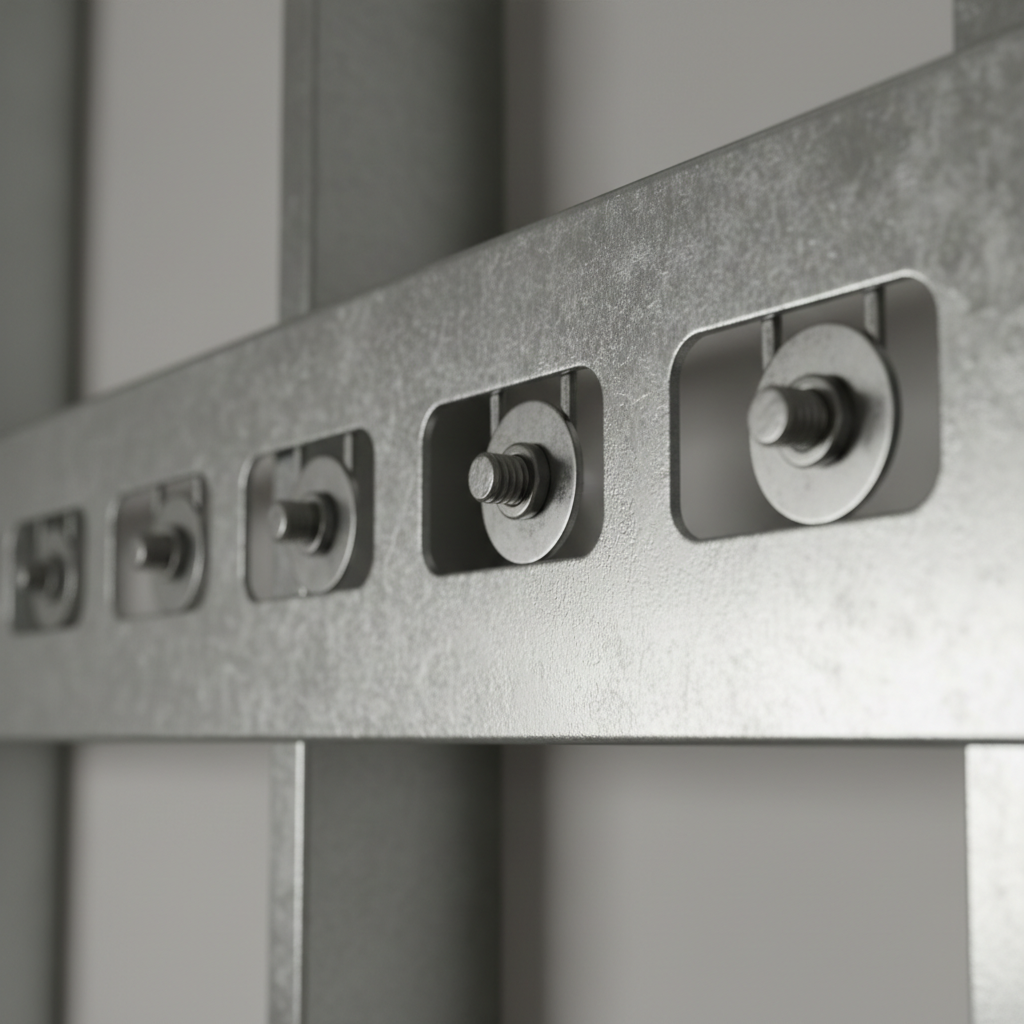
The slotted top track anchors to the structure. Studs fasten through the slots with specified screws and washers so they can slide. As the deck moves, studs slip inside the slot, preventing load transfer into the wall and protecting gypsum edges.
Think of the slotted track as a guide rail. The slot length equals expected vertical movement plus a safety margin. Fasteners are placed at the low end when movement is mainly downward, or centered for bi-directional slip—per engineering direction. Crucially, gypsum and stud ends stop short of the deck to avoid binding.
- Clearances: Hold stud and board edges back the detailed amount. A common guideline is 3/4 to 1 inch for interiors; confirm with drawings.
- Fastener rules: Use the specified screw size and oversized washers or listed clips; avoid over-tightening, which can lock the joint.
- Anchorage spacing: Follow track manufacturer and engineer notes—often 24 inches on center to structure.
- Joint continuity: Don’t bridge the slip gap with compound, bead, or rigid trim; use movement-tolerant sealants where shown.
To see the hardware interaction, review our slotted head-of-wall details in context of your stud gauges. Our steel studs guide explains when to step up thickness for tall or high-load walls so the slip joint works as intended.
Types of deflection track and related systems
Use slotted top track for most nonstructural interiors. Deep leg track provides more screw edge distance and tolerance. Curved or flexible tracks shape radiused walls. Tested clip systems handle drift or higher movement where needed.
Each project balances wall height, required movement, acoustic targets, and installer familiarity. Here’s how common components compare in use and purpose.
Common framing components you’ll compare
- Slotted deflection track: Standard head-of-wall slip under concrete or steel decks; pairs with movement-capable firestop.
- Standard track: Non-slotted; suitable where movement is negligible or at bottom track. See our standard track profiles.
- Deep track: Taller legs increase screw edge distance and tolerance for field conditions and tall walls.
- Resilient and furring channels: Sound control components that must not bridge the slip joint; coordinate gaps and fasteners.
- Deflection clips and webslide clips: Tested hardware for engineered slip and limited drift at jambs or studs.
| Component | Primary purpose | Movement capacity | Typical use |
|---|---|---|---|
| Slotted deflection track | Vertical slip at head-of-wall | Approx. 1/2–1-1/2 in. (verify) | Corridors, demising walls under deflecting decks |
| Deep track | Extra screw edge distance and tolerance | Small additional slip room | Tall walls; tolerance for field conditions |
| Standard track | Basic top/bottom track | None | Low-movement zones or bottom track |
| Deflection clip | Tested slip connection at stud or jamb | Varies by model | In-plane drift or high-movement details |
For curved corridors or feature walls, our drywall framing best practices article shows how to coordinate flexible tracks and channels without compromising the slip joint at the head.
Best practices for specification, detailing, and installation
Start with the structural deflection and drift criteria. Size slot length and clearances accordingly. Detail firestopping and acoustics to remain functional under movement. In the field, place fasteners per drawings and avoid overdriving screws that lock the joint.
Specification checklist
- Confirm expected vertical deflection and story drift with the structural engineer; many interiors assume L/360 slab deflection under live load.
- Select slotted track profiles and slot lengths that exceed calculated movement plus tolerance.
- Call out stud and gypsum clearances at head-of-wall—commonly 3/4 to 1 inch for interiors, more for high-movement areas.
- Specify movement-capable firestop materials matched to your rating, gap, and wall type.
- Include tested clip systems at jambs or studs where drift must be accommodated.
Installation essentials
- Anchor slotted track to structure at the required spacing; keep slots free of debris and compound.
- Place stud fasteners at the correct end of the slot for movement direction; use specified washers or clip kits.
- Hold gypsum edges short of the deck per detail; never bridge the slip gap with rigid trim or mud.
- Seal perimeters with the specified sealant after verifying slip conditions.
- Photograph fastener placement and head-of-wall gaps for closeout documentation.
Firestopping integration
- Use a listed, movement-capable head-of-wall firestop system that matches your assembly and gap size.
- Install mineral wool, sealant, or preformed devices so they compress and extend as the joint moves.
- Verify listing details for sealant depth, backing, and allowable joint movement before closing walls.
Acoustic considerations
- Maintain the slip gap; don’t short-circuit isolation with rigid accessories.
- Use acoustic sealants rated for dynamic joints to preserve STC after movement.
- Coordinate resilient channel layout so fasteners don’t enter the head-of-wall slip zone.
To align products with your wall heights and ratings, explore our light gauge steel studs guidance and heavy gauge framing overview. Choosing the right stud gauge ensures the slip connection performs as designed.
Tools, submittals, and resources
Win submittals by bundling product data, stud load tables, and head-of-wall details that show slot length, fastener positions, and firestop selection. Add a one-page field checklist so installers reproduce design intent consistently across floors.
- Product data: Slotted track, deep track, and compatible clips.
- Load tables: Stud capacities at specified gauges and spans.
- Details: Head-of-wall sections with dimensions and sealant notes.
- QC checklist: Gaps, fastener locations, and photo documentation points.
- Closeout: As-built head-of-wall photos and inspector sign-offs.
For practical reading on coordinating studs and track, browse our overview on steel in non-load-bearing walls and our roundup of steel studs and track quality considerations. These pieces help specifiers align performance, speed, and long-term durability.
Case studies and field examples
Projects stay straighter and quieter when deflection details are coordinated early. Pre-approving slot lengths and firestop listings reduces RFIs. Crews move faster when a one-page checklist and sample bay set the standard on day one.
Mixed-use corridor, Ontario
A corridor renovation targeted consistent reveals and better post-occupancy performance. We coordinated a 1-inch slip allowance with movement-capable firestopping and acoustic sealant. Result: no post-move-in cracking at corners or door heads, and inspectors signed off on the first pass.
Tall lobby partitions, U.S. office retrofit
High lobby walls under a steel deck needed tolerance and clean aesthetics. Using deep track increased screw edge distance, simplifying fastener placement at height. Combined with slotted head-of-wall, reveals stayed uniform even as the deck settled under live load.
Healthcare corridor, cross-border delivery
With strict acoustic and fire requirements, early submittal coordination mattered. Our team packaged slotted track data, stud load tables, and listed firestop systems. Phased deliveries kept the schedule, and field photos of slot fasteners sped final inspections.
Common mistakes to avoid
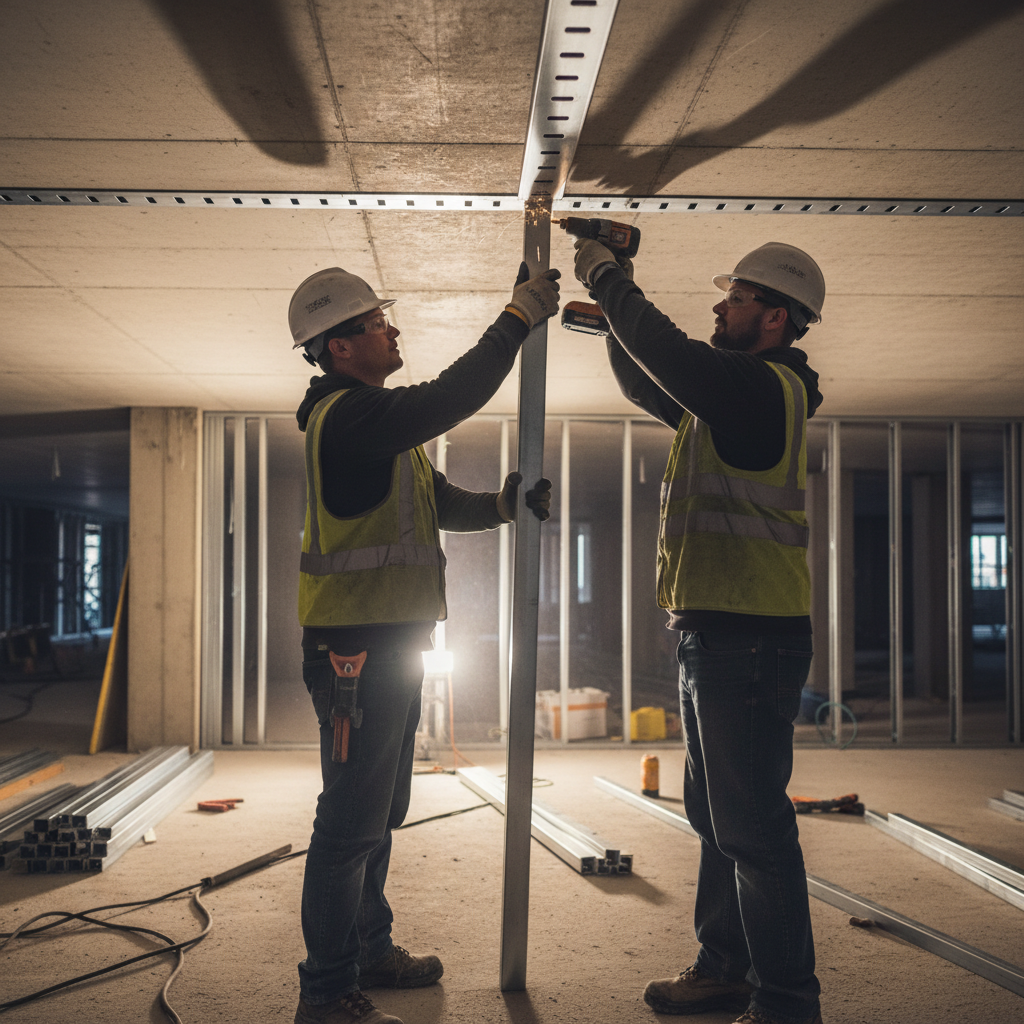
Most head-of-wall problems come from locked joints and bridged gaps. Don’t overdrive screws, don’t run rigid trims across the joint, and don’t guess at slot length. Verify movement, then build the joint to move.
- Over-tightening fasteners: Locks the slot and transfers movement into the wall.
- Bridging the gap: Rigid trim, bead, or compound that spans the joint defeats the slip detail.
- Insufficient clearance: Short gaps bind gypsum edges during live-load or thermal shifts.
- No coordination with firestop: Incompatible materials can restrict movement or void ratings.
- Undersized studs: Tall walls with light studs can wave or bind; select gauges from load tables.
To understand how track choice affects buildability, see our product page on standard track and the framing do’s and don’ts in drywall framing mistakes.
Codes and coordination signals
Treat head-of-wall slip as part of code coordination. Match movement-capable firestop listings to your wall rating and gap, and design joints to follow structural deflection criteria. Keep details consistent across typicals and shop drawings.
- Structural criteria: Design teams often specify slab deflection like L/360; use that to size slot length plus tolerance.
- Fire resistance: Choose a listed head-of-wall system that allows the designed joint movement without restricting it.
- Acoustics: Maintain the separation at the head and use rated acoustic sealants to preserve STC after movement.
- Documentation: Include head-of-wall details in submittals; field photos of screw positions and gaps streamline inspections.
For ongoing insights and updates on movement detailing, browse our slotted deflection track articles. We publish practical guidance for builders, drywall contractors, architects, and specifiers.
Frequently Asked Questions
These concise answers cover movement sizing, fastening, and coordination with firestop and acoustics. Share with field teams and inspectors to align expectations and expedite sign-offs.
How do I determine the required slot length?
Start with the structural engineer’s vertical deflection number and add tolerance. Place screws at the low end of the slot for downward movement or centered for bi-directional slip, as detailed. Ensure stud and gypsum clearances match the designed allowance.
Do I still need firestopping at the head-of-wall?
Yes. Use a movement-capable, listed head-of-wall firestop system matched to your wall type, rating, and gap size. Materials must compress and extend with the joint so the wall can move without losing its rating.
Can resilient channels work with deflection track?
They can—if you keep the head-of-wall gap clear and avoid fastening rigid elements through the slip zone. Coordinate channel layout and fasteners and use acoustic sealants rated for dynamic joints to preserve STC.
Where should I place the stud fastener in the slot?
Follow the drawings. For primarily downward slab movement, fasten near the bottom of the slot so studs can drop. For bi-directional slip, center screws. Always use specified washers or clips and avoid over-tightening.
Conclusion and key takeaways
Deflection track protects nonstructural walls from structural movement. When you size slot lengths to real deflection, place fasteners correctly, and coordinate firestopping and acoustics, partitions stay straight, finishes last longer, and inspectors sign off faster.
- Start with real movement data from the structural team.
- Match slotted track, deep track, and clips to wall height and ratings.
- Train crews to protect the slip gap and avoid over-driving fasteners.
- Document head-of-wall conditions before closing up.
Key takeaways
- Head-of-wall slip is essential wherever decks deflect or drift.
- Correct slot length + clearances prevent cracking and door issues.
- Movement-capable firestop and acoustic details must not restrict slip.
- Field photos of fasteners and gaps speed inspections and closeout.
Need a product match or a quick detail review? Our team in Vaughan supports fast, reliable supply across Ontario, Canada, and the U.S.—including custom profiles when geometry gets tricky.
Related articles in the framing cluster
Explore connected topics that influence head-of-wall performance. Understanding bracing, channels, and track selection leads to straighter, quieter, and more durable interiors.
For deeper context on studs and track selection, read our comprehensive steel studs guide and tips in drywall framing best practices. When you’re choosing top and bottom members, compare slotted and standard track options to suit real movement and tolerance on site.