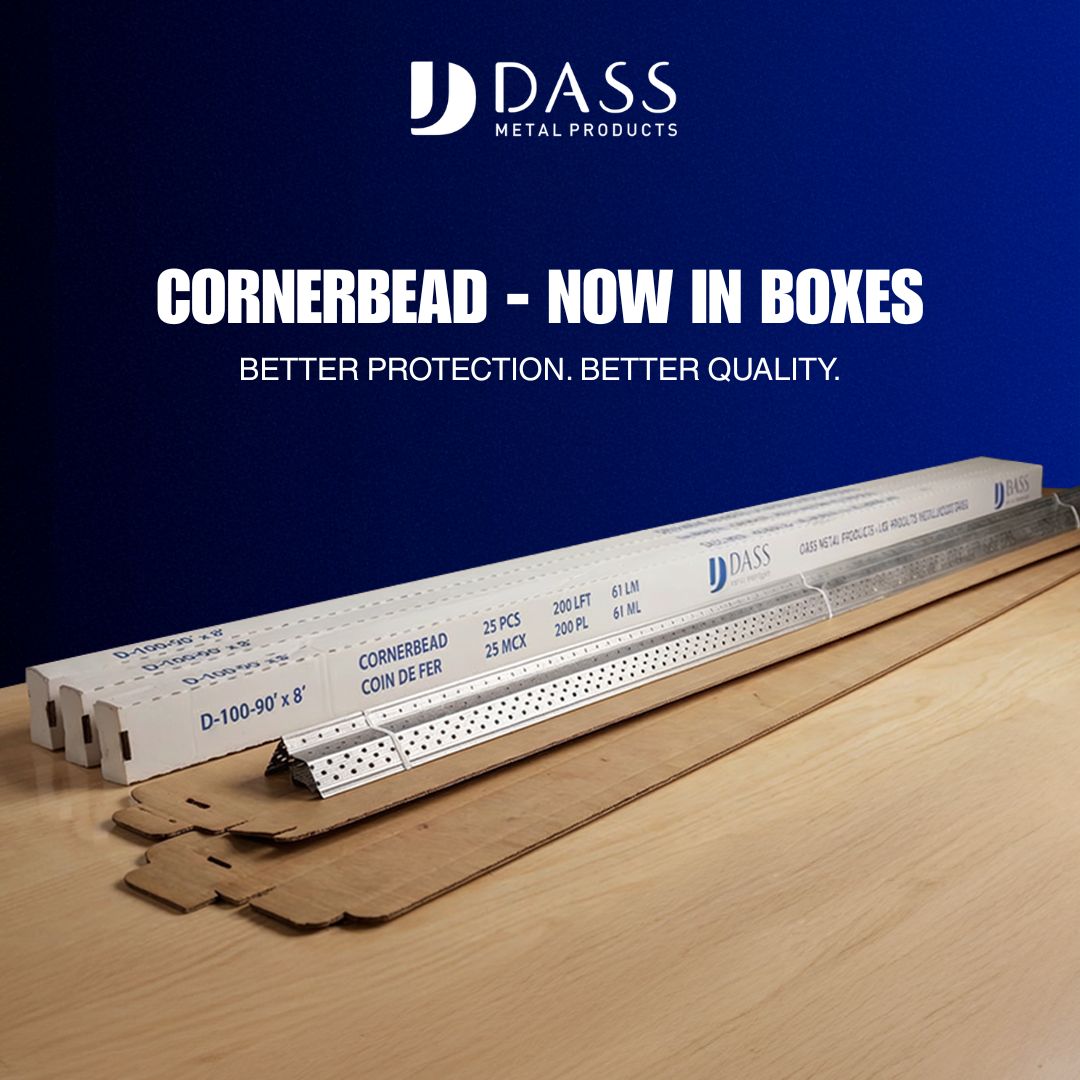
Metal stud framing sizes are the standardized web widths, flange depths, and steel gauges used to build interior and exterior partitions. For projects around 370 New Enterprise Way in Vaughan, selecting the right size ensures code compliance, straighter drywall, and predictable heights. In most U.S. interiors, studs are laid out at 16 or 24 inches on center based on height and finish.
By Navjot Dass — Dass Metal Products
Last updated: 2026-06-09
Above the Fold: Hook + Contents
Choose metal stud framing sizes by matching wall height, finish level, and service loads to stud width, flange depth, and gauge. Most interiors use 3-5/8 inch studs in 25–20 gauge at 16 inches on center. Taller or higher-performance walls may use 6 inch studs, heavier gauges, and strategic 24 inch spacing.
- What you’ll learn: A practical, job-ready way to decide width, gauge, and spacing
- Why it matters: Flatter drywall, fewer callbacks, and faster inspections
- How to apply it: Use our tables, checklists, and field tips to order correctly
- Quick Summary
- What Is a Metal Stud Framing Size?
- Why Sizes Matter
- How Sizing Works
- Studs, Tracks, and Channels
- 16 or 24 Inches On Center?
- Comparison Table
- Best Practices
- Tools & Resources
- Types & Approaches
- Case Examples
- Pricing Factors (No Numbers)
- Working with Dass Metal (York Region)
- Frequently Asked Questions
- Key Takeaways
- Conclusion
Quick Summary
Most non-structural interior walls use 3-5/8 inch studs at 16 inches on center in 25 or 20 gauge steel. Taller walls or higher acoustic targets often move to 6 inch webs and heavier gauges. Twenty-four inch spacing can work when gypsum, gauge, height, and details like resilient channel support it.
- Common widths: 1-5/8, 2-1/2, 3-5/8, 4, 6 inches
- Typical gauges: 25, 22, 20, 18, 16 (lower gauge = thicker)
- Standard spacing: 16 or 24 inches on center
- Deflection targets: Frequently L/120 to L/360 depending on finish/spec
- Acoustics: Resilient channel and insulation raise STC within the same cavity
Need a fast refresher on dimensions before ordering? See our steel framing dimensions guide for terminology and measurement conventions.
What Is a Metal Stud Framing Size?
A metal stud framing size is the combined specification of stud web width, flange depth, and steel gauge that determines wall capacity, height, and finish quality. Width shapes the cavity, flange supports screws, and gauge adds stiffness and strength for taller spans and door zones.
When professionals discuss metal stud framing sizes, they mean three linked variables that affect performance and constructability.
- Web width (inches): Governs cavity space for insulation and MEP. Typical: 1-5/8, 2-1/2, 3-5/8, 4, 6.
- Flange depth (inches): Deeper flanges improve screw bite and reduce edge cracking, especially on tall walls.
- Steel gauge (25–16): Thicker steel (e.g., 20, 18, 16 gauge) resists roll, supports doors, and handles abuse.
In our experience supplying interiors across Ontario and the United States, sizing as a system—stud + track + bridging + finishes—avoids wavy drywall and late-stage changes. For foundational context on profiles, review our light gauge steel studs overview.
Why Metal Stud Sizes Matter
Stud size dictates allowable height, straightness, and resilience under service loads. The right combination cuts joint cracking, prevents door binding, and speeds board installation. Pair correct gauge with deflection track and bridging to achieve reliable, inspection-ready results.
- Finish quality: Stiffer framing supports Level 4–5 finishes without telegraphing seams.
- Acoustic targets: Cavity depth plus resilient channel can raise STC by double digits compared to direct-attach.
- MEP routing: Wider webs simplify conduit, plumbing, and low-voltage runs.
- Abuse resistance: Heavier gauges at jambs handle daily impact in corridors and classrooms.
- Schedule control: Fewer reworks and punch items when deflection and bridging are detailed early.
On healthcare, education, and multifamily projects, we commonly see 6 inch cavities and heavier gauges, particularly where long corridors demand tighter deflection control and durability.
How Metal Stud Sizing Works
Start with wall height and finish expectations, then select the lightest web width and gauge that meet deflection criteria. Confirm head-of-wall movement, mid-height bridging, and field spacing (16 vs 24 inches). This sequence yields predictable performance without overbuilding.
- Height first: Taller walls typically require wider webs and heavier gauges to meet L/xx limits.
- Finish next: Level 5 finishes or tile often drive 16 inch spacing and stiffer studs.
- Movement: Use slotted deflection track at the head where structure can move.
- Stability: Add bridging/carrying channel on tall spans to control stud roll.
- MEP + acoustics: Pick cavity width and resilient channel to meet routing and STC goals.
Typical office partitions under about 10 feet succeed with 3-5/8 inch studs in 25–20 gauge at 16 inches on center. Very tall lobbies, mechanical rooms, or abuse-prone corridors often step to 6 inch webs and heavier steel for stability.
Studs, Tracks, and Channels: Pick Matched Components
Match studs to standard, deep, or slotted deflection track and stabilize with bridging or carrying channel. For acoustics, integrate resilient channel and insulation. Ordering a coordinated package reduces waste and smooths inspections.
- Standard Track: The baseline head and base track for most partitions.
- Deep Track: Adds engagement depth for taller walls or deflection-sensitive assemblies.
- Slotted Deflection Track: Allows vertical movement without cracking finishes.
- Bridging/Carrying Channel: Limits lateral roll on tall spans (common with 24 inch spacing).
- Resilient Channel: Decouples gypsum to raise STC in multifamily and healthcare.
- Shaftwall/CH Stud: Specialty profile for shafts and stairwells.
For a deeper dive into components and field sequencing, see our framing with metal studs guide. Aligning components with your selected metal stud framing sizes is what keeps walls straight as heights increase.
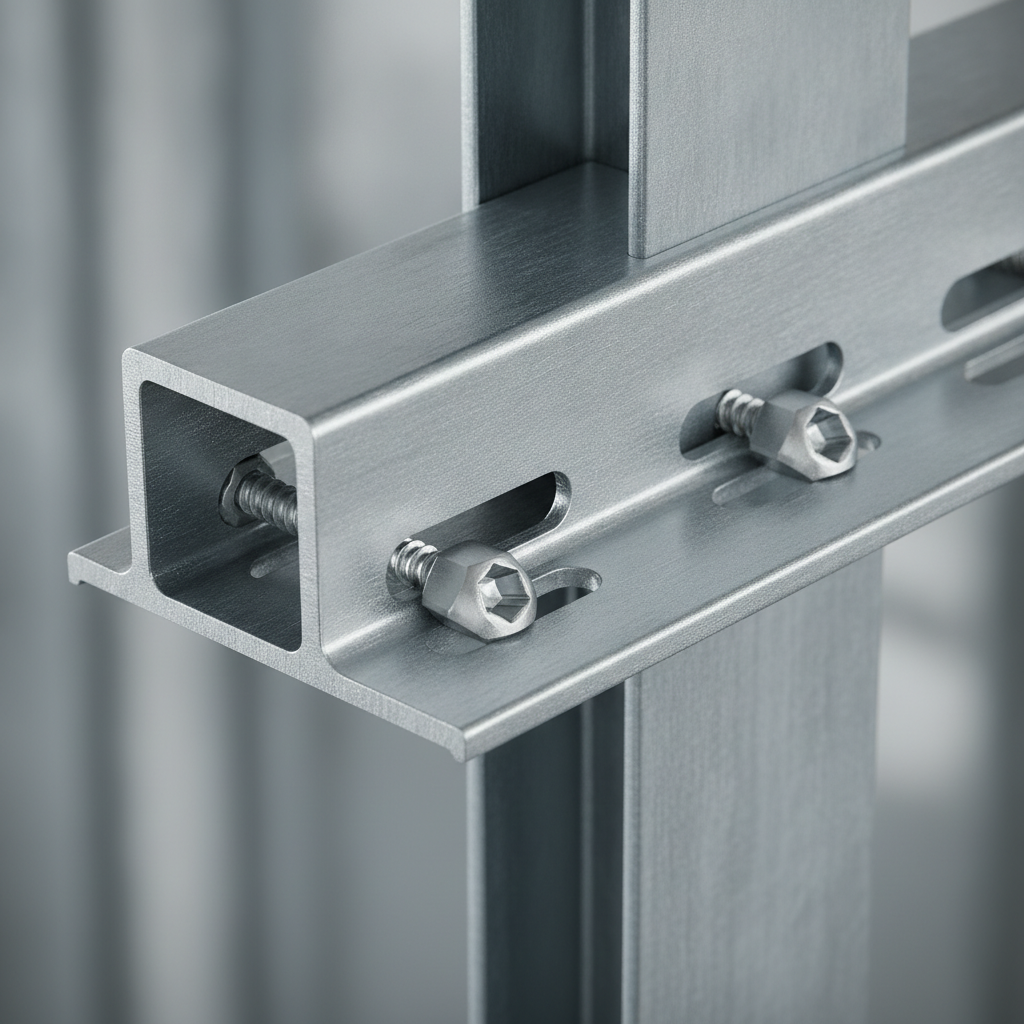
Are Metal Studs 16 or 24 On Center?
Both patterns are standard. Choose 16 inches on center for premium finishes, tile backers, or taller spans. Use 24 inches on center when the gypsum type, stud gauge, wall height, and details like resilient channel support it—often with mid-height bridging for flatness.
- 16 inches on center: Tighter layout supports Level 4–5 finishes and reduces fastener pop risk.
- 24 inches on center: Viable for certain assemblies; verify panel type and height limits.
- Openings: Door jambs typically upsize to 18 or 16 gauge regardless of field spacing.
Lay out doors and penetrations first, then confirm stud counts and bridging per bay. This sequencing reduces cutting, waste, and change orders.
Comparison Table: Common Sizes, Gauges, and Typical Uses
Commercial interiors often center on 3-5/8 inch studs in 25–20 gauge at 16 inches on center. As walls get taller, loads rise, or STC targets increase, designers move to wider webs, heavier gauges, and deeper tracks. Use the table as a kickoff for engineering checks.
| Stud width | Gauge range | Typical spacing | Where it’s used |
|---|---|---|---|
| 1-5/8 in. | 25–20 ga | 16 in. o.c. | Low partitions, soffits, returns |
| 2-1/2 in. | 25–20 ga | 16–24 in. o.c. | Standard interiors with slim cavities |
| 3-5/8 in. | 25–20 ga | 16–24 in. o.c. | Most commercial partitions, corridors |
| 4 in. | 25–18 ga | 16–24 in. o.c. | Added services or acoustic cavity |
| 6 in. | 20–16 ga | 16–24 in. o.c. | Tall walls, shafts, higher STC designs |
Always verify with current load tables and project specifications. The table is a planning aid—not a substitute for engineering judgment.
Best Practices for Selecting Metal Stud Framing Sizes
Define the wall assembly, confirm height and deflection, then choose width, gauge, and spacing. Detail head-of-wall movement and mid-height bridging. Document fasteners and clips so purchasing and field crews execute the same design without guesswork.
- Define the assembly: Gypsum layers, insulation, finishes, and any tile backers.
- Confirm height + deflection: Many interiors target L/240 for gypsum; adjust per spec.
- Pick web width: 3-5/8 inches for most interiors; 6 inches for height or higher STC.
- Select gauge: 25–20 for non-structural fields; 18–16 for jambs and high-abuse zones.
- Choose 16 vs 24 o.c.: Favor 16 inches for Level 5 or tile; use 24 inches when panel type and height allow.
- Detail track + bridging: Slotted deflection at the head, mid-height bridging on tall spans.
- Document fasteners + clips: Include deflection side clips, webslide, and bridging clips as needed.
For more step-by-step detail, our metal studs guide explains common profiles, fasteners, and field sequencing.
Tools and Resources You Can Trust
Use current load tables, system guides, and safety references to confirm height and spacing. Pair these with shop drawings and submittals so everyone builds the same wall the first time—reducing RFIs and punch items.
- Manufacturer load tables establish height limits for each gauge and spacing pattern.
- System guides for gypsum help determine when 24 inch spacing is acceptable.
- Safety references clarify cutting, handling, and storage for light-gauge steel.
- Submittal packages (product data, SDS, load tables) keep inspectors aligned.
For an adjacent trade’s perspective on sequencing and reinforcement, this concrete rebar guide offers practical coordination tips when framing shares slab edges and embeds.
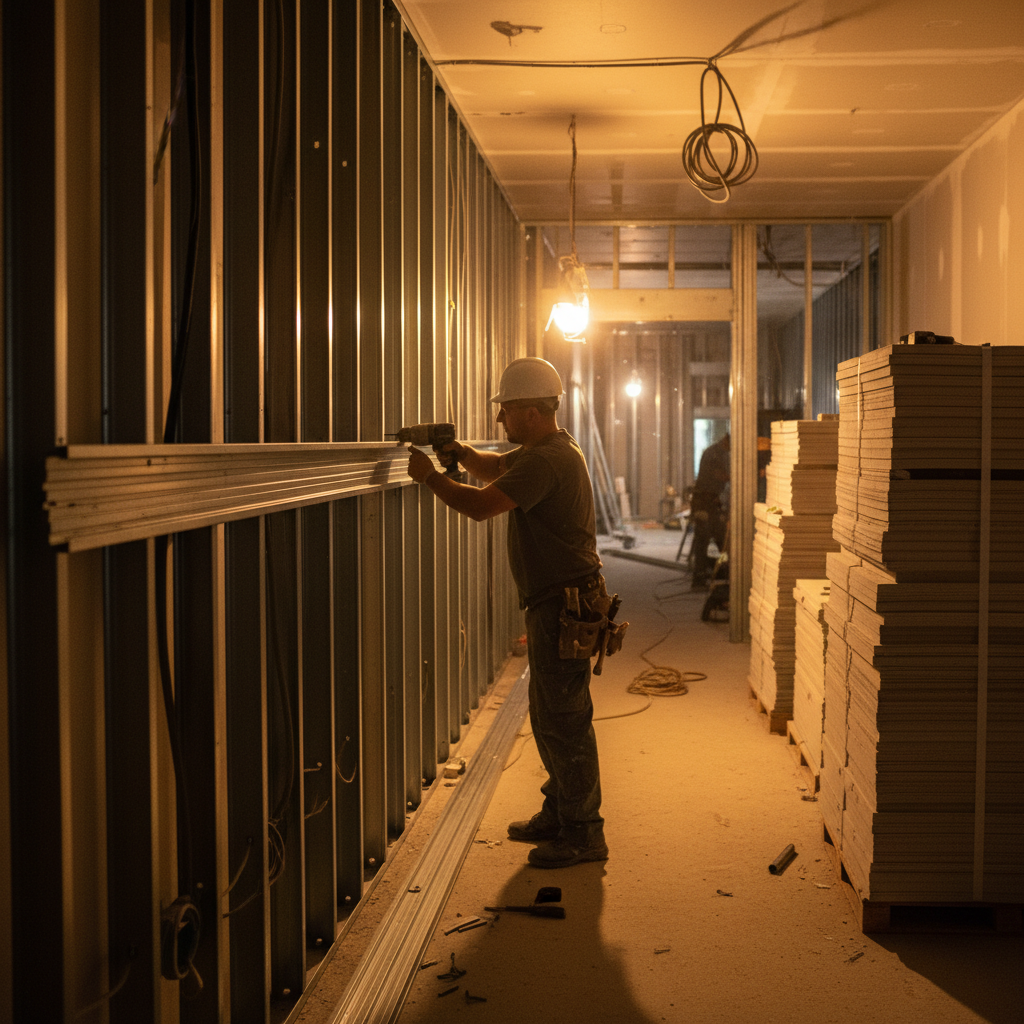
Types and Approaches: From Light-Gauge to Load-Bearing
Light-gauge, non-structural studs carry most interior partitions. Heavy-gauge, load-bearing studs and tracks are engineered for structural loads, exterior walls, and door clusters. Specialized components—resilient channel, furring, U-Flex, and CH studs—solve acoustic and geometry challenges.
- Non Load Bearing Steel Studs (Light Gauge): Core of commercial interiors and ceilings.
- Load Bearing Stud Framing System (Heavy Gauge): Engineer-designed for structural loads.
- Standard, Deep, and Slotted Deflection Track: Match movement and engagement needs.
- Bridging / Carrying Channel: Stabilizes studs on tall spans.
- Resilient Channel + Furring Channel: Decouple finishes and flatten uneven substrates.
- U-Flex Track: Build smooth curves without segmented joints.
- Shaftwall / CH Stud: Fire- and shaft-ready profiles for stairs and chases.
If your project has many interior partitions, our interior stud wall framing primer connects design intent with field-friendly details.
Case Examples: How Sizes Play Out on Real Jobs
In typical office buildouts, 3-5/8 inch studs dominate at 16 inches on center, with 20 gauge at door jambs. Taller lobbies or healthcare corridors shift to 6 inch webs, heavier gauges, and deflection track to control movement and finish quality across longer spans.
- Office retrofit (Ontario): Switched from 2-1/2 to 3-5/8 inches to route new cabling; kept 16 inch spacing to support a Level 5 finish.
- Multifamily corridor (U.S.): 3-5/8 inch field studs with resilient channel at 24 inches on center; 18 gauge jamb studs at doors for abuse resistance.
- Education wing (Canada): 6 inch non-structural framing with deep track and mid-height bridging to meet height and acoustic targets.
- Retail TI: Wider 4 inch cavities near storefronts to manage MEP congestion without adding walls.
- Clinic build: 24 inch spacing worked after switching to compatible gypsum and adding bridging; finish inspections passed on first visit.
These outcomes reflect a simple rule: treat width, gauge, spacing, track, and bridging as one decision. For jamb reinforcement options, see our note on 16 gauge metal studs.
Pricing Factors (Without Numbers)
Total investment depends on gauge, spacing, height, and accessories like deflection track, bridging, and resilient channel. Optimizing the system often saves more in labor than it adds in material—especially when spacing and detailing cut rework and callbacks.
- Material drivers: Gauge, web width, specialty tracks, clips, and fasteners.
- Labor drivers: Bridging quantity, fastener schedules, layout complexity, and rework.
- Logistics: Lead times, delivery sequencing, and site access windows.
- Risk reduction: Detailing head-of-wall movement and acoustics avoids finish repairs.
To avoid misorders, use our quick checklist in the steel stud size explainer before you submit a PO.
Working with Dass Metal in the Regional Municipality of York
Based at 370 New Enterprise Way in Vaughan, we support teams across the Regional Municipality of York with engineered submittals, load tables, and on-time delivery. Our CSSBI-certified processes and 40+ years of expertise help you choose sizes that meet code and keep schedules moving.
Builders, GCs, and drywall contractors rely on our engineering support to translate drawings into an efficient bill of materials. We coordinate web widths, flange depths, and gauges across studs, standard or deep track, bridging, and CH studs so crews stay productive from day one.
Local considerations for 370 New Enterprise Way
- Plan deliveries to avoid peak traffic near the Highway 50 – Zum Queen Stop EB transit area.
- Winter mobilization matters: protect galvanized components during freeze-thaw and frame after the building is weather-tight.
- For U.S.-bound jobs, coordinate cross-border paperwork early so Canadian-made materials align with inspection windows.
Mid-article CTA: Share wall heights, finish level, and door schedule. Our team will align widths, gauges, spacing, tracks, and clips into a clean submittal for faster approvals.
Frequently Asked Questions
Here are concise answers to common questions about metal stud framing sizes, spacing patterns, and component choices. Use them to align the design and site teams before procurement and to standardize field details.
What is the most common metal stud size for interior walls?
In commercial interiors, 3-5/8 inch studs are the workhorse, typically in 25 or 20 gauge at 16 inches on center. Wider studs like 6 inch appear on tall walls or where acoustics and services need a larger cavity.
Can I use 24 inches on center for drywall?
Yes—when the gypsum product, stud gauge, and wall height permit it. Many designs use 24 inches on center with resilient channel or deeper studs to maintain flatness. Always verify with the system guide and project specifications.
How do I choose between 20 and 25 gauge studs?
Pick 25 gauge for light, non-structural partitions with modest heights. Step up to 20 gauge for taller spans, better screw-holding, or abuse-prone areas such as corridors and door frames. Jamb studs often use heavier gauges regardless of field studs.
When should I use slotted deflection track?
Use slotted deflection track wherever the structure above can move relative to the wall—at slab edges, roof decks, or long-span areas. The slots allow vertical movement so drywall and finishes don’t crack.
Do I need bridging on every wall?
Not always. Short walls without doors may not require bridging, but taller walls, 24 inch spacing, or assemblies with resilient channel commonly benefit from mid-height bridging to control stud roll and improve flatness.
Key Takeaways
Treat sizing as a system: width, gauge, spacing, track, and bridging. Start with wall height and finish level, then select the lightest section that meets deflection and acoustic goals. Document details so ordering and field work stay in sync.
- 3-5/8 inch studs in 25–20 gauge cover most interiors at 16 inches on center.
- Use 24 inches on center only when panel type, height, and details support it.
- Heavier gauges belong at door jambs and high-abuse zones.
- Head-of-wall deflection and mid-height bridging control cracking and roll.
- Submittals with load tables and SDS accelerate approvals and inspections.
Conclusion
Select metal stud framing sizes by starting with height and finish expectations, then choose the lightest width and gauge that meet deflection and acoustic targets. Confirm 16 vs 24 inches on center with system guides and document track, bridging, and fasteners for predictable field results.
- Next steps: Share drawings and a door schedule; we’ll convert them into a clean bill of materials.
- Need a second set of eyes? Our engineers can review assemblies and provide load tables in imperial and metric.
- Keep learning: Explore our dimensions guide and light-gauge overview for quick refreshers.
Final CTA: If you’re working near Vaughan or anywhere in York Region, book a brief consult. We’ll align sizes and spacing to your schedule and inspection windows.
Reference placeholders: field-friendly framing overview and code-focused framing considerations.